
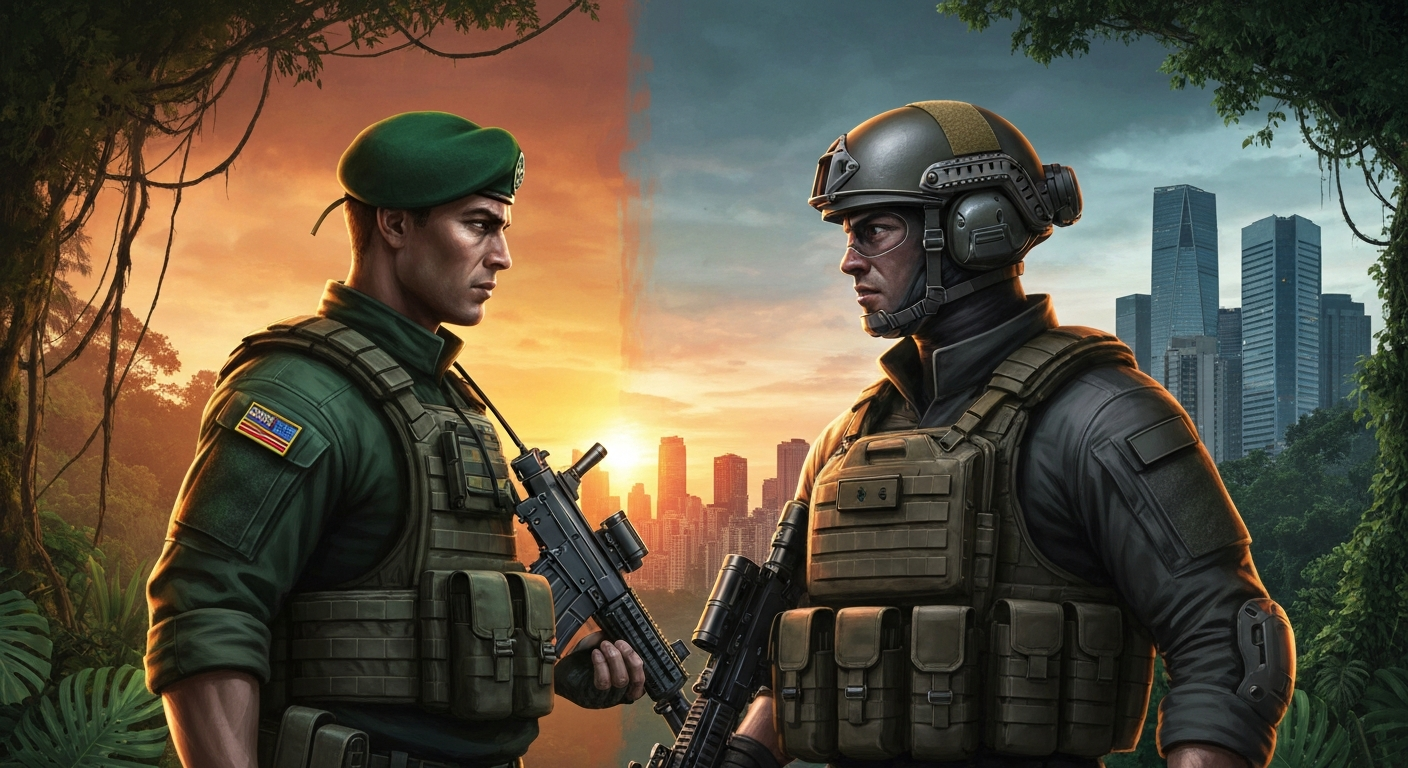
Key Highlights
- Green Berets, a publicly recognized special operations force, specialize in unconventional warfare and training allied forces.
- Delta Force is a highly secretive Tier 1 special missions unit focused on counter-terrorism and direct action.
- While both are elite U.S. Army special forces, their primary missions, training, and command structures are distinct.
- Green Berets focus on building relationships and long-term operations, acting as “soldier diplomats.”
- Delta Force operators are recruited from experienced service members, including Green Berets, for short-duration, high-intensity missions.
- The selection processes for both units are incredibly demanding, testing physical and mental limits to find the best candidates.
Introduction
Have you ever thought about what makes the U.S. Army’s top special forces different? Both Green Berets and Delta Force are known around the world for how tough they are. The men in these special operations are some of the best. Even though both train hard and go on dangerous missions, they do not do the same things. Each group has its own jobs and reasons for being there. This article will talk about what is not the same between Green Berets and Delta Force. You will learn about where each one started, what kinds of missions they do, and how hard it is to join them.
Understanding U.S. Army Special Operations Forces
 The U.S. Army has more than one special operations force. Each one has a different job to do. These special forces are made to take on the most dangerous missions. Many of these jobs are too tough for regular military units.
There is the group called Army Special Forces, also known as the Green Berets. There is also the very secret 1st Special Forces Operational Detachment-Delta, or Delta Force. Both teams use their skills at the top level, but each group answers to a different leader. Delta Force is in the Joint Special Operations Command, also called JSOC.
Overview of U.S. Special Operations Command (SOCOM)
The United States Special Operations Command (SOCOM) is in charge of all the special operations forces for the Army, Navy, Air Force, and Marine Corps. SOCOM makes sure these elite teams are found, taught, and given the tools they need for their jobs anywhere in the world. It works under the Department of Defense.
Inside of SOCOM, there is a group called the Joint Special Operations Command (JSOC). JSOC oversees the nation’s top special ops units. This includes Delta Force and the Navy’s SEAL Team Six. These special operations teams are picked for hard jobs, like counter-terrorism or hostage rescue. Their missions are some of the most important and secret in the country.
The main thing that separates Green Berets from Delta Force comes down to how they are seen. Green Berets are known as “white SOF.” The public knows about their work and their general mission. They are not kept from the public. Delta Force is called “black SOF” or a Tier 1 unit. Much about them is kept secret. The members, their missions, and even word of their work is often hidden by the government. There may even be times the government denies they had any part in certain special ops to keep things secret.
Introduction to Green Berets and Delta Force
Let’s get to know these two famous groups. The U.S. Army Special Forces, known as the Green Berets, are a top special operations unit. They are well-known for how they handle jobs that are not normal warfare. Many people call them “soldier diplomats” because they train and help other countries’ soldiers.
Delta Force is also part of the army but is called the 1st Special Forces Operational Detachment-Delta, or 1st SFOD-D. This squad is one of the most secret groups in the U.S. It stands out for doing top special operations. The main job of Delta Force is to handle direct attacks and stop acts of terrorism.
Here is a quick look at what each group does best:
- Green Berets: Work well in unconventional warfare, train others for safety in their home land, and make strong ties with local teams.
- Delta Force: Handles direct action, saves hostages, and fights support leaders or high-value threats in top difficult missions.
Origins and History of Green Berets and Delta Force
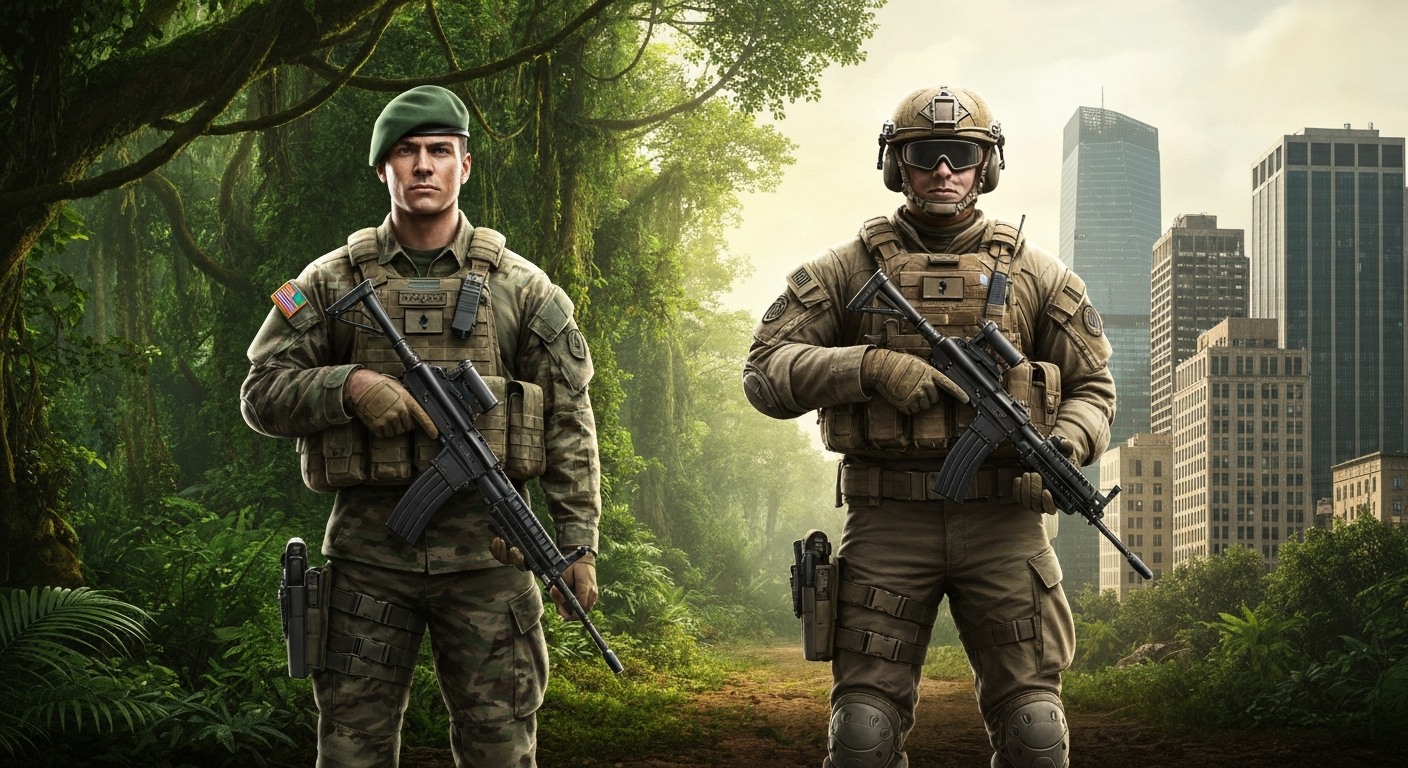 The history of the Green Berets and Delta Force starts at different times. The Green Berets were created in the 1950s. This was because people saw that future wars would be about guerrilla fighting and stopping uprisings.
Delta Force came much later, in 1977. At that time, the world was seeing more terrorism. The U.S. knew it had to have a special unit that would fight terrorists all the time. Now, let’s look closer at what makes delta force and green berets special in military service.
The Formation and Mission Roots of Green Berets
The U.S. Army Special Forces are also called the Green Berets. They started in 1952. Army leaders at the time saw that the Cold War would not just use regular fighting. They knew it would also need people who could work in the shadows, stop uprisings, and fight as guerrillas.
The main job of the Green Berets has always been something called unconventional warfare. They go into foreign countries in a quiet way. Then, they talk to local groups and teach them to stand up and fight against leaders or armies who should not be in power. The special forces are set apart from other military units in the U.S. by this work.
Every special forces group is trained to know certain places in the world very well. They learn the language, learn about the culture, and know how that place works in politics. This helps them work well with others and make strong friends around the world. It makes the army special forces a key part of U.S. policy and keeping the country safe.
The Creation and Evolution of Delta Force
Delta Force started in the 1970s. This was a time when the world saw more acts of terrorism. Colonel Charles Beckwith had worked with the British Special Air Service (SAS). He saw that America needed a group like this to handle these kind of threats.
Delta Force was set up in November 1977. It was made to be a group that always handles terrorism. Some of their main jobs are hostage rescue, direct action raids, and special reconnaissance. From the start, Delta Force was planned as small teams with many different skills. These teams are able to act fast and on their own.
Delta Force is different from the Green Berets. The Green Berets mostly do unconventional warfare and work with other nations. Delta Force is more about getting into action right away. They are not there to train or help build armies. Their main job is to carry out small, quick, and tough missions against very important targets. This goal of direct action makes them stand apart from the Green Berets.
Core Missions and Operational Roles
The Green Berets and Delta Force both work in the U.S. Army’s special operations group. But what they do is very different. Green Berets focus on unconventional warfare. They often work with other groups and help them do their missions.
Delta Force, on the other hand, is known as the top direct-action unit. They take on jobs like stopping terrorists and carrying out special reconnaissance. The way their teams are set up shows these different mission goals. For example, the Green Berets use Operational Detachment Alpha teams, while Delta Force uses squadrons. Let’s look at what jobs each group mainly takes on.
Green Berets’ Primary Roles: Unconventional Warfare & Training Allies
The Green Berets are the top U.S. military unit when it comes to unconventional warfare. This kind of work is what they do best. They are trained to enter a country in a quiet way. They know how to connect with local groups and teach them how to do things like gathering information on the enemy, causing damage to equipment, and working in secret.
What makes the Green Berets different is their focus on being good teachers. They help friendly countries train their own soldiers. They want these groups to fight well and protect their own land. Because of this foreign internal defense mission, the Green Berets are also like diplomats, not just fighters. They sometimes do quick attacks against the enemy, but most of the time they are helping local groups do better.
Their missions cover many tasks, like:
- Unconventional Warfare: Helping groups rise up against governments or groups in their home country.
- Foreign Internal Defense: Training and giving advice to soldiers or police in other countries.
- Special Reconnaissance: Finding out what the enemy is doing behind enemy lines.
Delta Force’s Main Focus: Counter-Terrorism & Special Reconnaissance
Delta Force, which people also call the Combat Applications Group or CAG, is a unit that acts fast and direct. Their main job is to carry out small missions that are often quick and intense. This kind of work is very different from what the Green Berets do, as Green Berets spend more time on building strong ties with locals during their missions.
This group is great at tasks like fighting terror, saving hostages, and catching or stopping the most important threats. Delta Force operators are trained to be the best in the world at breaking through doors and taking out the biggest enemies America has. Their missions do not usually last long, and most of the time, the public does not know about them. When they go after someone, they try to do it in the fastest and most exact way.
Delta Force’s main missions are:
- Counter-Terrorism: They work to hunt down and remove terrorist threats anywhere in the world.
- Hostage Rescue: They plan and carry out tough rescue jobs to bring home Americans and friends who are taken.
- Direct Action: They go in to raid places and grab or stop high-value people and targets.
delta force, green berets, hostage rescue, combat applications group, delta force operators
Differences in Structure and Organization
 The way Green Berets and Delta Force are set up shows that they do different things. Green Berets work in bigger teams. These teams are based on regions. The main part of their group is a 12-man operational detachment called ODA. This setup helps them act as advisors for a long time.
Delta Force is not like that. It is a smaller and more focused special operations unit. It is split into squadrons that can move fast and handle direct tasks. This difference in how they work and are built shows what jobs each group does best in the special operations world.
Team Structure: Operational Detachment Alpha (ODA) vs. Delta Squadrons
The fundamental building block of the Green Berets is the Operational Detachment Alpha, or ODA. This 12-man team is designed for versatility and long-duration missions. Each member is a specialist in areas like weapons, engineering, communications, or medicine, but they are also cross-trained in each other’s skills. This structure allows them to operate independently and train foreign forces effectively.
Delta Force is organized differently. It is comprised of several squadrons, including assault squadrons and support squadrons. These squadrons are further broken down into troops, which then consist of even smaller teams. This structure is optimized for executing quick, precise, and violent direct-action missions rather than long-term advisory roles.
Here’s a simple breakdown of their team structures:
| Unit | Basic Tactical Element | Typical Size |
|---|---|---|
| Green Berets | Operational Detachment Alpha (ODA) | 12 members |
| Delta Force | Squadron / Troop | Varies (organized in small teams) |
Placement Within Army Command Hierarchy
The Green Berets and Delta Force work in different parts of the military. The Green Berets, also called the U.S. Army Special Forces, are led by the United States Army Special Operations Command (USASOC). These special forces are split into different Special Forces Groups. Some groups are active duty, while others are part of the Army National Guard.
Delta Force is also part of USASOC, but has a different job setup. It is controlled by the Joint Special Operations Command (JSOC). JSOC oversees the military’s Tier 1 units, like Delta Force and SEAL Team Six. This means Delta Force gets a lot of resources and support for what they do. The work they do can range from counter-terrorism to executive protection. Much of their work is on special operations and stays secret.
This change in the command structure is important. It affects everything such as how missions are given out, how teams get money, and the way the missions stay quiet. Because of this, the Green Berets and Delta Force have their own ways of picking people for their teams. Each group chooses people to fit what their special forces need for the kind of missions they take on.
Selection and Recruitment Processes
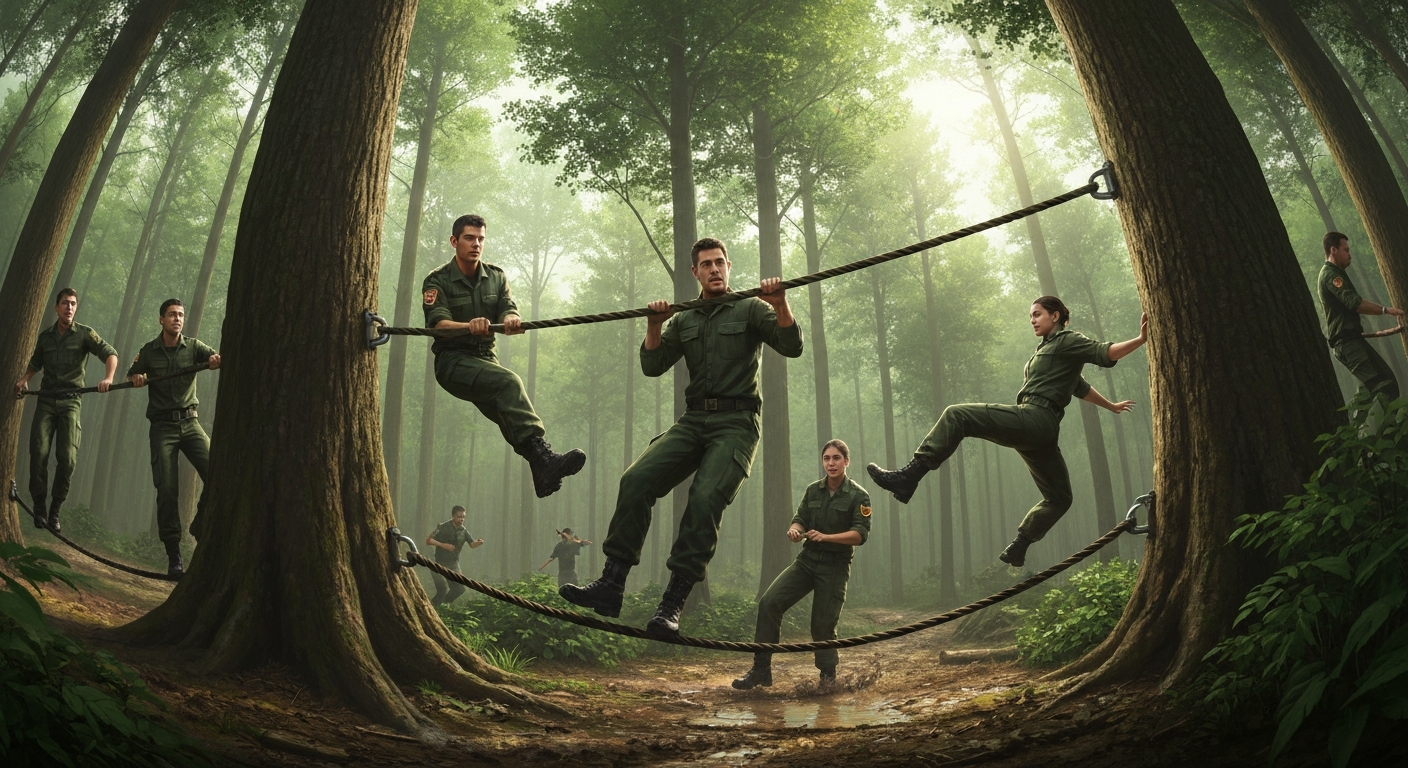 Getting into the Green Berets or Delta Force is very tough. The selection process for these special forces groups is made to pick only the strongest people both in mind and body. If you want to be a Green Beret, you have to pass the hard Special Forces Assessment and Selection.
Delta Force selection is even harder. The unit mostly takes people who have worked with other special operations units like the Green Berets or the 75th Ranger Regiment. Both these ways need a lot of grit and the will to not give up.
Eligibility and Pathways to the Green Berets
To be part of the Green Berets, you need to meet a few basic rules first. You must be a man. You must be a U.S. citizen between 20 and 32 years old. You must also have finished high school. You have to get a secret security clearance, and you should score at least 110 in the General Technical area of the Armed Services Vocational Aptitude Battery (ASVAB). People who want this job can come from active duty military service or sometimes from the Army National Guard.
Your path starts with the Special Forces Preparation Course (SFPC). This helps get you ready for the main part of training. After that, you will go through the 24-day Special Forces Assessment and Selection (SFAS). This part checks your physical fitness. It will see how well you can find your way across land and if you can work on a team when things get tough.
If you pass SFAS, you move to the next level. This is the Special Forces Qualification Course, also known as the Q Course. It lasts about one year. In the Q Course, you will learn small unit tactics. You will get language training. You will build survival skills. The last part is called “Robin Sage,” where your skills are tested in unconventional warfare.
This road is tough, but it helps get the best people into special forces—those who can work, lead, and think fast in hard situations.
Delta Force Selection Criteria and Recruit Origins
The process to join Delta Force is seen as one of the hardest in the world. Delta Force does not pick people from outside or new people who just joined the military. You have to be serving in the U.S. armed services already, and most people trying out are part of special operations. Many times, these candidates come from the Green Berets or the 75th Ranger Regiment.
The Delta Force selection process happens for about a month in the tough mountains of West Virginia. It is hard both on your body and mind. During delta force selection, people face land navigation tasks across long distances. They do these with heavy packs and get little clear information. The aim is to see who can do things well, even while under a lot of stress and when things are not clear.
Besides the physical tests, candidates also face hard mental checks to see if they have the strength inside for the job. The whole delta force selection is kept very quiet. Most people do not make it through; the dropout rate is very high. Out of close to 250 people who start, only about 12 to 14 are chosen. They are the ones who move ahead to the Operator Training Course.
Intensity and Phases of Training
Training for Green Berets and Delta Force is known to be very tough. People trying to be Green Berets must pass the Special Forces Assessment and Selection (SFAS) first. After that, they move on to the Special Forces Qualification Course, or “Q Course.” During this time, you start from the basics and learn what it means to be in special forces.
For Delta Force, the training is not the same. You only start Delta Force training after you have shown good skills in an elite unit. The Delta Force Operator Training Course (OTC) helps you sharpen your skills even more. It is focused on what you need for counter-terrorism and direct action work. No matter which path you take, both demand all your time and effort. You must be fully committed to special forces training to get through it.
The Special Forces Assessment and Q Course for Green Berets
The way to become a Green Beret begins with the Special Forces Assessment and Selection, often called the special forces assessment or SFAS. It takes place at Fort Bragg in North Carolina and lasts for 24 days. This course pushes each person to the limit to test both body and mind. You will have to meet hard fitness goals, do long-distance land navigation, and work in teams. All of this helps to find out who has the right skill, motivation, and the right kind of person for special forces.
If you get picked, you will head to the Special Forces Qualification Course, or the q course. This special forces qualification training can last from 55 weeks to sometimes more than a full year. How long you stay often depends on your military occupational specialty. There are many parts of the training. These cover small group tactics, survival lessons, language and cultural lessons, and it all leads up to the Robin Sage exercise for unconventional warfare.
During all of this special forces training, there is always a new challenge. The q course includes learning advanced marksmanship, tough medical training, and things like the tough 40-mile ruck march. At the end, they want to make sure you become the sort of operator who can do well and make it in any place or any situation.
Delta Force Selection & Operator Training Course (OTC)
After making it through the tough selection process, the people who pass move on to Delta Force’s Operator Training Course, or OTC. This course is six months long. It is where the group starts to turn the new members into real Delta Force operators. Green Beret training is for building a person who can do many things and work in unconventional warfare. OTC is not like that. It aims to make an expert who can handle direct action and stop terrorism.
The training is hard. People in the course spend a lot of time working on advanced marksmanship, learning how to blow stuff up, how to break into places, and how to use different skills together for things like hostage rescue and other hard jobs. The rules for physical fitness are very strict. There is also a lot of stress on the mind during the whole time.
OTC covers tradecraft training, which means people learn about watching others, how to spot if someone is watching them, and how to do executive protection. At the end, there is a big test. This brings together all the skills a person has learned in the course. Becoming a real Delta Force operator is tough. Former member Paul Howe says that only a small number of people in each group are able to finish the whole thing.
Physical and Mental Requirements
The men and women in the green berets and delta force have to deal with a lot. The job is hard in mind and body. People who want to join need to meet strong physical fitness rules. They also have to show they are tough in their head, not just their body. The way your head works is just as big a deal as how much you can run or lift.
People who want to be part of these groups also have to be able to get a secret security clearance. For delta force, the rules for the clearance can be even higher. These things make sure that only the best people who can be trusted get to join green berets and delta force.
Fitness Standards for Green Berets
The physical fitness standards to join the Green Berets are very high right from the start. Before you even begin the formal special forces preparation course, you have to show you are in good physical condition for what will come next. This means you need to take a tough physical fitness test and get a high score in push-ups, sit-ups, pull-ups, and in a two-mile run that is timed.
As you go through the special forces preparation course and SFAS, the workouts get even harder. You will need to take on long mile ruck marches, go through obstacle courses, and do physical work all the time that will test you every day. For example, you must be able to swim 50 meters while wearing boots and your uniform. You also have to finish a long multi-mile ruck march in a set time.
You must also be Airborne qualified or agree to attend Airborne School. The scores for physical tests are just the starting point. What really counts is if you can keep going every day–in hard physical times and when there is a lot of mental stress. The special forces will test this from the first day to the last of the whole qualification process.
Psychological and Physical Demands for Delta Force Operators
The physical demands for Delta Force are sometimes even greater than what you see with the Green Berets. People going for delta force selection are expected to show up already in the best shape of their lives. The selection process is tough. It has a well-known 40-mile ruck march that takes place over rough ground while carrying a 45-pound rucksack.
But the mental side of delta force selection is what really makes it different. The whole selection process is built as a mind game. The people in charge want to see who not only keeps going physically, but also shows that they can think well, roll with change, and stay strong in the head. The instructions are often unclear. The candidates go through stressful and hard-to-read situations to find out who will get through it in the end.
The delta force is searching for quiet professionals. These are people who can go out on the hardest missions by themselves and can be counted on to do the right thing. That means you need a strong mind and mental steadiness that not many people have. After the first selection process, everyone who makes it is checked all the time. This is to be sure they don’t fall behind the high standards you need for a Tier 1 special missions unit.
Daily Life and Culture Within the Units
Life in the Green Berets or Delta Force is not the same as in regular military service. In both, you find a strong sense of professionalism in everything they do. There is a lot of trust in their small teams. Each person has more freedom to make choices.
Green Berets spend a lot of time on long trips away from home. They often live and work side by side with people from other countries.
Delta Force is a unit that stays very private. People in delta force always have to be ready. They might get sent to different parts of the world at any time. The way people act in these small teams comes from the special jobs they take on and the great people who are part of the teams.
Traditions and Lifestyle of Green Berets
The daily life of a Green Beret is all about learning and being able to change with the times. As special forces “soldier diplomats,” they spend a lot of time with people from other countries. They need more than just fighting skills for the job. Green Berets must be good at language, talking to others, and working with people from other places. Their role in special operations often means staying far from home for a long time so they can build close ties with partner forces.
Inside a special forces group, the culture is about being grown-up, acting professionally, and showing respect to each other. Service members have a lot of freedom in how they work and are trusted to solve problems on their own. Even though they are soldiers before anything else, what they do in special forces takes a different way of thinking than in the regular Army.
Among all special operations and special forces units, there is a friendly rivalry. But when it comes to Green Berets and Delta Force, it is usually an even deeper respect. A lot of Delta operators used to be Green Berets, so they know what it takes for the job. Most of the rivalry happens because people take pride in their own group, not because of real bad feeling.
Inside the World of Delta Force
Life inside Delta Force is full of secrecy and comes with high risks. The people in this special operations unit are called “Quiet Professionals” because their work is not talked about in public. To keep their work secret, many grow out their hair and beards. They may not wear uniforms so they can blend in anywhere. The U.S. government will often say that these people or the work they do do not exist.
Delta Force stays busy all the time. The team is always ready for a relentless strike and keeps training for or handling dangerous missions. As a top special operations unit, they have to be prepared to help in any crisis around the world. This could be anything from a hostage situation to looking for top targets.
This way of life needs a lot from both the Delta Force operators and their families. People in this job have strong skill and a lot of trust in what they do. There is some pride in how well they do their jobs, but teams like Delta Force and SEAL Team Six still come together to train and work. The danger and the job they must do help them stick together, even with some friendly rivalry.
Iconic Operations and Key Accomplishments
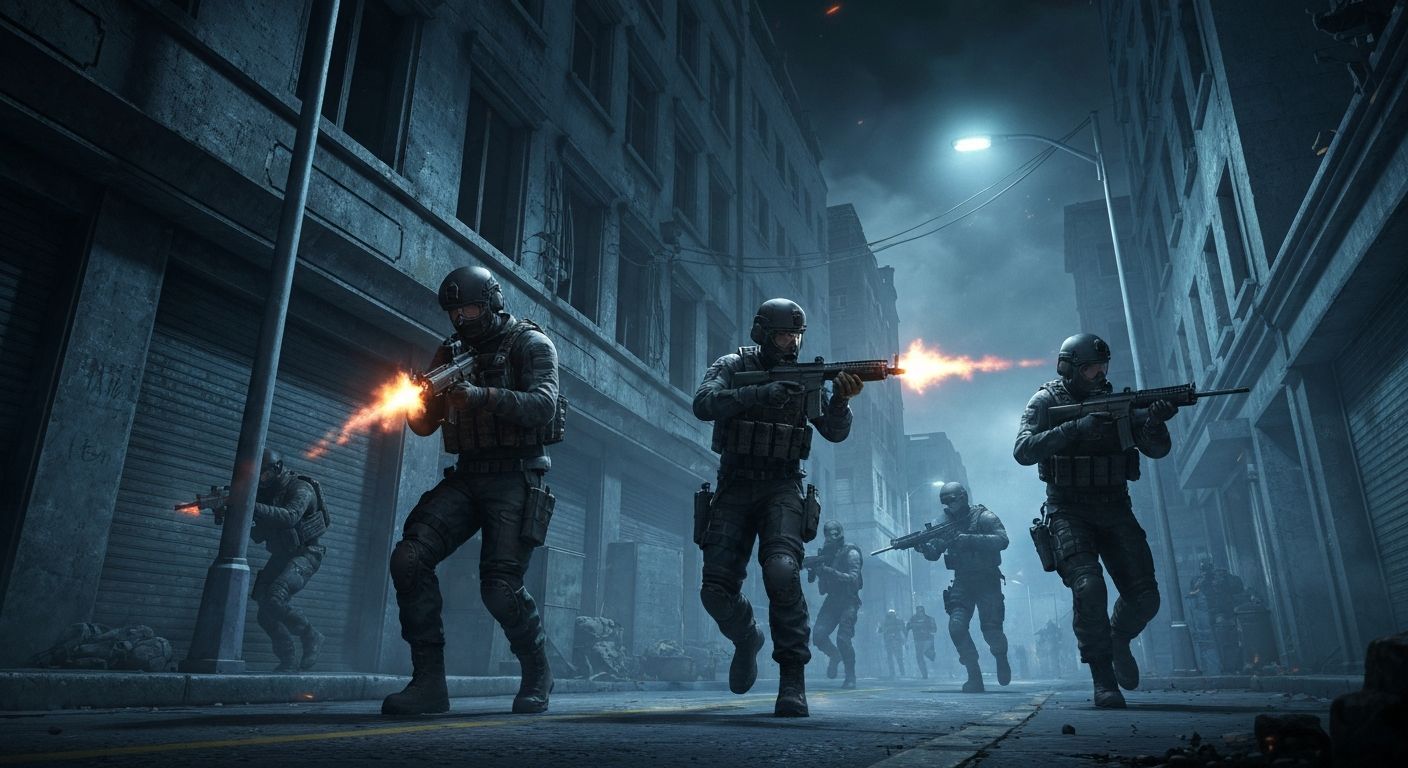 Both the Green Berets and Delta Force are known for their strong history in some of the hardest fights the world has seen in recent years. The stories of these special operations forces are full of big moments that have changed things around the world. The Green Berets played a key part at the start of the war in Afghanistan, when they worked with the Northern Alliance.
Delta Force has been leading America’s fight against terror for many years. They have taken on many risky missions and done important work. Most of what they do is still secret, but a few things are now well-known. Now, let’s see some of the top missions from these elite special operations forces.
Notable Missions by Green Berets
The Green Berets are well-known for going behind enemy lines and getting big results. Their work in unconventional warfare is famous. One of the best-known things they did was during the first invasion of Afghanistan back in 2001. Small teams of Green Berets worked with fighters from the Northern Alliance. They gave advice and helped call in airstrikes. Because of this, the Taliban was overthrown in just a few weeks.
They were also there for the 1993 Battle of Mogadishu. People know this fight from the book and movie “Black Hawk Down.” The Green Berets fought hard on the city streets with their team for many hours in a tough gunfight.
Some great operations:
- Operation Enduring Freedom (Afghanistan): Small teams worked with the Northern Alliance. They helped end the Taliban’s rule.
- Operation Viking Hammer (Iraq): The Green Berets and Kurdish Peshmerga worked together in 2003. They fought Ansar al-Islam in the north of Iraq.
- Vietnam War: The Green Berets did many unconventional warfare missions during this long war.
The story of the Green Berets is full of brave acts and great teamwork. They show what small teams can do when moving past enemy lines.
Legendary Operations Executed by Delta Force
Many of Delta Force’s biggest and most famous missions are still secret, but some have become well-known because they were so important. Delta is a top group for direct action and hostage rescue. The unit often leads some of the hardest missions in special operations. In Iraq and Afghanistan, they spent a lot of time searching for important enemies.
One of the missions people know about most is the 1993 Battle of Mogadishu. In it, Delta Force had to catch top people working for Mohamed Farrah Aidid. In recent years, people heard more about Delta Force after the 2019 operation against ISIS leader Abu Bakr al-Baghdadi. The Combat Applications Group helped on this very important raid.
A few famous Delta Force missions in special operations are:
- Operation Eagle Claw (1980): This was a failed try to rescue American hostages in Iran. It showed that having better special operations skills was a must.
- Battle of Mogadishu (1993): This was the “Black Hawk Down” fight that happened in Somalia.
- Operation Red Dawn (2003): This special operation ended when Saddam Hussein was caught.
These events show why Delta Force is a leader in hostage rescue and special operations.
Frequently Asked Questions (FAQ)
People are often interested in what special operations forces do and how they work. They ask questions about what special forces can do and how they are chosen. Many ask how Army Special Forces train compared to Delta Force, especially when it comes to physical fitness and the difficult missions they take on. Some people also ask if these groups ever work together, since both have skills like unconventional warfare and hostage rescue. Knowing about these things helps people see how special operations forces handle tough jobs behind enemy lines.
Can someone serve as both a Green Beret and a Delta Force operative?
Yes, this can happen and it is very common. Delta Force often looks for new people from special operations forces. Many who join Delta Force start with Army Special Forces. After working as a Green Beret, a person can ask to go through the Delta Force selection process. This is the way many make the move to Delta Force from other special operations units.
Is it possible to enlist directly into the Green Berets or Delta Force?
You can join the U.S. Army and sign up for special forces, putting you on the road to being a Green Beret. But you cannot join Delta Force right away. Delta Force picks people who already have years of military service. They usually take people from another special operations unit.
Are Green Berets or Delta Force considered more elite, and why?
Both the Green Berets and Delta Force are top units. But, they are great at different things. Delta Force is a Tier 1 unit. They do the most direct and secret counter-terrorism jobs. People often call them more “elite” because of what they do and how secret they are. Still, Green Berets do things Delta Force does not. They are the best when it comes to unconventional warfare.
Conclusion
To sum up, the debate between Green Berets and Delta Force is about more than just which one is more elite. It shows the long history, tough training, and different jobs that make both units special. They each have a key place in U.S. military work and both bring their own strengths to keep people safe. The Green Berets are known for their work in unconventional warfare and for helping to train allies. Delta Force stands out for their skill with counter-terrorism. Both groups do their job well and show what it really means to be great at what they do. Knowing how they are different helps us see what they do and respect the sacrifices they make. If you want to know more about Green Berets, Delta Force, or unconventional warfare, you can reach out for a free consultation!