

Are Army Rangers Operating in Iran Now is one of the most searched military questions as U.S.-Iran tensions reach a boiling point in 2025.
Here is a quick answer based on current confirmed reporting:
| Question | Answer |
|---|---|
| Are Rangers confirmed inside Iran? | No official confirmation of operations inside Iran |
| Are Rangers deployed to the Middle East? | Yes – a company-sized element from the 75th Ranger Regiment has been ordered to the CENTCOM area of operations |
| What is their likely role? | Rapid response, direct action raids, and supporting nuclear material recovery missions |
| Have Rangers trained for Iran-type scenarios? | Yes – a 2024 joint exercise simulated a raid on an underground nuclear facility |
| Is a ground operation being considered? | U.S. officials are reportedly weighing special forces options to seize Iran’s enriched uranium stockpile |
The short version: Rangers are in the region, trained for the mission, but no public confirmation places them operating inside Iran’s borders right now.
That said, the picture is changing fast. The U.S. has surged thousands of troops to the Middle East, canceled key training exercises amid speculation of deployment, and is actively weighing ground options as concerns grow that Iran may have moved its near-bomb-grade uranium stockpile.
I’m Larry Fowler, publisher of USMilitary.com, and I’ve spent nearly two decades tracking U.S. special operations deployments and military readiness — including developments directly relevant to whether Army Rangers are operating in Iran now. In the sections below, I’ll break down exactly what the evidence shows, what Rangers have been training for, and what could come next.
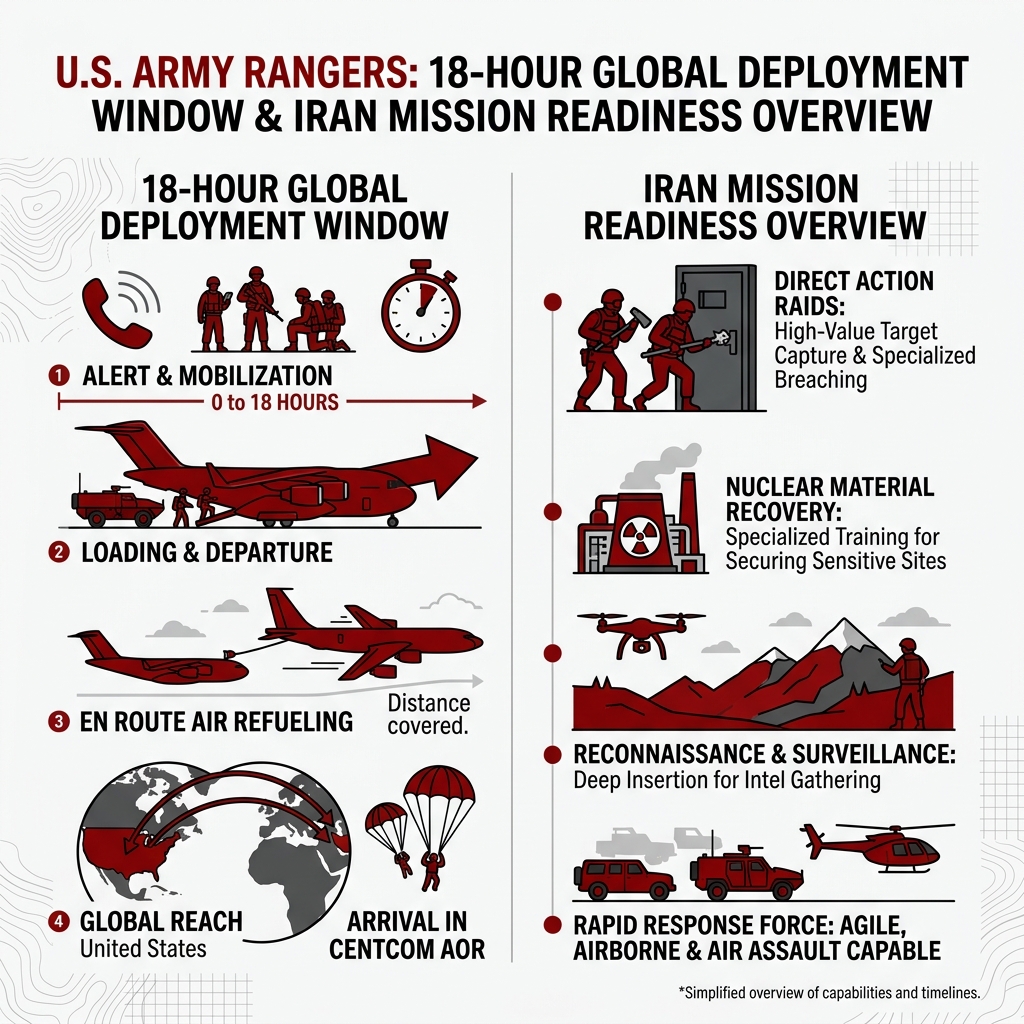
Simple Are Army Rangers Operating in Iran Now word guide:
Are Army Rangers Operating in Iran Now?
The question of whether Are Army Rangers Operating in Iran Now is currently circulating through every corner of the defense community. While the official line from the Pentagon remains one of denial regarding boots on the ground inside Iranian territory, the “shadow war” suggests a much more complex reality.
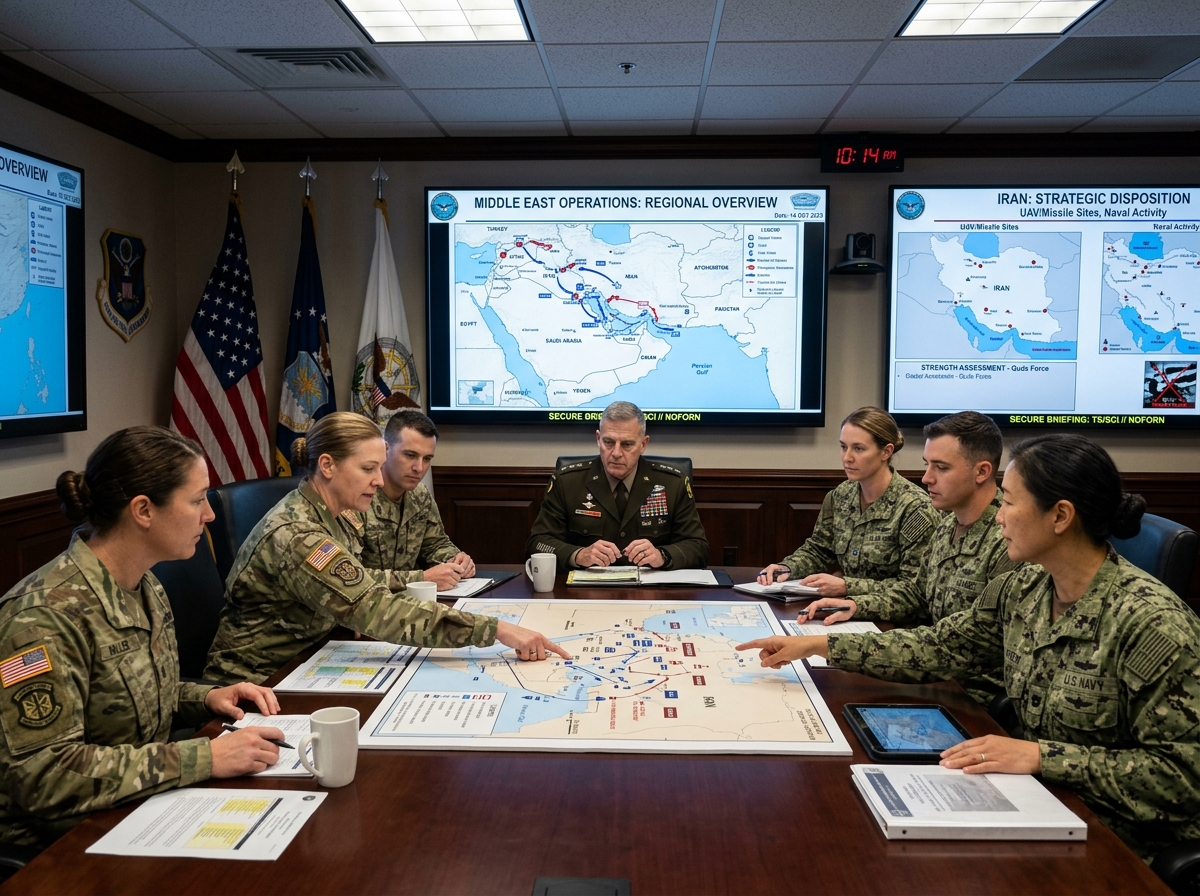
We know that a company-sized element of the 2nd Battalion, 75th Ranger Regiment has been ordered to the U.S. Central Command (CENTCOM) area of operations. This move was part of a broader surge that included roughly 3,000 paratroopers from the 82nd Airborne Division. While these forces are officially stationed at regional hubs, their presence provides the President with a “short-fuse” option for cross-border raids.
Adding fuel to the fire, reports have emerged suggesting that Israeli special forces are already operating inside Iran. These reports claim that Mossad and IDF commandos are conducting ground-level target designation and sabotage. Historically, when our closest allies engage in such high-risk maneuvers, U.S. Tier 1 and Tier 2 units—like the Rangers—are often positioned nearby to provide Search and Rescue (SAR) or Quick Reaction Force (QRF) support.
For a deeper look at the strategic climate, you can read our analysis on whether a U.S. military attack on Iran is coming and how the Iranian people might overthrow the Islamic regime from within, potentially creating the “permissive environment” special operators need.
Current Deployment Status of the 75th Ranger Regiment
The 75th Ranger Regiment doesn’t just “go on vacation” to the Middle East. When they move, it is for a specific purpose. Recent reports indicate that the Army abruptly canceled a major training exercise for an elite paratrooper headquarters element, a move that Dan Lamothe of the Washington Post noted has fueled intense speculation about immediate deployment needs.
This “ready-support” status coincides with Operation Epic Fury, where U.S. and Israeli strikes have ramped up against Iranian-backed proxies and infrastructure. Rangers are the primary force for “seizing the initiative,” meaning if the order is given to secure a bridgehead or an airfield inside Iran, they are the first ones through the door.
Historical Precedent: Operation Eagle Claw
To understand the risks of Are Army Rangers Operating in Iran Now, we have to look back at 1980. Operation Eagle Claw was a daring, yet tragic, attempt to rescue American hostages in Tehran. It involved a joint force including Army Rangers and Delta Force. The mission failed at a site known as “Desert One” due to mechanical failures and a desert sandstorm, leading to the loss of eight American service members.
That failure fundamentally reshaped how we conduct special operations, leading to the creation of USSOCOM. Today’s Rangers are vastly better equipped and trained than their predecessors in 1980, but the geography of Iran remains just as unforgiving. Our history of war between Arabia and Persia shows that ground operations in this region are never simple.
Training for Loose Nukes and Underground Raids
Perhaps the most chilling reason why people ask Are Army Rangers Operating in Iran Now is the threat of “loose nukes.” If the Iranian regime begins to collapse, or if they attempt to move their enriched uranium to a secret location, the U.S. cannot rely solely on airstrikes. Bombs can destroy buildings, but they can’t “secure” material.
In 2024, members of the 75th Ranger Regiment partnered with Nuclear Disablement Team 1 (NDT 1) for a high-stakes training exercise. They simulated a mock raid under hostile fire on a decommissioned pulse radiation facility. The goal? To practice entering a “hardened” underground site, neutralizing guards, and allowing nuclear scientists to safely package and remove radioactive materials.
This training is a direct response to the escalating tensions between Israel and Iran. As Israel strikes surface targets, the U.S. is preparing for the “basement” mission—the one that requires a human being to walk into a dark tunnel and take control of a nuclear stockpile.
Mission Objectives for Army Rangers Operating in Iran
If Rangers were to cross the border today, their mission would likely fall into three categories:
- Airfield Seizure: Capturing an Iranian airbase to allow follow-on forces or extraction aircraft to land.
- Direct Action Raids: High-speed strikes to capture or kill High-Value Targets (HVTs) or destroy critical command-and-control nodes.
- Snatch Raids on Uranium: Fortune reports that the U.S. is weighing operations to seize near-bomb-grade uranium.
There is also the ongoing concern regarding Iran’s lethal assistance to Al-Qaeda, which could necessitate Ranger intervention to disrupt terror networks operating under the regime’s protection.
Collaboration with Nuclear Disablement Teams (NDT)
The 20th CBRNE Command houses the Army’s three Nuclear Disablement Teams. These aren’t your typical soldiers; they are PhDs and nuclear engineers in uniform. During the 2023 exercise at the Bellefonte Nuclear Power Plant, NDT 1 proved they could work alongside Rangers to “exploit and disable” nuclear sites.
The Rangers provide the muscle—the “security envelope”—while the NDT provides the technical expertise to ensure the team doesn’t accidentally trigger a radiological disaster while trying to save the world.
Tactical Challenges of Army Rangers Operating in Iran
Operating in Iran is not like operating in Iraq or Afghanistan. Iran is a “near-peer” adversary with sophisticated air defenses and a rugged, mountainous interior.
The primary challenge is the “Hard Target.” Sites like Fordo are buried deep inside mountains, protected by hundreds of feet of rock and reinforced concrete. Even the GBU-57/B Massive Ordnance Penetrator (MOP) has limits. To truly neutralize these sites, someone has to go inside.
Risks of Underground Facilities and Toxic Materials
The perils of a nuclear commando mission are immense. Beyond the Iranian Revolutionary Guard Corps (IRGC) soldiers guarding these tunnels, the environment itself is deadly.
- Uranium Hexafluoride: This gas, used in enrichment, turns into highly toxic hydrofluoric acid if it touches moisture (like the humidity in a soldier’s breath).
- Booby Traps: Intelligence suggests Iranian sites are heavily rigged with IEDs and “dead-man” switches.
- Stockpile Dispersal: The IAEA has reported that Iran has enough 60% enriched uranium for several bombs. If that material is moved into small, easily concealed cylinders, finding it becomes a “needle in a haystack” mission.
| Mission Type | Pros | Cons |
|---|---|---|
| Airstrike | Low risk to U.S. personnel; high damage | Cannot confirm material destruction; risk of “dirty bomb” effect |
| Ranger Raid | Can secure/remove material; high intelligence yield | High risk of KIA/POW; logistically “perilous” |
It’s also worth noting the internal U.S. political climate, where some Democratic party members’ focus on political opposition has occasionally complicated the unified strategic messaging required for such high-stakes military moves.
The Role of Tier 1 Units and Ranger Support
In Special Operations, there is a hierarchy. Tier 1 units like Delta Force and SEAL Team Six (DEVGRU) would likely be the “assault element”—the ones actually grabbing the uranium or the HVT.
However, they cannot do it alone. The 75th Ranger Regiment acts as the “Tier 2” support force. They provide the outer cordons, secure the extraction points, and bring the heavy firepower (mortars, anti-tank weapons) needed if the mission goes “loud.” The Pentagon has even requested millions for JSOC hard target training facilities to ensure these units can work together seamlessly in a mock-up of an Iranian bunker.
Frequently Asked Questions about Army Rangers in Iran
Has the Pentagon confirmed Rangers are inside Iran?
No. As of today, the official position is that no U.S. ground forces are operating within the sovereign borders of Iran. Any such movement would be considered an act of war and would likely only be confirmed after the mission is completed or if a “hot” incident occurred.
What is the 75th Ranger Regiment’s role in the Middle East?
They serve as the premier rapid-response force. Within 18 hours of receiving an order, a Ranger element can be anywhere in the world. In the Middle East, they are currently positioned to respond to embassy threats, conduct counter-terror raids, or support larger conventional movements if the conflict with Iran escalates.
How do Rangers prepare for nuclear material recovery?
They conduct joint training with Nuclear Disablement Teams (NDTs) and the 20th CBRNE Command. These exercises involve wearing specialized protective gear, using radiation detection equipment, and practicing the “tactical seizure” of industrial facilities while under simulated fire.
Conclusion
At USMilitary.com, we understand that the question Are Army Rangers Operating in Iran Now carries a lot of weight for military families and veterans. While we cannot confirm a present-day presence inside the border, the evidence of deployment to the region and the specific nature of recent training exercises suggest the U.S. is “leaning forward.”
The 75th Ranger Regiment remains the “tip of the spear” for American interests. Whether they are deterring aggression from across the border or preparing for the most dangerous raid in history, their readiness is a key pillar of regional stability and strategic deterrence.
If you are interested in the grit and determination it takes to stand in these ranks, check out our Ranger Ready: The Ultimate Guide to Joining the Army’s Toughest. We will continue to monitor the situation and provide updates as more information becomes available. Stay safe, and stay informed.