
The Most Elite Soldiers in the U.S. Military — And What They Actually Do

What exactly do Army Delta Force operators do is a question most people can’t fully answer — because the U.S. government doesn’t officially confirm the unit even exists.
Here’s the short answer:
Delta Force operators:
- Hunt and capture (or eliminate) high-value targets — terrorists, warlords, and foreign leaders
- Rescue hostages in life-or-death situations around the world
- Conduct direct action raids — fast, precise, and often covert
- Perform special reconnaissance — gathering intelligence in denied or hostile areas
- Support CIA operations and provide VIP protection for senior military officials
Delta Force — officially called the 1st Special Forces Operational Detachment-Delta (1st SFOD-D) — is the U.S. Army’s premier Tier 1 special mission unit. It operates under the Joint Special Operations Command (JSOC) and is tasked with the most dangerous, sensitive missions in the U.S. military’s arsenal.
President Trump once called Delta operators “the most highly trained soldiers in the world” — and the numbers back that up. Roughly 9 out of 10 candidates wash out before ever earning the title of operator.
I’m Larry Fowler, publisher of USMilitary.com — and after nearly two decades covering military careers, special operations, and veteran benefits, I’ve spent considerable time researching what exactly do Army Delta Force operators do and what it takes to become one. Let’s break it all down clearly.
Important What exactly do Army Delta Force operators do terms:
What Exactly Do Army Delta Force Operators Do?
When we think of the military, we often picture large-scale battles with tanks and thousands of troops. Delta Force is the opposite. They are the “scalpel” used when a “sledgehammer” is too clumsy. Formally known as the 1st Special Forces Operational Detachment-Delta (1st SFOD-D), this unit has gone by many names to keep the public and our enemies guessing, including the Combat Applications Group (CAG) and Army Compartmented Elements (ACE).
At their core, Delta Force operators are the ultimate problem solvers for the Department of Defense. They specialize in high-stakes counterterrorism. This means they are the ones sent in to dismantle terrorist cells or capture “High-Value Targets” (HVTs)—the individuals at the very top of the most-wanted lists.
Their mission set is incredibly versatile. While they are famous for direct action—think fast-roping from helicopters into a compound—they also spend a significant amount of time on special reconnaissance. They slip into hostile territory undetected to watch an enemy, map out a target, and gather the intelligence needed for a successful strike. For a deeper dive into their role in the broader military landscape, you can read more about The Shadow Warriors and check out this Delta Force Overview.
What exactly do Army Delta Force operators do during hostage rescues?
Hostage rescue is perhaps the most difficult mission in the world, and Delta Force is arguably the best at it. Unlike a standard raid where the goal is to neutralize an enemy, a hostage rescue requires surgical precision. If an operator is off by just an inch, the hostage could be lost.
To succeed, operators master precision marksmanship and close-quarters combat (CQB). They train to move through buildings with lightning speed, identifying friend from foe in a fraction of a second. They are also experts in breaching—using explosives or mechanical tools to turn a locked door into an entry point in the blink of an eye.
A classic example of this expertise is Operation Acid Gambit. In 1989, Delta operators rescued Kurt Muse, an American civilian being held in the notorious Modelo Prison in Panama. The mission involved landing helicopters on the prison roof, breaching the cell block, and extracting Muse while under heavy fire. It remains a textbook example of the unit’s ability to execute complex rescues under extreme pressure.
What exactly do Army Delta Force operators do to maintain operational security?
You won’t see Delta Force operators in a parade. In fact, you might walk past one at an airport and never know it. Known as the “quiet professionals,” they go to great lengths to blend in.
To maintain operational security (OPSEC), operators are often granted “relaxed grooming standards.” This means they can grow beards and have longer hair, allowing them to look like civilians or locals while deployed in foreign countries. They frequently wear civilian attire rather than military uniforms when on covert assignments.
Even their unit names are designed to be boring and forgettable. Names like “Task Force Green” or “The Unit” help keep their activities off the radar of prying eyes. This level of secrecy extends to their personal lives, where families often have to live with the reality that they cannot know where their loved one is or what they are doing. For more on the unique challenges faced by these heroes’ loved ones, see our guide on Family Life and Secrecy.
The Crucible: Selection and the Operator Training Course (OTC)
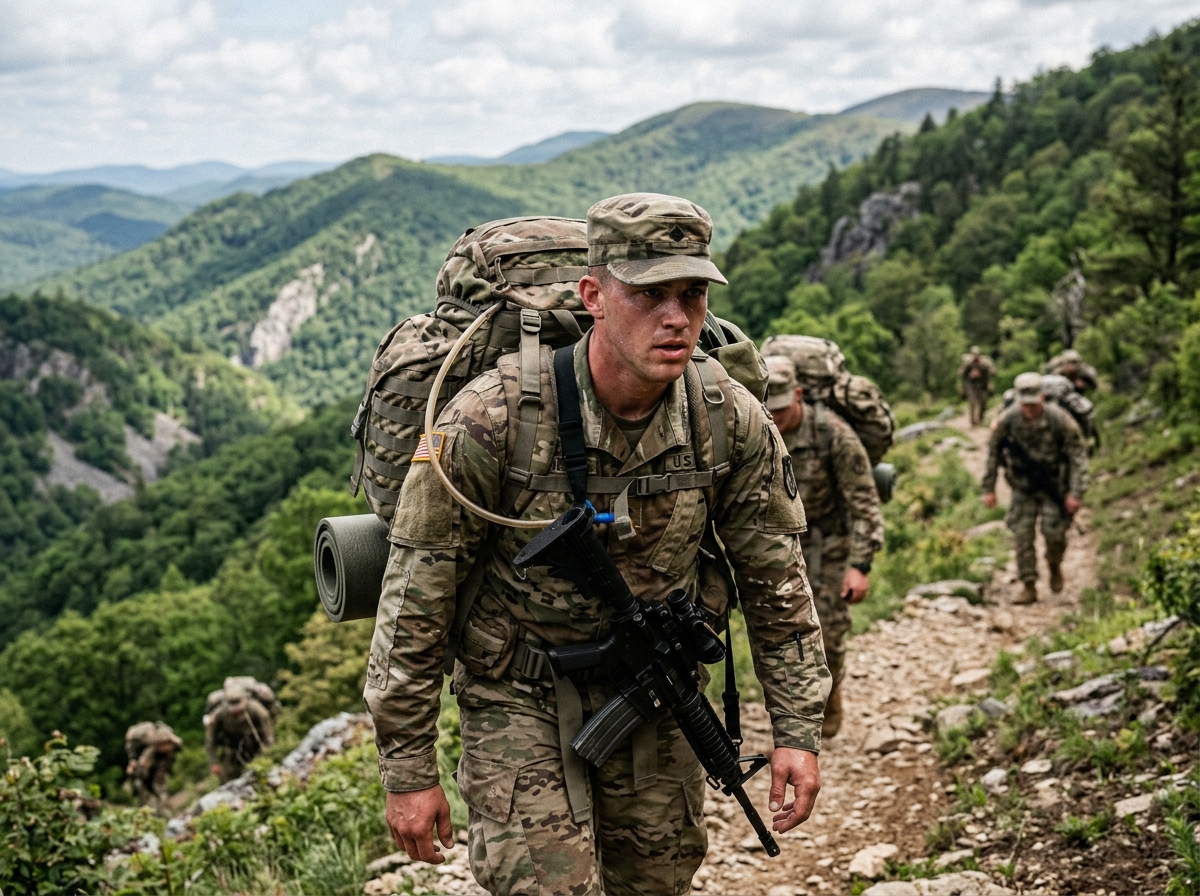
Becoming a Delta operator is not just about being strong; it is about being unbreakable. The selection process is legendary for its difficulty, with an attrition rate that often hovers around 90%. This means that out of 100 elite soldiers who try out, only about 10 will move on to training.
The process begins at Camp Dawson, West Virginia. Candidates are subjected to a month of grueling physical and mental tests designed to find their breaking point. The most famous part of this “crucible” is The Long Walk. This is a 40-mile (64-km) solo march over rugged terrain with a 45-pound (20-kg) rucksack. The catch? The candidates aren’t told the time limit or the exact distance. They are simply told to “keep moving.” This tests their internal drive—do they quit when they are tired, or do they push through the unknown?
Those who pass selection move on to the six-month Operator Training Course (OTC). This isn’t basic training; it’s a masterclass in warfare. OTC covers:
- Advanced Marksmanship: Shooting at moving targets while moving themselves, often using live ammunition in “shoot houses” with “hostages” to build absolute trust.
- Demolitions: Learning how to blow open anything from a wooden door to a reinforced vault.
- Tradecraft: This is where they learn “CIA-style” skills, such as surveillance, dead drops, and how to operate undercover in a city.
- Executive Protection: Training to protect high-ranking officials (like General Norman Schwarzkopf during the Gulf War).
For those interested in the nitty-gritty of the process, the Delta Force Selection Details provide a fascinating look at the history of this program.
Requirements for Joining the Unit
You can’t just walk into a recruiting office and sign up for Delta Force. It is a “invitation-only” or “application-only” unit for those already serving. The typical requirements include:
- Rank: Must be between E-4 and E-8 (enlisted) or O-3 to O-4 (officers).
- Age: Generally at least 21 years old.
- Experience: Must have at least 2.5 years of service remaining on their contract.
- Qualifications: Must be Airborne qualified and have a high ASVAB score (GT 110 or higher).
- Clearance: Must be eligible for a Secret or Top Secret security clearance.
While Delta recruits from all branches—including the Navy, Air Force, and even the Coast Guard—the vast majority of candidates come from the Army’s 75th Ranger Regiment and Special Forces (Green Berets).
Organizational Structure and Elite Versatility
Delta Force is structured to be agile. While the exact numbers are classified, estimates suggest the unit has about 2,000 personnel in total. However, only about 250 to 400 of those are actual “operators” (the shooters). The rest are vital support personnel, including riggers, armorers, intelligence analysts, and communicators.
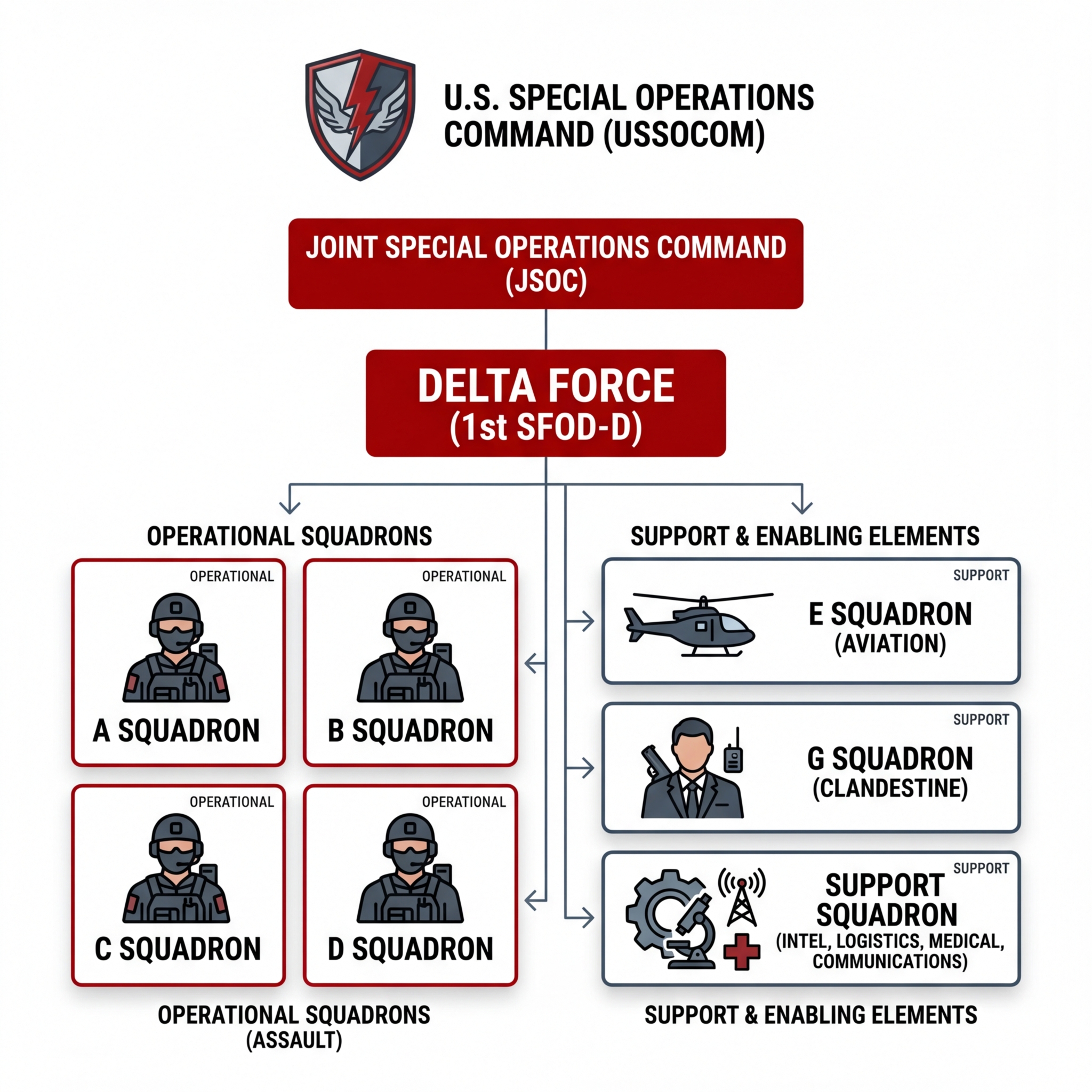
The unit is divided into several squadrons:
- Assault Squadrons (A, B, C, and D): These are the core combat elements. Each squadron is divided into “troops” that specialize in either mountain, water, or air insertions.
- E Squadron (Aviation): A secretive aviation unit (sometimes linked to the “SeaSpray” program) that handles clandestine transport.
- G Squadron (Clandestine): Focused on Advanced Force Operations (AFO). These operators often go in weeks before a mission to scout the area.
- Combat Support Squadron: Contains the “wizards” who handle everything from high-tech communications to specialized medical care.
- CNOS (Computer Network Operations Squadron): The unit’s cyber warfare arm, capable of hacking into enemy networks to track terrorists.
Understanding how Delta fits into the Tier 1 world is easier when you compare them to their peers.
| Feature | Delta Force | Navy SEALs (Team 6) | Green Berets |
|---|---|---|---|
| Branch | Army | Navy | Army |
| Tier | Tier 1 (SMU) | Tier 1 (SMU) | Tier 2 |
| Primary Focus | Counterterrorism/Direct Action | Counterterrorism/Maritime | Unconventional Warfare |
| Recruitment | All Branches | Navy Only | Army Only |
For more comparisons, check out our articles on Army Green Beret vs Navy SEAL and Navy SEAL vs Delta Force.
Distinguishing Delta from Other Tier 1 Units
The biggest distinction between Delta and other units like the Green Berets is their mission. Green Berets are “teachers”—they specialize in training foreign armies to fight. Delta operators are “doers”—they are the ones who go in to finish the fight themselves.
When comparing Delta Force vs SEAL Team 6, the differences are often about the environment. While both are Tier 1 Special Mission Units under JSOC, DEVGRU (SEAL Team 6) has a maritime heritage. Delta, being Army-based, is often the preferred choice for large-scale land-based operations and complex urban hostage rescues. You can learn more about the Navy’s counterpart at SEAL Team 6/DEVGRU.
Legendary Operations: From Mogadishu to Operation Absolute Resolve
Delta Force’s history is written in the headlines of the last 40 years. It was founded in 1977 by Colonel Charles Beckwith, who spent time with the British SAS and realized the U.S. needed a similar direct-action counterterrorism unit.
Their first major mission, Operation Eagle Claw (the 1980 attempt to rescue hostages in Iran), was a tragic failure due to mechanical issues and a desert sandstorm. However, this failure led to the creation of the 160th Special Operations Aviation Regiment (SOAR) and the JSOC structure we have today.
Since then, their record has been one of incredible success:
- Operation Gothic Serpent (1993): The “Black Hawk Down” incident in Somalia. Delta snipers Gary Gordon and Randy Shughart were posthumously awarded the Medal of Honor for defending a crash site against hundreds of enemies.
- Operation Red Dawn (2003): The capture of Saddam Hussein in a “spider hole” in Iraq.
- Operation Kayla Mueller (2019): The raid that led to the death of ISIS leader Abu Bakr al-Baghdadi.
- Operation Absolute Resolve (2026): According to recent reports, Delta Force led a daring raid into Caracas to capture Venezuelan President Nicolás Maduro and his wife, Cilia Flores. The mission involved a surgical strike on a fortified compound and a high-speed extraction by the 160th SOAR.
Weapons and Tactics of the Modern Operator
What exactly do Army Delta Force operators do with their gear? They customize it. Delta is famous for having its own armorers who modify weapons to fit the specific needs of an operator.
- Primary Rifle: The Heckler & Koch HK416 is the standard. It is more reliable than the standard M4 in harsh conditions.
- Sidearm: While they used custom 1911s for years, most have transitioned to the Glock 19 or Glock 17 for their reliability and capacity.
- Night Vision: They use the GPNVG-18, the “four-eyed” goggles that provide a 97-degree field of view, allowing them to see in the dark almost as well as in the daylight.
- The “Gangster Grip”: An in-house modification to the rifle’s vertical grip that integrates a flashlight and pressure switch for better control during room clearing.
Their tactics involve a “multi-layered” approach. A typical raid includes the assault force (the guys going through the door), an inner cordon to stop anyone from escaping, an outer cordon to block reinforcements, and overwatch snipers providing “eyes in the sky.”
Frequently Asked Questions
Is Delta Force the same as the Navy SEALs?
No. While both are elite, Delta is part of the Army and recruits from all branches, whereas the Navy SEALs are part of the Navy. Delta focuses heavily on land-based counterterrorism and hostage rescue, while SEALs have a maritime (sea-based) specialty.
How many Delta Force operators are there?
The exact number is classified, but it is estimated that there are between 300 and 400 combat-trained operators, with a total unit strength of around 2,000 including support staff.
Who founded Delta Force?
Colonel Charles Beckwith founded the unit in 1977. He modeled it after the British Special Air Service (SAS) after serving as an exchange officer with them in the 1960s.
Conclusion
At USMilitary.com, we recognize that Delta Force represents the absolute pinnacle of American military might. They are the “quiet professionals” who take on the missions no one else can, often without ever receiving public credit. From the mountains of Afghanistan to the streets of Caracas, these operators provide a vital insurance policy for national security.
Their unmatched talent, grueling selection process, and relentless pursuit of excellence make them a force without equal—Sine Pari. If you’re interested in how they stack up against other elite units, Compare Army Delta Force vs Navy SEALs to see which path might be right for you or simply to learn more about our nation’s defenders.