
What Sets Army Rangers and Delta Force Operators Apart From Everyone Else

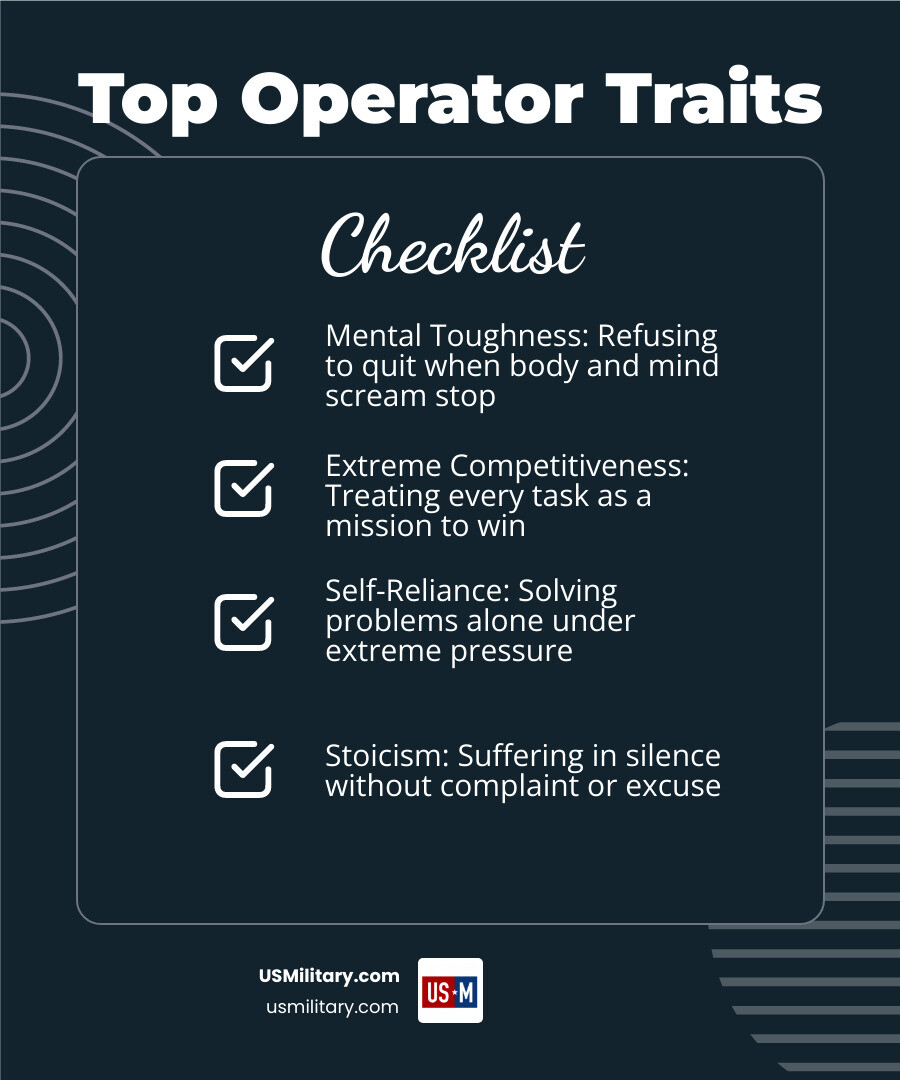
What are the Top 10 Character Traits of Army Rangers and Delta Force Operators comes down to this core list:
- Mental Toughness – refusing to quit when the body and mind say stop
- Extreme Competitiveness – treating every task as a mission to win
- Self-Reliance – solving problems alone under pressure
- Emotional Stability – staying calm and focused in chaos
- Integrity and Accountability – being someone your team can trust with their life
- Resilience – bouncing back harder after failure or injury
- High Functional Intelligence – thinking clearly and deciding fast
- Adaptability – adjusting when the plan falls apart
- Stoicism – suffering in silence without complaint
- Humility – putting the mission and the team before yourself
These aren’t traits you’re simply born with. They’re forged under extreme stress – through sleep deprivation, physical punishment, and relentless pressure to quit.
Out of roughly 120 candidates who attempt Delta Force selection, only 8 finish the full Operator Training Course. Ranger School and Special Forces Assessment and Selection (SFAS) are no different – they’re designed to break people who aren’t built for this level of performance.
As one BUD/S instructor put it to candidates who were cold, exhausted, and ready to ring the bell: “The way out is mental.”
That single idea captures everything about what makes these operators different from conventional soldiers. The body gets you in the door. The mind gets you through.
I’m Larry Fowler, publisher of USMilitary.com and a longtime resource for active military and veterans navigating service-related decisions – including understanding what are the Top 10 Character Traits of Army Rangers and Delta Force Operators and how selection processes are designed to find them. In the sections below, we’ll break down each trait in depth, show how selection identifies them, and explain how you can develop them yourself.
Basic What are the Top 10 Character Traits of Army Rangers and Delta Force Operators terms:
- army ranger vs green beret
- delta special forces
- how to become Ranger
What are the Top 10 Character Traits of Army Rangers and Delta Force Operators?
When we look at the elite tiers of the U.S. Army, specifically the 75th Ranger Regiment and the 1st Special Forces Operational Detachment-Delta (Delta Force), we aren’t just looking at physically fit soldiers. We are looking at a specific psychological profile. While conventional soldiers are trained to follow orders and execute drills, Special Operations Forces (SOF) operators are selected for their ability to thrive when there are no orders, no drills, and no easy answers.
The SOF Truths remind us that “Humans are more important than hardware” and “Quality is better than quantity.” This philosophy guides how the Army identifies the right people. Below is a comparison of how these traits manifest across the two units.
| Trait | Army Ranger Manifestation | Delta Force Manifestation |
|---|---|---|
| Mental Toughness | Grinding through the “Suck” of Ranger School. | Enduring the 40-mile solo “Long Walk.” |
| Competitiveness | Striving to be the “Honor Man” of the class. | Constant evolution of tactical skills. |
| Intelligence | Rapid tactical decision-making in fireteams. | High-level espionage and hostage rescue logic. |
| Adaptability | Mastering the “70% Solution” in the field. | Blending in as a “Quiet Professional” anywhere. |
| Integrity | Absolute accountability to the Ranger Creed. | Unwavering trust in small, high-stakes teams. |
1. Mental Toughness: The Foundation of an Operator
Mental toughness is the bedrock. It is the ability to consistently perform at the upper range of your talent regardless of the circumstances. For an Army Ranger or a Delta operator, this means defeating the “quit voice” that screams in your ear when you haven’t slept in three days and your feet are bleeding.
In SOF, mental toughness isn’t about being a “Rambo” type; it’s about refusing to lose. It’s the realization that while the body may feel like it’s at 100% exhaustion, the mind knows you’ve only used about 40% of your actual capacity. This “40% Rule” is what allows a Ranger to keep pushing through a mountain phase or a Delta candidate to finish a ruck march when their muscles are seizing.
For those interested in how this compares to other branches, you can find More info about Army Ranger School vs Navy Seal Training to see how different elite units test this foundational trait.
2. Extreme Competitiveness and the Drive to Win
You will rarely find a “relaxed” Army Ranger or Delta operator when a task is at hand. These men turn everything into a competition. Whether it’s a morning run, cleaning a weapon, or a friendly game of cards, the drive to be the best is pathological.
This isn’t about ego; it’s about survival. In a high-stakes environment, being “second best” often means mission failure or loss of life. This “Honor Man” mentality drives constant self-improvement. They are hyper-self-critical, often conducting “After Action Reviews” (AARs) on their own performance to find even the smallest margin for improvement. If a Delta operator goes for a “friendly” jog with you, don’t be surprised if it turns into a full-blown sprint by the last mile. They simply cannot help themselves.
3. Self-Reliance and Independent Initiative
While teamwork is vital, an operator must be able to function in total isolation. Delta Force, in particular, looks for the “independent operator.” During selection, candidates are often sent on solo land navigation courses through the mountains of West Virginia with no feedback, no encouragement, and no idea how much further they have to go.
This self-reliance means that when a mission goes sideways and communications are cut, the operator doesn’t freeze. They have the initiative to solve the problem themselves. They believe they can fix anything, from a Humvee engine to a complex tactical dilemma, using only what they have on hand.
To understand how this initiative carries over into leadership roles, check out More info about Beyond The Badge The Life Of An Army Ranger Officer.
How Selection Processes Identify These Elite Traits
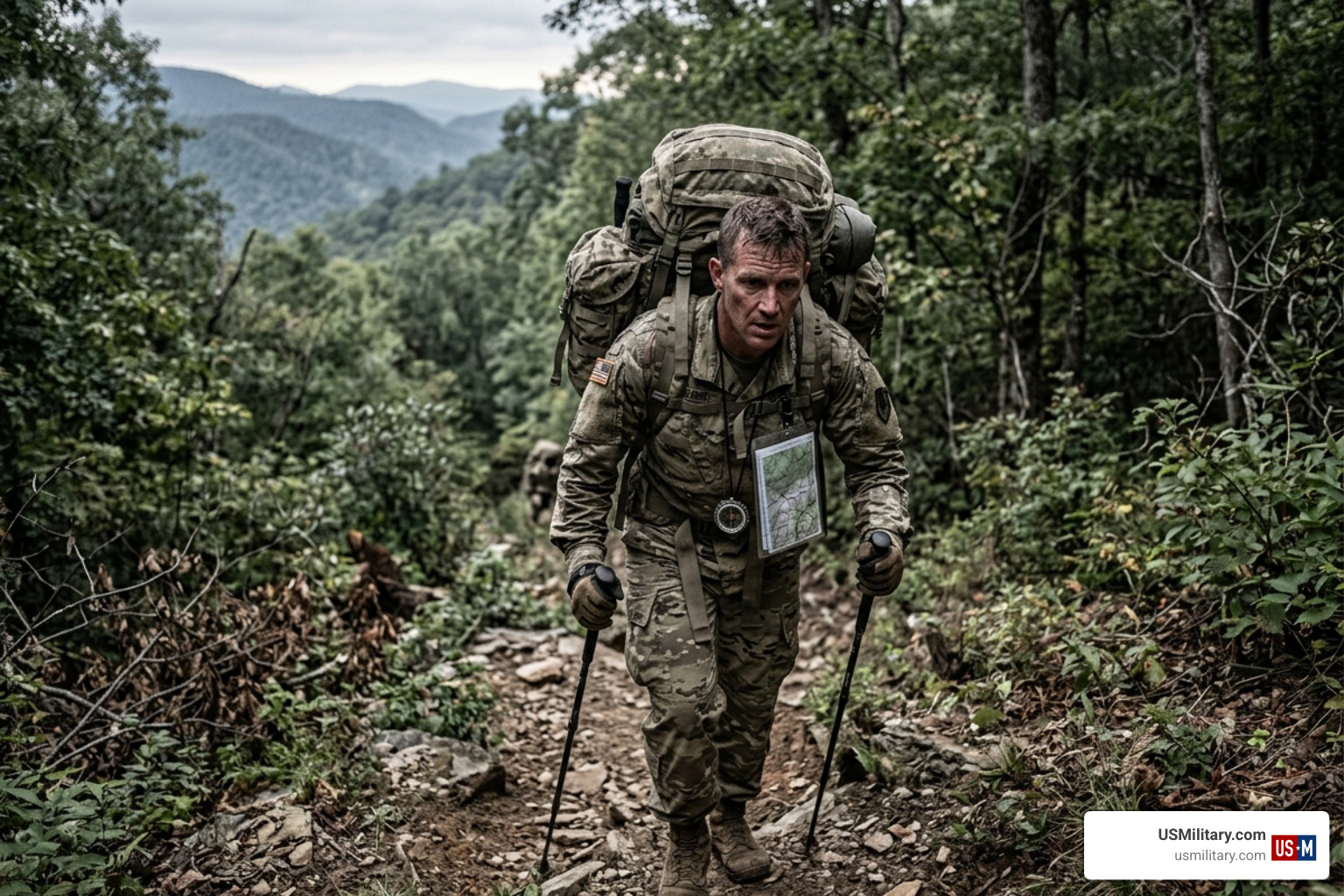
The selection processes for these units are not “training” courses—they are assessment periods. The goal is to strip away the “mask” that people wear in polite society to see who they really are when they are broken.
- Ranger School: A 61-day crucible of small-unit tactics that tests endurance through extreme food and sleep deprivation.
- SFAS (Special Forces Assessment and Selection): Uses 13 specific attributes—including motivation, stability, and influence—to narrow down candidates.
- Delta OTC (Operator Training Course): A six-month program that emphasizes marksmanship, espionage, and hostage rescue, only open to those who have already passed the brutal “Long Walk” selection.
Selection identifies those who are self-disciplined and mature. Interestingly, younger candidates (teenagers) often have higher failure rates because they lack the emotional maturity and “life grit” required to handle constant negative feedback and isolation.
For a deeper dive into the specifics, read More info about Army Delta Force Selection Process.
The Wet Socks Theory and Performance Under Stress
What are the Top Character Traits of Army Rangers and Delta Force Operators revealed by hardship
There is a concept in special operations known as the “Wet Socks Theory.” It suggests that anyone can look like a hero when they are dry, fed, and well-rested. However, a true operator is someone who can still perform at 95% capacity when they are soaking wet, freezing cold, and haven’t eaten in 24 hours.
Hardship reveals the true character traits of an operator. Selection cadre look for the “Grey Man”—the person who doesn’t complain, doesn’t draw unnecessary attention to themselves, but consistently carries their weight (and often the weight of others) when conditions are at their worst. Sleep deprivation is the great equalizer; it removes the ability to “fake” personality traits, leaving only the raw character underneath.
Intelligence and Decisiveness in the Chaos of Combat
Contrary to the “mindless killing machine” stereotype, operators are highly intelligent. Most Delta operators possess high ASVAB GT scores (often 110 or higher). They must master complex tasks like tactical driving, espionage techniques taught by the CIA, and advanced demolitions.
In the chaos of combat, they use the “70% Solution.” This means they don’t wait for a perfect plan. They take the 70% of information they have, make a decisive move, and adapt as they go. This prevents “analysis paralysis” which can be fatal in a gunfight.
Building Unbreakable Bonds Through Integrity and Accountability
In the SOF community, your word is your bond. Integrity isn’t just a moral concept; it’s a functional requirement. If an operator says they have covered a specific sector or prepped a certain piece of equipment, their teammates must trust that statement implicitly.
This leads to “Extreme Ownership.” If a mission fails, an operator doesn’t blame the weather, the intel, or their subordinates. They look in the mirror and ask what they could have done better. This level of accountability builds bonds that are stronger than those found in almost any other profession.
For more on how these team dynamics differ between units, see More info about Green Berets Vs Army Rangers.
Stoicism and the Role of Dark Humor
Why stoicism is among the Top 10 Character Traits of Army Rangers and Delta Force Operators
Stoicism—the ability to suffer in silence—is a hallmark of the quiet professional. Operators don’t vent their frustrations or complain about the “suck.” Instead, they use a “wicked” or dark sense of humor as a psychological pressure relief valve.
Gallows humor allows operators to find levity in the most dire situations. It is a coping mechanism that keeps the mind from spiraling into despair. When things are at their worst, you will often hear an operator crack a joke that would seem horrifying to a civilian, but to the team, it’s the signal that they are still in the fight and haven’t lost their composure.
Applying the Operator Mindset to Civilian Success
You don’t have to be in the 75th Ranger Regiment to use these traits. Many veterans transition into the corporate world and find immense success by applying the same mental frameworks:
- Goal Segmenting: Don’t look at the whole mountain. Just make it to the next meal, the next hour, or the next task.
- Positive Self-Talk: Replace the “inner quitter” with mantras that reinforce your capability.
- Visualization: Mentally rehearse your “mission” (like a big presentation) until the actual event feels like a repeat.
- Arousal Control: Use “Box Breathing” (inhale for 4, hold for 4, exhale for 4, hold for 4) to keep your heart rate down during high-stress meetings.
Understanding the gear and mindset is the first step. You can find More info about Inside The Kit Delta Forces Essential Equipment to see how preparation meets performance.
Frequently Asked Questions about Special Operations Traits
What is the main difference between a Ranger and a Delta operator?
Rangers primarily focus on large-scale direct action, airfield seizures, and special light infantry operations. Delta Force is a “Tier 1” unit focused on precision counterterrorism, hostage rescue, and “black” operations that are often highly classified. Most Delta operators actually start their careers as Rangers or Green Berets.
How high is the dropout rate for Delta Force selection?
The attrition rate is staggering. Typically, out of a class of 120 highly qualified candidates (who are already elite soldiers), only about 12 to 14 will finish the selection hike, and only 8 or so will graduate the full Operator Training Course (OTC).
Can civilians learn mental toughness techniques used by SOF?
Absolutely. Mental toughness is a trainable skill. By practicing “voluntary hardship”—putting yourself in uncomfortable situations like cold showers, difficult workouts, or public speaking—you can build the same “mental calluses” that operators use to thrive in chaos.
Conclusion
At USMilitary.com, we believe that the traits of the “Quiet Professional” are universal. Whether you are serving in the 75th Ranger Regiment, hunting high-value targets in Delta Force, or leading a team in the civilian sector, the refusal to settle for “good enough” is what defines excellence.
These operators are not superheroes; they are ordinary people who have developed an extraordinary level of discipline and resilience. They are lifelong learners who embrace failure as data and never stop striving for the next objective.
If you’re ready to learn more about the different paths to the tip of the spear, Compare Army Delta Force vs Navy SEALs to see which elite unit’s culture and traits resonate most with you.