
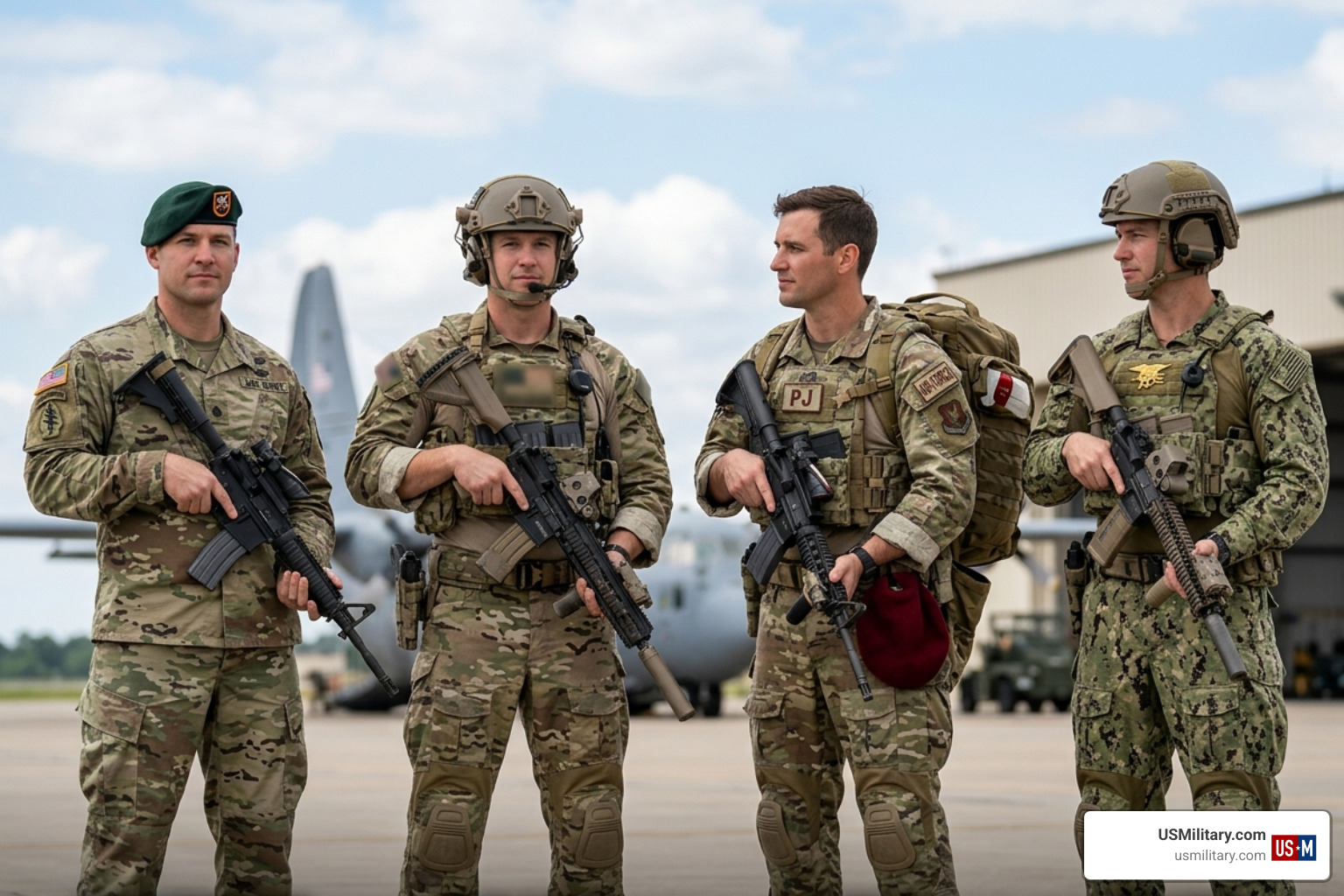
Comparing Army Green Beret, Delta Force, Air Force PJs, Navy SEALs: The Pros and Cons of Each comes down to mission fit, training demands, lifestyle tradeoffs, and career goals. Here’s a quick snapshot:
| Unit | Key Strength | Key Tradeoff |
|---|---|---|
| Army Green Beret | Unconventional warfare, language skills, soldier-diplomat role | Longest training pipeline (12-24 months), ~60% attrition |
| Delta Force | Elite counter-terrorism, surgical precision, Tier 1 status | Requires prior elite service, extreme secrecy, intense psychological demands |
| Air Force PJs | Combat medicine, personnel recovery in any terrain | Highest attrition rate (90%+), small force (~500 airmen) |
| Navy SEALs | Maritime and multi-domain expertise, mission variety | ~75-85% BUD/S attrition, high public profile, frequent deployments |
No single unit is “the best.” Each is built for a specific job — and excels at it.
These are four of the most elite fighting forces on the planet. They share extreme training standards and an unmatched commitment to mission success. But they operate very differently, attract different personalities, and offer very different careers.
Whether you’re considering enlisting, exploring a career change within the military, or just trying to understand how these units compare — this guide breaks it all down clearly.
I’m Larry Fowler, publisher of USMilitary.com, and since 2007, I’ve spent nearly two decades helping active-duty service members and veterans navigate military career decisions — including the high-stakes choices around elite units like those covered in Army Green Beret, Delta Force, Air Force PJs, Navy SEALs: The Pros and Cons of Each. Let’s get into what actually sets these units apart.
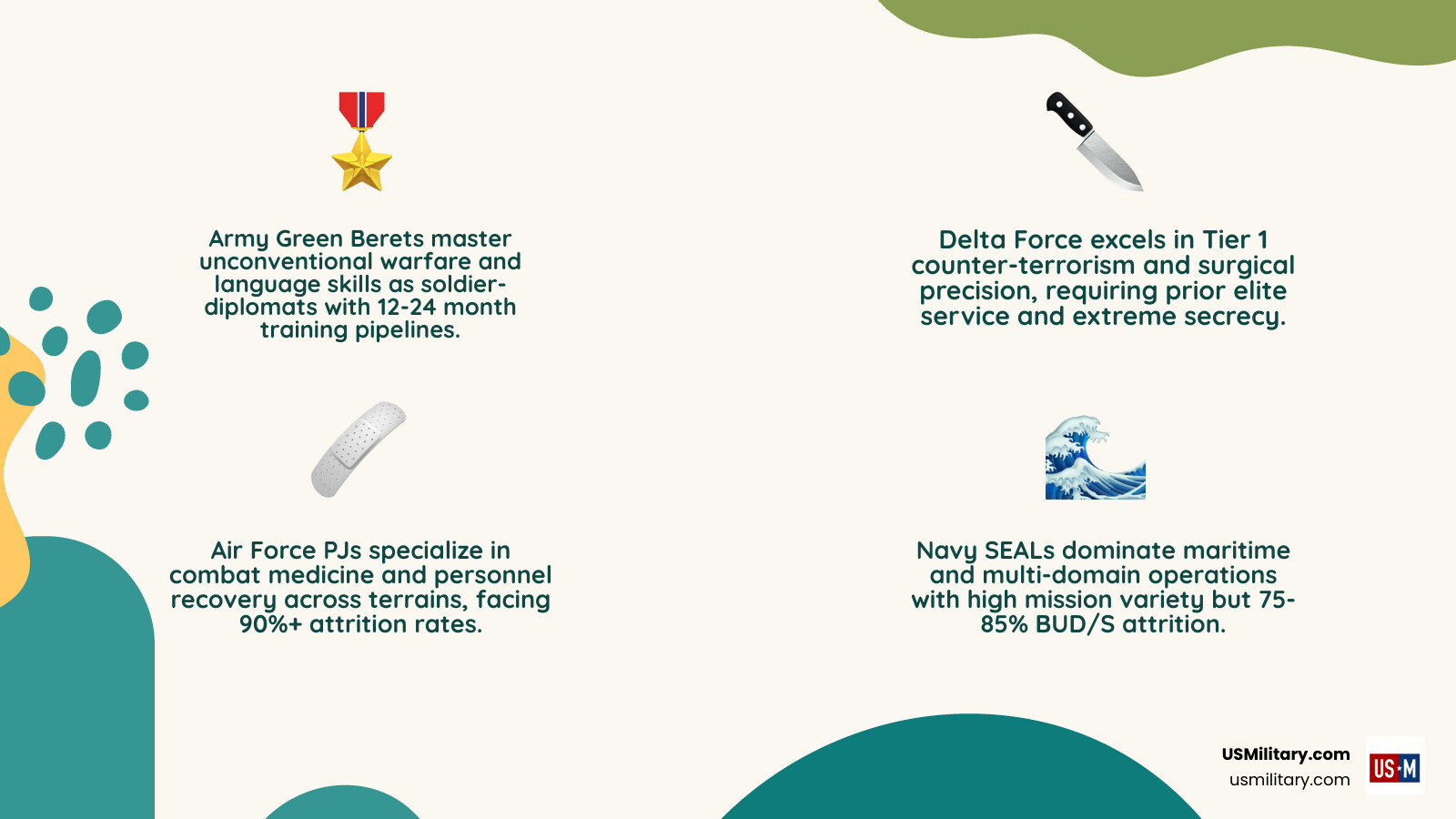
Quick Army Green Beret, Delta Force, Air Force PJs, Navy SEALs: The Pros and Cons of Each definitions:
- DEVGRU requirements
- Pararescue jumper training
- Delta Special Forces
Introduction
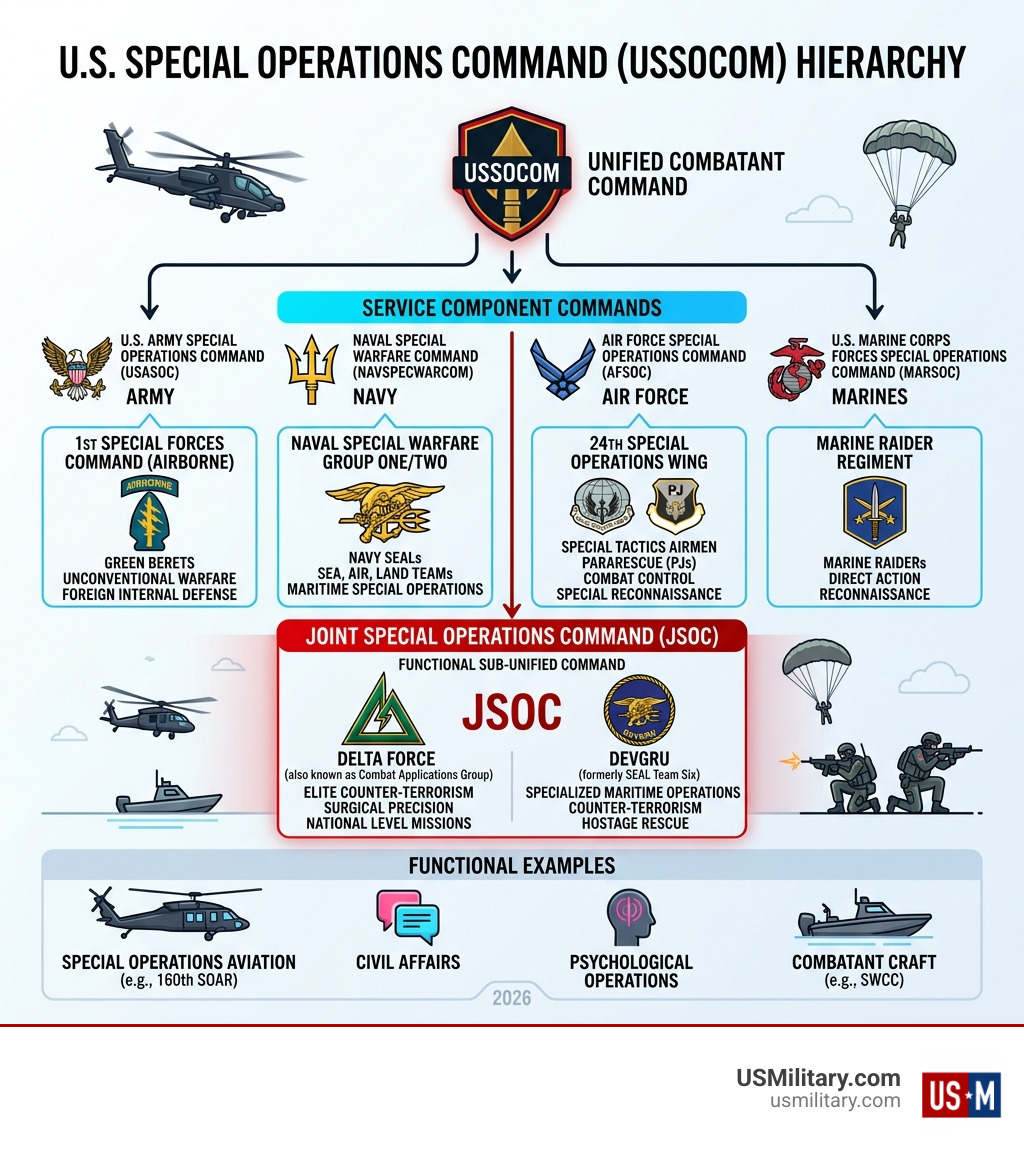
As we look at the landscape of special operations in April 2026, the world remains as complex as ever. The United States maintains its edge through a sophisticated network of elite warriors organized under the U.S. Special Operations Command (SOCOM) and the Joint Special Operations Command (JSOC). These units aren’t just “tougher soldiers”; they are highly specialized tools designed for specific problems.
Understanding the hierarchy is the first step. While all these units fall under the “Special Operations” umbrella, they are divided into “Tiers.” Tier 1 units, such as Delta Force, handle national-level classified missions directed by the President or the Secretary of Defense. Tier 2 units, such as the Green Berets, Navy SEALs, and Air Force PJs, handle a broader range of specialized tasks for their respective branches.
Primary Missions and Roles of Elite Special Operations Forces
To understand the Army Green Beret, Delta Force, Air Force PJs, Navy SEALs: The Pros and Cons of Each, we first have to look at what they actually do on a Tuesday morning in a deployment zone.
| Mission Type | Primary Unit(s) | Focus Area |
|---|---|---|
| Unconventional Warfare | Army Green Berets | Training and leading indigenous forces to overthrow a government or fight an occupier. |
| Direct Action | Navy SEALs, Delta Force | Short-duration strikes, raids, and ambushes to capture or kill targets. |
| Personnel Recovery | Air Force PJs | Rescuing downed pilots or isolated personnel in hostile environments. |
| Counter-Terrorism | Delta Force, Navy SEALs | High-stakes hostage rescue and dismantling terrorist networks. |
| Foreign Internal Defense | Army Green Berets | Teaching a friendly nation’s military how to defend itself. |
While there is significant overlap—especially in modern “gray zone” conflicts—each unit has a “home base” of expertise. For instance, Who Are Navy Seals often focuses on maritime environments, while Green Berets are the masters of the “long game,” spending months or years building relationships with local tribes.
If you are trying to decide between these paths, you might also want to check out Everything You Need To Know About Marines Vs Army Special Forces/ to see how the Marine Raiders fit into this puzzle.
Army Green Beret, Delta Force, Air Force PJs, Navy SEALs: The Pros and Cons of Each
When we weigh the delta force vs. Green Berets vs. Navy Seals, we have to look at the “lifestyle” of the unit.
Tier 1 vs. Tier 2 Status:
- Tier 1 (Delta Force): These units receive the highest level of funding and the most sensitive missions. The pro? You are the “tip of the spear.” The con? You essentially don’t exist to the public, and the pressure is astronomical.
- Tier 2 (Green Berets, SEALs, PJs): These units are more numerous and have a wider mission variety. The pro? More opportunities for different types of deployments. The con? Slightly less specialized funding than Tier 1.
Deployment Frequency:
Special operators deploy often. SEALs might have a high-intensity 6-month rotation followed by intense training, while Green Berets might spend a year in a remote village. The “con” for all is the strain on family life, but the “pro” is a level of team bonding you won’t find anywhere else.
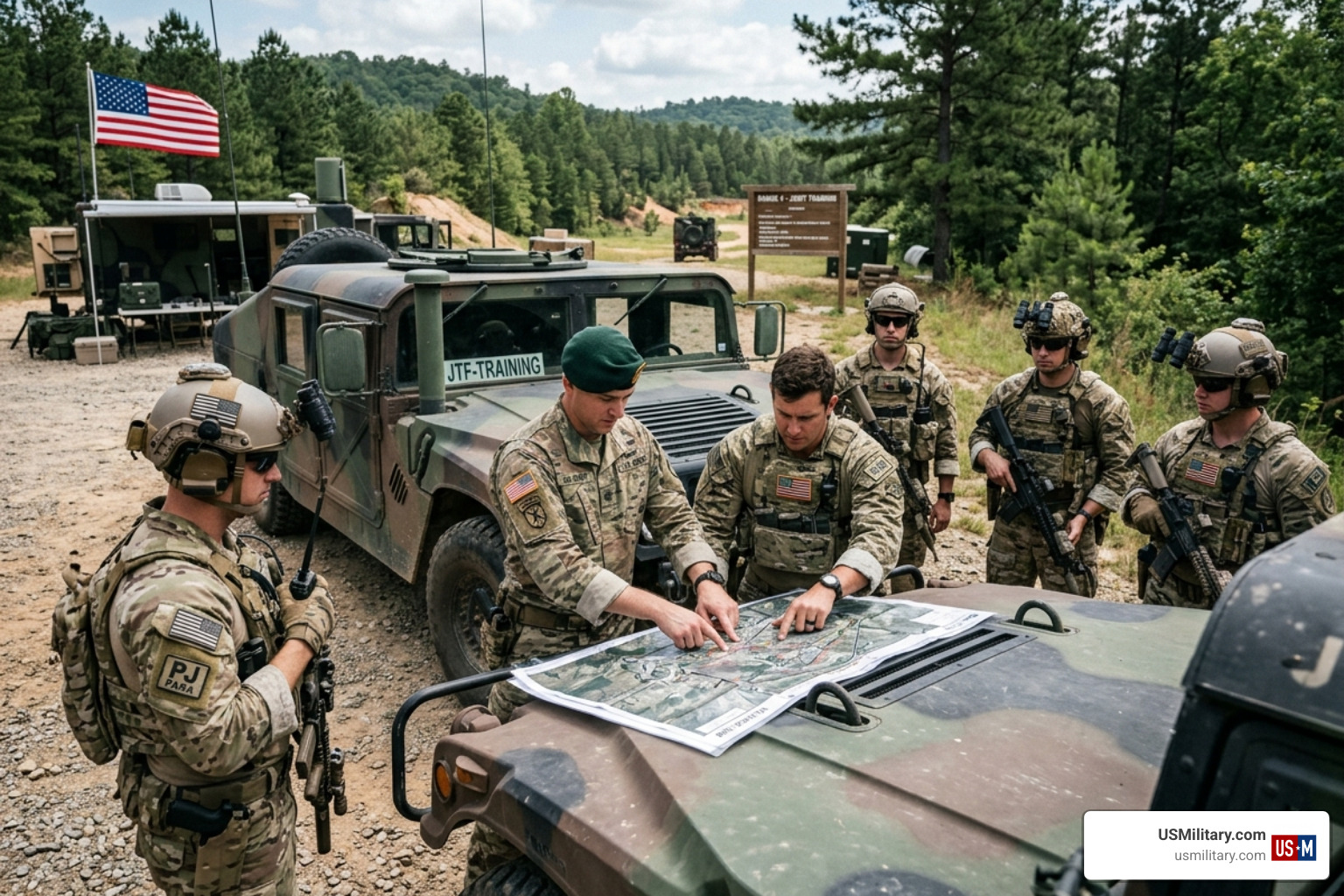
Army Green Beret, Delta Force, Air Force PJs, Navy SEALs: The Pros and Cons of Each – Army Units
The Army provides two of the most distinct flavors of special operations.
Army Green Berets (Special Forces)
The Green Berets are our “soldier-diplomats.” They operate in 12-man teams called an Operational Detachment Alpha (ODA).
- Pros: You become an expert in a foreign language and culture. You have a high degree of autonomy; a small team might be the only U.S. presence in an entire region.
- Cons: The training is incredibly long (often 2 years). You spend more time teaching others how to fight than doing the “door-kicking” yourself.
- Comparison: Many people confuse them with other units, so checking out Green Beret Vs Ranger can help clear up the differences in their mission sets.

Delta Force (1st SFOD-D)
Delta is the Army’s “Special Missions Unit.” They are the masters of surgical precision.
- Pros: Top-tier equipment, the most advanced training in the world, and a focus on high-value target (HVT) extraction.
- Cons: You cannot join Delta off the street. You generally need to be an experienced Ranger or Green Beret first. The secrecy is so high that even your family may not know exactly what you do.
Army Green Beret, Delta Force, Air Force PJs, Navy SEALs: The Pros and Cons of Each – Navy and Air Force Units
The Navy and Air Force bring specialized environmental expertise to the table.
Navy SEALs
The SEALs (Sea, Air, Land) are perhaps the most famous of the group.
- Pros: Masters of maritime operations. If it involves water, ships, or sub-surface infiltration, the SEALs own it. They have a very high public profile, which can lead to great post-service opportunities.
- Cons: That high profile can be a double-edged sword, sometimes leading to internal friction. The training (BUD/S) is famously brutal on the body, leading to high injury rates.
- Requirements: Before you dive in, make sure you meet the Navy Seal Qualifications.
Air Force PJs (Pararescue)
The PJs have the most noble motto in the military: “That Others May Live.”
- Pros: You are a world-class combat medic and a world-class commando. You get to jump, dive, and climb to save lives. It is a high-reward mission emotionally.
- Cons: The training attrition is the highest in the military (often over 90%). You are often an “attachment” to other units rather than operating solely as a PJ team, which can affect team dynamics.
Selection and Training: The Path to the Tab, Trident, and Beret
Training for these units is designed to find your breaking point and see if you can keep going.
Navy SEALs (BUD/S):
The Navy Seal Buds Training Program is legendary for “Hell Week”—5.5 days of continuous training with less than 4 hours of sleep total. The attrition rate stays steady at 75-85%. It’s about water tolerance and mental grit.
Army Green Berets (SFQC):
The “Q-Course” lasts 12 to 24 months. It includes the Special Forces Assessment and Selection (SFAS), which has about a 60% washout rate. It culminates in “Robin Sage,” a massive unconventional warfare exercise. You can explore Army Special Forces Careers to see the specific specialties like weapons, medical, or communications.
Delta Force Selection:
Delta selection is held in the mountains of West Virginia. It’s famous for “The Long Walk”—a 40-mile solo land navigation ruck march. There are no public attrition stats, but it’s known for being psychologically isolating. They want to see if you can perform when no one is watching and no one is cheering.
Air Force PJ Pipeline:
Lasting nearly two years, this is often called “Superman School.” Candidates must pass the “Indoc” (now Assessment and Selection), followed by intense paramedic training and combat tactics. If you can’t handle the “water confidence” drills, you’re out.
Frequently Asked Questions about Special Operations
When people research Army Green Beret, Delta Force, Air Force PJs, Navy SEALs: The Pros and Cons of Each, a few common questions always pop up.
Which unit has the highest training attrition rate?
Statistically, the Air Force Special Tactics (PJs and CCTs) often see attrition rates exceeding 90%. Navy SEAL BUD/S follows closely at 75-85%. While Green Beret selection has a lower attrition rate (around 60%), many candidates are already screened or come from elite backgrounds before they even start.
Can a Navy SEAL join Delta Force?
Yes. While Delta Force is an Army unit, it is a joint-service Special Missions Unit under JSOC. They recruit from all branches. There have been several Navy SEALs and even Air Force personnel who have successfully completed Delta selection, though the vast majority of “operators” come from the 75th Ranger Regiment or the Green Berets.
What is the difference between Tier 1 and Tier 2 units?
As discussed on various platforms like Quora, the “Tier” system is about funding and command.
- Tier 1: Delta Force and SEAL Team 6 (DEVGRU). They answer to JSOC for “national mission” tasks.
- Tier 2: Regular SEAL Teams, Green Berets, and PJs. They handle “theater-level” missions for regional commanders.
Conclusion
Choosing between the Army Green Beret, Delta Force, Air Force PJs, and Navy SEALs: The Pros and Cons of Each is a deeply personal decision. Do you want to be a teacher and a diplomat (Green Beret)? A maritime commando (SEAL)? A life-saver in the heat of battle (PJ)? Or a secretive counter-terrorism specialist (Delta)?
Each path offers incredible career progression and, eventually, a transition into a veteran community that is highly respected in the private sector. As of April 2026, the demand for these skills—both technical and leadership—has never been higher.
If you’re still torn between the two most famous units, we recommend you Compare Army Delta Force vs Navy SEALs or read our deeper dive on Delta Force Vs Seals to see which culture fits your personality best.
At USMilitary.com, we are here to support you from your first day of enlistment to your final VA disability claim. Whether you need information on military loans or guidance on the Navy Seal Qualifications, we are your central hub for the military lifestyle. Stay safe, and aim high.