
What You Need to Know Before You Apply to the Army

If you want to apply to the army, here’s the short version:
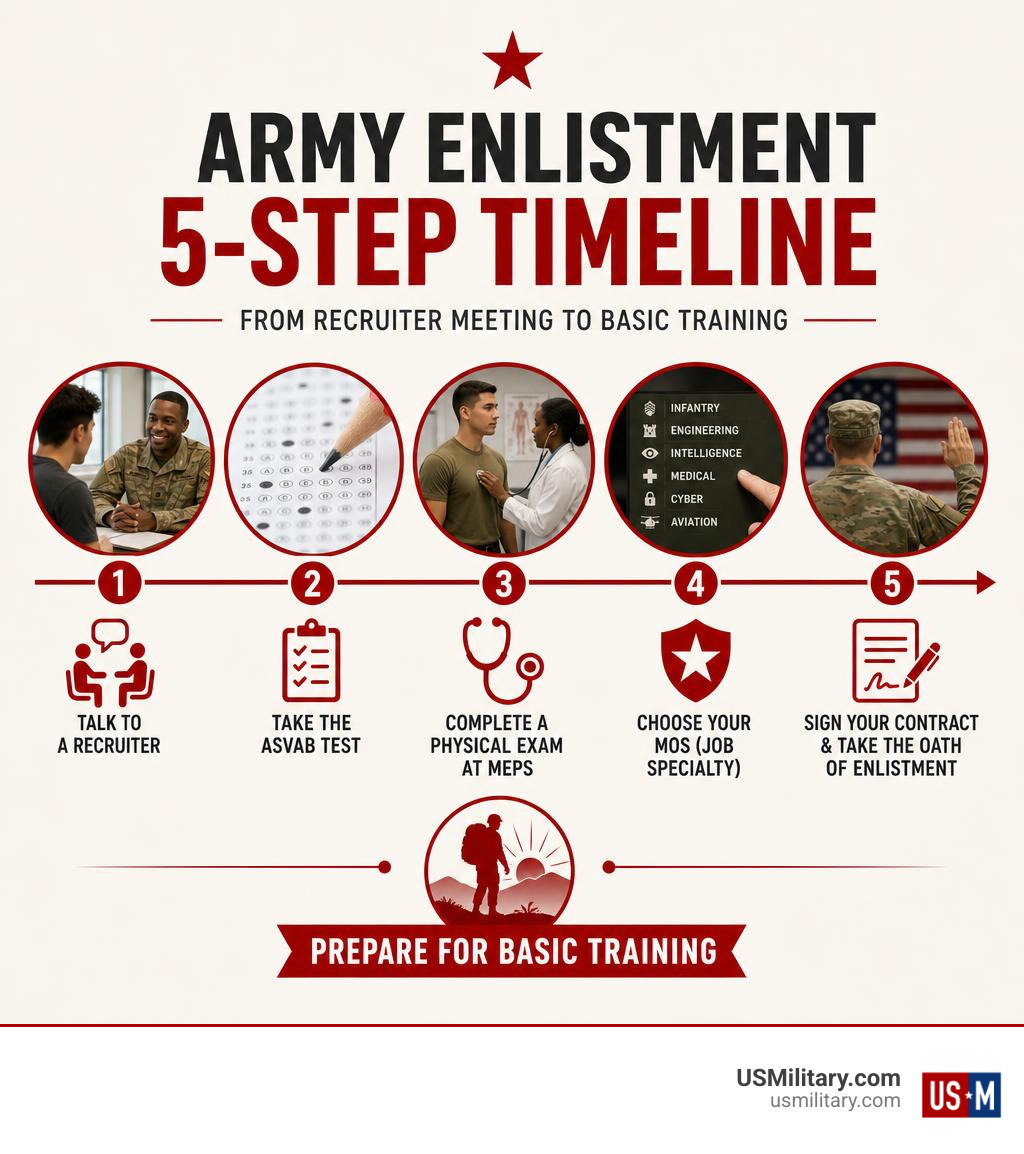
- Talk to a recruiter — find one at goarmy.com or call your local recruiting office
- Take the ASVAB — this test determines which jobs you qualify for
- Complete a physical exam at MEPS — the Military Entrance Processing Station clears you medically
- Choose your Military Occupational Specialty (MOS) — your career field in the Army
- Sign your contract and take the Oath of Enlistment — then prepare for Basic Training
The U.S. Army is the largest branch of the military, with over 450,000 active-duty Soldiers and more than 1 million available across the Reserve and National Guard. It offers more than 200 career paths — from combat roles to healthcare, technology, and law.
But the application process can feel overwhelming. There are eligibility rules, tests, medical exams, and paperwork — and it’s not always clear where to start or how long it takes.
That’s exactly what this guide is for.
I’m Larry Fowler, publisher of USMilitary.com — a network I’ve run since 2007 to help people navigate military service decisions, including how to apply to the Army. Over the years, this platform has connected hundreds of thousands of prospective recruits with the information and recruiters they need.
Easy apply to the army glossary:
- Can I Join The Army?
- requirements to join the army
- Army application process
Understanding Your Options: Enlisted vs. Officer Paths
Before you fill out a single form, you need to decide which path fits your background and career goals. The Army divides its personnel into two primary categories: Enlisted Soldiers and Commissioned Officers. Think of enlisted Soldiers as the highly skilled specialists and “backbone” of the Army, while officers are the managers, planners, and executives who lead them.
Additionally, you must decide how you want to serve. The Army offers three distinct service options:
- Active Duty: This is full-time service. You live on or near a military base, work a full-time military job, and are subject to deployment. Terms typically last between two and six years, and you will receive a regular salary, housing allowances, and comprehensive medical care.
- Army Reserve: This is part-time service designed for those who want to maintain a civilian career or attend college full-time. Reservists typically train one weekend a month and two weeks during the summer. The Army Reserve is a highly flexible force with over one million Soldiers available at any time to support national security needs.
- Army National Guard: The National Guard is unique because it serves a dual state and federal mission. It is the only military branch whose existence is required by the U.S. Constitution. Guard members generally serve part-time, responding to local emergencies (like natural disasters) directed by their state governor, but they can also be federally deployed by the President.
To help you decide between enlisting or pursuing a commission, we’ve put together a quick comparison:
| Feature | Enlisted Path | Officer Path |
|---|---|---|
| Primary Role | Hands-on specialists, technical experts, and execution of missions. | Leadership, planning, management, and operational command. |
| Education Required | High school diploma, GED, or equivalent. | Bachelor’s degree (by the time of commissioning). |
| Training Path | 10 weeks of Basic Combat Training + MOS training (AIT). | ROTC, OCS (12 weeks), West Point, or Direct Commission. |
| Age Limits | 17 to 42 years old. | 17 to under 31 years old (under 27 for West Point). |
| Career Fields | Over 200 technical, combat, and support jobs. | Specialized leadership roles in intelligence, aviation, logistics, etc. |
Who is Eligible to Apply to the Army?
The U.S. Army maintains strict entry standards to ensure every recruit is physically, mentally, and morally prepared for the rigors of service. If you are preparing to apply to the army, you must meet the following baseline requirements:
- Age: Enlisted applicants must be between the ages of 17 and 42. If you are 17, you will need signed parental consent to enlist. Commissioned Officers must be at least 17 but under 31 in the year they are commissioned.
- Citizenship and Residency: You must be a U.S. citizen or a non-citizen legal permanent resident (possessing a valid Green Card, officially known as a U.S. Permanent Resident Card). Non-citizens must also be able to speak, read, and write English fluently.
- Education: A college degree is not required to enlist, but you must have a high school diploma or a GED. That GED holders may face stricter quotas and benefit significantly from having college credits or scoring higher on the entrance exam. For officers, a four-year bachelor’s degree is mandatory by the time of commissioning.
- Physical and Medical Standing: You must pass a comprehensive medical exam and meet height and weight standards. Disqualifying factors include severe chronic medical conditions, major joint issues, or certain mental health histories, though waivers are sometimes available.
- Moral Character: The Army will run a background check. Significant legal issues, felony convictions, or a history of drug abuse can disqualify you.
For a deeper dive into these requirements, you can check out our detailed guide on An Essential Guide to Army Eligibility Requirements or read the official federal guidelines on the Requirements to join the U.S. military – USAGov website.
Commissioned Officer Pathways
If you already have a college degree or plan to earn one, becoming an officer is a highly rewarding route. Officers enter the Army with immediate leadership responsibilities and higher starting pay. There are four primary pathways to earning a commission:
- Army ROTC (Reserve Officers’ Training Corps): Available at more than 1,100 colleges and universities nationwide, ROTC is an elective curriculum you take alongside your regular college classes. It combines leadership training with practical military instruction. ROTC offers highly competitive scholarships that can cover your full tuition, and upon graduation, you commission as a Second Lieutenant.
- The U.S. Military Academy at West Point: This is a prestigious, highly selective four-year federal service academy. Tuition, room, and board are fully funded by the government in exchange for a service commitment after graduation. Applicants must be under 27 years old and obtain a nomination, typically from a member of Congress.
- Officer Candidate School (OCS): If you already hold a bachelor’s degree, OCS is a 12-week intensive training program at Fort Moore, Georgia. It is designed to test your mental and physical limits while teaching you military tactics, ethics, and leadership.
- Direct Commission Program: This pathway is reserved for highly skilled civilian professionals in specialized fields such as medicine, law (the JAG Corps), cyber warfare, engineering, and chaplaincy. Through this program, you can enter the Army at a rank corresponding to your experience — sometimes up to Colonel (O-6). This allows professionals to immediately apply their civilian expertise to national defense. To learn more about this specialized path, visit the United States Army Recruiting Division – Direct Commission Program page.
Step-by-Step Guide: How to Apply to the Army
The actual enlistment process follows a structured sequence designed to evaluate your strengths and place you in a role where you can succeed. Here is how the step-by-step journey unfolds:
- Step 1: Speak with a Recruiter. Your recruiter is your guide, advocate, and main point of contact. They will help you gather your documents, pre-screen your medical history, and schedule your testing.
- Step 2: Take the ASVAB. The Armed Services Vocational Aptitude Battery is the academic gatekeeper of your military career. It measures your strengths in areas like math, science, mechanics, and word comprehension.
- Step 3: Complete a Physical Exam. This takes place at a Military Entrance Processing Station (MEPS), where military doctors will evaluate your physical fitness, vision, hearing, and overall health.
- Step 4: Find Your Career Field. Once your ASVAB scores and medical clearance are finalized, you will sit down with a career counselor at MEPS to choose your Military Occupational Specialty (MOS) from the 200+ available careers.
- Step 5: Sign Your Contract and Swear In. You will review your enlistment agreement, sign the paperwork, and take the Oath of Enlistment. From there, you will enter either the Delayed Entry Program or prepare for immediate shipment to Basic Combat Training.
For a comprehensive walkthrough of this entire sequence, read our article Ready to Serve: The Army Application Process Made Simple.
Online Portals: Where to Apply to the Army
While you will eventually need to meet with a recruiter in person, the modern Army enlistment process begins online. The digital gateway makes it easy to submit your initial interest, track your application, and explore career options from the comfort of home.
- For Enlisting: You can create an account on the “My GoArmy” portal at the official Apply Online: Online Enlistment Process | U.S. Army website. This portal allows you to fill out your initial background questionnaire, upload basic documents, and request to be contacted by a local recruiting office.
- For ROTC Scholarships: High school seniors and college students can apply for ROTC scholarships directly through the same My GoArmy portal by selecting the ROTC application path.
- For the Green to Gold Program: Active-duty enlisted Soldiers who want to earn a college degree and transition to commissioned officers can access the Green to Gold application online to submit their commander recommendations and academic transcripts.
- For Army Law (JAG Corps): If you are a law student or a practicing attorney, the application process is handled separately. You must learn the specific requirements, complete a formal screening interview with an active-duty JAG officer, and submit your application through the dedicated JAG website.
Starting your journey online is simple, and you can learn exactly what to expect by reading The First Step to Joining the Army Starts Here.
Surviving MEPS: Testing, Physicals, and Job Selection
The Military Entrance Processing Station (MEPS) is where your application becomes a reality. It is a joint-service facility where applicants are formally screened. Most applicants spend one to two days at MEPS, with food and lodging paid for by the military.

The ASVAB and Your AFQT Score
Your academic eligibility is determined by the ASVAB. If you take the computerized version (known as the PiCAT or CAT-ASVAB), it typically takes about 1.5 hours. The paper-and-pencil version takes about 3 hours.
The most critical score on the ASVAB is your Armed Forces Qualification Test (AFQT) score, which is calculated from your math and verbal subtests. Enlisted applicants must score a minimum of 31 on the AFQT to qualify for enlistment. Your individual line scores will also dictate which of the 200+ Army careers you are eligible to choose.
The Physical Exam
The medical screening at MEPS is thorough and designed to ensure you can handle the physical demands of military life. You will undergo:
- Vision and hearing tests
- Blood and urine tests (including drug screening)
- Range of motion and joint flexibility tests
- A complete physical examination by a military physician
- A review of your medical history records
Job Selection and the Oath
Once you are cleared medically and academically, you will meet with an Army Guidance Counselor. This is where you negotiate your job contract. The counselor will show you what jobs are currently open based on your ASVAB scores.
After selecting your job, you will sign your contract and stand before the American flag to take the Oath of Enlistment, vowing to support and defend the Constitution of the United States. Most recruits then enter the Delayed Entry Program (DEP), which allows them to return home to finish school or wrap up personal affairs before shipping out to Basic Training, typically within 30 to 45 days.
To prepare yourself mentally for this big day, check out our guide on Joining the Army.
Waivers, Prior Service, and Enlistment Incentives
Not every applicant has a perfect medical record or a flawless background, and the Army understands that. If you have a disqualifying factor, you may still be able to join by securing an official waiver.
Enlistment Waivers
Waivers are evaluated on a case-by-case basis, taking into account the severity of the issue, how much time has passed, and your overall value to the Army.
- Medical Waivers: Common for past surgeries, childhood asthma, or corrective eye procedures.
- Tattoo Waivers: The Army has strict rules regarding tattoos. Ink is generally prohibited on the face, neck, and hands (with exceptions for a single ring tattoo on each hand). Tattoos that are prejudicial, offensive, or extremist are strictly disqualifying, but non-offensive tattoos that violate location rules can sometimes receive a waiver.
- Conduct/Legal Waivers: Minor traffic violations rarely require a waiver, but misdemeanor arrests, juvenile offenses, or major misconduct require a formal review and approval process.
If you are wondering whether a past mistake or medical issue will block your path, read Can I Join the Army? to learn more about how the waiver process works.
Prior Service Applicants
If you have previously served in the Army or another branch of the military, you may be eligible to re-enlist. The Army values your experience, but your re-entry will depend on your Reentry Eligibility (RE) code listed on your DD Form 214, your physical fitness, and current prior-service recruiting business rules. Prior service applicants must meet specific age and physical standards, and their entry pay grade will be determined by their previous rank and time in service.
Enlistment Incentives and College Partnerships
To attract top-tier talent, the Army offers a variety of lucrative incentives:
- Enlistment Bonuses: Depending on your chosen MOS, test scores, and shipping date, you may qualify for enlistment bonuses of up to $50,000.
- Education Benefits: In addition to the Post-9/11 GI Bill, which covers college tuition, housing, and books, the Army offers Tuition Assistance to pay for college classes while you are on active duty.
- The Concurrent Admissions Program (ConAP): This is a unique partnership between the Army Recruiting Command and over 1,900 accredited colleges across the United States. ConAP links Future Soldiers to a college at the time of enlistment, allowing them to earn college credits for their military training and plan their post-service education from day one.
Frequently Asked Questions About Joining the Army
How long does the Army enlistment process take?
The timeline varies from person to person. On average, the time from your very first meeting with a recruiter to the day you swear in is about 30 to 45 days. However, if you require medical waivers or background investigations, it can take several months. Once you swear in and enter the Delayed Entry Program, your ship date to Basic Training will depend on when your chosen MOS training class begins.
Do I need to pass a physical fitness test before enlisting?
No, you do not have to pass the official Army Combat Fitness Test (ACFT) before you enlist. However, you must meet the Army’s height and weight standards at MEPS. You will be required to pass the ACFT during Basic Combat Training and periodically throughout your military career (twice a year for active-duty, once a year for Reserve and National Guard). Keeping yourself in good physical shape before shipping out will make your transition infinitely easier!
Can non-citizens apply to join the U.S. Army?
Yes. If you are not a U.S. citizen, you can still apply to enlist if you are a legal permanent resident holding a valid Green Card. You must also live in the United States, speak, read, and write English fluently, and pass the same medical, moral, and academic screenings as U.S. citizens. Non-citizens are not eligible to become commissioned officers or hold jobs that require a security clearance.
Conclusion

Taking the first step to apply to the army is a major life decision, but it doesn’t have to be overwhelming. By understanding your options, gathering your documents early, and working closely with an experienced recruiter, you can navigate the enlistment pipeline with confidence.
At USMilitary.com, we are dedicated to providing clear, unbiased guidance for service members, veterans, and prospective recruits. Whether you want to compare career paths, understand your future VA benefits, or find your local recruiting office, we are here to support you at every stage of your military journey.
Ready to take the leap? Head over to our comprehensive checklist on the requirements to join the Army to make sure you have everything you need to start your application today!