
What Are Army Reserve Benefits? A Quick Overview
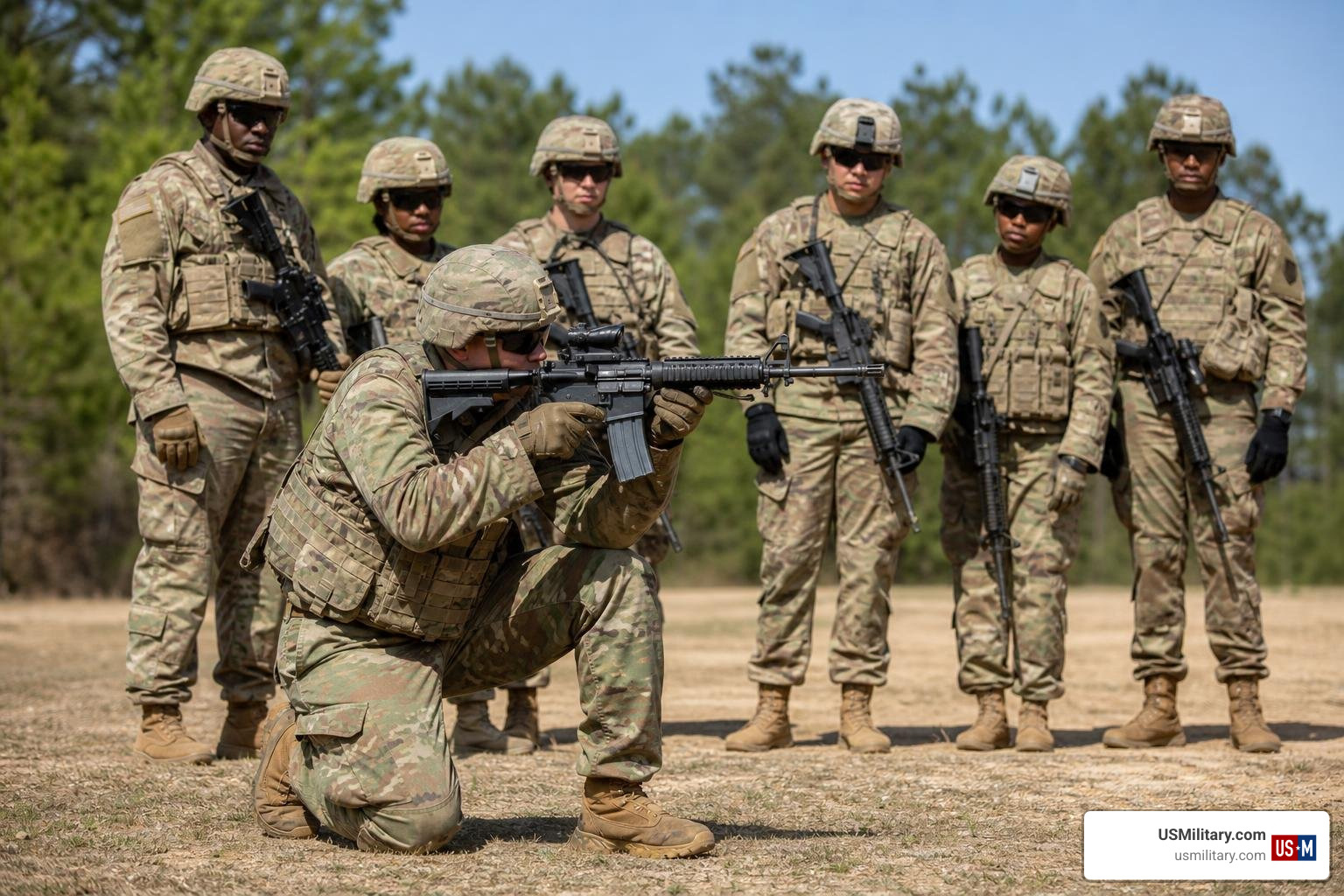
Army Reserve benefits give part-time service members access to many of the same financial, educational, and healthcare perks as full-time active duty soldiers — without requiring you to leave your civilian career or community.
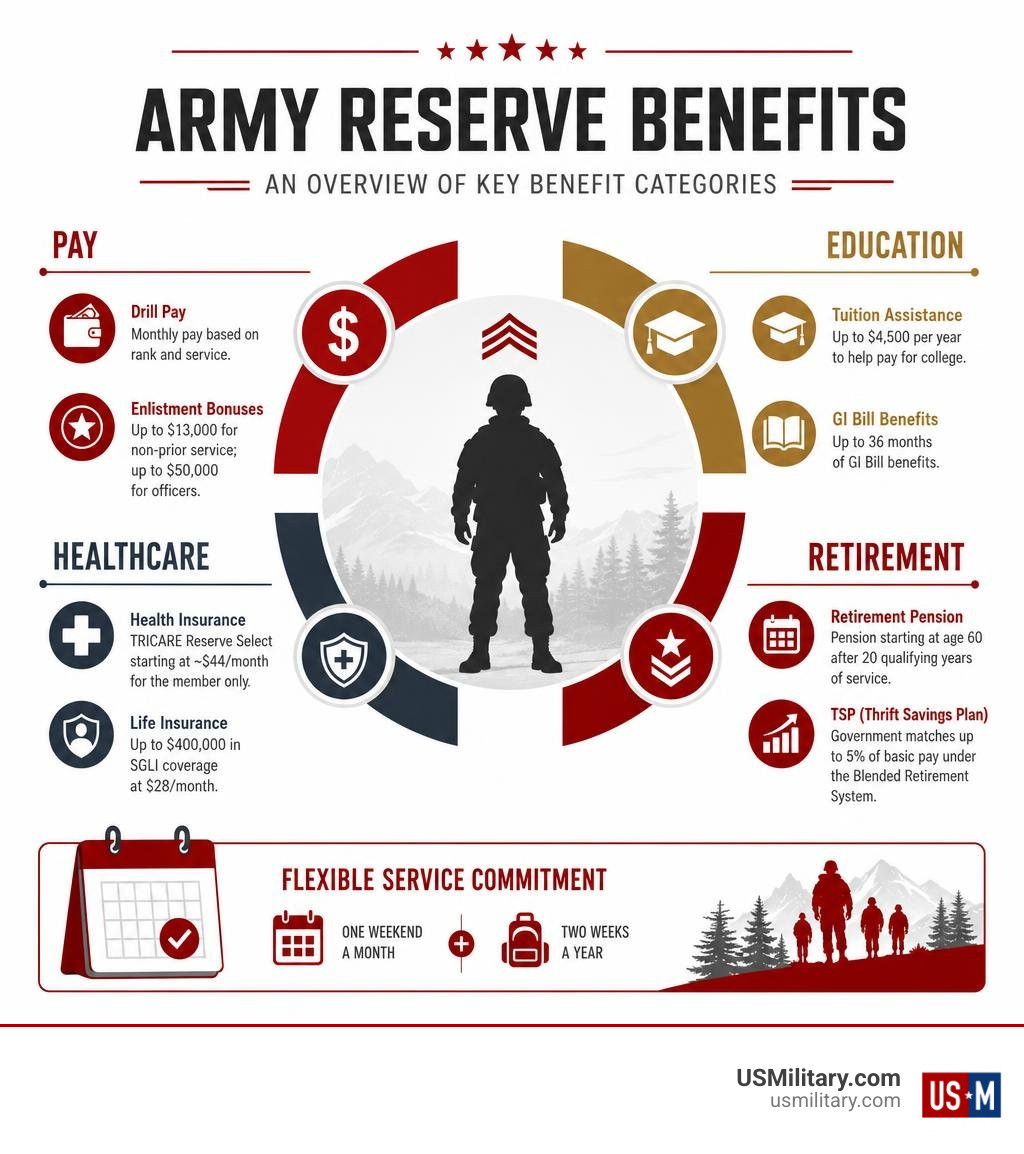
Here is a quick summary of the core benefits available to Army Reserve soldiers:
| Benefit Category | What You Get |
|---|---|
| Drill Pay | Monthly pay based on rank and years of service |
| Enlistment Bonuses | Up to $13,000 for non-prior service; up to $50,000 for officers |
| Education | Up to $4,500/year in Tuition Assistance; up to 36 months of GI Bill benefits |
| Student Loan Repayment | Up to $50,000 for qualifying specialties |
| Health Insurance | TRICARE Reserve Select starting at ~$44/month for the member only |
| Life Insurance | Up to $400,000 in SGLI coverage at $28/month |
| VA Home Loan | No down payment required after 6 years of qualifying service |
| Retirement | Pension starting at age 60 after 20 qualifying years of service |
| TSP (Thrift Savings Plan) | Government matches up to 5% of basic pay under the Blended Retirement System |
The standard service commitment is just one weekend a month and two weeks a year — making it possible to serve your country while holding a civilian job, raising a family, or finishing a degree.
I’m Larry Fowler, publisher of the USMilitary.com Network since 2007, and I’ve spent nearly two decades helping service members and veterans navigate army reserve benefits, VA disability trends, and military career decisions. In this guide, I’ll break down every major benefit category so you can make a fully informed decision about Reserve service.
Service Commitment, Paths, and Army Reserve Benefits
Serving in the United States Army Reserve is often called “the best of both worlds.” It allows you to build a civilian career or attend college full-time while serving your country part-time. But what does that actually look like on a calendar?
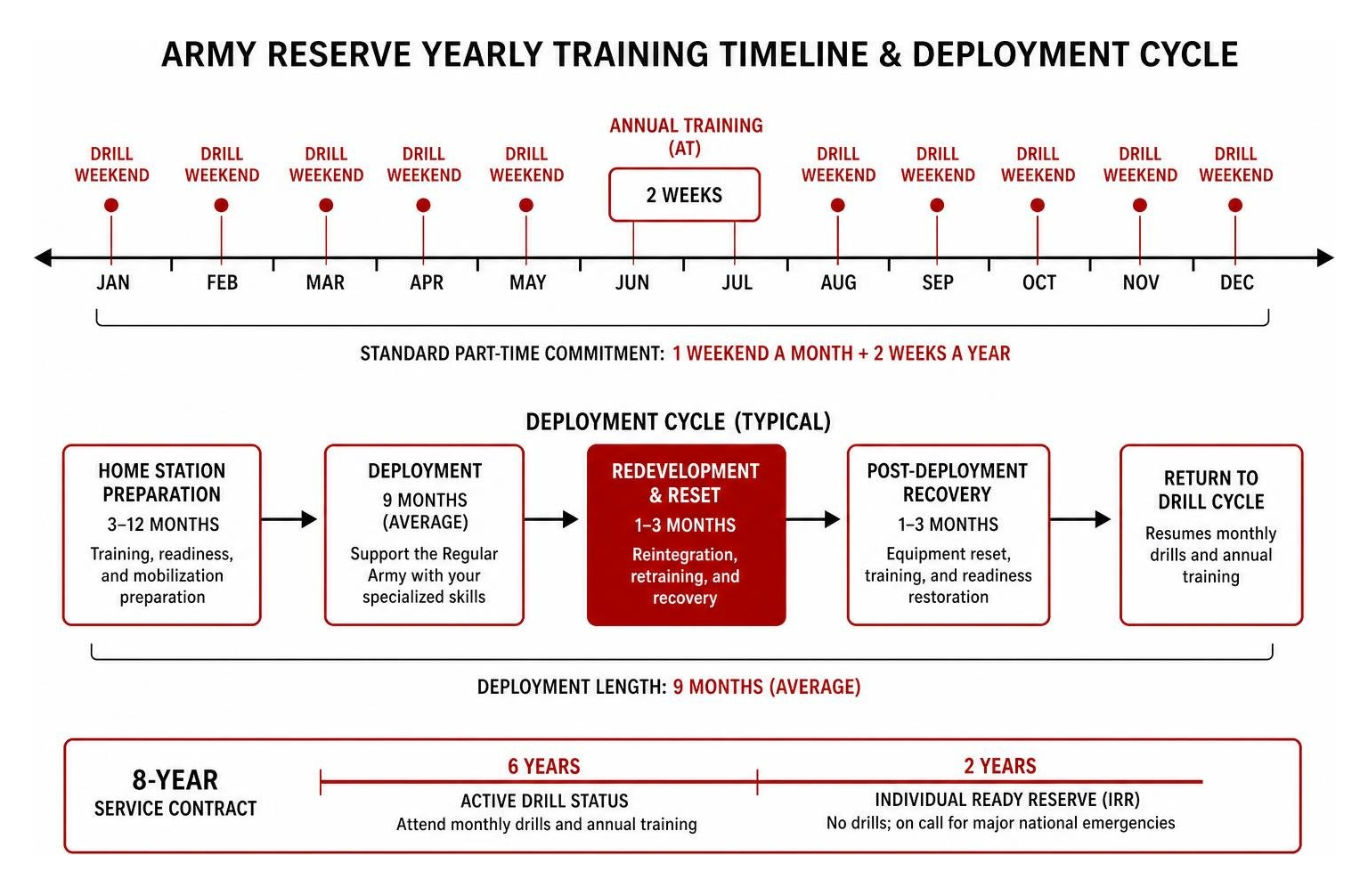
The standard part-time commitment consists of:
- One weekend a month (referred to as “drill” or Inactive Duty Training).
- Two weeks a year of Annual Training (AT), where your unit mobilizes for larger-scale exercises.
While deployments can happen, they are highly structured and predictable in the Army Reserve compared to other components. The average deployment length to a combat region is nine months, during which soldiers support the Regular Army with their specific professional expertise.
When you sign up, the standard initial contract spans a total of eight years. However, you do not have to spend all eight years actively drilling. Many contracts allow you to serve six years as an active drilling member and the final two years in the Individual Ready Reserve (IRR), where you do not attend monthly drills but remain on call for major national emergencies.
If you are trying to figure out how to balance these requirements with your civilian job or college schedule, check out our guide on How to Apply for the Army Reserves Balancing Civilian Life and Service.
Enlisted vs. Commissioned Officer Paths
When you join the Army Reserve, you must choose between two distinct career paths: Enlisted Soldier or Commissioned Officer.
- Enlisted Soldiers are the doers. They specialize in hands-on, highly technical job skills (known as Military Occupational Specialties, or MOS). Enlisted recruits must complete Basic Combat Training (BCT) followed by Advanced Individual Training (AIT) to learn their specific job.
- Commissioned Officers are the managers and leaders. They plan missions, lead units, and make critical decisions. Officers do not go through standard enlistment; instead, they must complete the Basic Officer Leadership Course (BOLC) after commissioning through ROTC, Officer Candidate School (OCS), or direct commissioning (for professionals like doctors, lawyers, and chaplains).
Age limits and entry requirements differ for both paths. If you have prior military service and are looking to return as an officer, you will want to read about Your Path to Officer Age Limits for Prior Service in the Army Reserve. If you are a civilian looking to join later in life, don’t worry—the military has become much more flexible. You can read the details in Can You Join the Army Reserve After 35 The Age Breakdown.
Drill Pay, Bonuses, and Financial Incentives
Let’s talk about the money. How does part-time pay work?
Unlike active duty soldiers who get paid twice a month, drilling Reservists receive “drill pay” once a month. This pay is calculated based on your military rank and years of service. A standard drill weekend consists of four distinct “drill periods” (each period is a half-day of work). That means for a single two-day weekend, you receive four days of active duty base pay!
To see exactly how much you can make based on your rank, check out the Military Pay Chart 2026.
On top of your monthly drill pay, the Army Reserve offers substantial enlistment and affiliation bonuses to attract and retain talent:
- Non-Prior Service Enlistment Bonus: New recruits enlisting for a six-year term in a specified job skill can qualify for a bonus or combination of bonuses up to $13,000.
- Civilian Skill Enlistment Bonus: If you already possess a high-demand, technical civilian skill that aligns with an Army Reserve need, you could secure a bonus of up to $20,000.
- Prior Service Enlistment Bonus: Formerly serving military members who agree to join the Reserve for a three- or six-year term may qualify for up to $10,000.
- Enlisted Affiliation Bonus: Soldiers transitioning directly from active duty to the Reserve can earn up to $20,000.
- Officer/Warrant Officer Accession Bonus: Officers who accept a commission in a high-demand specialty and commit to a minimum four-year term can receive up to $50,000 (capped at $15,000 paid out annually).
You can explore these financial incentives further through the Active Duty Bonuses For Service Members | The Official Army Benefits Website .
Education, Tuition Assistance, and Financial Incentives

One of the most popular reasons people join the Army Reserve is to pay for higher education without the burden of student loans. The Army Reserve offers several programs that allow you to earn your degree while you serve close to home.
First, let’s look at the Tuition Assistance (TA) Program. The Army Reserve provides up to $4,500 per fiscal year to cover 100% of your tuition costs at approved institutions, capped at $250 per credit hour. To qualify for this benefit, soldiers must complete the mandatory ArmyIgnitED 101 training and upload their Career Path Decide Assessment Report directly to the ArmyIgnitED platform.
To explore all the academic resources and pathways available to you, visit the official Educational Benefits – Army Reserve page.
Maximizing Your Army Reserve Benefits Through Education
Beyond standard Tuition Assistance, the Army Reserve unlocks powerful GI Bill programs:
- Montgomery GI Bill Selected Reserve (MGIB-SR): If you enlist for a six-year obligation in the Selected Reserve, you can receive up to 36 months of education benefits. This program pays up to $356 per month directly to full-time students to help cover living expenses and books.
- Army Reserve MGIB “Kicker”: If you enlist in a high-priority job specialty, the Army Reserve may tack on an additional “Kicker” of up to $350 per month, adding up to $12,600 on top of your standard MGIB-SR payments.
- Post-9/11 GI Bill: If you are mobilized or serve on active duty for at least 90 aggregate days (post-September 11, 2001), you qualify for a percentage of the Post-9/11 GI Bill. This program pays up to 100% of public school tuition directly to the university, provides a monthly housing allowance, and offers a yearly book stipend.
- Reserve Education Assistance Program (REAP): This program provides nearly $40,000 in educational benefits to Reserve soldiers who were called to active duty for at least 90 consecutive days in support of a contingency operation.
Student Loan Repayment and Scholarships
If you already have college debt, the Student Loan Repayment Program (SLRP) can be a lifesaver. If you enlist in the Army Reserve for a six-year term in a qualifying specialty, the military will pay up to $50,000 directly to your lenders to wipe out your student loans.
For future officers, the Minuteman Campaign under the Guaranteed Reserve Forces Duty (GRFD) scholarship is an incredible deal. These scholarships cover either 100% of college tuition and fees or $10,000 per year for room and board for up to four years. Recipients also receive a $1,200 annual book allowance and a monthly ROTC stipend of $350 to $500, all while participating in the Simultaneous Membership Program (SMP), which lets you drill with a Reserve unit as an officer cadet.
Additionally, the Concurrent Admissions Program (ConAP) partners with over 1,800 civilian colleges and universities. ConAP helps transition military training into college credits, making it much easier to earn your degree quickly.
Healthcare, VA Home Loans, and Retirement Systems

When you look at the total value of army reserve benefits, healthcare savings and home-buying assistance often save soldiers more money than their actual drill pay. Let’s look at how the military protects your health and your wallet.
Health and Dental Insurance Options
Finding affordable healthcare in the civilian world can be incredibly stressful. Fortunately, drilling Reservists have access to TRICARE Reserve Select (TRS), which is widely considered one of the best health insurance values in the United States.
Unlike active duty members who receive TRICARE Prime at no cost, Reservists pay a low monthly premium for TRS. For individual coverage, the monthly premium is just $44.17. For a member and their family, the premium is $228.27 (based on standard baseline rates). Compared to civilian employer-provided plans, which can easily cost over $1,000 a month for a family, TRS can save you thousands of dollars every year.
For life insurance, the Servicemembers’ Group Life Insurance (SGLI) program automatically provides up to $400,000 in term life insurance coverage for just $28 per month (calculated at a rate of 7 cents per $1,000 of coverage). You can also secure Family SGLI (FSGLI) for your spouse and children at highly competitive rates.
VA Home Loan Eligibility for Reservists
The VA Home Loan is one of the most powerful wealth-building tools in America. It allows you to buy a home with $0 down payment, no private mortgage insurance (PMI), and highly competitive interest rates.
To qualify for a VA Home Loan as an Army Reserve soldier, you must meet one of the following service requirements:
- Complete 6 years of honorable service in the Selected Reserve.
- Serve 90 days of active duty (Title 10) during a wartime period.
- Serve 181 days of active duty during a peacetime period.
Once you meet these criteria, you can apply for your Certificate of Eligibility (COE) through the VA and start shopping for a home.
Retirement Systems and the Blended Retirement System (BRS)
If you stick with the Army Reserve for the long haul, you can earn a lifetime retirement pension. All service members joining on or after January 1, 2018, are automatically enrolled in the Blended Retirement System (BRS).
The BRS is a fantastic deal because it combines a traditional pension with a modern 401(k)-style investment plan:
- The Pension (Defined Benefit): Once you complete 20 years of qualifying service, you will receive a lifetime monthly pension. Your pension is calculated by taking your total accumulated retirement points, dividing them by 360 to get your “years of equivalent active service,” multiplying that by 2%, and multiplying that by the average of your highest 36 months of basic pay. Your pension payments typically begin when you reach age 60.
- Thrift Savings Plan (TSP) Matching: The DoD automatically contributes 1% of your basic pay to your TSP after 60 days of service. Once you hit two years of service, the government will match your personal contributions up to an additional 4%. That means you can get a total of 5% free matching money deposited into your retirement account.
- Continuation Pay: Between your 7th and 12th year of service, you are eligible for a one-time, mid-career cash bonus (Continuation Pay) in exchange for an additional four-year service commitment.
For a deeper dive into the math behind reserve pensions, read A Complete Guide to Military Reserve Pension Rules and visit the Blended Retirement System For Soldiers | The Official Army Benefits Website .
Comparing Army Reserve Benefits to Active Duty and National Guard
How do army reserve benefits stack up against other service branches? The biggest difference comes down to Title 10 vs. Title 32 service. The Army Reserve is a federal force (Title 10), meaning you report directly to the President and the federal government. The National Guard is a state-based force (Title 32) that reports to their state’s Governor unless federally mobilized.
| Feature | Active Duty | Army Reserve | National Guard |
|---|---|---|---|
| Service Status | Full-Time | Part-Time (Federal) | Part-Time (State/Federal) |
| Primary Authority | Title 10 (Federal) | Title 10 (Federal) | Title 32 (State Control) |
| Healthcare | TRICARE Prime ($0 cost) | TRICARE Reserve Select (Low Premium) | TRICARE Reserve Select (Low Premium) |
| State Tuition Perks | No | No (Federal TA Only) | Yes (Many states offer 100% free state college tuition) |
| Retirement Start | Immediately upon retirement | Age 60 (Usually) | Age 60 (Usually) |
You can compare how other branches structure their part-time benefits by reading about Air Force Reserve Benefits – U.S. Air Force or looking at U.S. Navy Reserve Pay & Benefits | Navy.com .
Career Development, Transition Support, and Disability Compensation
The Army Reserve actively helps you succeed in your civilian career. Programs like the Private Public Partnership (P3O) and the Partnership for Your Success (PaYS) connect soldiers directly with civilian employers who value military leadership, teamwork, and technical skills.
Additionally, Army Community Service (ACS) centers provide resume-writing workshops, interview preparation, and tips on how to translate your military accomplishments into terms civilian hiring managers understand.
If you are injured during your service, you are also protected. Veterans Disability Compensation is a monthly, tax-free financial benefit paid to veterans who are at least 10% disabled due to an injury or illness that occurred or was aggravated during military service.
Crucially, drilling Reservists are covered for injuries, heart attacks, or strokes that occur during inactive duty training (weekend drill), not just active duty deployments. To understand the full scope of these protections, check out our guide on the Benefits of Joining the Military and the official Veterans Disability Compensation For Service Members | The Official Army Benefits Website .
Frequently Asked Questions About Army Reserve Benefits
What is the typical time commitment for the Army Reserve?
The minimum standard commitment is one weekend a month and two weeks a year for annual training. Your initial service contract is typically eight years, though many contracts allow you to spend the final two years in the Individual Ready Reserve (IRR) rather than actively drilling.
Can I receive VA disability compensation for injuries sustained during weekend drill?
Yes. Unlike active duty where any disease or illness is covered, injuries sustained during inactive duty training (weekend drill) must result from an injury, stroke, or heart attack that occurred in the line of duty. This compensation is completely tax-free.
How does the Blended Retirement System work for Reservists?
Under the BRS, your pension is calculated using your accumulated retirement points (divided by 360) multiplied by 2% and your highest 36 months of basic pay. The BRS also includes a 401(k)-style TSP component where the government matches up to 5% of your basic pay. You can read more about this on the Retired Pay For Soldiers | The Official Army Benefits Website .
Conclusion
The army reserve benefits program offers an unmatched pathway to build a secure financial future, earn a debt-free college degree, and protect your family with top-tier health insurance—all while maintaining your civilian lifestyle.
Whether you want to buy your first home with a VA loan, transition to a high-paying civilian career, or build a robust retirement portfolio, the Army Reserve gives you the tools to succeed.
At USMilitary.com, we are dedicated to helping you make the most of your military journey. For more expert guides, career comparisons, and financial resources, explore our comprehensive list of the Benefits of Joining the Military today.