
Military Hardship Grants Can Provide Fast, Non-Repayable Relief

Military hardship grants can help eligible service members, military families, retirees, and in some cases veterans pay urgent essential bills after an unexpected crisis. Unlike a loan, a grant generally does not have to be repaid.
Quick answer:
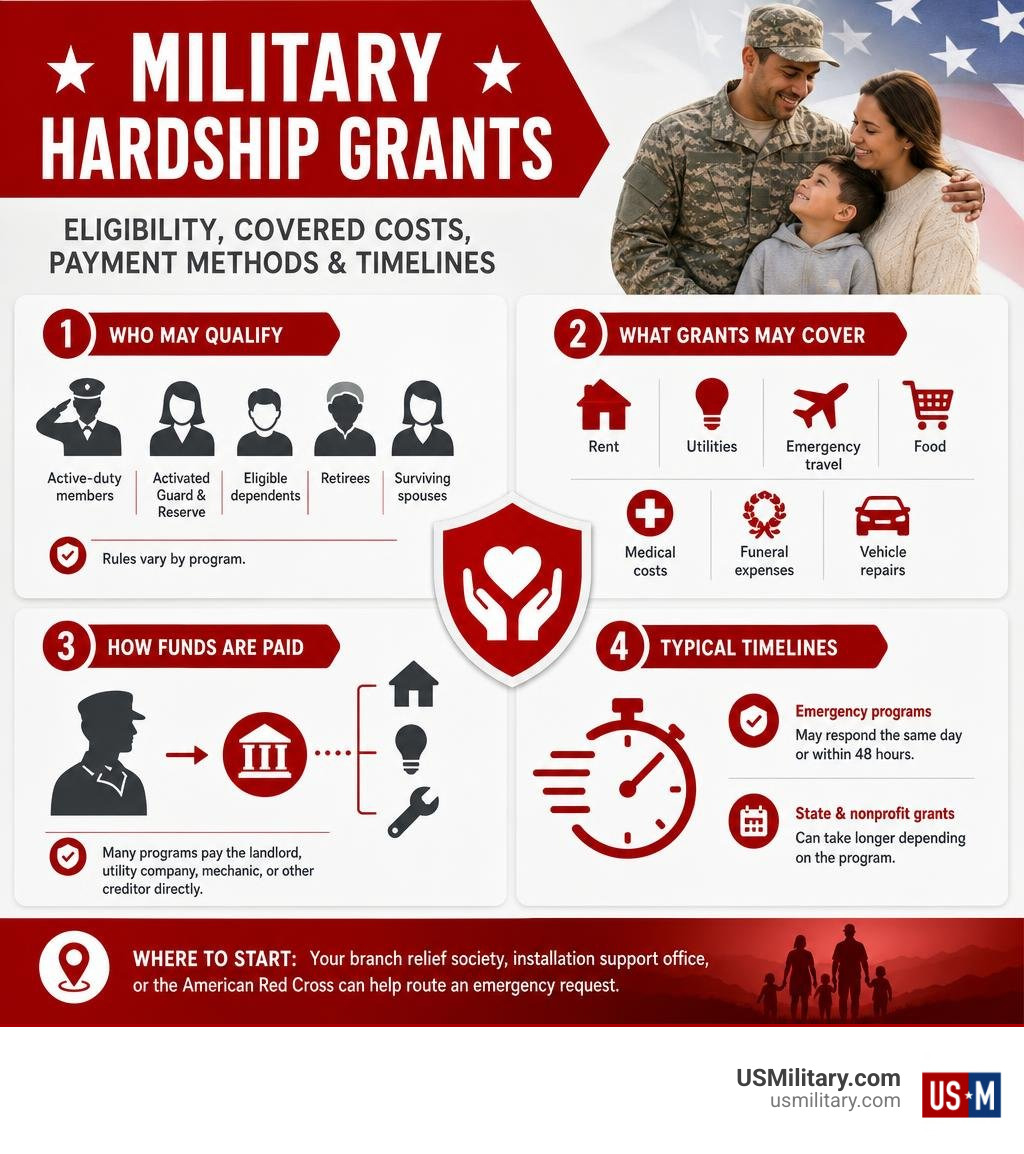
- Who may qualify: Active-duty members, activated Guard and Reserve personnel, eligible dependents, retirees, and surviving spouses. Rules vary by program.
- What grants may cover: Rent, utilities, emergency travel, food, medical costs, funeral expenses, and essential vehicle repairs.
- How funds are paid: Many programs pay the landlord, utility company, mechanic, or other creditor directly.
- How fast help arrives: Emergency programs may respond the same day or within 48 hours, while state and nonprofit grants can take longer.
- Where to start: Your branch relief society, installation support office, or the American Red Cross can help route an emergency request.
A sudden deployment issue, family death, medical bill, or threat of eviction can create a financial emergency with little warning. Military relief programs exist to reduce that pressure, but eligibility, covered costs, grant limits, and application steps are not the same everywhere.
I am Larry Fowler, publisher of the USMilitary.com Network since 2007, where I have helped connect active-duty members, recruits, and veterans with clear information about military benefits and financial resources, including military hardship grants. This guide explains the practical options and rules to know before you apply.
Understanding Military Hardship Grants vs. Emergency Loans
When a financial crisis strikes, understanding the difference between non-repayable aid and zero-interest loans is critical for long-term budget stability. Both options provide immediate emergency relief, but their structural impact on your paychecks differs significantly.
A military hardship grant provides financial assistance that does not require repayment. It is essentially gift aid intended to stabilize a service member or family experiencing severe, unexpected financial distress. On the other hand, an emergency military loan provides immediate cash or creditor payments that must be paid back over a structured timeline, typically via automated allotments from military pay.
To see how these options compare side by side, review the breakdown below:
| Feature | Military Hardship Grants | Emergency Military Loans |
|---|---|---|
| Repayment Needed? | No. Funds are non-repayable gift aid. | Yes. Funds must be repaid over time. |
| Interest Rates | 0% (No interest charges ever). | 0% through service relief societies. |
| Impact on Paychecks | None after disbursement. | Direct monthly allotment deductions from pay. |
| Primary Distribution | Paid directly to vendors/creditors. | Disbursed to applicant or vendors. |
| Primary Use Cases | Severe crisis, bereavement, low income. | One-time temporary budget gaps. |
Understanding your options under Military Emergency Financial Assistance allows you to choose the right path before committing to future payroll deductions.
Primary Advantages of Military Hardship Grants
The primary benefit of securing a grant over a loan is the complete elimination of financial debt burden. When facing severe personal turmoil—such as the loss of a close relative, a natural disaster, or major health complications—adding a monthly loan repayment obligation to your Leave and Earnings Statement (LES) can prolong personal financial strain.
Additionally, most military hardship grant programs pay service providers directly. Whether covering emergency rent, overdue utilities, or essential vehicle transmission repairs, sending funds straight to the creditor eases administrative stress while ensuring urgent needs are resolved immediately. Grant limits range from micro-grants of $500 up to substantial emergency relief sums reaching $4,000 depending on the issuing organization and nature of the crisis.
When Emergency Military Loans Are Necessary
While military hardship grants are ideal, they are not always guaranteed. Emergency zero-interest loans remain an essential tool when grant allocations are exhausted or when an applicant’s financial situation indicates an ability to repay temporary debt without causing long-term distress.
Many service branch relief societies combine interest-free loans with non-repayable grants depending on the applicant’s overall financial profile. Before taking on any outside debt, review our detailed guide on Top 10 Military Loans Detailed Reviews to ensure you avoid high-interest commercial lenders. Furthermore, active-duty members are protected under federal law by the Military Lending Act, which caps interest rates and restricts predatory lending practices across commercial financial markets.
Top Organizations Providing Military Hardship Grants

A vast network of official branch societies, veterans organizations, and charitable foundations stand ready to deliver emergency aid to uniformed service members. Knowing where to direct your emergency request saves precious time when facing strict payment deadlines.

If you are looking for nationwide resources, reviewing the official directory of Military Relief Organizations and Emergency Financial Help provides a comprehensive foundation for active and reserve components alike.
Service Branch Emergency Relief Societies
Each military branch maintains a dedicated, non-profit emergency relief society designed specifically to support its personnel:
- Army Emergency Relief (AER): Offers non-repayable grants, zero-interest loans, and educational scholarships. AER recently transitioned emergency travel support into full grants, providing up to $2,000 for domestic travel and up to $4,000 for international emergency travel. Details on their programs are available directly on Financial Assistance Programs.
- Navy-Marine Corps Relief Society (NMCRS): Provides interest-free loans and grants for urgent necessities, emergency travel, and disaster relief.
- Air Force Aid Society (AFAS): Supports Airmen and Guardians with emergency assistance grants, educational aid, and community programs.
- Coast Guard Mutual Assistance (CGMA): Delivers financial grants and zero-interest loans to Coast Guard members and eligible family members facing unexpected emergencies.
VFW and Non-Profit Crisis Programs
Beyond official service societies, major non-profit organizations offer targeted non-repayable crisis aid:
- Veterans of Foreign Wars (VFW): The VFW Financial Assistance for Service Members program offers grants up to $2,500 to assist active-duty and activated Guard or Reserve personnel with daily necessities. The VFW pays approved service providers directly. Learn more through the official Financial Grants – VFW portal.
- MOAA Charities: The MOAA Crisis Relief Program through the MOAA Foundation delivers emergency hardship grants up to $1,000 to cover immediate housing, auto, and medical expenses caused by crises occurring within the past 12 months. Review eligibility at MOAA – Crisis Relief.
American Red Cross Hero Care Network
The American Red Cross operates the Hero Care Network, serving as the official 24/7/365 emergency intake and verification portal for the U.S. Armed Forces. While the Red Cross does not directly determine final grant amounts, it works in partnership with service relief societies to process urgent financial assistance requests.
If you are stationed far from a military installation or off-base, calling the Red Cross at 1-877-272-7337 allows specialists to verify your emergency, contact your command, and coordinate expedited grant funds directly to your location.
Eligibility Rules and Covered vs. Excluded Expenses

Grant eligibility depends heavily on your current service status, rank, and the nature of your financial emergency. While active-duty members generally qualify across all service relief societies, Reserve and National Guard personnel must meet specific active-duty deployment thresholds.
For Guard and Reserve members exploring immediate relief, our resource on how Reserve Military Members Can Get These Emergency Loans Now breaks down active orders and Title 10 criteria in depth.
Eligible Expenses Covered by Financial Grants
Most military hardship grants focus strictly on basic living necessities and life-safety emergencies. Approved coverage categories usually include:
- Housing & Lodging: Past-due rent, mortgage payments to prevent foreclosure, temporary emergency shelter, and security deposits.
- Utilities & Basic Living: Overdue electric, gas, water, or trash bills to prevent service disconnection, as well as essential food assistance.
- Emergency Transportation: Urgent airfare or travel costs due to critical illness or death of an immediate family member, along with essential auto repairs needed for daily commuting.
- Medical & Dental: Urgent medical co-pays, emergency dental care, and cranial helmets or specialized care not covered fully by TRICARE.
Expenses Excluded From Military Hardship Grants
Military hardship grants are strictly designed for unexpected emergencies and basic needs. Consequently, relief organizations explicitly exclude non-essential purchases and personal liabilities:
- Legal fines, court fees, or bail bond payments.
- Divorce proceedings or marriage legal fees.
- Credit card debt consolidation or payday loan pay-offs.
- Home purchases, down payments, or real estate investments.
- Vehicle purchases, lease buyouts, or cosmetic auto modifications.
- Vacation expenses, non-essential travel, or luxury goods.
How to Apply for Grants and Required Documentation
Applying for a military hardship grant requires demonstrating clear financial need and documenting the unexpected event that triggered the hardship. Preparing your paperwork in advance significantly accelerates approval times.
Required Documentation Checklist
To submit a complete grant application, ensure you gather the following core documents before initiating your request:
- Proof of Military Status: Active-duty ID card, official active-duty orders (for Guard/Reserve serving over 30 days), or DD Form 214 for qualifying veterans.
- Income Verification: Latest Leave and Earnings Statement (LES) or recent civilian pay stubs showing total household income.
- Hardship Documentation: Eviction notices, overdue utility bills, repair quotes from certified auto mechanics, or medical billing statements.
- Budget Worksheet: Formal breakdown of monthly income versus expenditures (such as AER Form 57R).
- Exception Documents: If submitting an Exception to Policy request, reference the official Exception to Policy Application Checklist for submission guidelines.
Application Processing Times and Disbursement
Turnaround times for military hardship grants are built to accommodate urgent crises. Branch relief societies like Army Emergency Relief frequently review and disburse funds within 24 to 48 hours, with same-day emergency processing available for urgent travel or housing threats.
When applying through non-profit crisis funds such as MOAA, application reviews typically take 5 to 7 business days. Once approved, disbursements are processed via secure digital platforms like Tipalti directly into direct deposit accounts or issued as vendor checks within 3 to 5 business days.
State-Specific Military Hardship Grant Programs
In addition to federal and national non-profit relief funds, many states maintain independent military hardship programs dedicated to residents, local National Guard members, and state-stationed personnel.
Arizona Military Family Relief Fund
The Arizona Military Family Relief Fund (MFRF) provides direct emergency grant assistance to service members, veterans, and military families dealing with financial hardships tied to military service. MFRF operates under strict funding caps:
- Emergency Assistance Cap: Up to $3,000 for one-time urgent financial crises, processed within a 5-business-day voting window.
- Lifetime Limit: A cumulative limit of $20,000 per applicant across all MFRF grants.
- Eligibility Rules: Requires proof of Arizona residency (12 months continuous presence), qualifying deployment history, and documentation of unforeseen financial hardship.
Iowa National Guard and Other State Programs
State National Guard organizations often provide dedicated micro-grants to handle localized emergencies. For example, the Iowa National Guard Hardship Grant offers micro-grant aid capped at $500 to help Guard Soldiers, Airmen, and their dependents resolve sudden expenses due to non-willful job loss, vehicle breakdowns, or natural disasters.
Local Guard members can review application guidelines directly on Hardships | We Care For Iowa to verify state eligibility requirements.
Frequently Asked Questions About Military Hardship Grants
How quickly can I receive money from a hardship grant?
Emergency relief through service societies (such as Army Emergency Relief or Navy-Marine Corps Relief Society) can be issued within 24 to 48 hours, and often on the same day for critical emergencies. Non-profit organization grants generally require 5 to 7 business days for application review, followed by 3 to 5 days for direct bank disbursement.
Do military hardship grants ever need to be repaid?
No. True hardship grants are non-repayable gift assistance. However, if a relief society determines that your financial hardship is manageable via budget restructuring, they may issue a zero-interest loan or a combination grant/loan package instead of a full grant.
Can veterans and military retirees qualify for emergency grants?
Yes. Military retirees drawing retirement pay and surviving spouses generally qualify for assistance through service branch relief societies. Qualifying veterans with honorable or general discharges can access specialized crisis grants through non-profit charities such as MOAA, the VFW, and state-level military relief funds.
Conclusion
Facing an unexpected financial emergency while serving our nation should never be a journey you take alone. Military hardship grants provide a vital financial safety net, delivering non-repayable aid to cover urgent living expenses, vehicle repairs, medical bills, and emergency travel without saddling your family with unwanted debt.
At USMilitary.com, we are dedicated to ensuring active-duty service members, Guard and Reserve personnel, retirees, and veterans have complete access to the benefits and financial tools they have earned. If you are currently navigating an urgent hardship, explore our comprehensive guide on Military Emergency Financial Assistance to take the first step toward immediate relief and long-term stability.