
Branch Comparison: Core Differences in Mission, Size, and Culture
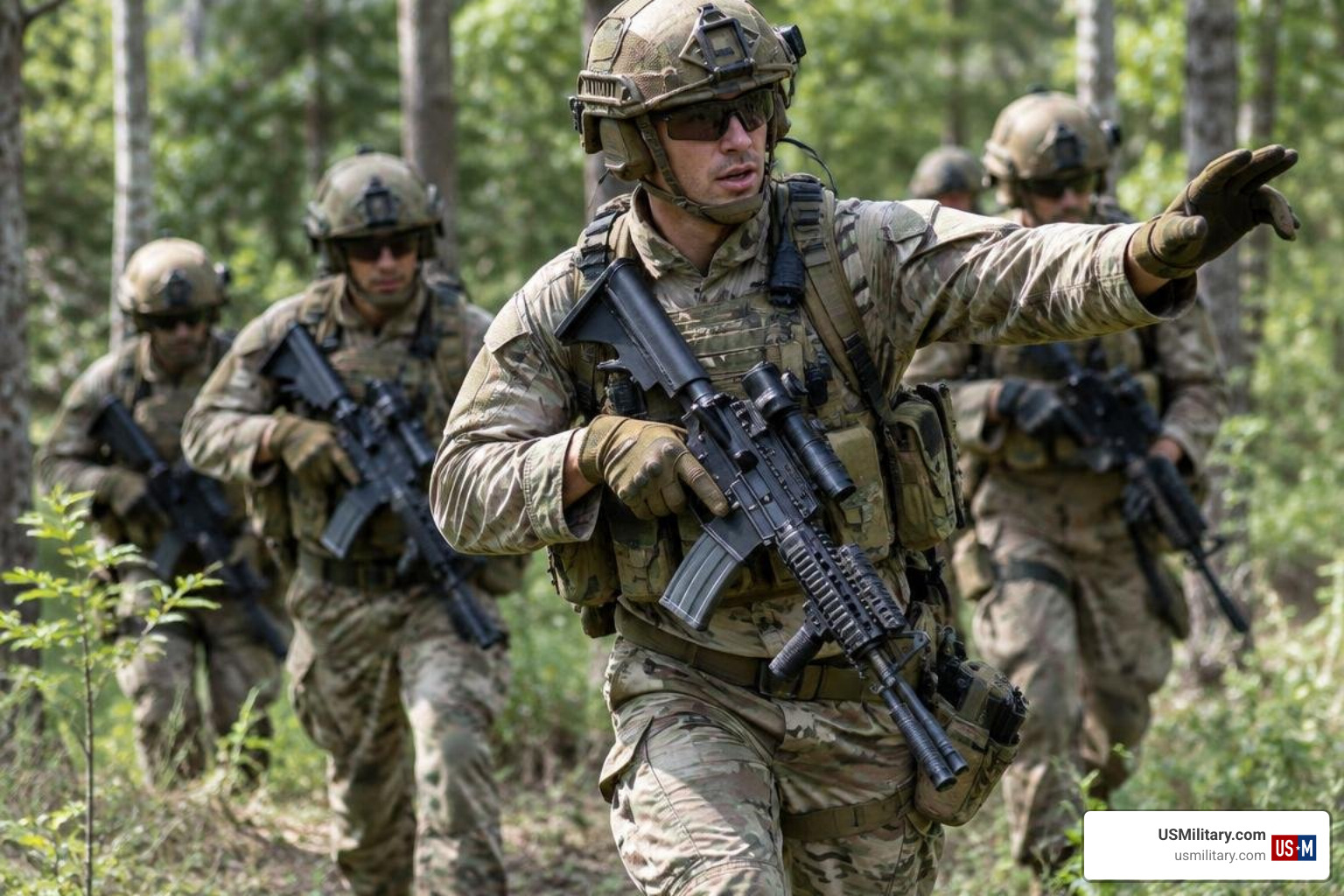
When evaluating your enlistment options, understanding what’s the difference between the 7 military branches is essential for matching your strengths with the right mission. The United States Army serves as the nation’s premier land-based fighting force. Unlike services tailored to specific operating mediums—such as the Navy in maritime environments, the Air Force in aviation, or the Space Force in orbital defense—the Army is built on sheer organizational scale and operational flexibility.
For a broader perspective across the entire Armed Forces, our comprehensive guide to branches of the military details how each branch functions. The Army’s sheer size means it commands the largest share of personnel billets, ground equipment, and tactical support roles. Whether an applicant seeks frontline combat arms, high-tier cyber warfare, logistics, or medical administration, the Army maintains dedicated units for virtually every mission imaginable.
Operational Environment and Global Deployments
The operational tempo of the Army is grounded in expeditionary logistics and sustained forward presence. Air Force personnel generally deploy to established air bases with fixed infrastructure, and Navy sailors endure extended rotations aboard naval vessels. In contrast, Army soldiers operate in diverse land environments ranging from arid deserts and dense forests to established overseas garrisons.
The Army maintains permanent installations across 25 U.S. states and strategic overseas locations, including Germany, Italy, Japan, and South Korea. This physical footprint gives soldiers opportunities to live, train, and operate across the globe.
Organizational Culture and Camaraderie
The cultural fabric of the Army is rooted in unit cohesion and a distinct warrior ethos forged through shared adversity. While other services may focus primarily on technical platforms (such as ships, aircraft, or satellites), the Army’s core asset is the individual soldier.
This creates a tight-knit team environment where peer accountability, team-building, and tactical proficiency form deep personal bonds. Squads and platoons live, train, and execute field operations together, fostering a sense of camaraderie that soldiers carry throughout their military and civilian lives.
10 Huge Benefits Of Joining The Army vs Other Military Branches
| Feature / Benefit | U.S. Army | U.S. Navy | U.S. Air Force | U.S. Marine Corps | U.S. Space Force |
|---|---|---|---|---|---|
| Guaranteed Job (MOS) | Yes (Contract Lock) | Varies / Rating Availability | Often Aptitude Area | Job Field, Rarely Exact MOS | Highly Specialized Billets |
| Promotion Speed | Rapid / High Billets | Moderate / Exam-Based | Slower / Strict Caps | Moderate to Slow / Cutting Scores | Moderate / New Structure |
| Max Recruitment Bonus | Up to $50,000+ | Up to $50,000+ | Highly Selective Fields | Limited MOS Incentives | Highly Selective Tech Roles |
| College Loan Repayment | Up to $65,000 (SLRP) | Select Ratings Only | Limited Programs | No Direct Program | Highly Limited |
| Technical Specialties | 150+ Career Fields | ~80 Ratings | ~130 AFSCs | ~120 OccFields | Focused Tech/Space Only |
To provide clarity for those reviewing career options, reviewing independent comparisons like choosing a military branch on GovFacts and the official overview at Federal Benefits on MyArmyBenefits helps confirm standard military entitlements.
Career and Financial Perks: 10 Huge Benefits Of Joining The Army vs Other Military Branches
1. Guaranteed MOS in Your Enlistment Contract
One of the most notable advantages the Army offers is the ability to lock in your specific Military Occupational Specialty (MOS) before you head to initial training. In several other branches, recruits often enlist under general aptitude areas (such as mechanical or general administrative) and receive their specific job assignments during basic training based on branch needs. In the Army, your enlistment contract specifies your exact MOS code, protecting your career path from day one.
2. Industry-Leading Enlistment Bonuses
Due to its operational scope, the Army frequently offers some of the highest cash recruitment bonuses in 2026 to attract qualified candidates to high-demand skills, combat arms, and quick-ship options. Combined incentives can reach up to $50,000 for critical skills and immediate departure dates.
3. Student Loan Repayment Program (SLRP)
For college graduates or those with existing student debt, the Army’s Student Loan Repayment Program can pay down up to $65,000 in qualifying federal loans for eligible MOS enlistments. This program provides a powerful financial head start compared to branches that offer limited loan assistance.
4. Accelerated Enlisted Promotion Timelines
Because the Army operates the largest enlisted force, it maintains more non-commissioned officer (NCO) leadership billets than any other branch. With a semi-centralized promotion points system for ranks E-5 (Sergeant) and E-6 (Staff Sergeant), driven soldiers who pursue college credits, physical fitness, and technical schools can advance significantly faster than peers in branches with strict promotion quotas.
5. Extensive Access to Elite Specialty Schools
Soldiers can attend prestigious military schools, including Airborne School, Air Assault, Ranger School, Sapper Leader Course, and the Mountain Warfare School. These certifications sharpen tactical leadership and earn promotion points that speed up career progression.
Detailed breakdowns of military compensation across ranks are covered in our active duty military pay and benefits breakdown.
Education, Travel, and Support: 10 Huge Benefits Of Joining The Army vs Other Military Branches

6. Robust Credentialing Assistance (Army IgnitED)
Beyond standard federal Tuition Assistance ($4,500 annually), the Army Credentialing Assistance (CA) program provides funding for professional civilian certifications, licenses, and industry credentials (such as PMP, CompTIA Security+, and commercial pilot licenses), enhancing long-term marketability. For an educational evaluation across all services, see our review evaluating the best military branches for education.
7. Unmatched Global Installation Options
With dozens of major installations across the continental United States, Hawaii, Alaska, and overseas locations like Germany, Italy, and South Korea, soldiers experience a wide variety of duty assignments without being confined to coastal bases or shipboard life.
8. Comprehensive Family Readiness and Support
Army Community Service (ACS) and Child and Youth Services (CYS) deliver extensive on-base child care, spouse employment assistance, and family advocacy networks. For insight into civilian lifestyle transitions, candidates often review comparative sources like military quality-of-life differences on Quora and CollegeVine’s military benefits overview.
9. Seamless Translation to Civilian Careers
The Army’s structured leadership development creates operational managers capable of handling personnel, logistics, and multi-million-dollar supply chains. Organizations actively recruit Army veterans for high-responsibility supervisory roles. Prospective enlistees can explore long-term strategies in our complete guide to military career paths.
10. Expedited Path to U.S. Citizenship
Under Immigration and Nationality Act (INA) Section 329, non-citizen permanent residents serving honorably can apply for expedited naturalization. The Army actively streamlines this process during basic training, allowing many eligible soldiers to graduate as naturalized U.S. citizens.
Key Enlistment Criteria and Contract Differences
Navigating the entry requirements is the first step toward a successful military career. Reading through our enlistment unpacked guide will help clarify what to expect during initial processing.

Medical Waivers and ASVAB Score Requirements
All branches evaluate applicants using the Armed Services Vocational Aptitude Battery (ASVAB). While the Armed Forces Qualification Test (AFQT) percentile determines general enlistment eligibility, the Army looks closely at specific ASVAB line scores (such as GT – General Technical, ST – Skilled Technical, and CL – Clerical) to qualify recruits for specific jobs.
Medical waivers are processed independently by each branch’s medical authority:
- Navy: Rapid processing averages (5–6 business days).
- Marine Corps: Standard timelines (approximately 12 days).
- Army: Thorough review processes (averaging 60–83 days depending on complexity).
- Air Force: Longest medical waiver queues (frequently 90+ days).
The Army also operates the Future Soldier Preparatory Course (FSPC), which helps highly motivated applicants improve academic scores or meet body composition standards before starting basic training. Prospective applicants should confirm eligibility requirements by checking military enlistment age requirements.
Initial Entry Training: Basic Combat Training vs Other Boot Camps
Initial entry training sets the foundation for your military career. The standard boot camp lengths across branches are:
- U.S. Army: 10 weeks of Basic Combat Training (BCT).
- U.S. Navy: 9 weeks (including Battle Stations 21).
- U.S. Air Force / Space Force: 8.5 weeks of Basic Military Training (BMT).
- U.S. Coast Guard: 8 weeks.
- U.S. Marine Corps: 13 weeks of Recruit Depot Training.
The Army evaluates physical conditioning using the sex-neutral Army Combat Fitness Test (ACFT), consisting of six events: deadlift, standing power throw, hand-release push-ups, sprint-drag-carry, plank, and a two-mile run. Following BCT, soldiers proceed directly to Advanced Individual Training (AIT) to master their specific MOS.
For additional branch mission assessments, read the perspective on Which is the Best Branch of the Military to Join in 2026?.
Frequently Asked Questions About Military Branch Selection
Which military branch promotes the fastest?
The U.S. Army typically offers the fastest promotion path to non-commissioned officer ranks (E-5 and E-6). Its size creates a large number of open leadership slots, and its semi-centralized promotion point system rewards soldiers who demonstrate leadership, complete civilian education, and excel in physical fitness.
Can I guarantee my specific job before enlisting in the Army?
Yes. The Army guarantees your chosen Military Occupational Specialty (MOS) in your enlistment contract (DA Form 3286/Annexes), provided you meet the required ASVAB line scores, physical standards, and security clearance criteria.
What branch is best for non-citizens seeking expedited citizenship?
The Army offers one of the most streamlined pipelines for lawful permanent residents. Through partnerships with U.S. Citizenship and Immigration Services (USCIS), qualifying recruits can complete naturalization paperwork during Basic Combat Training and often take their oath of citizenship upon graduation.
Conclusion
Choosing the right military branch is a significant decision that shapes your personal and professional future. While the Air Force is recognized for comfortable base amenities and the Navy offers unmatched maritime travel, the Army delivers unique strengths: guaranteed job contracts, rapid promotion opportunities, substantial enlistment incentives, and robust leadership development.
At USMilitary.com, we are committed to providing service members and veterans with clear guidance on career opportunities, VA loans, disability ratings, and educational benefits. Begin your journey by exploring the comprehensive benefits of military service to find the path that best aligns with your goals.