
All About Army Delta Force at a Glance
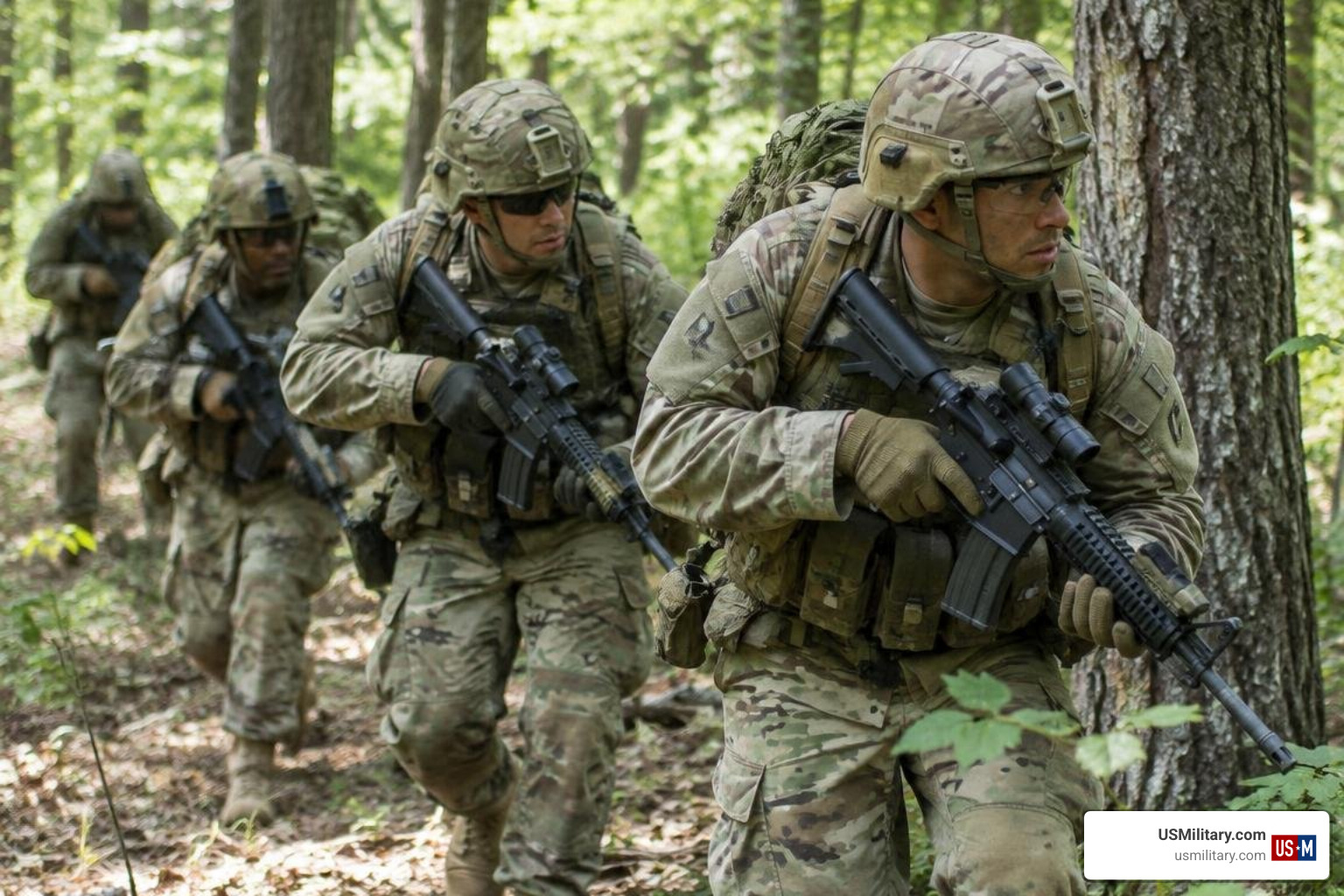
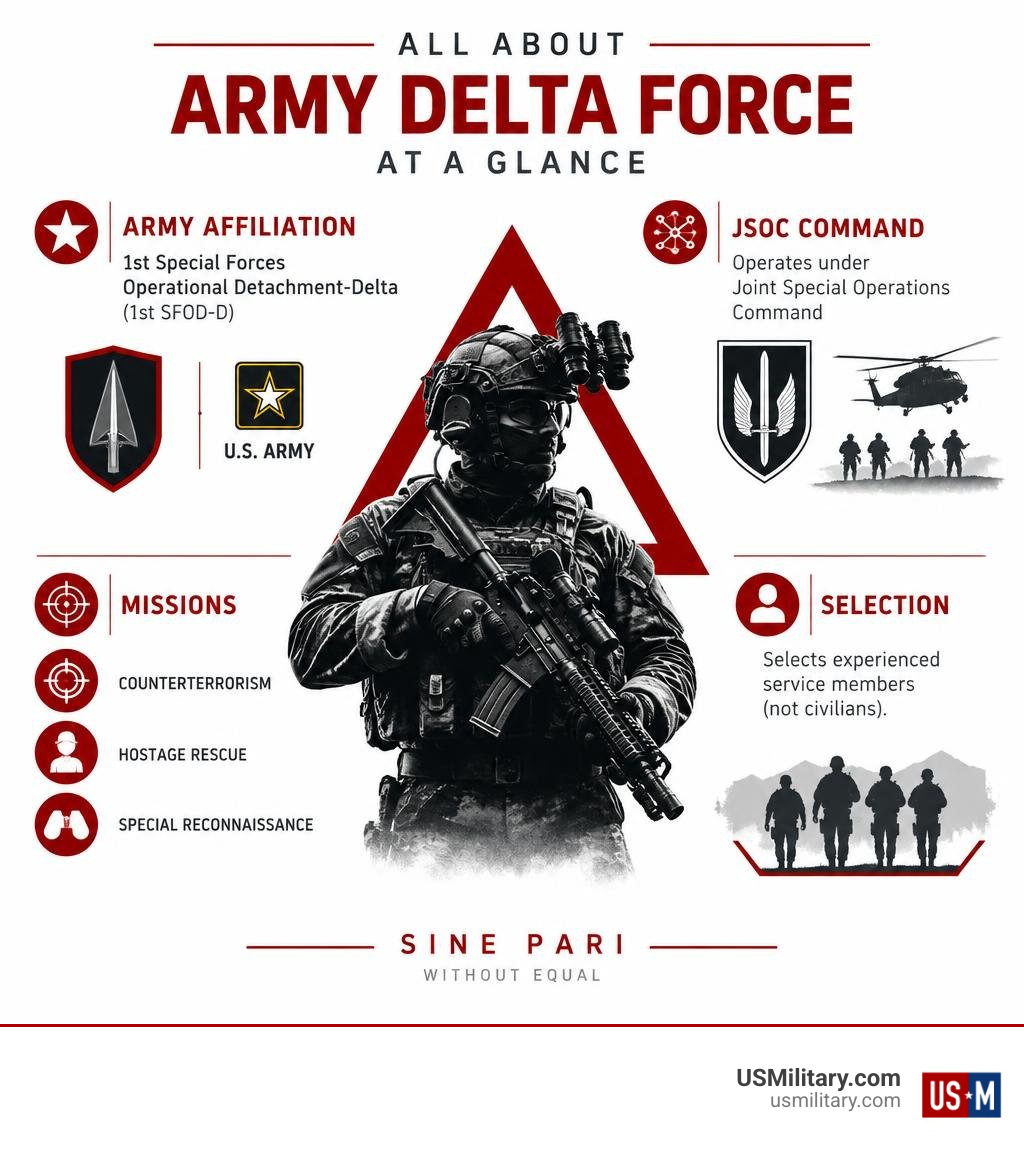
Delta Force is a U.S. Army special mission unit widely known as the 1st Special Forces Operational Detachment-Delta (1st SFOD-D). It operates under Joint Special Operations Command and is known for high-risk missions such as counterterrorism and hostage rescue. Founded in 1977, it selects experienced service members rather than recruiting civilians directly. Its motto, Sine Pari, means “Without Equal.”
I’m Larry Fowler, a Navy veteran and BUD/S Class 89 graduate. I bring that military training background to USMilitary.com’s guide to All about Army Delta Force.
Terms related to All about Army Delta Force:
All About Army Delta Force: Origins, Mission, and Command Structure
The story of Delta Force began in the 1970s amid a global surge in high-profile hijackings and embassy sieges. Colonel Charles Beckwith, an Army Special Forces officer who served as an exchange officer with the British Special Air Service (SAS) in the early 1960s, recognized that the United States military lacked an agile, surgical unit specifically organized to handle sensitive hostage rescues and counterterrorism.
After years of internal military debates, the Pentagon officially activated the unit on 19 November 1977. Its first training cycle ran from April to September 1978, and the detachment reached full operational capability by the fall of 1979. Today, as documented in this historical overview of 1st SFOD-D, the unit has carried several designations to safeguard operational security—including the Combat Applications Group (CAG), Army Compartmented Element (ACE), and Task Force Green within joint command task forces.
Branch Affiliation and JSOC Chain of Command
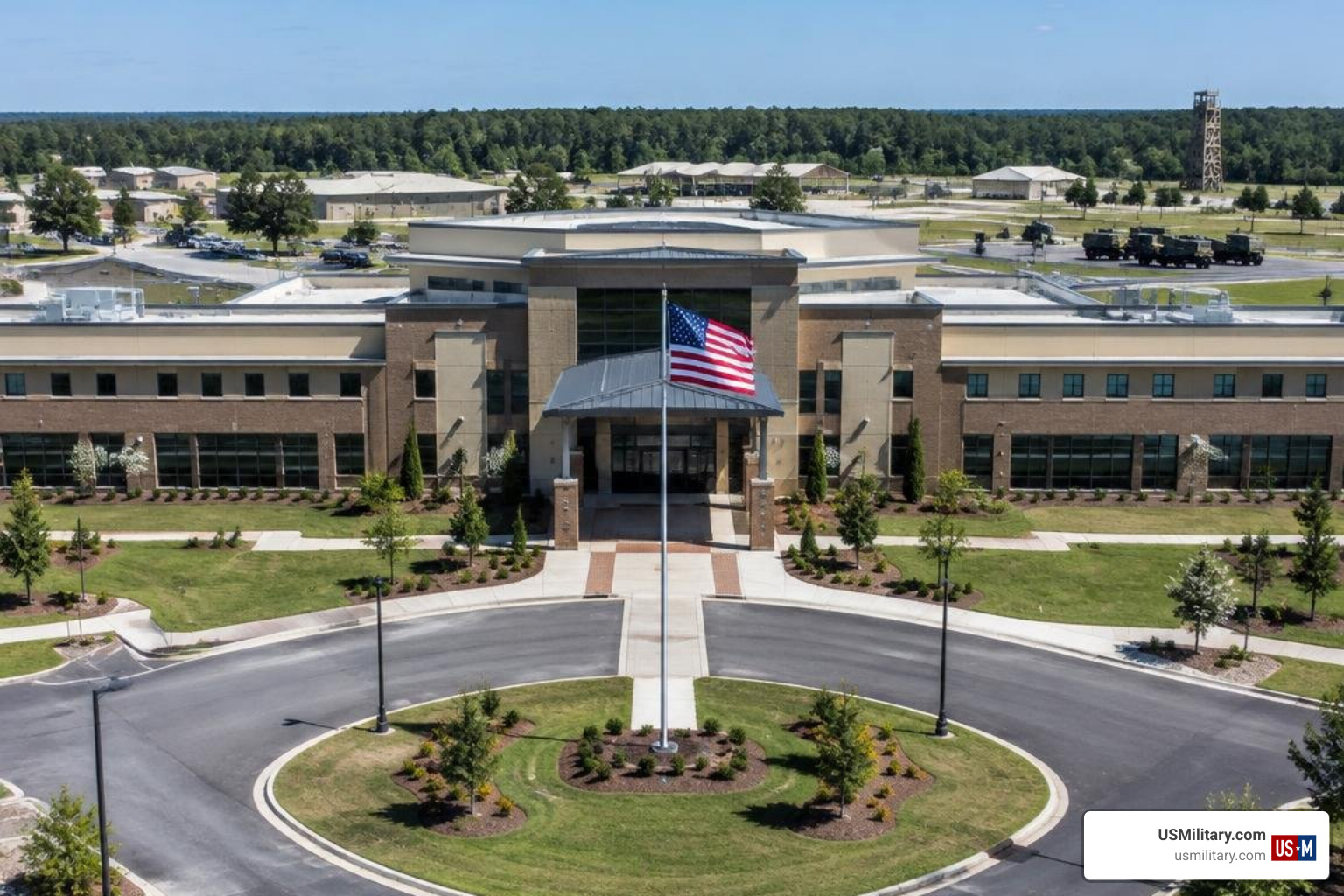
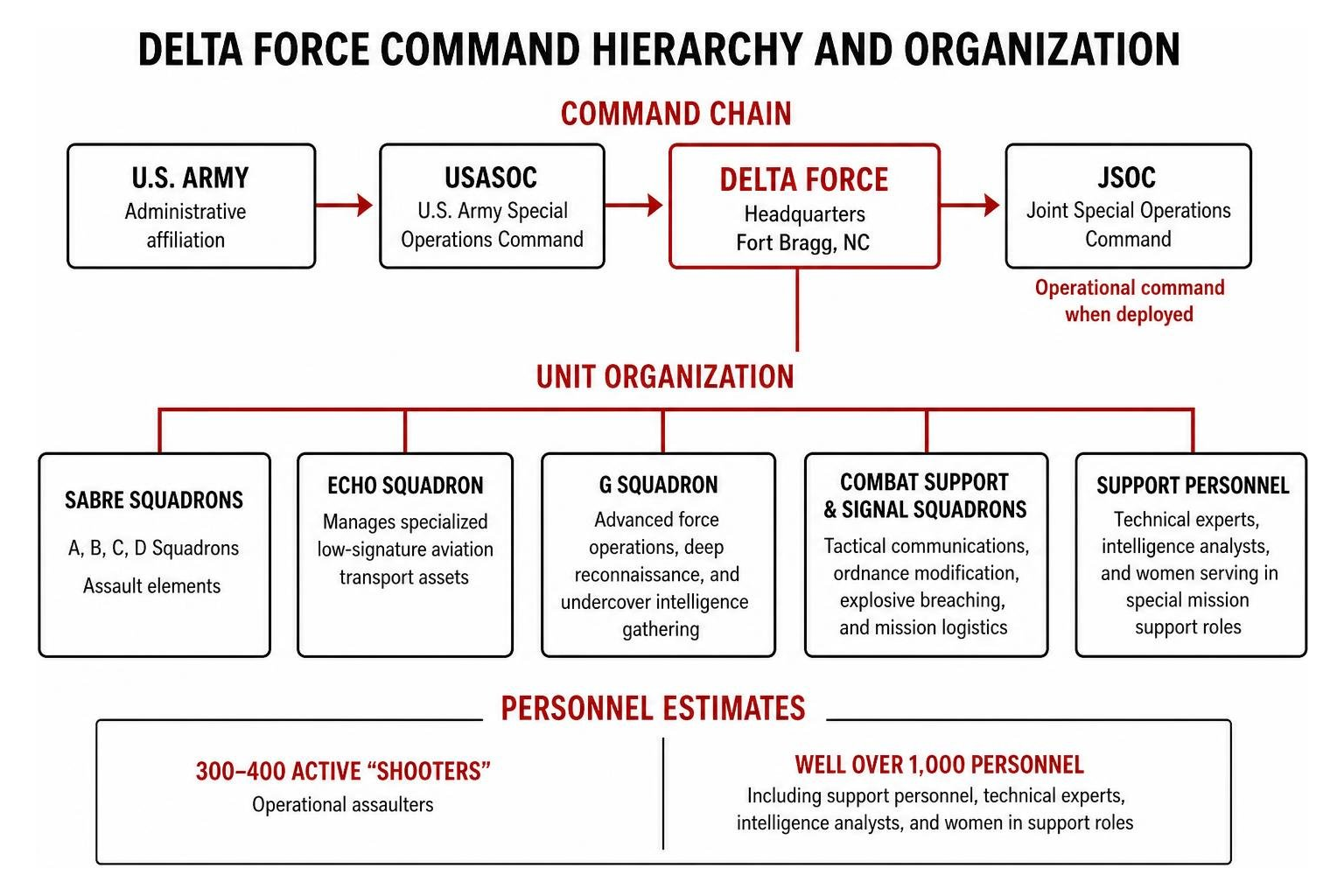
Delta Force is administratively rooted in the United States Army, with headquarters at Fort Bragg, North Carolina, and overseen by the U.S. Army Special Operations Command (USASOC). However, when deployment orders are signed, operational command shifts directly to the Joint Special Operations Command (JSOC) at Fort Bragg.
JSOC coordinates national-level special mission units, directing surgical direct-action strikes, high-value target takedowns, and sensitive intelligence collection. While the unit wears Army branch colors on paper, the shadow warriors of Delta Force execute missions that report straight to the National Command Authority.
Unit Organization and Estimated Size
Delta Force is structured around specialized assault elements called Sabre Squadrons, designated as A, B, C, and D Squadrons. Each squadron contains smaller troops and tactical teams focused on specific assault and sniper disciplines:
- Echo Squadron: Manages specialized low-signature aviation transport assets.
- G Squadron: Focuses on advanced force operations, deep reconnaissance, and undercover intelligence gathering.
- Combat Support & Signal Squadrons: Handle tactical communications, ordnance modification, explosive breaching, and mission logistics.
While the exact numbers remain classified, open-source estimates indicate that Delta maintains between 300 and 400 active “shooters” (operational assaulters). Including support personnel, technical experts, intelligence analysts, and women serving in special mission support roles, the entire organization numbers well over 1,000 personnel.
The Brutal Selection Process and Operator Training Course
Delta Force does not recruit candidates off the street; it selects seasoned warfighters who have already proven themselves in high-stress tactical units. The initial assessment, conducted twice each year in the remote, rugged mountains of Camp Dawson, West Virginia, is one of the most grueling physical and mental evaluations on the planet. Candidates are pushed to physical exhaustion to observe how they think, communicate, and navigate when completely depleted. You can see this environment detailed in Delta Force: Inside America’s Secret Selection.
All About Army Delta Force Selection and the Infamous Long Walk
The selection course strips away external rank and feedback. Instructors do not offer encouragement, time benchmarks, or distance markers; candidates simply receive a grid coordinate and a time to move.
The ultimate test is “The Long Walk”—a solo 40-mile ruck march through steep mountain terrain carrying a 45-pound rucksack plus food, water, and rifle. Candidates are not told the time limit or the route length. The attrition rate is staggering: in a typical selection class of 120 experienced soldiers, often only 12 to 16 complete the course.
Operator Training Course (OTC) and Advanced Tradecraft
Passing selection simply earns a candidate an invitation to the six-month Operator Training Course (OTC). During OTC, candidates transform from standard combat soldiers into surgical precision operators:
- Marksmanship & Close-Quarters Battle (CQB): Firing thousands of rounds weekly until instinctual accuracy and target discrimination become second nature in live-fire shoothouses.
- Explosive Breaching & Demolitions: Engineering custom charges to breach steel, concrete, and barricaded doorways cleanly.
- Executive Protection: Providing low-profile security details for senior military leaders and diplomats in active combat zones.
- Covert Tradecraft & Technical Surveillance: Infiltrating non-permissive urban environments using specialized vehicles, advanced night optics, and specialized gear and tactical weapon kits.
Out of 120 initial selection candidates, historically only around eight to ten complete the full OTC pipeline and earn their assignment to an active Sabre Squadron.
Historic Raids, Major Operations, and Legendary Operators
Delta Force’s operational ledger spans nearly five decades of modern military history. Its baptism by fire occurred during the tragic 1980 Operation Eagle Claw in Iran, where mechanical failures in extreme desert conditions led to an aborted mission and highlighted the need for dedicated special ops aviation—which led directly to the formation of the 160th Special Operations Aviation Regiment (Night Stalkers).
Subsequent operations established Delta’s legendary combat pedigree:
- Operation Urgent Fury (1983): Conducting airfield assaults and government compound raids during the invasion of Grenada, earning the Joint Meritorious Unit Award.
- Operation Acid Gambit (1989): Rescuing American Kurt Muse from the notorious Modelo Prison in Panama during Operation Just Cause, earning the Valorous Unit Award.
- Operation Gothic Serpent (1993): The intense Battle of Mogadishu in Somalia, where Delta snipers Master Sergeant Gary Gordon and Sergeant First Class Randall Shughart deliberately inserted into a downed helicopter site to defend critically injured pilots, fighting to their deaths and earning posthumous Medals of Honor.

All About Army Delta Force Operators and Landmark 21st Century Raids
Throughout the Global War on Terrorism, Delta was awarded the Presidential Unit Citation for combat actions in Afghanistan and Iraq. Renowned operators such as Larry Vickers (who later helped develop the HK416 assault rifle) and Brent Tucker helped pioneer modern close-quarters combat methods. In 2015, Master Sergeant Thomas Payne participated in a joint nighttime raid in Kirkuk Province, Iraq, repeatedly entering a burning compound under heavy fire to cut locks and save 70 hostages, earning the Medal of Honor for his actions in high-risk hostage rescues in Iraq.
More recently, Delta operators carried out the 26 October 2019 raid on the compound of Islamic State leader Abu Bakr al-Baghdadi in Syria. On 3 January 2026, Delta units demonstrated their precision capabilities by capturing Venezuelan leader Nicolás Maduro and his wife Cilia Flores during a covert operation. These missions reflect the truth about covert Tier 1 deployments—they are executed with surgical speed in global hotspots.
Delta Force vs. SEAL Team 6, Green Berets, and Army Rangers
The U.S. military fields several elite special operations forces, each tailored with distinct mandates, training pipelines, and core missions.
| Feature | Delta Force (1st SFOD-D) | SEAL Team 6 (DEVGRU) | Army Green Berets (Special Forces) | 75th Ranger Regiment |
|---|---|---|---|---|
| Service Branch | U.S. Army | U.S. Navy | U.S. Army | U.S. Army |
| Command Level | Tier 1 (JSOC) | Tier 1 (JSOC) | Tier 2 (USASOC) | Tier 2 (USASOC / JSOC support) |
| Primary Mission | Direct action, CT, hostage rescue | Maritime CT, direct action, hostage rescue | Unconventional warfare, foreign internal defense | Large-scale direct action, airfield seizures |
| Candidate Source | All military branches (Army heavy) | Exclusively Navy SEALs | Army enlisted/officers | Army enlisted/officers |
| Operating Profile | Small assault cells, clandestine | Small assault troops, maritime | 12-man Operational Detachments (ODAs) | Regiment-sized airborne strike force |
Readers looking for an in-depth breakdown can explore our analysis on comparing Navy SEALs vs Delta Force capabilities as well as the differences in mission scope between Delta and SEALs.
How Delta Differs from DEVGRU and Special Forces
While both Delta Force and SEAL Team 6 function as Tier 1 national counterterrorism units under JSOC, their organizational makeup and operational styles differ. Delta accepts qualified applicants from all service branches—including the Marine Corps, Air Force, and Coast Guard—though the vast majority come from the Army. DEVGRU recruits exclusively from within the existing Navy SEAL community.
Furthermore, Delta’s primary focus is land-based and urban direct action, whereas DEVGRU specializes heavily in maritime environments, shipboard assaults, and combat diving. Meanwhile, conventional Army Green Berets specialize in training indigenous guerrilla forces over multi-month deployments, a stark contrast to Delta’s rapid-strike hostage rescue profile. For service members weighing these career paths, reviewing the elite special operations pay structure and evaluating service branch special operations pathways helps clarify how each unit operates.
How to Join Delta Force: Requirements and Career Pathways
You cannot walk into a military recruiting station and sign a contract for Delta Force. To earn an invitation to selection, candidates must first join the military, excel in their primary duties, and meet strict prerequisites:
- Enlisted Rank: E-4 through E-8 (typically with at least 2.5 years of active service remaining).
- Officer Rank: Captain (O-3) or Major (O-4).
- Armed Services Vocational Aptitude Battery (ASVAB): General Technical (GT) score of 110 or higher.
- Qualifications: Airborne qualified (or volunteer to attend Airborne School), able to pass a rigorous secret-level security clearance check, and deployment-ready with no disciplinary flags.
The two primary feeder pipelines are the 75th Ranger Regiment and Army Special Forces (Green Berets). These units provide the extensive tactical experience, weapon handling, and rucking foundation needed for selection. If you are preparing for these pipelines, review our guide on training to become an elite operator.
Frequently Asked Questions About Army Delta Force
What is the official military name and motto of Delta Force?
The unit’s official military designation is the 1st Special Forces Operational Detachment-Delta (1st SFOD-D). Its Latin motto is Sine Pari, which translates to “Without Equal.”
Can civilians enlist directly into Delta Force?
No. Civilians cannot enlist directly into Delta Force. Aspiring operators must first enlist in the military, serve with distinction in an initial unit, achieve the required rank, and apply when internal JSOC recruitment notices open.
How many operators currently serve in Delta Force?
Delta Force maintains an estimated combat strength of 300 to 400 operational assaulters divided across four Sabre Squadrons. With intelligence, aviation, logistics, communications, and administrative support staff included, total unit personnel exceeds 1,000.
Conclusion
Army Delta Force represents the pinnacle of military professionalism and direct-action precision. Known as the “quiet professionals,” its operators operate in the shadows, avoiding public fanfare while tackling the nation’s most perilous missions. At USMilitary.com, we provide service members, veterans, and military families with transparent career guidance, VA benefit updates, and in-depth tactical profiles. To dive deeper into how America’s top units match up, compare Army Delta Force vs Navy SEALs to see how their missions, training, and capabilities compare.