
How the World’s Toughest Elite Forces’ Training Compares
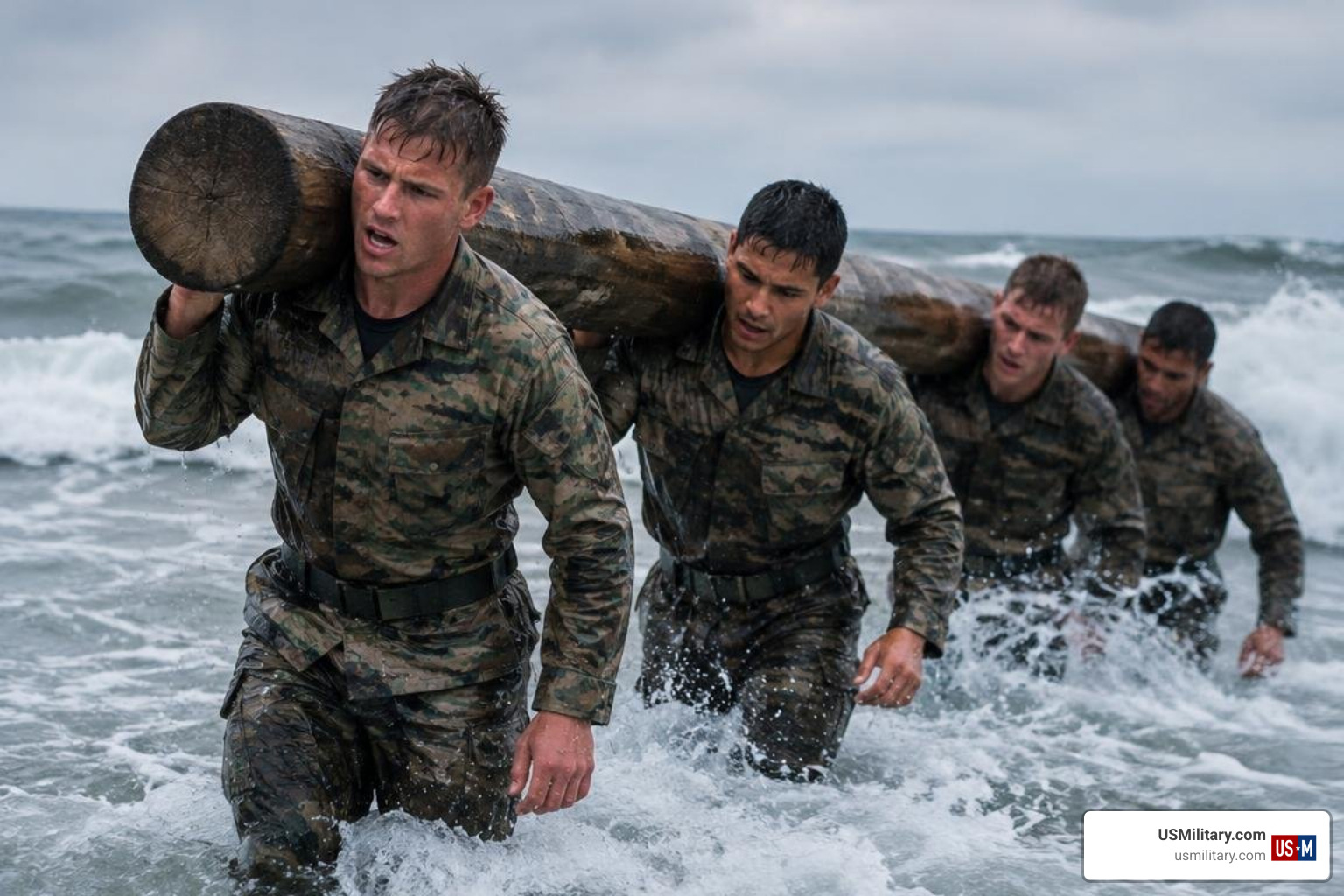
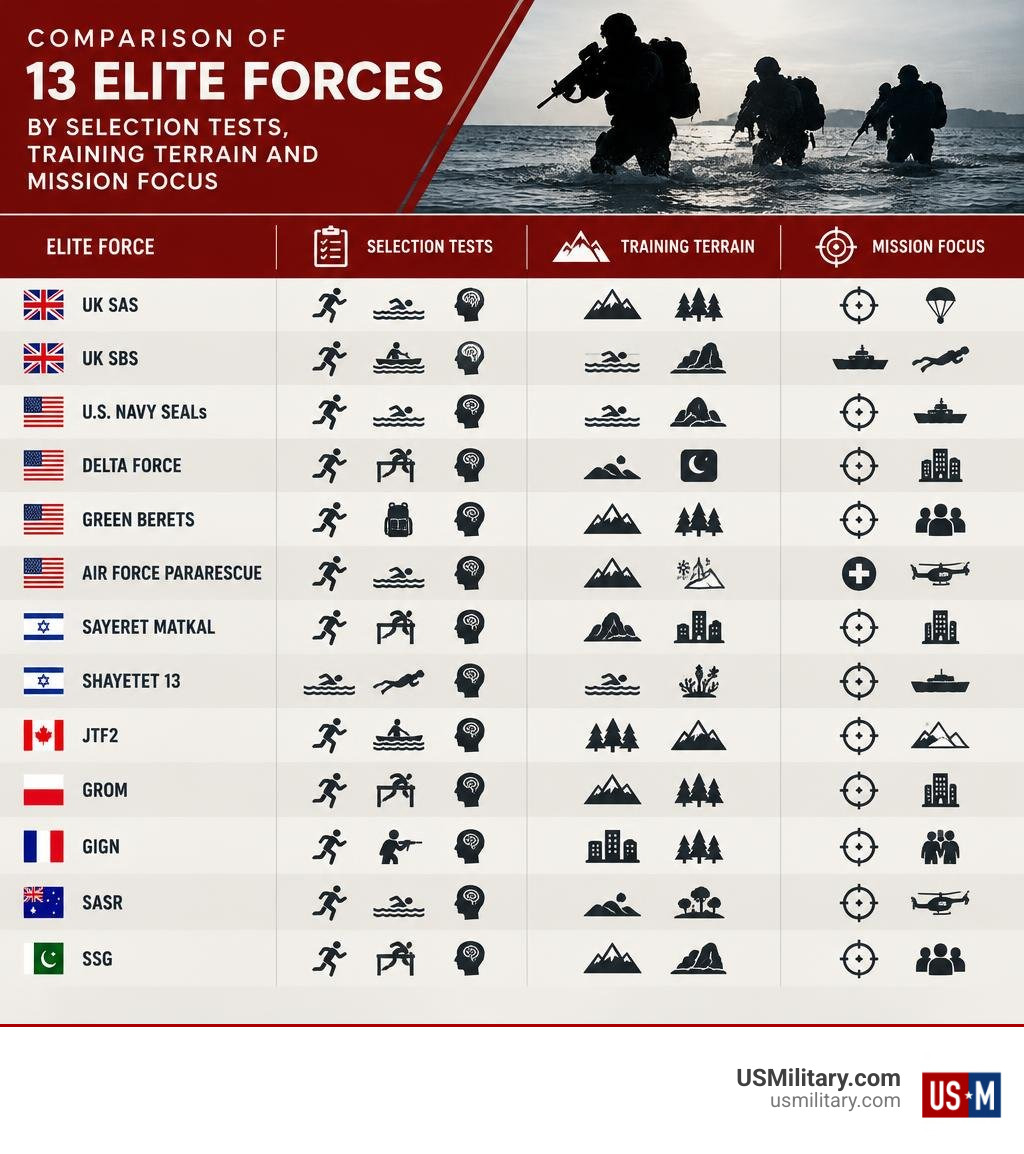
The training of the 13 toughest military elite forces in the world includes the UK SAS and SBS; U.S. Navy SEALs, Delta Force, Green Berets, and Air Force Pararescue; Israel’s Sayeret Matkal and Shayetet 13; Canada’s JTF2; Poland’s GROM; France’s GIGN; Australia’s SASR; and Pakistan’s SSG.
There is no official worldwide ranking. To compare these programs, look at how candidates are tested: long marches, cold-water work, difficult terrain, limited sleep, and decisions made under stress. A high washout rate tells part of the story, but not how well a course prepares its graduates for their mission.
I’m Larry Fowler, a Navy veteran and graduate of BUD/S Class 89. In this guide to the 13 Toughest Military Elite Forces Training In The World, I’ll use that experience to explain the challenges behind each selection process.
Simple guide to 13 Toughest Military Elite Forces Training In The World:
- Army vs Marines: Whose Boot Camp Is Tougher
- army basic training length
- army basic training map reading
What Defines the 13 Toughest Military Elite Forces Training In The World?
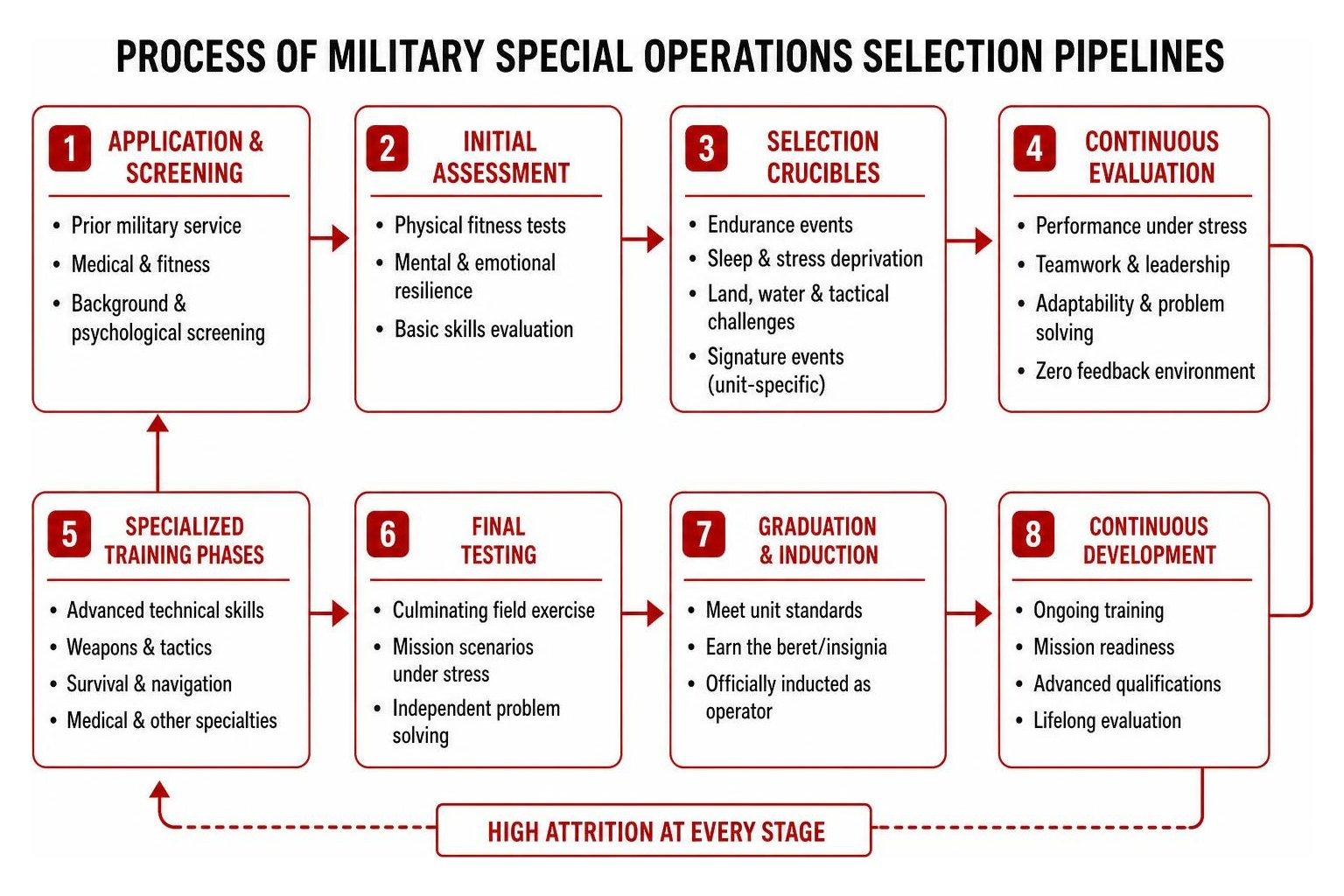
When defense analysts evaluate elite military pipelines, they do not just look at physical fitness scores. The true benchmark is whether an assessment can systematically strip away a candidate’s comfort and test their cognitive judgment under overwhelming physical stress.
Elite selection separates conventional soldiers from Tier-1 and Tier-2 special operators through extreme environmental stressors, caloric restriction, and cumulative sleep deprivation. Authoritative registries like the international 50 Most Elite Special Forces Units in the World, Ranked highlight how global programs refine their training pipelines to push human endurance to its absolute biological threshold.
Physical and Psychological Washout Factors in Elite Selection
Attrition across elite pipelines regularly reaches 80% to 95%. Candidates rarely fail because of a single workout; they fail due to cumulative physiological breakdown:
- Hypothermia & Non-Freezing Cold Injury (NFCI): Prolonged exposure to ocean surf or freezing rain saps core body heat, leading to rapid loss of fine motor skills.
- Overuse Skeletal Trauma: Carrying 60-to-100-pound rucksacks across uneven terrain causes stress fractures in the tibia, metatarsals, and lumbar spine.
- Caloric Deficits & Mental Fatigue: Sustained operations burn 6,000 to 8,000 calories per day against minimal rations, slowing cognitive reaction times during navigation and tactical tasks.
Maritime vs. Land and Alpine Training Environments
Specialized operating environments impose entirely different physical demands. Maritime units like the SEALs, SBS, and Shayetet 13 demand exceptional sub-surface composure, combating panic during night ocean swims and rebreather dives.
In contrast, land and alpine specialists like the British SAS, Austrian Jagdkommando, and Pakistan SSG prioritize extreme aerobic stamina and load-bearing endurance across high-altitude mountain ranges and dense jungle canopies.
The 13 Toughest Military Elite Forces Training Programs Ranked
The table below outlines how the world’s most formidable special operations pipelines compare across duration, attrition, and signature crucible events as of 2026:
| Unit & Country | Pipeline Duration | Attrition Rate | Defining Selection Crucible | Primary Specialty |
|---|---|---|---|---|
| 1. UK SAS (United Kingdom) | ~24 Weeks | ~90% | “The Long Drag” (40-mile march in < 20 hrs) | Unconventional Warfare & Deep Recon |
| 2. Delta Force (USA) | ~24–36 Weeks | ~90–95% | “The Long Walk” (40-mile solo mountain trek) | Tier-1 Direct Action & Counter-Terrorism |
| 3. US Navy SEALs (USA) | ~65 Weeks | ~75–85% | “Hell Week” (5.5 days, 4 hrs total sleep) | Maritime Special Warfare & Direct Action |
| 4. Sayeret Matkal (Israel) | ~20 Months | ~85–90% | “Gibbush” (Brutal multi-day screening) | Deep Penetration Recon & Hostage Rescue |
| 5. UK SBS (United Kingdom) | ~24–32 Weeks | ~90% | UKSF Endurance + Swimmer Canoeist Phase | Maritime Counter-Terrorism & Amphibious Raids |
| 6. JTF2 (Canada) | ~24–40 Weeks | ~85–90% | Sub-zero wilderness tactical assessment | Tier-1 Counter-Terrorism & Precision Strike |
| 7. JW GROM (Poland) | ~30–50 Weeks | ~80–85% | Bieszczady Mountain survival crucible | Direct Action & Combat Medicine |
| 8. GIGN (France) | ~14 Months | ~85–90% | Live-fire trust drills & combat shooting | Hostage Rescue & Elite Intervention |
| 9. SASR (Australia) | ~18 Months | ~80–85% | Cadre Selection & Kimberley survival | Long-Range Recon & Counter-Terrorism |
| 10. Shayetet 13 (Israel) | ~20 Months | ~80–90% | Cold-water sea marches & sub-surface diving | Naval Commando Raids & Sabotage |
| 11. USAF Pararescue (USA) | ~100+ Weeks | ~80–85% | Extended Water Confidence & SOCM medical | Combat Search, Rescue & Trauma Medicine |
| 12. US Green Berets (USA) | ~60–100+ Weeks | ~70–80% | Robin Sage Unconventional Warfare Exercise | Foreign Internal Defense & Guerrilla Warfare |
| 13. Pakistan SSG (Pakistan) | ~36 Weeks | ~90–95% | 36-mile march in 12 hrs with full combat load | Mountain Warfare & Asymmetric Combat |
Tier-1 Standards: Training of the 13 Toughest Military Elite Forces in the World (Part 1)
- United Kingdom Special Air Service (SAS): Operating continuously since 1941, SAS selection begins in the Brecon Beacons of Wales. Candidates tackle timed solo navigational treks carrying full kit, culminating in the 15-mile “Fan Dance” and the infamous 40-mile “Long Drag” over Pen y Fan, followed by brutal jungle survival in Belize or Brunei.
- Delta Force (1st SFOD-D, USA): America’s premier counter-terror unit screens experienced military personnel through an overview of Delta Force selection marked by psychological tests and escalating solo ruck marches through the Appalachian Mountains. It finishes with the 40-mile “Long Walk” with zero feedback from cadre.
- U.S. Navy SEALs (USA): Modern Navy SEAL BUD/S training requirements push students through a 24-week initial crucible in Coronado, California. Its signature event, Hell Week, forces candidates through five and a half days of continuous ocean evolutions, log physical training, and boat races on roughly four total hours of sleep, as detailed in our guide to the phases of Navy SEAL training.
- Sayeret Matkal (Israel): Known for historic missions like the 1976 Entebbe rescue, this unit evaluates candidates during the grueling “Gibbush”—several days of non-stop physical tasks, complex problem-solving under extreme exhaustion, and competitive peer reviews.
- Special Boat Service (SBS, UK): The maritime sister unit of the SAS shares the grueling UKSF joint selection mountain marches before candidates branch off into demanding cold-water diving, sea kayaking, and clandestine underwater demolition training.
- Joint Task Force 2 (JTF2, Canada): Operating under JSOC Tier-1 classification, Canada’s secretive unit tests prospective operators across harsh sub-zero winter survival, advanced close-quarters battle (CQB), and remote mountain operations.
- JW GROM (Poland): Poland’s top special forces unit subjects candidates to exhausting selection in the Bieszczady Mountains. Selection integrates extreme mountain endurance marches with advanced field trauma medicine scenarios, earning operators the nickname “The Surgeons.”
Global Specialists: 13 Toughest Military Elite Forces Training In The World (Part 2)
- GIGN (France): France’s elite tactical unit maintains a 14-month pipeline focusing on exceptional marksmanship and high-stress hostage rescue. Candidates must pass live-fire trust drills, including shooting a clay target mounted on a teammate’s ballistic vest.
- Special Air Service Regiment (SASR, Australia): Stationed in Western Australia, SASR candidates undergo intense long-range desert and jungle tracking selection, demanding flawless independent navigation under brutal heat.
- Shayetet 13 (Israel): Israel’s naval commando force puts recruits through a 20-month pipeline combining cold Mediterranean open-ocean swims, night combat diving, and ship-to-ship boarding tactics.
- U.S. Air Force Pararescue (USA): As broken down in our Pararescue training pipeline guide, PJs undergo a two-year course covering combat diving, military freefall, and the 36-week Special Operations Combat Medic (SOCM) course, making it one of the longest pipelines in the Department of Defense.
- U.S. Army Green Berets (USA): The Green Beret qualification course culminates in Robin Sage—a multi-week exercise where candidates integrate with and train surrogate guerrilla forces across a simulated politically unstable environment.
- Pakistan Special Services Group (SSG, Pakistan): SSG commandos endure a grueling 9-month course featuring high-altitude mountain warfare, an introductory 36-mile forced march in 12 hours with full combat gear, and a 5-mile run in full kit in 20 minutes, yielding an attrition rate above 90%.
How Elite Units Build Unbreakable Mental Resilience
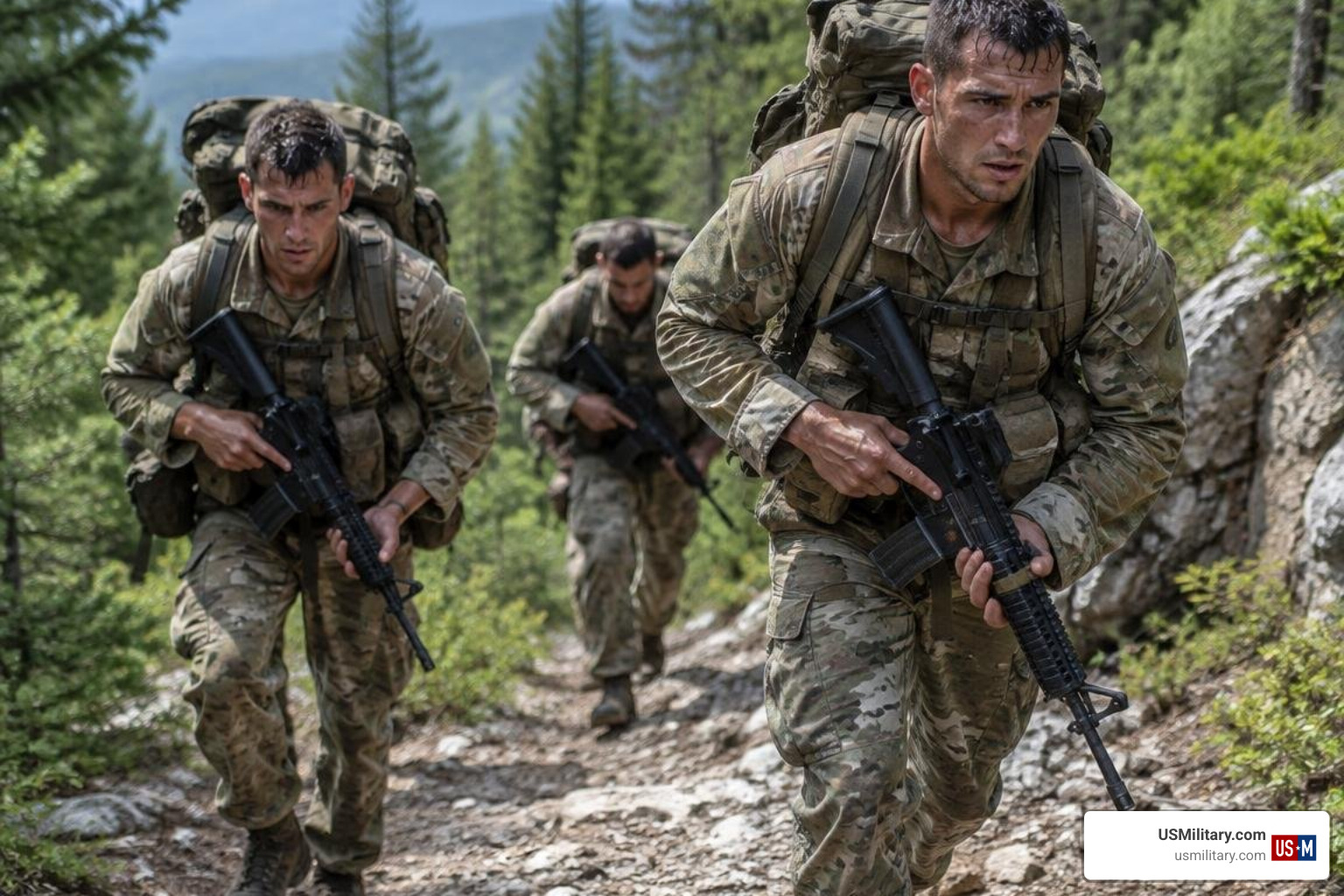
Every elite pipeline uses deliberate stress inoculation to transform candidates from reactive recruits into calm operators. When comparing top forces, such as in our breakdown comparing Navy SEALs and Delta Force standards, psychological screening proves just as critical as raw physical performance.
Units also utilize Survival, Evasion, Resistance, and Escape (SERE Level-C) training to teach candidates how to handle capture, interrogation, and psychological isolation. Instructors deliberately create situations where physical strength alone is not enough, forcing candidates to rely on mental clarity, adaptive problem-solving, and trust in their teammates.
Frequently Asked Questions About Elite Special Forces Training
What military unit has the highest training attrition rate?
Delta Force, the UK SAS, and India’s MARCOS regularly report attrition rates between 90% and 98%. Delta Force has documented selection classes where fewer than 15 out of 240 candidates passed the final evaluation.
How dangerous is special operations selection for candidates?
Elite pipelines carry inherent physical risks, including heat stroke, rhabdomyolysis, hypothermia, and training accidents. Military branches manage these hazards by assigning dedicated combat medical officers, monitoring wet-bulb temperatures, and using active safety divers during underwater evolutions.
Why do most candidates fail elite military selection courses?
The primary reasons for washout are overuse musculoskeletal injuries (such as stress fractures), failure on solo land navigation courses, and voluntary withdrawal due to mental fatigue and sleep deprivation.
Conclusion: Preparing for the Ultimate Military Challenge

Graduating from any of the world’s elite special operations pipelines requires years of disciplined preparation, physical conditioning, and mental resilience. Whether a soldier is aiming for the Green Beret Q-Course or preparing for Navy SEAL BUD/S, success always starts with mastering the fundamentals.
For prospective service members, building a strong base starts with core military skills, including foundational preparation for Army basic training. At USMilitary.com, we provide active duty personnel, recruits, and veterans with clear guidance on military career paths, VA benefits, and specialized training standards. Maintain your focus, train smart, and approach every challenge one evolution at a time.