
Common Army Veteran Disabilities: Where to Start

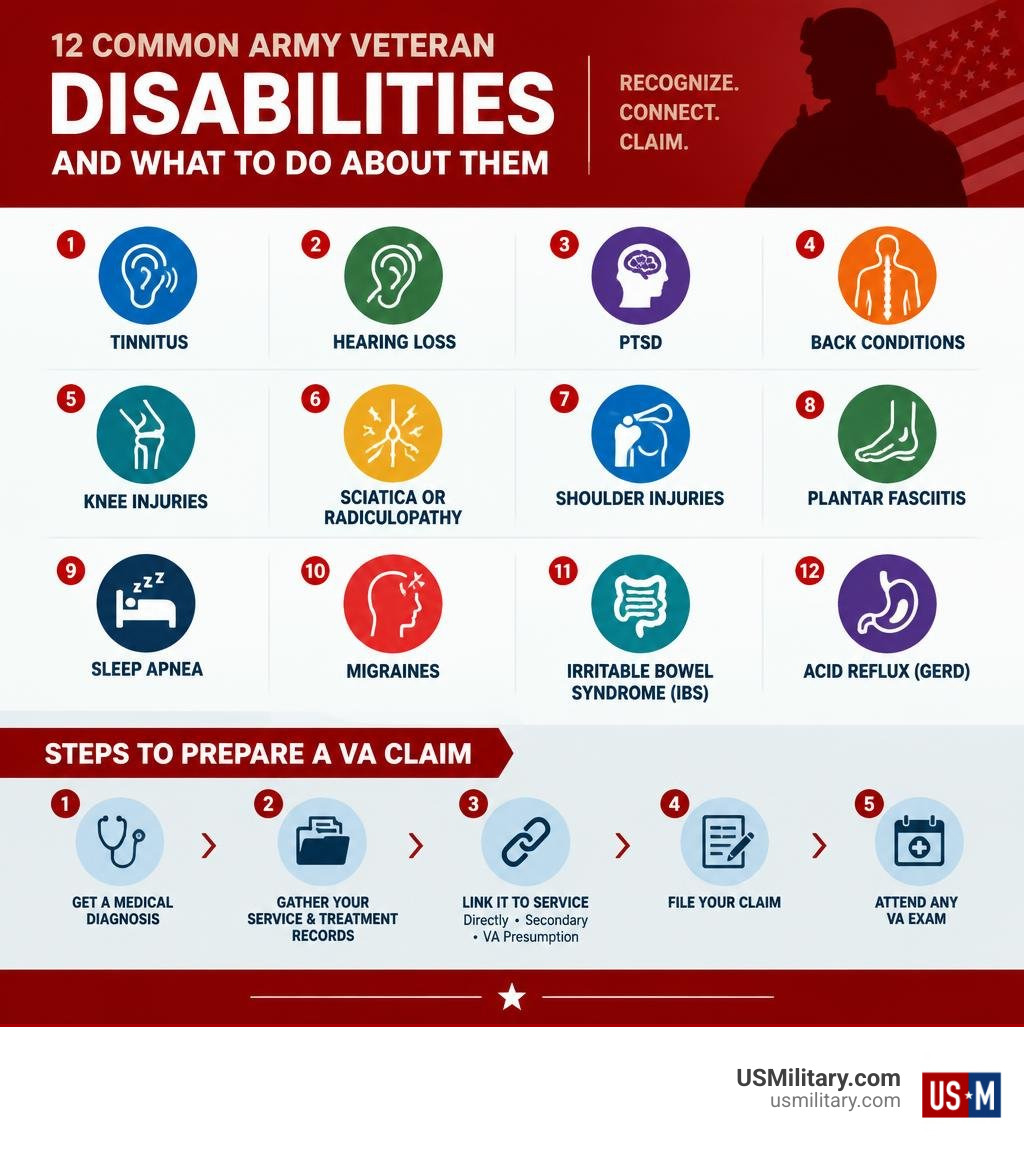
The 12 most common Army veteran disabilities and what to do about them include tinnitus, hearing loss, PTSD, back conditions, knee injuries, sciatica or radiculopathy, shoulder injuries, plantar fasciitis, sleep apnea, migraines, irritable bowel syndrome (IBS), and acid reflux (GERD). These are common claim types, not an official Army-only ranking.
If you have one of these conditions, get a medical diagnosis and gather your service and treatment records. Then check whether you can link it to service directly, as a secondary condition, or through a VA presumption. File a claim and attend any VA exam you are asked to complete.
I’m Larry Fowler, a Navy veteran, BUD/S Class 89 graduate, and publisher of USArmy.com and USMilitary.com. In 12 Most Common Army Veteran Disabilities And What To Do About Them, I draw on years of publishing VA benefits guidance to help you understand your next steps.
The 12 Most Common Army Veteran Disabilities and What to Do About Them
Years of rigorous training, heavy rucks, combat deployments, and engine room decibels leave a distinct mark on the human body. When we look at VA data across millions of recipients, certain injuries and illnesses appear far more frequently among Army personnel.
| Disability Condition | VA Diagnostic Code (38 CFR) | Rating Range | Common Military Triggers & Service Links |
|---|---|---|---|
| Tinnitus | DC 6260 | 10% (Flat) | Small arms fire, artillery, heavy machinery, aircraft noise |
| Hearing Loss | DC 6100 | 0% – 100% | Acoustic trauma, blast waves, flight line exposures |
| PTSD | DC 9411 | 0% – 100% | Combat exposure, direct threats, Military Sexual Trauma (MST) |
| Lumbosacral Strain (Back) | DC 5237 | 10% – 100% | Ruck marching, airborne drops, repetitive heavy lifting |
| Knee Limitation / Strain | DC 5257 / 5260 | 0% – 60% | Running on hard surfaces, jumps, carrying combat loads |
| Sciatica / Radiculopathy | DC 8520 | 10% – 80% | Nerve root compression secondary to spinal trauma |
| Shoulder Impingement | DC 5201 | 20% – 50% | Repetitive overhead lifting, obstacle courses, falls |
| Plantar Fasciitis | DC 5276 / 5284 | 10% – 50% | Long road marches with heavy combat gear in combat boots |
| Sleep Apnea | DC 6847 | 0% – 100% | Burn pit smoke exposure, secondary to PTSD or weight gain |
| Migraines | DC 8100 | 0% – 50% | Traumatic Brain Injury (TBI), chronic stress, neck injuries |
| Irritable Bowel Syndrome | DC 7319 | 0% – 30% | Gulf War environmental hazards, chronic mental stress |
| GERD (Acid Reflux) | DC 7346 | 10% – 60% | Long-term NSAID medication use, hiatal hernia, stress |
High-Prevalence Auditory and Mental Health Conditions Among Army Veterans
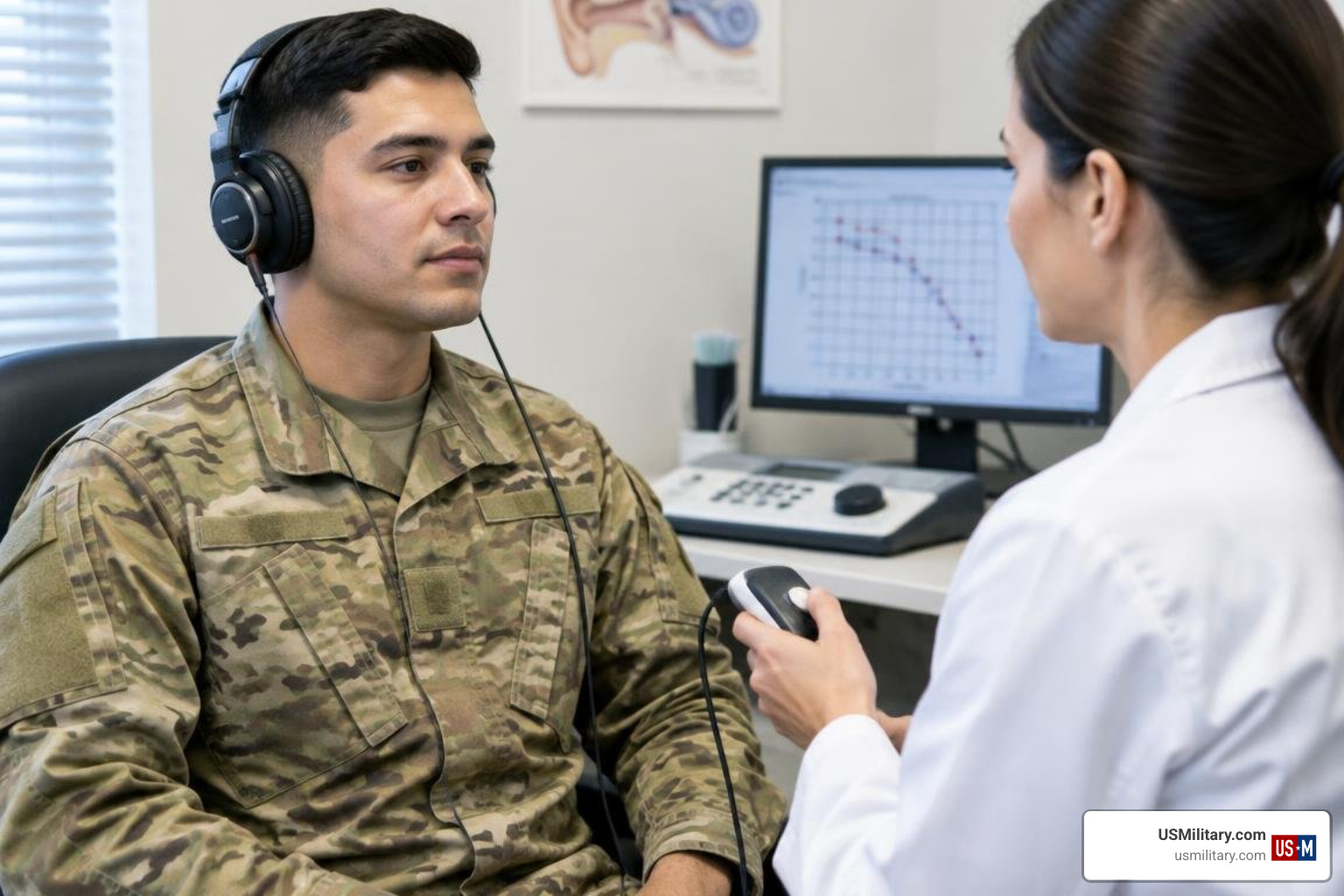
Tinnitus is universally the single most claimed condition in the VA system. Diagnostic Code 6260 awards a flat 10% rating whether the persistent ringing or buzzing affects one ear or both. While you cannot receive more than 10% for tinnitus alone, it frequently serves as a gateway to establish secondary service connections for sleep disturbances or anxiety.
Bilateral hearing loss (DC 6100) requires specific audiometric testing measuring pure-tone decibel loss and speech discrimination scores. Many veterans receive a 0% non-compensable rating for mild hearing loss, which still qualifies them for VA-issued hearing aids and related healthcare.
Post-Traumatic Stress Disorder (PTSD) falls under DC 9411 and is evaluated under the VA mental health general rating formula from 0% to 100% (rated at 0%, 10%, 30%, 50%, 70%, or 100%). Ratings depend on occupational and social impairment. Army veterans frequently experience combat trauma, catastrophic accidents, or personal violence during service. Knowing what conditions qualify for veteran disability benefits helps ensure you present comprehensive psychiatric evidence and personal stressor statements during your evaluation.
Musculoskeletal Injuries, Spine Conditions, and Joint Impairments
Years of hauling body armor and navigating rough terrain place enormous strain on the spine and joints. Lumbosacral strain and degenerative disc disease are rated based on objective Range of Motion (ROM) measurements under 38 CFR Part 4. The VA applies the “Painful Motion Rule,” meaning that if pain begins before reaching the end of your movement, your rating should reflect the point where limitation and discomfort start.
Spinal issues often pinch nerve roots, leading to radiating pain, numbness, and tingling down the legs, a condition rated as sciatica or lower radiculopathy. In the upper body, cervical strain frequently causes radiculopathy down the arms.
Knee conditions are evaluated for limited flexion, extension, and joint instability. Using a clear 38 CFR knee rating chart for veterans shows how separate ratings can be assigned for motion loss versus stability issues in the same joint. Shoulder conditions and plantar fasciitis round out these common physical injuries, often requiring custom orthotics, braces, or physical therapy.
Systemic, Respiratory, and Gastrointestinal Service-Connected Illnesses
Obstructive Sleep Apnea (OSA) has become one of the most frequently claimed respiratory conditions. Rated under DC 6847, sleep apnea requires a formal sleep study showing an elevated Apnea-Hypopnea Index (AHI). Under long-standing criteria, an award of 50% is assigned when a Continuous Positive Airway Pressure (CPAP) machine is medically required. However, staying informed through the complete guide to navigating 2026 VA disability changes is critical, as rating criteria for sleep apnea continue to evolve.
Migraine headaches (DC 8100) can warrant up to a 50% rating if you experience frequent, fully prostrating attacks that severely impair your ability to work.
Digestive disorders are also widespread. Irritable Bowel Syndrome (IBS) under DC 7319 and Gastroesophageal Reflux Disease (GERD) under DC 7346 often develop from chronic field conditions, combat rations, dysentery during deployment, or prolonged use of anti-inflammatory medications taken for service-connected joint pain.
How to Establish Service Connection and File an Army Disability Claim
Securing disability compensation requires proving to the VA that your current medical condition is directly related to your active-duty service.

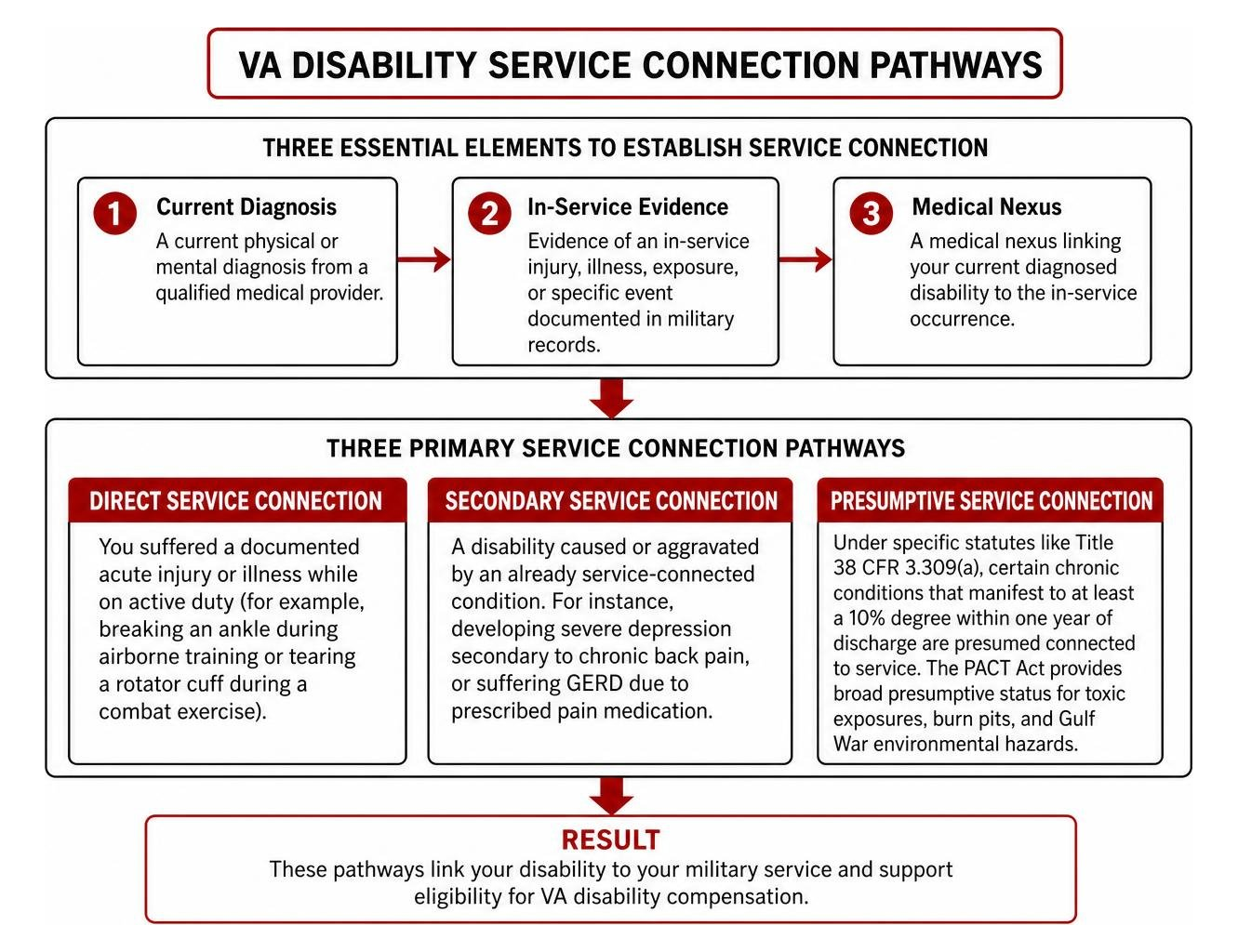
To establish service connection, your claim must contain three essential elements:
- A current physical or mental diagnosis from a qualified medical provider.
- Evidence of an in-service injury, illness, exposure, or specific event documented in your military records.
- A medical nexus linking your current diagnosed disability to the in-service occurrence.
Enrolling in VA care is straightforward, and reviewing the official VA Health Care Benefits Overview Guide provides clear details on enrollment priority groups and medical access.
Direct, Secondary, and Presumptive Service Connection Pathways
You can link your disability to your service through three primary legal avenues:
- Direct Service Connection: You suffered a documented acute injury or illness while on active duty (for example, breaking an ankle during airborne training or tearing a rotator cuff during a combat exercise).
- Secondary Service Connection: A disability caused or aggravated by an already service-connected condition. For instance, developing severe depression secondary to chronic back pain, or suffering GERD due to prescribed pain medication.
- Presumptive Service Connection: Under specific statutes like Title 38 CFR 3.309(a), certain chronic conditions (including arthritis, hypertension, or diabetes) that manifest to at least a 10% degree within one year of discharge are presumed connected to service without needing to prove an in-service trigger. Additionally, the PACT Act provides broad presumptive status for toxic exposures, burn pits, and Gulf War environmental hazards.
Navigating the Claim Process and Evidentiary Requirements for the 12 Most Common Army Veteran Disabilities and What to Do About Them
When submitting your claim, the quality of your documentation determines your outcome. Submitting a Fully Developed Claim (FDC) speeds up processing because you provide all required evidence at once.
Essential evidence includes:
- Service Treatment Records (STRs) and personnel files detailing military duties and assignments.
- Disability Benefits Questionnaires (DBQs) completed by treating physicians to document the exact functional severity.
- Private Nexus Letters where a medical professional states it is “at least as likely as not” that your condition stems from military service.
- Buddy Statements and Lay Evidence from fellow soldiers or family members describing how the injury occurred and how it limits your daily routine.
If you are currently transitioning out of active duty, the DoD-VA Integrated Disability Evaluation System Guidelines outline how the medical evaluation board (MEB) works. Utilizing Benefits Delivery at Discharge (BDD) between 180 and 90 days prior to separation allows you to secure decisions before your final out-processing. Following a structured winning strategy for your VA disability claim approval helps avoid common administrative delays.
Actionable Strategies to Maximize, Appeal, or Increase Your VA Disability Rating
If your initial claim was denied or your rating does not match the actual severity of your condition, you have multiple legal options to secure full benefits.
Working with accredited Veteran Service Officers (VSOs) can make a substantial difference. You can consult the DAV National Service Officer Directory and Claims Guide to find free, professional claims representation.
Overcoming Denials, Requesting Increases, and Claiming Secondary Conditions
When a decision letter arrives with an unfavorable ruling, you have one year to challenge it using the VA decision review process:
- Supplemental Claim: Submit new and relevant medical evidence, such as an updated nexus statement or diagnostic imaging.
- Higher-Level Review (HLR): Request a senior adjudicator re-examine the existing record for clear errors or Duty to Assist violations.
- Board of Veterans’ Appeals (BVA): Take your appeal directly to a Veterans Law Judge.
If an existing condition has worsened over time, our step-by-step guide to increasing your VA disability rating outlines how to file for an increase with updated medical records. You can also consult our 2026 VA rating increase roadmap to properly claim related secondary conditions like sciatica or migraine attacks.
Long-Term Management and Maximizing Benefits for the 12 Most Common Army Veteran Disabilities and What to Do About Them
Managing chronic conditions requires ongoing clinical care and financial planning. Service-connected veterans rated 50% or higher fall into VA Priority Group 1, granting comprehensive, copay-free care and prescription coverage.
When service-connected disabilities prevent you from securing substantially gainful employment, you may qualify for Total Disability based on Individual Unemployability (TDIU). TDIU pays at the 100% compensation rate even if your schedular rating is lower. Review our guide on understanding 100% disabled veteran compensation to see how monthly payouts and dependents change at the maximum level.
Additionally, our detailed overview of VA benefits by disability percentage explains state property tax exemptions, Veteran Readiness and Employment (VR&E) programs, and Special Monthly Compensation (SMC) for specific physical losses.
Frequently Asked Questions About Common Army Veteran Disabilities
What is the fastest way to get a disability rating after leaving the Army?
The fastest route is filing a Pre-Discharge claim through the Benefits Delivery at Discharge (BDD) program between 180 and 90 days before separation. This enables the VA to complete your C&P exams while you are still on active duty, often delivering a final rating decision shortly after your discharge date.
Can I receive VA disability benefits for multiple common service-connected conditions?
Yes. You can receive benefits for any number of service-connected disabilities. However, the VA does not simply add percentages together. It uses non-additive “VA math,” calculating each successive disability from your remaining whole person efficiency. When conditions affect paired extremities (like both knees or both arms), the VA applies an additional Bilateral Factor calculation.
How does the PACT Act impact presumptive claims for Army veterans in 2026?
The PACT Act permanently expanded presumptive eligibility for veterans exposed to toxic burn pits, particulate matter, and airborne hazards across Southwest Asia, Afghanistan, and other operational theaters. Conditions like chronic sinusitis, rhinitis, asthma, and various respiratory cancers no longer require an individualized nexus letter, requiring only proof of deployment and a current diagnosis.
Conclusion
Navigating the VA claims process for Army disabilities requires preparation, persistence, and accurate evidence. Whether you are filing an initial claim for tinnitus, seeking a rating increase for chronic back injuries, or establishing secondary service connection for sleep apnea, understanding your rights ensures you receive the compensation you earned.
At USMilitary.com, we provide the resources, calculators, and detailed guides you need to navigate military benefits confidently. Take charge of your physical and financial health by exploring our comprehensive 2026 VA disability pay tables and compensation charts to understand your benefit entitlement today.