
Find a US Army Recruiter Near You in Minutes
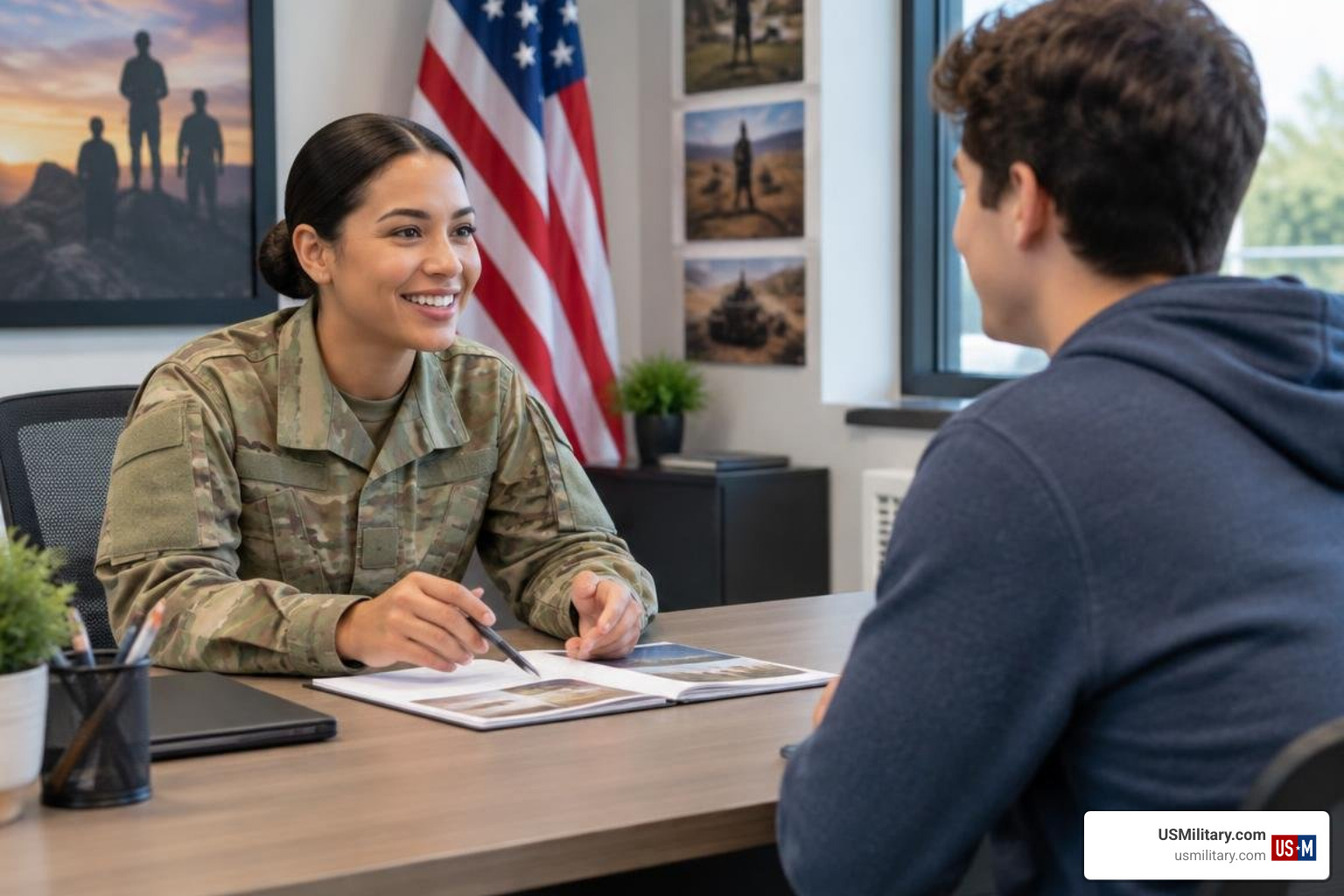
To find your nearest U.S. Army recruiter, start with the official GoArmy recruiter page and enter your ZIP code. You can also call 1-888-550-ARMY (2769) to be routed to a local office, or visit a nearby recruiting station in person during business hours.
Before you reach out, decide which path interests you most:
- Active Duty for full-time Army service
- Army Reserve for part-time federal service
- Army National Guard for part-time service with state and federal missions
A recruiter can explain eligibility, career options, ASVAB testing, medical screening, bonuses, education benefits, and the steps leading to Basic Combat Training. There is no need to commit just because you ask questions. Bring your goals, your questions, and an honest overview of any medical, legal, or education history.
I am LARRY FOWLER, publisher of the USMilitary.com Network since 2007, where I have helped military audiences navigate recruiting, service options, and veterans benefits. This quick guide to How To Find My Nearest US Army Recruiter will help you choose a reliable contact method and prepare for the conversation ahead.
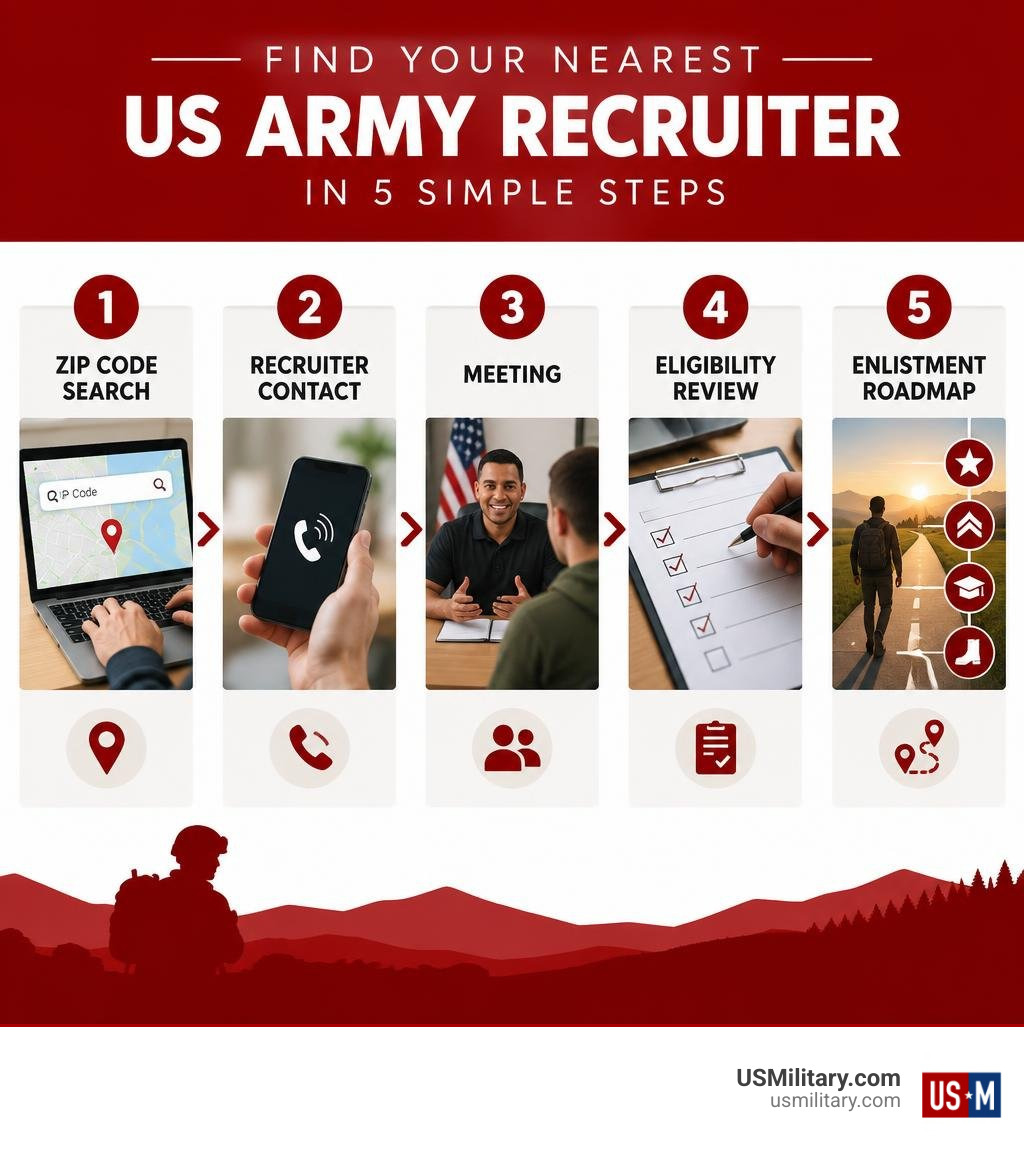
How To Find My Nearest US Army Recruiter: Proven Step-by-Step Channels
Taking your first step into military service should never feel intimidating. Finding a recruiter is simpler than Basic Combat Training. The U.S. Army maintains thousands of recruiting professionals stationed across the United States. Whether you live in a bustling metropolitan center or a rural county, dedicated non-commissioned officers (NCOs) cover your geographic territory.
Connecting with an Army recruiting center gives you access to direct information about enlistment bonuses, Military Occupational Specialties (MOS), and education funding. You can connect through online tools, direct phone calls, or walk-in visits.
Online ZIP Code Locators: How To Find My Nearest US Army Recruiter
The most efficient digital method is using an official online locator. When you learn how to find my nearest US Army recruiter through the web, you cut out the guesswork. By visiting the GoArmy recruiter locator, you simply input your 5-digit ZIP code and select your search radius.
The tool instantly populates the nearest physical recruiting stations, their operating hours, direct telephone numbers, and email addresses. You can also submit an online form with your basic details (full name, date of birth, contact information) to have a local representative reach out to you directly via phone, email, or text.
Phone Contact and Regional USAREC Brigades
If you prefer speaking directly with someone over the phone, call the national recruiting hotline at 1-888-550-ARMY (1-888-550-2769) or 1-800-USA-ARMY. These centralized dispatch lines automatically match your area code or spoken ZIP code with your local station.
For higher-level administrative questions, regional briefings, or non-standard inquiries, you can reach out through the official Contact USAREC portal. The U.S. Army Recruiting Command manages several regional brigades across the nation:
- 1st Recruiting Brigade (Northeast/Mid-Atlantic): (301) 677-2790
- 2nd Recruiting Brigade (Southeast): (256) 450-9500
- 3rd Recruiting Brigade (Midwest): (502) 626-0600
- 5th Recruiting Brigade (Southwest): (210) 221-1900
- 6th Recruiting Brigade (West Coast): (702) 639-2000
- Medical Recruiting Brigade: (502) 626-0801
Walk-In Recruiting Stations and Career Centers
Most civilian communities have joint Armed Forces Career Centers located in commercial plazas, shopping centers, or standalone municipal offices. Standard business hours run Monday through Friday from 9:00 AM to 5:00 PM, with many stations offering evening and weekend appointments.
While scheduling ahead guarantees immediate attention, walk-in visits are always welcome. Recruiters also routinely visit local high schools, vocational campuses, job fairs, and community college career centers.
Choosing the Right Path: Active Duty, Reserve, and National Guard
The U.S. Army consists of three distinct components: Active Duty, the Army Reserve, and the Army National Guard. When beginning your recruitment journey, understanding which component aligns with your personal, academic, and professional goals ensures you contact the right recruiting professional.
| Component | Service Commitment | Primary Mission | Command Structure |
|---|---|---|---|
| Active Duty | Full-Time (2-6 year initial contracts) | Worldwide federal deployment & operations | Federal (President / Department of Defense) |
| Army Reserve | Part-Time (1 weekend/month + 2 weeks/year) | Combat support & federal mission augmentation | Federal (President / Department of Defense) |
| Army National Guard | Part-Time (1 weekend/month + 2 weeks/year) | Community emergency relief & combat capability | State Governors (State) & President (Federal) |
If you want to serve your home state during natural disasters while maintaining local tuition benefits, you can find an Army National Guard recruiter to explore localized opportunities. If you are comparing your options across other military branches, you can also explore how to find an Air Force recruiter to evaluate different service cultures.
Matching Recruiter Types to Service Goals
- Active Duty Recruiters: Ideal if you want a complete lifestyle change, full-time salary, complete healthcare (TRICARE Prime), housing allowances (BAH), and relocation opportunities across the globe.
- Army Reserve Recruiters: Ideal if you want to attend college full-time or build a civilian career while serving part-time in specialized technical, medical, logistical, or administrative roles.
- Army National Guard Recruiters: Ideal if you want to remain in your home state, assist local communities during domestic emergencies, and take advantage of state-funded college tuition assistance programs.
How To Find My Nearest US Army Recruiter for Specialized Tracks
Applicants pursuing non-standard enlistments require specialized recruiting personnel:
- Special Operations (ARSOF): If your ambition includes 75th Ranger Regiment, Special Forces (Green Berets), or Psychological Operations, consult the official Army Special Operations Recruiter Directory to connect with specialized NCOs.
- Warrant Officer Flight Training (“Street to Seat”): Civilians aiming to fly helicopters without prior service work with dedicated Non-Prior Service Warrant Officer recruiters.
- Army ROTC & West Point: High school and college students seeking officer commissions work with on-campus ROTC cadre and regional Recruiting Operations Officers (ROOs).
- Healthcare Professionals: Physicians, dentists, nurses, and allied health specialists work directly with Medical Recruiting Brigade representatives.
Meeting Your Recruiter: Eligibility, Documents, and Expectations
Your initial meeting with an Army recruiter is an exploratory conversation, not a legally binding contract. Think of it as a two-way interview where you discover what the Army can do for your personal ambitions.
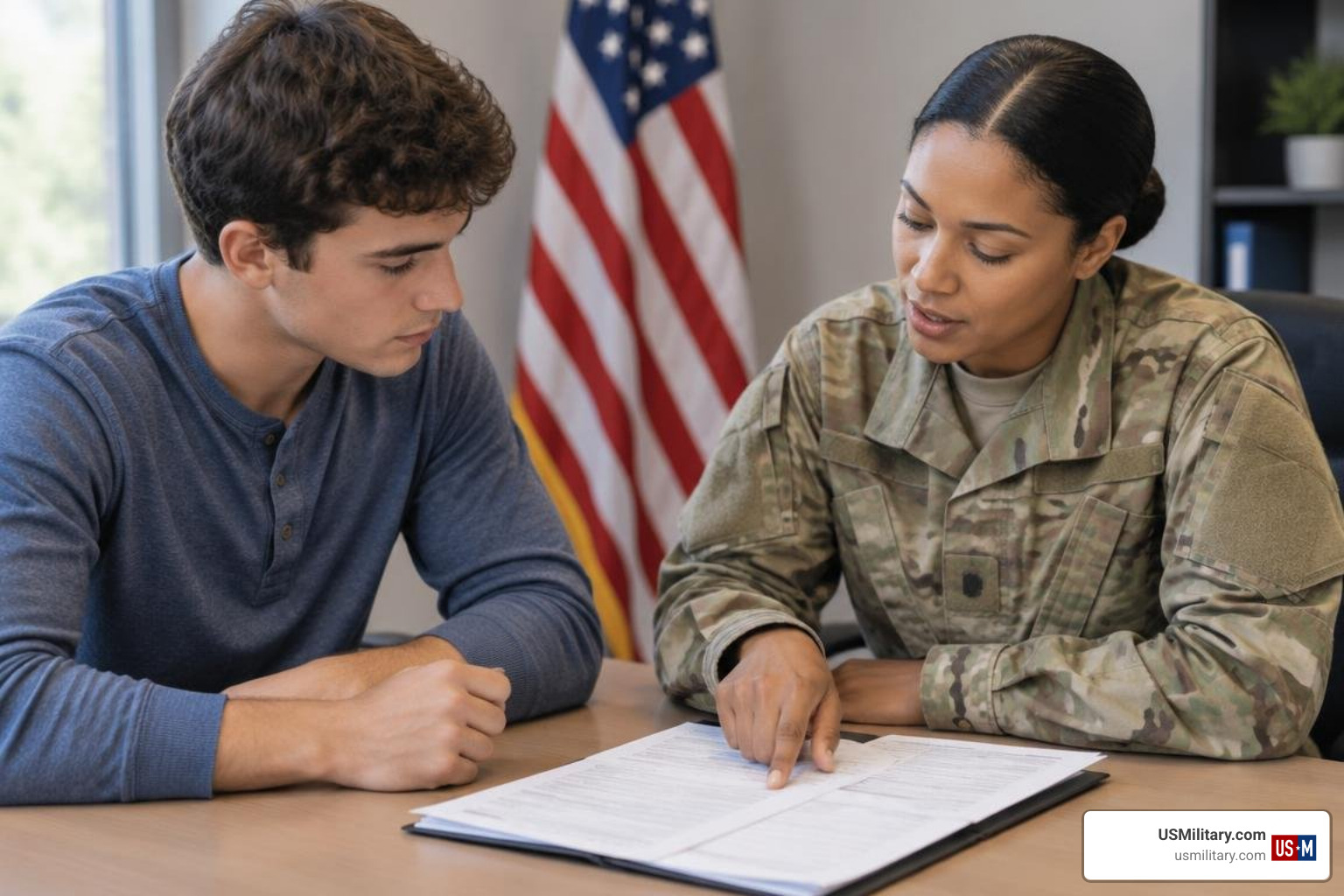
Basic Eligibility Standards and Waiver Options
To join the U.S. Army, candidates must satisfy foundational criteria:
- Age: 17 to 35 years old (17 requires parental consent; certain Reserve/Guard roles accept up to age 35+).
- Citizenship: U.S. citizen or lawful permanent resident (Green Card holder).
- Education: High school diploma or recognized GED equivalent.
- ASVAB Score: Minimum Armed Forces Qualification Test (AFQT) score of 31 out of 99.
- Physical Fitness: Ability to pass initial height/weight screening and Army physical standards.
If you have a past minor legal infraction, historical medical condition, or body art, USAREC provides formal evaluation paths. You can review the official recruiting regulations and qualification standards to understand how medical and moral waivers are reviewed. Tattoos on the arms, torso, and legs are widely accepted, provided they do not feature extremist, sexist, or indecent messaging. Tattoos behind the ear or on the back of the neck may require an administrative waiver.
What to Bring to Your First Recruiter Appointment
To streamline your appointment, bring these foundational items:
- Government-issued photo identification (Driver’s License or State ID)
- Original Social Security Card
- Official Birth Certificate or Permanent Resident Card (Form I-551)
- High school diploma, GED certificate, or official college transcripts
- Pertinent medical documentation for past surgeries, broken bones, or treated chronic conditions
- Documentation regarding any civil traffic violations or legal records (if applicable)
- A written list of your primary questions, target MOS career fields, and life goals
The Path to Basic Training: From Initial Contact to Enlistment
Enlistment follows a clear, structured sequence designed to evaluate your mental aptitude, physical health, and occupational preferences.

ASVAB Testing, MEPS Processing, and Career Selection
- Practice Screening: Your recruiter administers a short preliminary test (such as the PiCAT) at the station to gauge your academic standing.
- ASVAB Examination: You complete the full Armed Services Vocational Aptitude Battery to establish your AFQT score and line scores for MOS classification.
- MEPS Physical: At the Military Entrance Processing Station, doctors evaluate your hearing, vision, blood work, joint flexibility, and medical history.
- MOS Reservation: You sit down with a MEPS guidance counselor to review open job slots, select your Military Occupational Specialty, lock in your contract terms, and review available enlistment bonuses.
- Oath of Enlistment: You swear your initial Oath of Enlistment into the Delayed Entry Program (DEP) / Future Soldier Program.
Enlistment Incentives, Bonuses, and Benefits
The Army provides competitive financial packages to enlistees entering critical high-demand roles. Recruiters have direct visibility into:
- Cash Enlistment Bonuses: Depending on the job, test scores, and your readiness to ship quickly, cash incentives can reach substantial amounts.
- GI Bill & Tuition Assistance: The Post-9/11 GI Bill covers college tuition, housing, and books, supplemented by up to $4,500 per year in Federal Tuition Assistance while serving.
- VA Home Loan Eligibility: Military service unlocks access to zero-down-payment home financing backed by the Department of Veterans Affairs.
- Comprehensive Healthcare: Zero-deductible medical and dental coverage for active personnel, and low-cost TRICARE Reserve Select for part-time soldiers.
Frequently Asked Questions About Army Recruiters
What is the best way to contact an Army recruiter without immediate commitment?
The best approach is using the online chat on GoArmy.com or calling a local station directly to state that you want an “informational briefing.” Recruiters are there to answer questions about jobs, education, and lifestyle. You are under no legal obligation until you sign your final contract and take the oath at MEPS on your ship date.
Can I switch recruiters or Army branches if I change my mind?
Yes. If you feel your current recruiter is not addressing your goals, or if you decide another branch aligns better with your career plans, you have the right to request another station or visit another service branch recruiter. If processing paperwork has already begun at MEPS, your recruiter simply transfers your electronic applicant file.
What happens if I have a medical issue, past bankruptcy, or tattoo?
Transparency is essential. Disclose everything during your initial consultation. Past bankruptcies older than three years generally do not disqualify you from enlisting. Non-disqualifying tattoos are photographed and cataloged, while medical conditions are reviewed through the Department of Defense medical waiver board for clearance.
Conclusion
Finding and connecting with your nearest Army recruiter gives you clear answers about your career, education, and service opportunities. Whether you choose the full-time commitment of Active Duty, the technical versatility of the Army Reserve, or the community focus of the Army National Guard, taking that first step sets your path in motion.
We encourage you to explore our comprehensive military recruiting and enlistment pathways to compare benefits, evaluate branch cultures, and prepare for your enlistment consultation today.