
The US Army Suicide Crisis: What Every Service Member and Family Needs to Know

Are suicides taken seriously in the US Army today? The short answer is: officially yes, but in practice, not enough.
Here is a quick breakdown:
| Factor | Reality |
|---|---|
| Official policy | Army has a formal Suicide Prevention Program (ASPP) and AR 600-92 |
| Actual suicide rates | At least 2 soldiers die by suicide every week on average |
| Suicides vs. combat deaths (2014-2019) | 883 suicides vs. 96 combat deaths |
| Prevention doctrine | Released 3 years late, criticized as “short on answers” |
| Mental health staffing | Some bases have ~20 counselors for 12,000+ soldiers |
| Progress | Rates have increased steadily since the Army began tracking them |
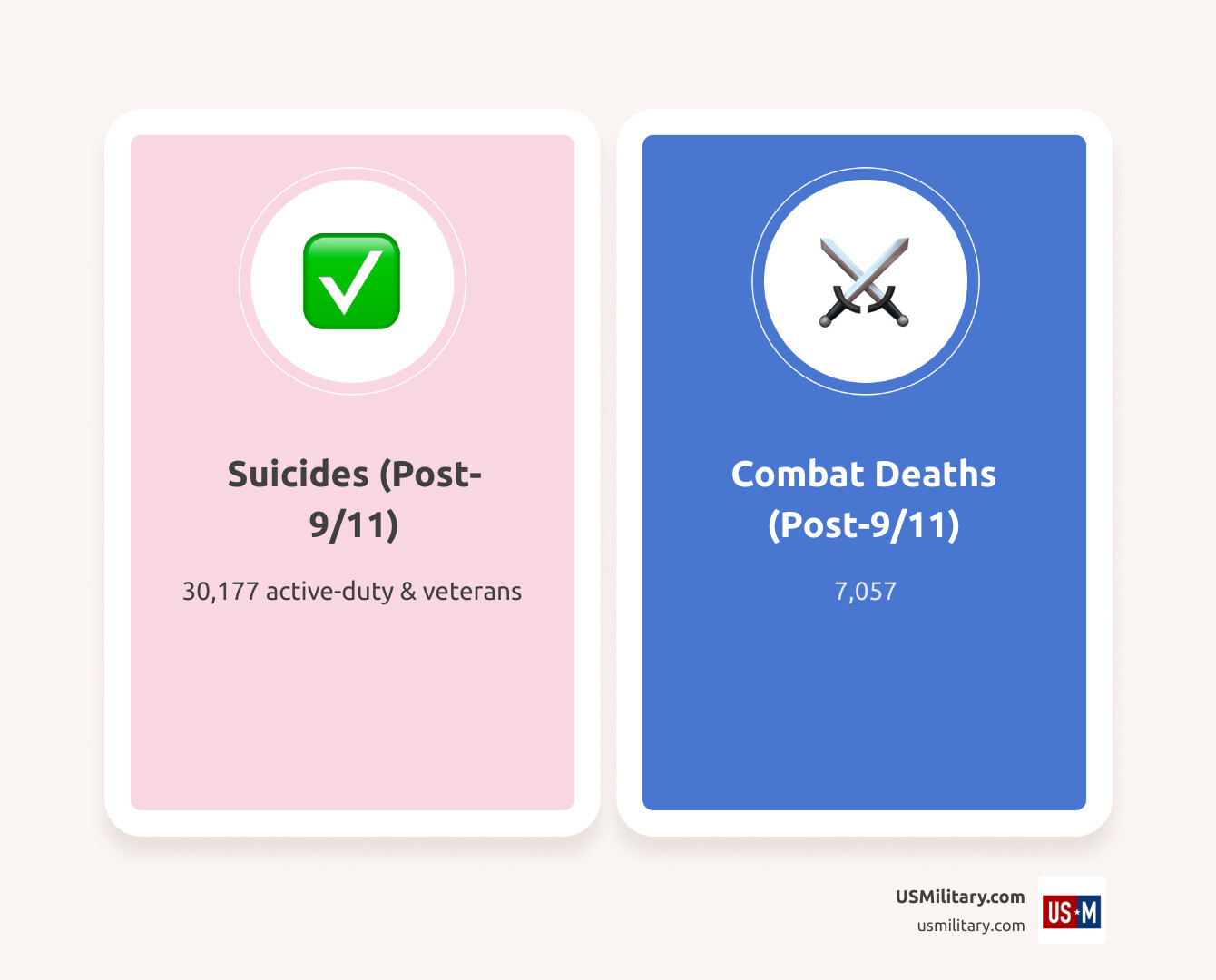
The numbers are stark. Between 2014 and 2019, 35% of all Army deaths were suicides – nearly 10 times the number killed in combat during the same period. Since 9/11, over 30,000 active-duty personnel and post-9/11 veterans have died by suicide – more than four times the 7,057 who died in combat operations.
Programs exist. Hotlines are funded. Regulations are written. But a pattern of delayed policies, ignored Pentagon studies, and chronic resource shortages raises serious questions about whether the Army’s commitment goes beyond paperwork.
“If we keep doing what we’re doing, we’ll keep getting what we’re getting.” – Maj. Richard Pedersen, 1994
That quote is 30 years old. The problem is still here.
I’m Larry Fowler, publisher of the USMilitary.com Network since 2007, and I’ve spent nearly two decades tracking the policies, trends, and real-world outcomes that affect active-duty soldiers and veterans – including the deeply troubling question of are suicides taken seriously in the US Army today. In this guide, I’ll walk you through the data, the gaps, and what genuine progress would actually look like.
If you or someone you know needs help now, call or text 988 and press 1 for the Military Crisis Line, available 24/7.
Are suicides taken seriously in the US Army today terms to know:
Analyzing the Data: Are Suicides Taken Seriously in the US Army Today?
To understand if are suicides taken seriously in the US Army today, we have to look past the press releases and into the hard data. The numbers suggest a “silent war” occurring within the ranks—one where the enemy isn’t an insurgent, but a complex mix of trauma and systemic failure.
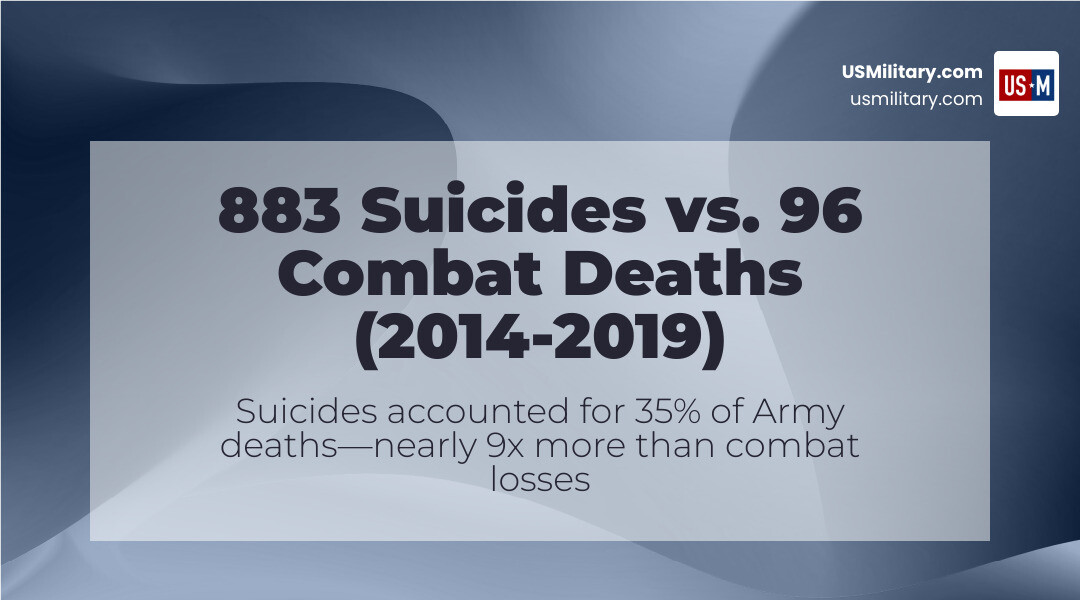
According to Pentagon studies, suicide has become the leading cause of death for active-duty soldiers. Between 2014 and 2019, a total of 2,530 soldiers died while serving. Of those, 883 (35%) took their own lives. In that same six-year window, only 96 soldiers were killed in combat. This means a soldier was nearly nine times more likely to die by their own hand than by enemy fire.
When we look at the broader picture since the Global War on Terror began, the Research on military suicide trends since 9/11 reveals that 30,177 active-duty personnel and veterans have died by suicide, compared to roughly 7,000 killed in action. This four-to-one ratio indicates that the psychological toll of modern warfare is significantly more lethal than the physical battlefield itself.
Furthermore, the veteran suicide rate stands at approximately 31.7 per 100,000—about 57% higher than the non-veteran population. While the Department of Defense (DoD) often argues that these rates are comparable to civilians when adjusted for age and sex, the “Healthy Soldier Effect” suggests military members should actually be healthier than the general public due to rigorous screening and fitness standards. The fact that they are not raises red flags about the environment they serve in.
Why Army suicides are taken seriously in the US Army today through clinical research
One area where the Army is showing serious effort is in clinical research. We are beginning to understand that suicide isn’t always a “mental health” problem in the traditional sense; it is often a physiological one.
Scientific research on sleep and suicide risk has shown that sleep disturbances, such as chronic insomnia, are one of the most reliable predictors of suicidal ideation and behavior. In the high-tempo world of the Army, where “sleep is a luxury,” this finding is critical.
Additionally, we’ve seen a massive push to understand the role of:
- Traumatic Brain Injuries (TBI): Repeated exposure to “micro-blasts” from heavy weaponry or IEDs can cause physical damage to the brain’s white matter, leading to depression and impulsivity.
- Substance Abuse: The opioid epidemic hasn’t spared the military. Many soldiers are prescribed high-dose painkillers for physical injuries, which can lead to addiction and increased suicide risk.
- Clinical Care Gaps: While u-s-army-research-institute-harvard-team-up-against-ptsd-mtbi is a great step toward better care, only 23-40% of soldiers who screen positive for mental health issues actually seek help.
Comparing branch-specific suicide rates and historical peaks
While the Army often bears the brunt of the suicide crisis, it is a Department-wide issue. Recent Latest research on military suicide rates shows that rates are at an all-time high since record-keeping began after 9/11. Some branches are seeing rates not witnessed since before World War II.
The Army’s suicide rate has risen steadily for 20 years. In 2021, the Army saw a particularly alarming spike, and while there was a slight dip in 2022, the 2023 data showed the Active Component rate climbing again to 28.2 per 100,000.
In comparison, other branches face their own struggles. An internal Navy audit found that 62% of Navy homepages failed to display the mandatory suicide hotline link. This lack of compliance in the digital age suggests that even “easy” prevention measures are being overlooked.
Root Causes: From Blast Exposure to Operational Demands
Why is this happening? If we want to answer are suicides taken seriously in the US Army today, we must look at the unique stressors soldiers face.
Blast Exposure and TBI
We used to think TBIs only happened during massive explosions. Now, we know that Special Operations forces, particularly Navy SEALs and Army Rangers, suffer brain damage from the very weapons they use in training. This “breacher’s brain” leads to a loss of impulse control and extreme depression. A Study on PTSD and mortality risk found that those with PTSD are at a significantly higher risk of death from suicide and accidents, often fueled by these underlying physical brain changes.
Access to Firearms
Firearms are the most common method used in Army suicides, accounting for roughly 70% of deaths. Unlike the civilian world, where a waiting period might exist, soldiers live in a culture where firearms are a daily tool. While the Army is looking into fda-clears-new-traumatic-brain-injury-assessment-device and other tech, the simple reality of easy access to lethal means during a moment of crisis remains a primary driver of the death toll.
Operational Demands
Repeated deployments and a high “operational tempo” mean soldiers have less “dwell time” at home. This strains marriages and breaks down the social support networks that keep people grounded. When a soldier is on their fourth or fifth deployment, the psychological “armor” begins to thin.
The impact of social isolation and financial stress
It’s not just combat. Many suicides occur among soldiers who have never deployed. Research on social connection as a buffer shows that loneliness is a major killer.
The Blue Star Families 2022 Military Family Lifestyles Survey highlighted two massive stressors:
- Financial Stress: 26% of enlisted active-duty members report “very low food security.” It is hard to focus on mental health when you are worried about feeding your kids.
- Housing Concerns: Frequent moves and the current housing market have left many military families feeling unstable.
Organizations like the USO are stepping in where the military falls short. Through programs like the USO Reading Program and Warrior Centers, they help soldiers maintain connections with home. For those recovering from injury, acupuncture-helping-reduce-use-of-pain-killers-in-army and other holistic approaches at these centers provide a lifeline.
Barriers to Prevention: Culture, Stigma, and Resource Gaps
Even with the best intentions, the Army faces a “culture of toughness” that often treats mental health as a weakness. Many soldiers fear that seeking help will end their careers or result in them being “flagged” and unable to promote.
Resource Shortages
At bases like Fort Riley, the shortage of mental health professionals is a life-and-death issue. With only about 20 counselors for over 12,000 soldiers, wait times can be weeks or months. We saw the tragic result of this with Specialist Austin Valley, who reached out for help multiple times but didn’t receive the inpatient care he needed before taking his own life.
Leadership Priorities
Sometimes, leadership is the problem. Some senior leaders still view suicide prevention as a “check the box” requirement rather than a mission-essential task. For more insights on how the Army is trying to change this, you can check More info about VA disability services which often details the transition from active duty to veteran care.
Assessing if suicides are taken seriously in the US Army today by leadership
Is the leadership doing enough? There is a feeling among many families and experts that the Pentagon “sits on” studies. For example, the Army quietly released its major suicide prevention doctrine in 2023—three years later than promised. Critics noted it contained outdated references (like the old APFT) and lacked clear “battle drills” for junior leaders to follow when a soldier is in crisis.
However, some legislative progress has been made:
- Joshua Omvig Veterans Suicide Prevention Act (2007): Expanded VA mental health services.
- Clay Hunt SAV Act (2015): Required third-party evaluations of suicide prevention programs.
- The Brandon Act (2023): Allows soldiers to self-refer for mental health evaluations confidentially.
Scientific research on suicide prevention strategies emphasizes that “relational” care—where leaders actually know their soldiers—is more effective than any PowerPoint presentation.
Successful Models and Policy Recommendations
If we want to fix the issue of are suicides taken seriously in the US Army today, we need to look at what actually works.
- The Power of Connection: Non-profits like “Give an Hour” offer peer-support training that helps soldiers support each other. This moves the burden off the overstretched medical system and back into the units.
- Animal-Assisted Therapy: Research on the power of pets for mental health isn’t just “feel good” science. Petting a dog releases phenylethylamine, a natural anti-depressant. The USO’s use of canine volunteers at Warrior Centers has been a massive success.
- Lethal Means Safety: Encouraging safe storage of firearms and medications. The Army is currently army-study-looks-at-developing-mental-armor-for-soldiers to help soldiers build the resilience needed to survive these moments of crisis.
- Community Care: fort-hood-ministry-teams-care-for-counsel-soldiers-families-in-aftermath-of-tragedy shows that spiritual and community support are vital components of the “postvention” process—helping units heal after a loss.
Frequently Asked Questions about Army Suicide Prevention
Is suicide the leading cause of death for active-duty soldiers?
Yes. Recent Pentagon data confirms that suicide is the primary cause of death among active-duty Army personnel, far exceeding combat deaths. In some years, a soldier was nearly 10 times more likely to die by suicide than in battle.
How do military suicide rates compare to the civilian population?
The veteran suicide rate is approximately 57% higher than that of the civilian population. While the military rate was historically lower than the civilian rate, it surpassed it around 2008 and has remained elevated ever since.
What role does the 988 hotline play for service members?
The 988 Suicide and Crisis Lifeline (specifically pressing “1” for the Military Crisis Line) provides 24/7 confidential support. It has answered millions of calls and dispatched emergency services over 100,000 times to save lives in progress.
Conclusion
So, are suicides taken seriously in the US Army today? The answer is a complicated mix of “yes” at the policy level and “not always” at the unit level. The Army has the regulations (AR 600-92), the research, and the funding. What it often lacks is the execution—the staffing at local clinics, the timely release of doctrine, and a culture that truly prioritizes the person over the mission.
We need to move away from “check the box” training and toward a public health model that addresses financial stress, housing, and the physical brain damage caused by service. The families of soldiers like Austin Valley and Brandon Caserta deserve an Army that acts before the crisis, not just after.
For more information on the resources available to you, including More info about VA disability services, stay tuned to USMilitary.com. We are here to ensure you have the tools to navigate your career and your health.
If you are in crisis, please reach out. You are not alone. Dial 988, then press 1.