
When looking at the elite echelons of the United States military, the lines between different units can easily blur. Hollywood often depicts all special operations forces as identical door-kickers. However, comparing the Green Berets to Delta Force is not a question of who is “more elite,” but rather what specific job they are designed to perform.
To help visualize these structural and operational distinctions, we can look at how they fit within the broader military apparatus:
| Feature | Green Berets (U.S. Army Special Forces) | Delta Force (1st SFOD-D / CAG) |
|---|---|---|
| Primary Philosophy | “De Oppresso Liber” (To Free the Oppressed) | Surgical precision and absolute secrecy |
| Operational Focus | Long-term partner nation capacity building | Direct action, hostage rescue, national-level tasks |
| Command Authority | U.S. Army Special Operations Command (USASOC) | Joint Special Operations Command (JSOC) |
| Classification | Tier 2 / “White” SOF | Tier 1 / “Black” SOF |
| Active Force Size | Approximately 6,600 operational operators | Fewer than 1,000 operational members |
| Deployment Length | Typically 6 months or longer (persistent presence) | Highly variable, often short-duration, high-impact |
To dive deeper into who these warriors are, we must look at how their daily lives, operational structures, and primary missions diverge. For a broader look at how these units compare to other branches, you can read our comparison of Green Beret vs Navy Seal.
Core Missions: Unconventional Warfare vs Counterterrorism
The core mission of the Green Berets is Unconventional Warfare (UW) and Foreign Internal Defense (FID). They are trained specifically to insert behind enemy lines, make contact with local insurgent groups or friendly foreign militaries, and train them to fight. They are force multipliers. A single 12-man Operational Detachment Alpha (ODA), commonly known as an “A-Team,” can organize, equip, and lead a guerrilla army of thousands.
Green Berets are diplomat-warriors who spend months or even years in a region. They learn the local language, study cultural nuances, and build deep trust with indigenous forces. While they are highly capable of Direct Action (DA) raids, their ultimate success is measured by how well their partner forces fight.
In contrast, Delta Force was founded on November 19, 1977, by Colonel Charles Beckwith, who saw a critical need for a dedicated, full-time counterterrorism and hostage rescue unit after working closely with the British Special Air Service (SAS). Delta Force operates as a precision instrument. Their primary mission is to execute highly complex counterterrorism operations, rescue American hostages in hostile environments, and neutralize high-value targets.
While Green Berets build armies, Delta Force operators execute surgical raids. If a terrorist group needs to be dismantled from the inside out through rapid, highly classified direct action, Delta Force is called in. For more on how Delta compares to other elite maritime forces, see our breakdown of Delta Force vs Navy Seals.
Command Structure: JSOC vs USASOC
The administrative and operational command structures of these two units highlight their differing roles in national security.
- Green Berets (Tier 2 / “White SOF”): The Special Forces Groups fall under the U.S. Army Special Operations Command (USASOC). They are considered “white” special operations forces because their existence, general locations, and many of their training missions are unclassified and publicly acknowledged. They work closely with geographic combatant commanders to maintain a persistent, stabilizing presence in over 70 countries at any given time.
- Delta Force (Tier 1 / “Black SOF”): Delta Force is administratively supported by USASOC but operates under the direct operational control of the Joint Special Operations Command (JSOC). As a Tier 1 Special Mission Unit (SMU), Delta is part of the nation’s “black” or highly classified military assets. Their missions are directed by the National Command Authority (the President and the Secretary of Defense).
Because Delta Force operations are highly classified, the government rarely acknowledges their specific deployments. Operators sign legally binding non-disclosure agreements, subjecting them to severe legal consequences and prison time if they speak about “The Unit.”
To understand how this tier system compares to other elite units, you can read about Delta Force vs Seals or explore the differences between Green Berets vs Army Rangers.
Selection and Training Pipelines
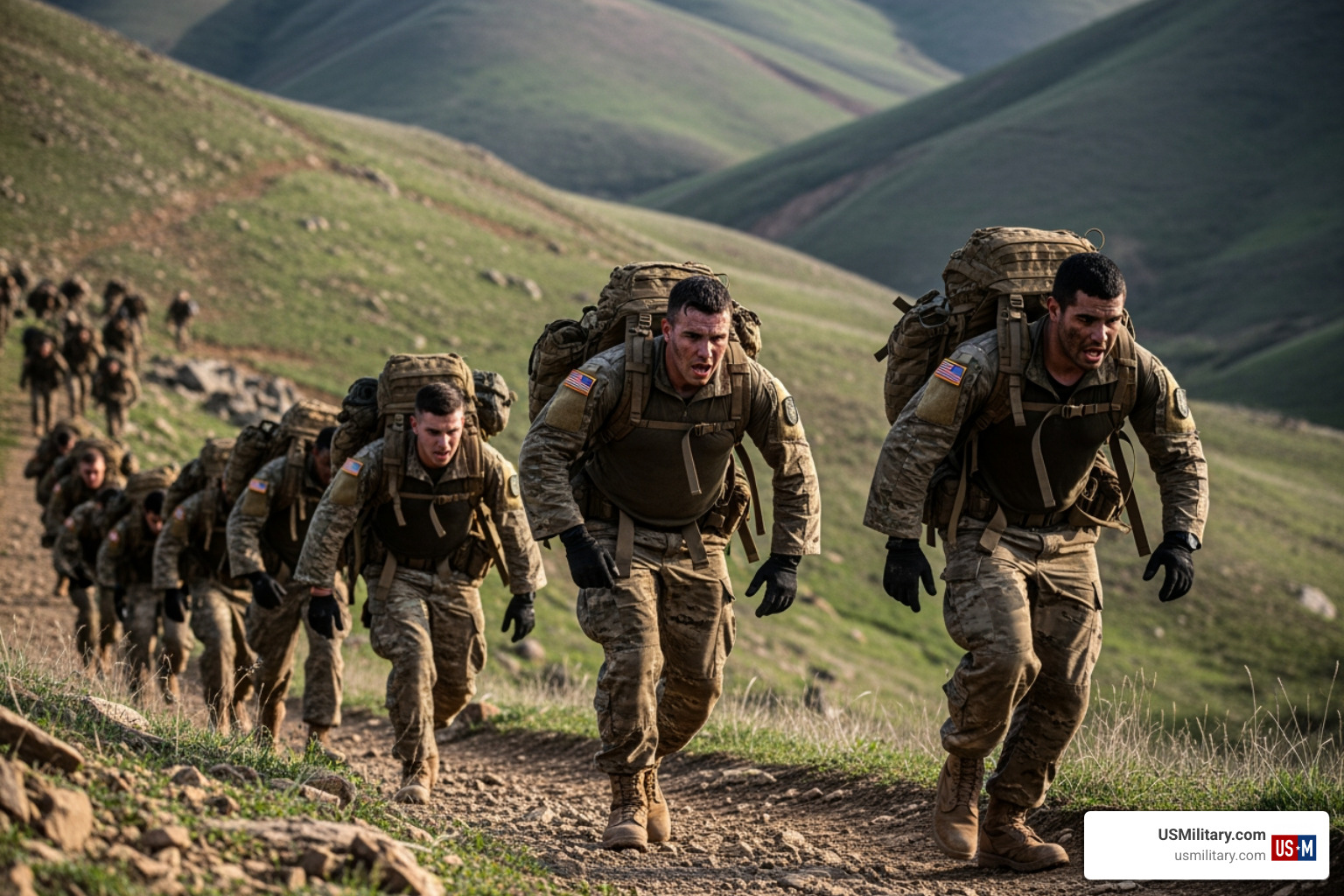
The path to wearing either the Green Beret or becoming an operator in Delta Force represents some of the most grueling training in the world. However, the pipelines are structured differently to select for different psychological and physical profiles.
How Selection Differs: What Are The Differences Between Army Delta Force vs Green Beret Candidates?
The recruitment pools and entry requirements for these units represent a major point of divergence:
- Green Beret Recruitment: The Army offers a direct enlistment path for civilians through the 18X Special Forces Candidate contract. This allows qualified individuals to enlist, go through Infantry One Station Unit Training (OSUT), Airborne School, and go straight to Special Forces Assessment and Selection (SFAS). Green Berets also recruit from within the active-duty Army, accepting applicants from any military occupational specialty (MOS) who meet the physical and mental benchmarks.
- Delta Force Recruitment: There is no direct civilian route to Delta Force. You cannot enlist with a “Delta contract.” Instead, Delta Force is an invitation-only unit that primarily recruits from highly experienced personnel within the 75th Ranger Regiment and the Green Berets, though selection is technically open to all branches of the military.
Furthermore, Delta candidates must have already attained leadership experience, requiring applicants to hold the rank of Sergeant (E-5) through Sergeant First Class (E-7) for enlisted personnel, or Captain (O-3) for officers before they can volunteer for selection.
To learn more about the specific steps required to join “The Unit,” read our guide on how to Become an Army Delta Force Operator.
Training Timelines: Q-Course vs OTC
The length and focus of the training pipelines are tailored to the distinct mission sets of each unit.
The Green Beret Pipeline (The Q-Course)
After passing the 24-day Special Forces Assessment and Selection (SFAS), candidates enter the Special Forces Qualification Course (SFQC), commonly known as the “Q-Course.” This pipeline lasts anywhere from 56 to 95 weeks (nearly one to two years) depending on the candidate’s assigned MOS and language requirements.
The Q-Course includes:
- Survival, Evasion, Resistance, and Escape (SERE) training.
- MOS-specific training (such as weapons, engineering, medical, or communications).
- Extensive foreign language and cultural immersion training, which is mandatory for all Green Berets.
- The Robin Sage exercise, a massive, realistic unconventional warfare simulation where candidates must build and lead a mock guerrilla force.
The Delta Force Pipeline (OTC)
Delta’s selection process is legendary for its psychological isolation. Held in mountainous terrain, it tests an individual’s ability to navigate land alone over long distances with heavy loads under extreme time limits, without any feedback from instructors.
Those who pass selection enter the Operator Training Course (OTC), which is estimated to last approximately seven months. OTC focuses heavily on:
- Advanced combat marksmanship and dynamic room clearing.
- Breaching tactics and explosive demolition.
- Hostage rescue operations in complex urban environments, aircraft, and maritime vessels.
- Espionage tactics, vehicle dynamics, and operating in civilian clothes while blending into foreign populations.
For a look at how other elite Army pipelines compare, check out our comparison of Army Ranger vs Green Beret.
Operational Styles, Culture, and Secrecy
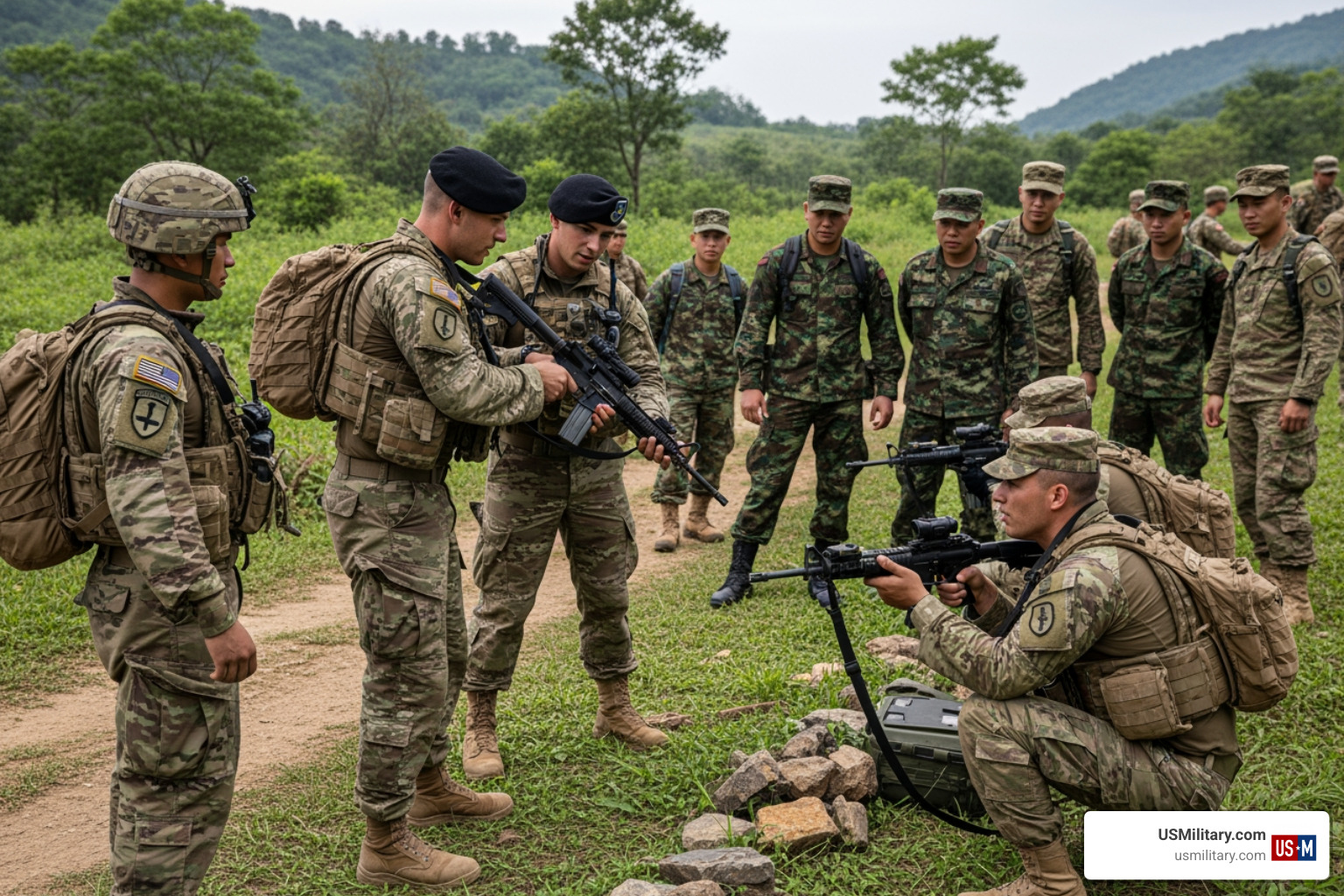
The distinct missions of these two units have forged two very different internal cultures.
Cultural Distinctions: What Are The Differences Between Army Delta Force vs Green Beret Operational Environments?
The Green Berets are often called the “Quiet Professionals.” Because their primary weapon is their ability to build relationships, they are highly social, culturally adaptive, and patient. They operate in 12-man ODAs where every member has a specific specialty (such as medical, weapons, or communications).
An ODA must be self-sufficient for months at a time in remote regions of the world, often living in local villages, eating local food, and wearing local attire to build trust. They are diplomat-warriors who solve complex geopolitical problems through partnership and training.
Delta Force, on the other hand, is the surgical scalpel. Their operational environment is , high-stakes, and focused on immediate, decisive actions. Delta operators often work in small, modular squads or troops designed to hit a target with overwhelming speed and precision and then vanish.
To maintain their cover during sensitive operations, Delta operators are allowed “relaxed grooming standards” (long hair and beards) and wear civilian clothing or non-standard uniforms to blend into local crowds. If captured, they operate under protocols where official government acknowledgment of their mission may be denied.
For more information on modern roles within special missions units, you can read about Women in Army Delta Force Terms Demystified.
Frequently Asked Questions About Army Special Operations
Can you go straight from civilian to Delta Force?
No. There is no direct enlistment contract that allows a civilian to join Delta Force. To become a candidate for Delta Force selection, you must first enlist in the military, gain experience, and attain the rank of Sergeant or Captain. Most successful Delta candidates come from the 75th Ranger Regiment or U.S. Army Special Forces (Green Berets), where they have already proven their capabilities in combat and advanced tactical environments.
Are Green Berets considered Tier 1?
No. Green Berets are classified as Tier 2 or “White SOF.” This classification is not a measure of bravery or combat capability, but rather a reflection of command structure, funding, and mission type. Green Berets operate under USASOC and focus on persistent, regional partner-nation training and unconventional warfare. Tier 1 units, like Delta Force, operate under JSOC and are funded to execute national-level, highly classified counterterrorism and direct-action missions.
Why is Delta Force so secretive?
Delta Force is highly secretive because they are a Tier 1 Special Mission Unit tasked with executing the nation’s most sensitive, high-risk counterterrorism and hostage rescue operations. Public disclosure of their tactics, personnel, or operational locations could compromise national security, put ongoing hostage rescue missions at risk, and endanger the lives of the operators and their families.
Conclusion
Both the Green Berets and Delta Force represent the absolute pinnacle of U.S. military capability, yet they serve entirely different strategic purposes. The Green Berets are the nation’s premier force multipliers, using language, cultural expertise, and unconventional warfare tactics to build armies and stabilize regions over the long term. Delta Force is the nation’s premier counterterrorism asset, utilizing unmatched speed, precision, and secrecy to eliminate immediate threats and rescue American citizens in the most hostile corners of the world.
At USMilitary.com, we are dedicated to providing clear, unbiased resources for active-duty personnel, veterans, and those looking to start their military journey. Whether you are researching elite career paths, looking for VA loan guidance, or exploring military benefits, we are here to support you every step of the way.
If you are interested in how other elite units compare across branches, read our complete guide comparing Army Delta Force vs Navy Seals.