
Why Faith Matters for Military Soldiers — Courage, Confidence & Mental Strength
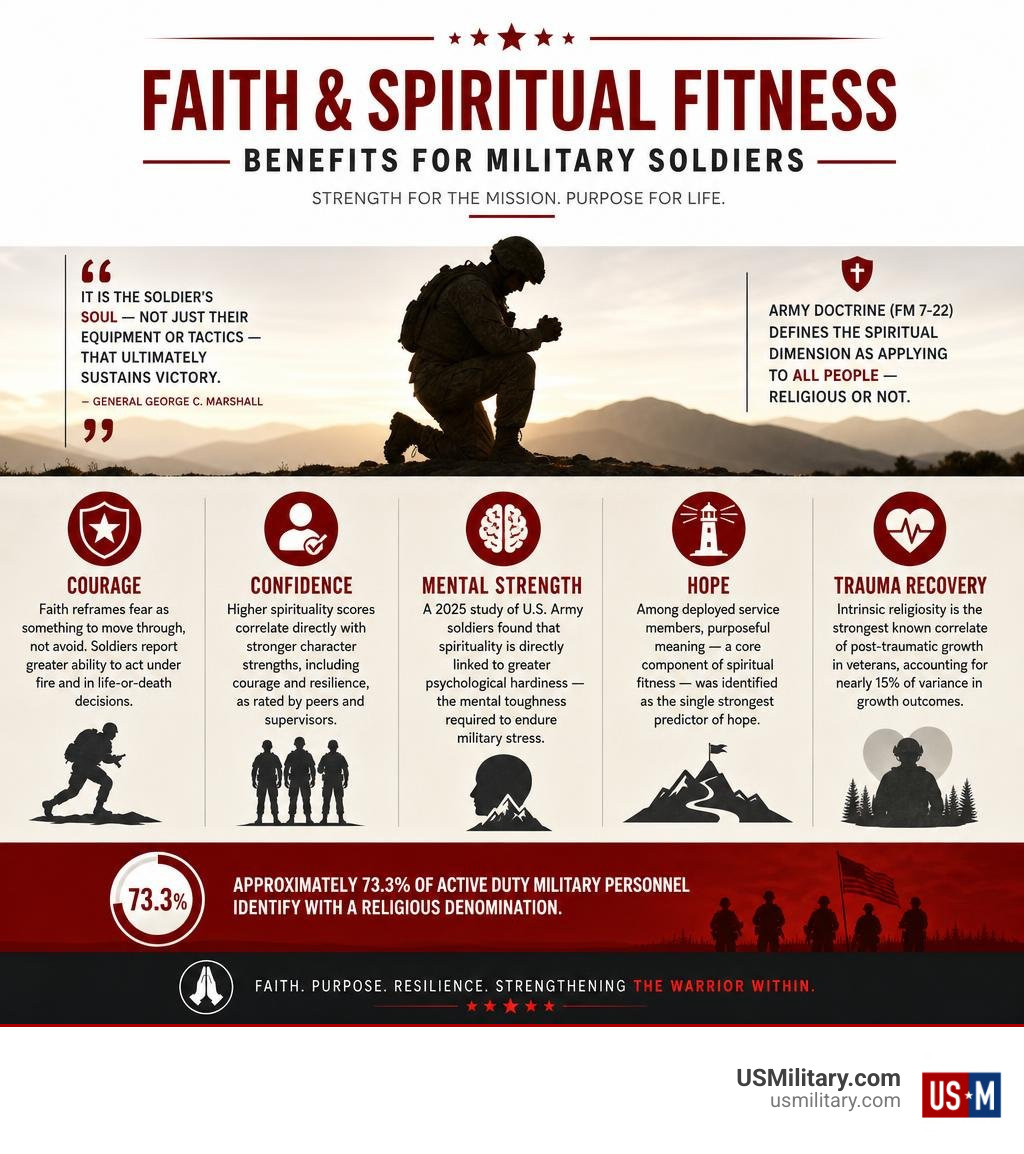
Does faith provide courage, confidence & mental strength for military soldiers? Yes — and the evidence is strong. Here is a quick summary:
- Courage: Faith reframes fear as something to move through, not avoid. Soldiers with a spiritual foundation report greater ability to act under fire and in life-or-death decisions.
- Confidence: Studies show that higher spirituality scores correlate directly with stronger character strengths, including courage and resilience, as rated by peers and supervisors.
- Mental strength: A 2025 study of U.S. Army soldiers found that spirituality is directly linked to greater psychological hardiness — the mental toughness required to endure military stress.
- Hope: Among deployed service members, purposeful meaning — a core component of spiritual fitness — was identified as the single strongest predictor of hope.
- Trauma recovery: Intrinsic religiosity is the strongest known correlate of post-traumatic growth in veterans, accounting for nearly 15% of variance in growth outcomes.
Approximately 73.3% of active duty military personnel identify with a religious denomination. But faith’s benefits in the military extend beyond religion alone. Army doctrine (FM 7-22) defines the spiritual dimension as applying to all people — religious or not — as the foundation of personal character, purpose, and inner strength.
As General George C. Marshall observed, it is the soldier’s soul — not just their equipment or tactics — that ultimately sustains victory.
My name is Larry Fowler, BUD/S class 89, author of Dare To Live Greatly, and as the publisher of USMilitary.com since 2007, I’ve spent nearly two decades covering the topics that matter most to active duty service members, veterans, and military families — including the deeply personal question of whether does faith provide courage, confidence & mental strength for military soldiers in real, measurable ways. In this guide, I’ll walk you through the research, the doctrine, and the real-world practices that answer that question directly.
Simple guide to Does Faith Provide Courage, Confidence & Mental Strength For Military Soldiers:
- How Important is Christian Faith In The US Military Today
- Is Faith Erolding In Todays’ Military
- Why Faith Is Important For All Men
Does Faith Provide Courage, Confidence & Mental Strength For Military Soldiers
To fully understand how spiritual belief shapes a warrior, we must look at how the military defines and measures “hardiness.” In high-stress tactical environments, physical preparation is only half the battle. The other half is purely psychological.
According to a landmark study published in Military Psychology, Spirituality is associated with psychological hardiness in U.S. army soldiers and civilians. This peer-reviewed research demonstrates a direct, positive relationship between personal spirituality and positive hardiness traits. Conversely, soldiers who rate higher in spiritual practices show a marked decrease in negative hardiness traits. In simple terms: when the pressure builds, a soldier’s spiritual foundation acts as a shock absorber.
This psychological hardiness is crucial for dealing with occupational stress, which can impact not just individual soldiers, but entire units, families, and readiness. When we look at Why Faith is Important for Everyone Serving in the Military, we see that having a core set of beliefs helps service members make sense of chaotic environments. It gives them an anchor when their physical safety is threatened, transforming abstract concepts of duty into deeply felt personal convictions.
How Does Faith Provide Courage, Confidence & Mental Strength For Military Soldiers in Combat?
In the heat of combat, fear is an objective reality. However, how a soldier processes that fear determines whether they freeze or execute the mission. Faith does not eliminate fear; rather, it provides the framework to master it.
Physical courage is the ability to overcome the fear of bodily harm to perform one’s duty. Spiritual faith reinforces this by shifting a soldier’s perspective from immediate, earthly danger to a sovereign, higher purpose. This dynamic is highly visible in elite training programs. For example, looking at What Navy Seal Buds Training Taught Me About Self-Confidence, Courage & Faith, operators frequently note that when physical limits are reached, it is their spiritual resolve that keeps them moving forward.
This deep-seated assurance builds an Unbreakable Spirit: How to Build Mental Toughness, allowing soldiers to act with composure. They can rely on a strength larger than themselves. This aligns with other elite tactical principles, such as Navy Seal Training Success Traits and strategies designed to Increase Confidence & Courage: Navy Seal Training, where mental and spiritual preparation are treated as foundational elements of combat readiness.
Why Does Faith Provide Courage, Confidence & Mental Strength For Military Soldiers Facing Separation?
While combat presents acute, immediate dangers, deployment presents a chronic, slow-burning stressor: prolonged separation from family, friends, and normal life. This isolation can erode a soldier’s morale and sense of self over months in a foreign environment.
This is where the relationship between spiritual fitness and hope becomes vital. In a comprehensive academic study, SPIRITUAL FITNESS AND RELIGIOUS COMMITMENT AS PREDICTORS OF HOPE IN ACTIVE DUTY DEPLOYED MILITARY by David Nicholas Sidnam Liberty University, researchers found that spiritual fitness—specifically a strong belief in service and a sense of purposeful meaning—is the single best predictor of hope in deployed settings. Hope is not just a passive wish; in a military context, hope is an active psychological driver that keeps a soldier focused on the future and connected to their loved ones back home.
To maintain this spiritual connection while deployed, many service members turn to literature. Utilizing lists like the 20 Best Faith Books for Military Men & Women or other curated Best Inspirational Books for Military resources provides soldiers with daily, portable encouragement. These books offer a quiet space for reflection amidst the noise of a deployment zone, reminding them of who they are and why they serve.
Spiritual Fitness in Action: Practices That Build Resolve
Spiritual fitness is not an abstract concept; it is built through daily, deliberate actions. Just as soldiers lift weights to build physical muscle, they engage in specific spiritual practices to build mental and moral resilience.
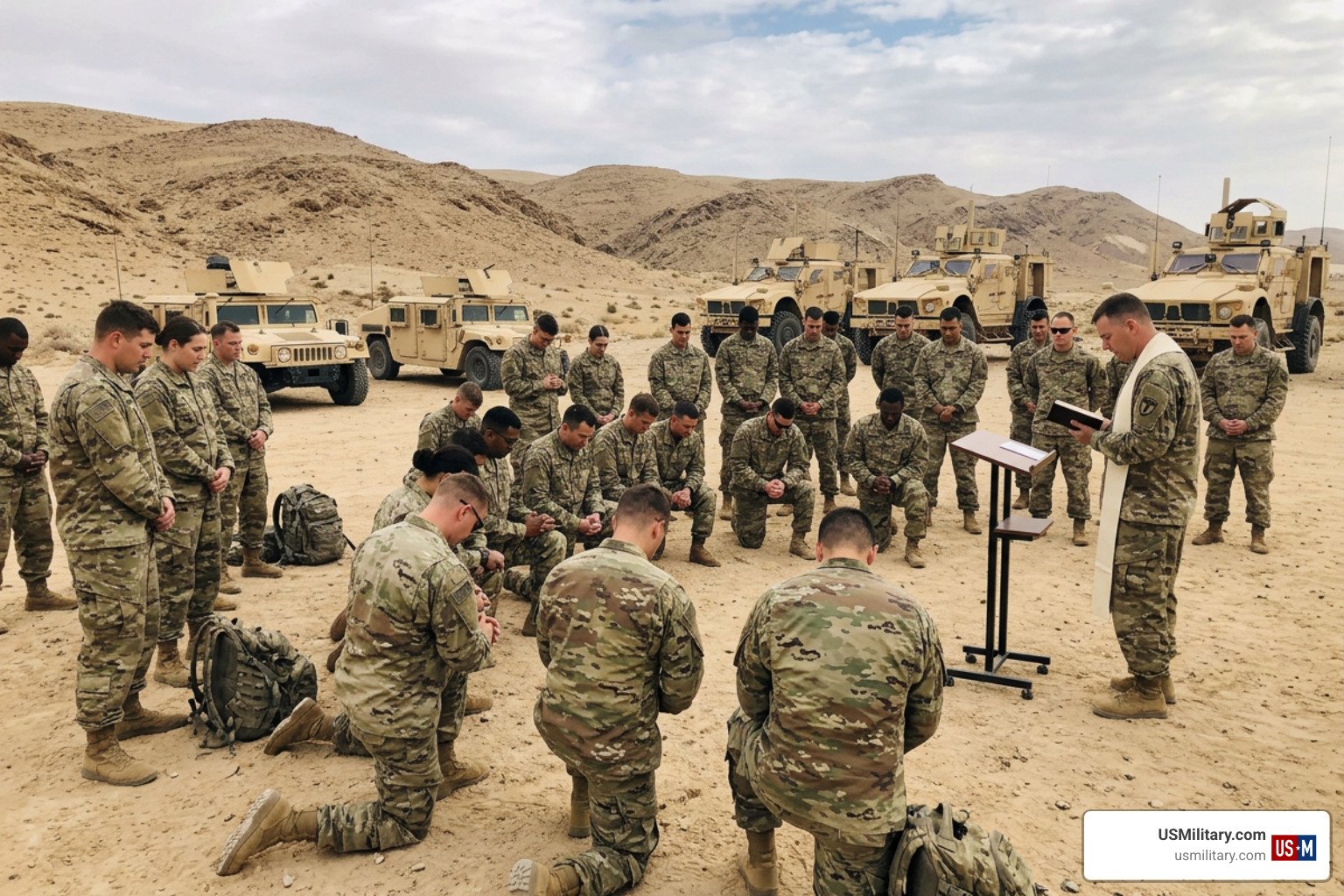
Historically, these practices have been a cornerstone of American military culture. From Civil War soldiers reading pocket-sized Bibles on opposing front lines to today’s service members gathering in makeshift desert chapels, active faith is highly visible. For many, integrating scripture into daily routines is a powerful way to find peace. Resources like 40 Amazing Military Bible Quotes That Will Make You See Faith In A … show how military-themed scriptures—such as the “Armor of God” in Ephesians 6—directly resonate with the physical armor and protective gear soldiers wear every day.
For those looking to deepen this foundation, reading targeted literature is highly effective. Many find guidance in Christian Books for Military Men to Strengthen Faith, which speak directly to the unique trials of the profession of arms.
Prayer, Scripture, and Communal Worship
For service members on duty, consistent spiritual habits act as a daily anchor. These habits typically include:
- Solitary Prayer & Meditation: Quiet moments spent in reflection or prayer before a shift or patrol, activating the parasympathetic nervous system to reduce physical stress and lower cortisol levels.
- Scripture Reading: Engaging with daily devotionals to keep mindsets grounded in eternal truths rather than immediate, chaotic circumstances.
- Communal Worship: Gathering with other service members for field services, which fosters deep bonds of unity and counters the intense isolation of deployment.
Many elite operators have documented how these exact practices sustained them through the darkest moments of modern warfare. Reading 15 Must-Read Faith Books by Military Elite Special Force Operators offers incredible, accounts of how prayer and scripture kept these high-tier warriors grounded.
Additionally, keeping short, powerful reminders close at hand can be incredibly useful. Many soldiers memorize or carry Military Encouragement Quotes in their helmets or uniform pockets as quick reference points of strength when things get tough.
Intersecting Army Values with Spiritual Beliefs
The military does not operate in a moral vacuum. The U.S. Army, for example, is guided by seven core values: Loyalty, Duty, Respect, Selfless Service, Honor, Integrity, and Personal Courage. These values are not just rules; they are ethical standards that define character.
Interestingly, these institutional values perfectly intersect with and reinforce spiritual virtues. When a soldier has a robust spiritual foundation, upholding these values ceases to be a matter of mere compliance—it becomes a natural expression of their faith.
| Army Value | Spiritual Intersection | Practical Manifestation |
|---|---|---|
| Loyalty | Fidelity to a higher covenant | Allegiance to the unit, country, and family |
| Duty | Answering a divine calling | Executing missions with excellence and care |
| Respect | Recognizing the inherent dignity of all humans | Treating captives, civilians, and peers honorably |
| Selfless Service | Sacrificial love and humility | Putting the welfare of others before one’s own |
| Honor | Living with moral beauty and reverence | Adhering to a strict, values-based lifestyle |
| Integrity | Truthfulness and alignment of actions with beliefs | Doing what is right even when no one is watching |
| Personal Courage | Trusting in divine protection over fear | Facing physical danger and moral opposition boldly |
This alignment of institutional values and spiritual beliefs creates a powerful ethical shield. When soldiers view their duty through the lens of a higher calling, their commitment to these values becomes absolute, protecting them from moral compromise.
Coping with Combat Trauma, Moral Injury, and PTSD
One of the most profound challenges soldiers face is the psychological aftermath of combat. War exposes humans to extreme violence, loss, and impossible ethical dilemmas. This exposure can lead to Post-Traumatic Stress Disorder (PTSD) and “moral injury”—the deep psychological distress that occurs when a person’s actions or experiences violate their core moral and ethical beliefs.
Research shows that traditional psychological therapies are highly effective, but they are often incomplete without a spiritual component. As detailed in Religious Faith as a Tool for Psychological Support During Combat Operations, religious faith fulfills vital psychological, cognitive, and social functions that specifically help mitigate moral injury. Faith offers a cognitive framework for meaning-making, allowing soldiers to process and reframe traumatic events through a larger lens of justice, forgiveness, and ultimate redemption.
When we look at The Unfiltered Truth About Faith Eroding in Today’s Military, we see that maintaining these spiritual frameworks is more critical than ever. Without a solid spiritual foundation to process the horrors of war, soldiers are at a higher risk of experiencing profound existential crises during their transition back to civilian life.
Posttraumatic Growth and the Role of Faith
While trauma can cause deep suffering, it can also lead to positive psychological change, a phenomenon known as Post-Traumatic Growth (PTG). PTG is characterized by an increased appreciation of life, warmer personal relationships, greater personal strength, and spiritual development.
According to research published in the Journal of Clinical Psychology, Spirituality is associated with psychological hardiness in U.S. army …, intrinsic religiosity—the internal, deeply held personal faith of an individual—is the single strongest predictor of post-traumatic growth in military veterans. In fact, in population-based studies of trauma-exposed veterans, intrinsic religiosity accounted for nearly 15% of the variance in growth outcomes.
This means that while two soldiers might experience the exact same traumatic event, the soldier with a deeply rooted, active faith is statistically far more likely to emerge from that trauma with a renewed sense of personal strength, deeper relationships, and a clearer life purpose.
The Dual Nature of Religiosity in Suicide Prevention
When discussing mental health in the military, we must address the critical issue of suicide prevention. The Department of Veterans Affairs (VA) and military branches study the protective factors of faith extensively. The relationship between religion and suicide risk is highly nuanced and requires careful, compassionate understanding.
Data from the VA’s National Center for PTSD shows that regular religious attendance and intrinsic faith can be incredibly powerful protective factors, reducing the overall likelihood of suicide attempts by providing a supportive community and an ethical framework that values life. However, the research also reveals a “dual nature.” For example:
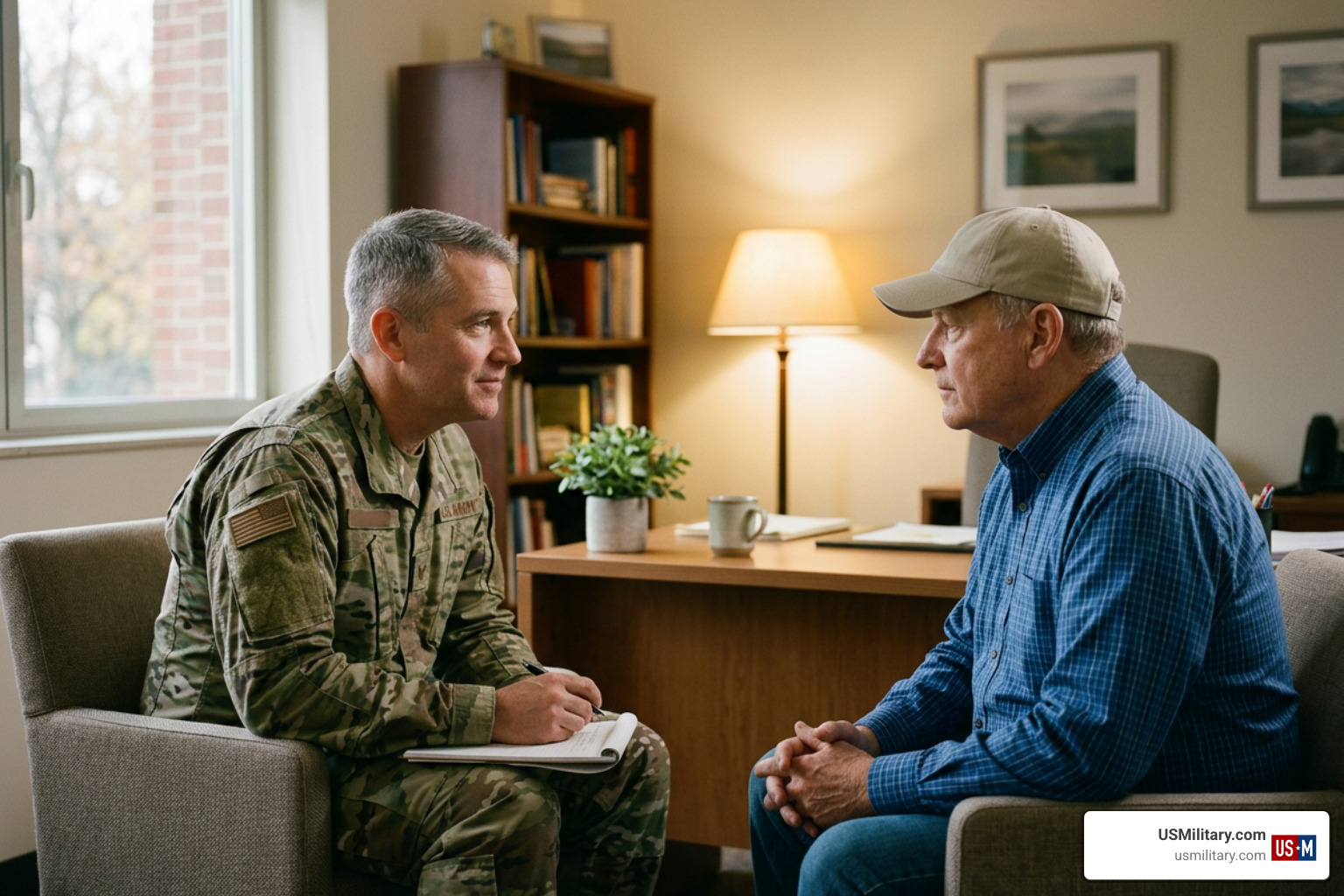
- Protective Aspects: Believing in a loving, sovereign Creator helps veterans make sense of suffering, while VA chaplains provide safe, highly confidential counseling spaces.
- Risk Aspects: Conversely, if a veteran experiences “spiritual struggle”—such as feeling abandoned by God, feeling unforgivable due to actions in combat, or facing community rejection—their suicide risk can actually increase.
This is why the VA Chaplain Service works hand-in-hand with clinical mental health professionals. By taking a holistic spiritual inventory, counselors can help veterans resolve these deep-seated spiritual conflicts, turning a source of psychological distress back into a source of life-saving hope and resilience.
Leadership, Chaplains, and the Constitutional Balance
Because spiritual fitness is so closely tied to a soldier’s readiness and resilience, military leaders have a professional obligation to support it. However, leading a diverse formation requires a delicate balance.
As outlined by the Center for Junior Officers in Finding Faith before the Foxhole: Spiritual Readiness in the Profession of Arms – Center for Junior Officers, leaders must recognize that spiritual readiness must be cultivated before the crisis hits. Waiting until a unit is in the middle of a high-stress deployment to talk about values, purpose, and inner strength is often too late. Leaders can find excellent strategies on how to model this authentic, values-based presence by reading curated Military Leadership Books.
Integrating Spiritual Fitness into Military Training
In recent years, the U.S. military has formalized this approach. The U.S. Army’s FM 7-22 (Holistic Health and Fitness) manual officially establishes “Spiritual Readiness” as one of the five core domains of soldier health, alongside physical, nutritional, mental, and sleep readiness.
According to military doctrine, Spiritual fitness grows ability to face challenges of 2022 – Army.mil, the spiritual domain is not about forcing any specific religion onto service members. Instead, it is about helping every individual soldier—whether religious, philosophical, or non-religious—develop a robust core value system. Training programs focus on:
- Identity & Purpose: Helping soldiers define their personal mission statements and life vision.
- Values Alignment: Ensuring a soldier’s daily actions align with their stated ethical values to avoid inner conflict.
- Reflective Practices: Teaching mindfulness, meditation, journaling, and time in nature to help process daily stressors.
By treating spiritual fitness as a standard training metric, the military ensures that soldiers are as mentally and ethically prepared for the challenges of service as they are physically.
Balancing Free Exercise with Unit Cohesion
While supporting spiritual readiness is a priority, military commanders face a strict legal and cultural boundary. They must balance the constitutional right to the Free Exercise of Religion (guaranteed by the First Amendment and reinforced by the Religious Freedom Restoration Act) with the Establishment Clause, which prevents the government from endorsing or coercing any specific religious belief.
As discussed in Faith in the Foxhole: The True Source of Courage, Comfort, and Conscience, commanders must adhere to several key principles to maintain unit cohesion:
- Command Neutrality: A commander’s personal faith is not the command’s religion. Leaders must never use their rank to proselytize or pressure subordinates.
- Accommodating Diverse Beliefs: Commanders must actively accommodate religious requests—such as dietary restrictions, grooming standards, or holy day observances—unless doing so directly compromises military necessity.
- Utilizing the Chaplaincy: Chaplains serve as the vital bridge. They are fully equipped to provide religious services for their own faith group while facilitating care and protecting the constitutional rights of soldiers of all other faiths (or no faith at all).
This careful balance ensures that the military remains a cohesive, lethal force where every service member’s conscience is respected.
Frequently Asked Questions about Faith in the Military
How do military chaplains support soldiers of different or no faiths?
Military chaplains operate under a strict pluralistic mandate: “To perform or provide.” This means a chaplain will personally perform religious services and counseling according to their own faith tradition. If a soldier of a different faith (or no faith) comes to them, the chaplain will provide by helping that soldier connect with a leader of their own tradition, or by offering non-sectarian pastoral care, ethical counseling, and a completely confidential listening ear.
What is the difference between spiritual fitness and religious commitment in the military?
While closely related, they are not identical:
- Religious Commitment refers to a person’s specific adherence to a particular faith tradition, including beliefs, doctrines, and organized worship practices.
- Spiritual Fitness is a broader, doctrinal term that applies to everyone. It is the strength of a person’s character, their sense of life purpose, and their ability to align their daily actions with their core values. A non-religious soldier can have high spiritual fitness by being deeply committed to a philosophical moral code and a clear sense of duty.
How does the military define spiritual readiness in its official doctrine?
According to FM 7-22, spiritual readiness is defined as the ability to endure and persevere through times of high stress, hardship, and tragedy by developing a robust value system. This system may stem from religious, philosophical, or human values, and it provides the soldier with a sense of meaning, connection, and ultimate purpose in life.
Conclusion
The answer to whether does faith provide courage, confidence & mental strength for military soldiers is a resounding yes. From the front lines of combat to the quiet struggles of post-deployment transition, a robust spiritual foundation is one of the most powerful tools a warrior can possess. It builds psychological hardiness, fosters hope during separation, guides ethical decision-making, and acts as a vital shield against moral injury and trauma.
At USArmy.com, we are committed to supporting our active duty personnel, veterans, and military families in every aspect of their lives—from physical and financial health to mental and spiritual resilience. If you are looking to strengthen your own faith walk or find resources to support your journey, we highly recommend checking out More info about faith resources to help guide your path.
Thank you for your service, your sacrifice, and your dedication to keeping our nation free. Stay strong, stay resilient, and keep the faith.
For more reading on stronger faith for warriors, check out Dare To Live Greatly. A great read comparing faith vs Navy SEAL training.