
Who Really Institutes the Military Draft During Wartime?

Does Only The Army Institute The Military Draft During Wartime is a common misconception — and the short answer is no. The U.S. military draft has never been an Army-only program.
Here’s the quick answer:
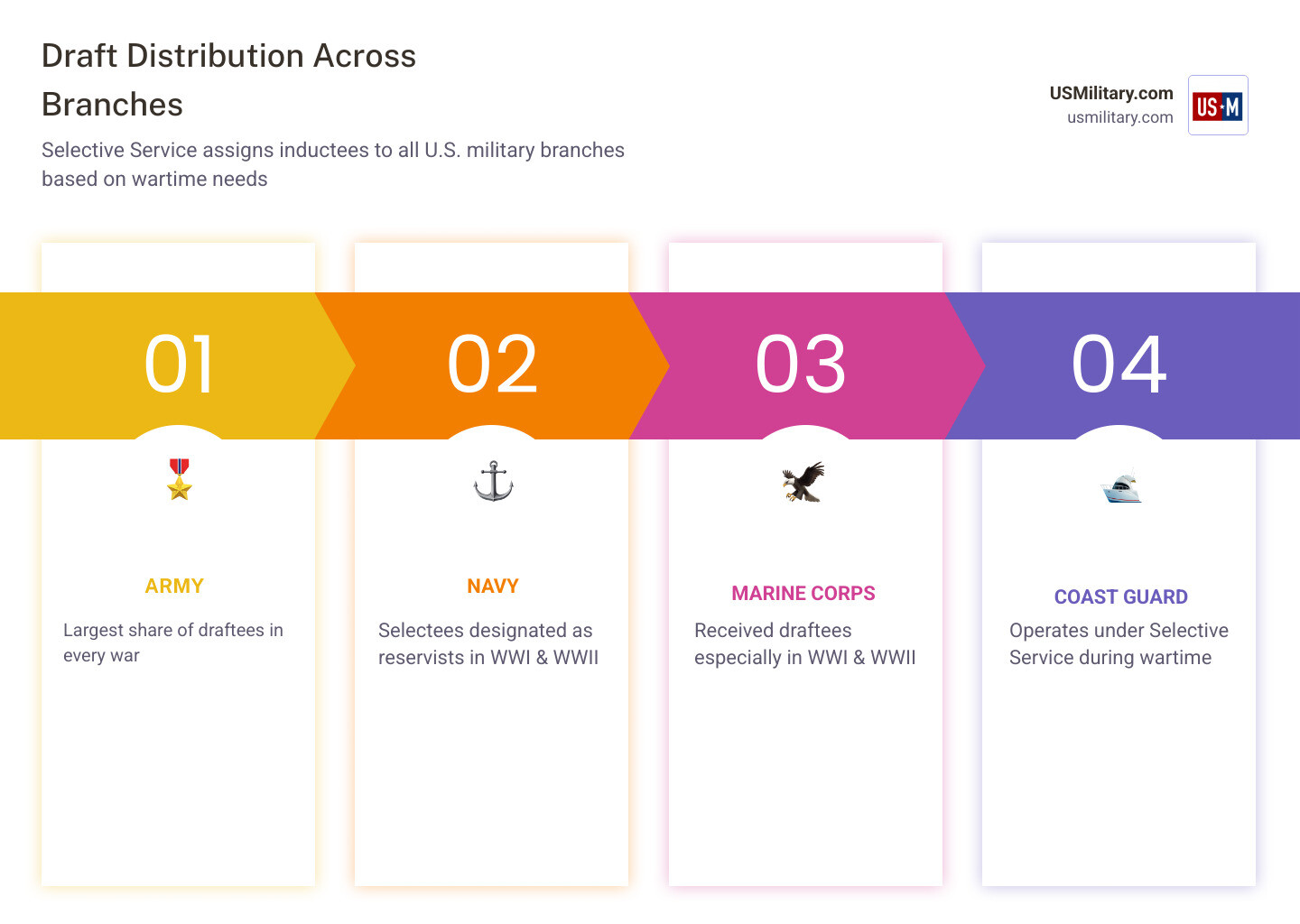
| Branch | Received Draftees? | Notes |
|---|---|---|
| Army | Yes | Received the largest share of draftees in every war |
| Navy | Yes | Selectees designated as “reservists” in WWI and WWII |
| Marine Corps | Yes | Received draftees, especially in WWI and WWII |
| Coast Guard | Yes | Operated under Selective Service in wartime |
| Air Force | Yes (WWII era) | As Army Air Forces before 1947 |
The Selective Service System — a federal civilian agency — manages the draft for all U.S. military branches. It sets quotas, processes registrants, and assigns inductees across services based on military need.
During World War II alone, nearly 12 million men entered the military through Selective Service. About 8 million served in the Army — but the rest were distributed across the Navy, Marine Corps, and other branches.
After Executive Order 9279 in December 1942, voluntary enlistment was halted entirely for men aged 18–37. From that point on, Selective Service became the only entry point into any branch of the U.S. military.
I’m Larry Fowler, publisher of USMilitary.com, and since 2007 I’ve helped hundreds of thousands of service members, veterans, and military-curious individuals navigate questions exactly like does only the Army institute the military draft during wartime — from enlistment options to VA benefits. Read on for a full breakdown of how the draft has worked across every branch and every major conflict.
Quick look at Does Only The Army Institute The Miltiary Draft During Wartime:
- Everything You Need to Know About the Military Draft
- Does the US currently have a military draft
- Who gets pulled first in a draft?
Does Only The Army Institute The Military Draft During Wartime?
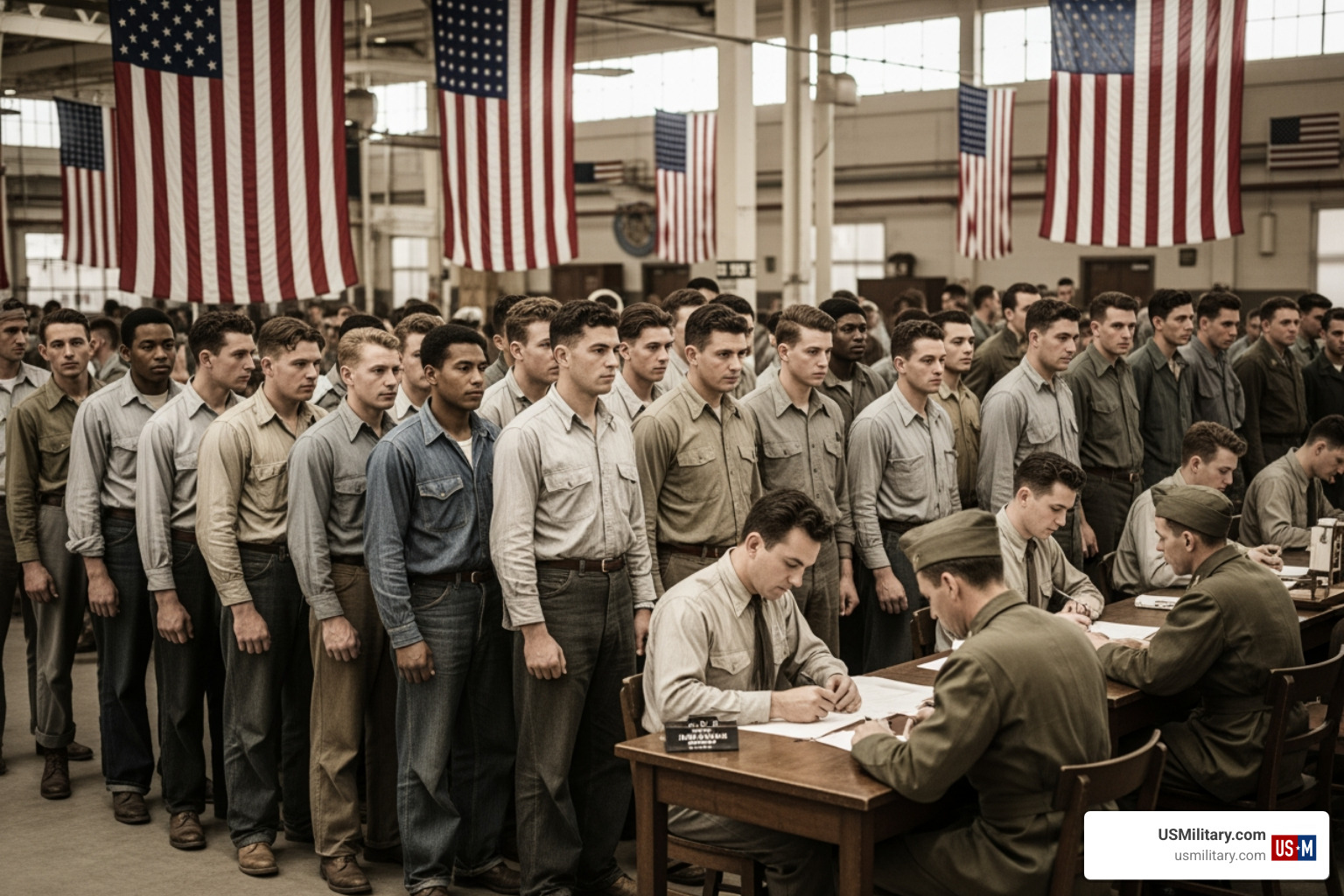
When we think of a “draftee,” we usually picture a soldier in olive drab clutching an M1 Garand or an M16. Because the Army is the largest branch and typically requires the most “boots on the ground,” it has historically absorbed the lion’s share of conscripted men. However, the legal authority to draft is a federal power that covers the entire U.S. Armed Forces.
The Selective Service System (SSS) is actually a civilian agency of the federal government. It isn’t part of the Department of Defense. This is a crucial distinction. The SSS acts as a middleman. When Congress and the President decide a draft is necessary, the SSS gathers the names, conducts the lotteries, and then hands the “selectees” over to the various branches.
Historically, this unified system has filled vacancies in the Navy, Marine Corps, and even the Coast Guard. While the Army might be the primary customer, the “store” (the Selective Service) serves the entire military. For example, during the massive mobilization of the 20th century, the draft was the primary engine for manning the entire American war machine.
Does Only The Army Institute The Military Draft During Wartime?
No, the Army is not the only branch that uses a military draft, though it is the primary recipient of draftees. While the Army historically takes the vast majority, the Selective Service System can assign draftees to any branch of the armed forces—including the Navy, Marine Corps, and Air Force—based on need.
During the Great War, the Selective Service Act of 1917 was passed specifically to avoid the failures of the Civil War draft. We didn’t want a repeat of the riots and the “substitute” system where wealthy men could pay someone else to fight for them.
Under this act, the draft created what was known as the National Army. These were divisions made up entirely of draftees. But the Army wasn’t alone in this. While the Navy and Marine Corps initially relied on voluntary enlistments, they eventually drew from the pool of selectees.
Who is drafted first?
By the end of the war, branch quotas were established. If the Navy needed 50,000 men and couldn’t find enough volunteers, the Selective Service would bridge that gap. Interestingly, draftees sent to the Navy were often designated as “Navy Reservists” to distinguish them from the professional, pre-war sailors, but they were draftees nonetheless.
Does Only The Army Institute The Military Draft During Wartime in World War II?
World War II was the ultimate test of the unified draft. At its peak, the U.S. had over 16 million people in uniform. Nearly 12 million of those were brought in via the Selective Service.
While the Army took about 8 million of those men, the Navy and Marine Corps became heavily dependent on the draft as the war dragged on. In the early days of the war, a young man might “volunteer” for the Navy just to avoid being drafted into the Army’s infantry. This created a massive imbalance. The Navy was getting all the volunteers, while the Army was struggling to find enough men for the front lines.
To fix this, President Roosevelt issued Executive Order 9279 in December 1942. This order was a game-changer. It effectively ended voluntary enlistment for men between the ages of 18 and 37. If you wanted to serve, you went through your local draft board. This allowed the government to look at a man’s skills and the military’s needs and say, “You’re going to the Marines,” or “We need you in the Navy.”
How the Selective Service System Distributes Recruits Across Branches
The distribution of recruits isn’t random. It’s a calculated process based on “manpower requirements.” Every month, the Department of Defense tells the Selective Service how many men are needed for each branch.
Once a man is called up, he undergoes physical and mental testing. Historically, the Navy and the Army Air Forces (the precursor to the modern Air Force) often had higher “test score” requirements for certain technical roles. If a draftee showed high aptitude for mechanics or radio operation, he might be funneled toward the Navy, even if he originally expected to be in the Army.
Voluntary Induction and Branch Choice
There was a middle-ground option known as voluntary induction. This allowed a man who knew his number was coming up to “volunteer” to be drafted early. Why would someone do this? Because it often gave them a better chance of choosing their branch.
If you walked into a draft board and said, “I want to be voluntarily inducted into the Marine Corps,” and the Marines had an open quota, you could often secure that spot. This was a popular move for men who wanted to serve in a specific capacity but didn’t want to wait for the lottery to decide their fate.
Branch Assignments During the Korean and Vietnam Wars
During the Cold War era, the draft continued, but its application shifted. In the Korean War, over 1.5 million men were drafted to augment units and keep our reserves ready in case the conflict spread to Europe.
By the Vietnam War, the draft became a point of massive national tension. Between 1964 and 1973, the Selective Service drafted 2.2 million men. While the vast majority (nearly all) went into the Army, the Marine Corps also took draftees during peak years of the conflict.
The Navy and Air Force, however, remained almost entirely volunteer-based during Vietnam. But there was a catch: many of those “volunteers” were actually draft-motivated. They knew that if they didn’t join the Navy or Air Force voluntarily, they would almost certainly be drafted into the Army infantry. This “pressure” allowed the non-Army branches to keep their ranks full without officially requesting draftees from the SSS.
It was during this era that the push for an all-volunteer force (AVF) began. The draft officially ended in 1973. Interestingly, the transition was so long that the the story of the last continuously serving draftee didn’t end until 2014, when Chief Warrant Officer 5 Ralph E. Rigby finally retired after 42 years of service.
Frequently Asked Questions about the Military Draft
Did the Navy or Marine Corps ever operate independent drafts?
No. While individual branches have their own recruiting commands, they do not have the legal authority to “conscript” citizens. That power belongs to Congress, and it is executed through the Selective Service System. The Navy and Marines have always relied on the unified federal process to provide draftees when voluntary numbers fell short.
What is the difference between a ‘selectee’ and a ‘reservist’ in the draft?
This usually comes down to wartime terminology. In World War II, men drafted into the Army were often called selectees or members of the “Army of the United States” (as opposed to the Regular Army). In the Navy and Marine Corps, draftees were often technically inducted into the Reserve components of those branches for the “duration of the emergency plus six months.” Functionally, they served exactly like any other sailor or Marine, but their paperwork reflected their status as temporary wartime additions.
How does the modern Selective Service impact different branches?
Today, the draft is in a “standby” mode. While all men aged 18–25 are required to register, no one has been drafted since 1973. If a national emergency occurred and Congress reactivated the draft, the Selective Service would again serve as the funnel for all branches.
We currently have a military draft 2024 guide that explains how modern registration works. Even though we are an all-volunteer force, the registration system ensures that the 6 branches of the military (and the 7 branches of us military if you count the Commissioned Corps of the PHS and NOAA) could be rapidly manned if necessary.
Conclusion
So, Does Only The Army Institute The Miltiary Draft During Wartime? Clearly, the answer is no. While the Army is the most visible face of conscription, the draft is a total-force tool. From the “Navy Reservists” of WWI to the Marine draftees in the jungles of Vietnam, every branch has, at some point, relied on the Selective Service to fill its ranks.
At USMilitary.com, we pride ourselves on being your central hub for military-related guidance. Whether you’re looking for VA disability information, exploring military career paths, or just trying to understand the history of our armed forces, we are here to help.
The draft might be a thing of the past for now, but the call to serve is still loud and clear. If you’re ready to take the next step in your career and serve your country on your own terms, sign up now to hear from a recruiter. There’s no better time to explore the benefits of military life, from education to specialized training.
For more information on the current state of the military, check out our latest updates: