
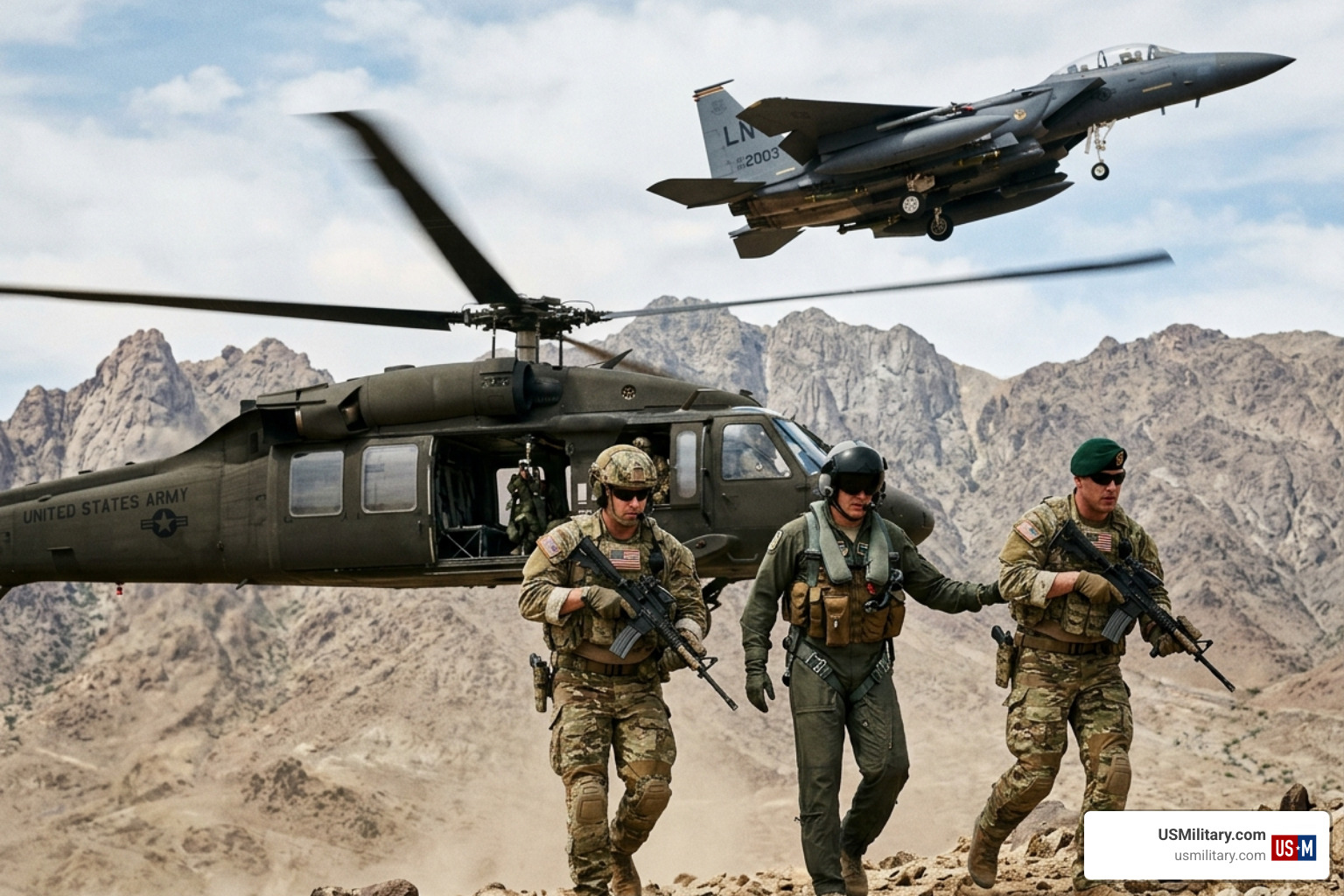
The f-15 pilot rescue show of power by us military special forces is one of the most dramatic combat search-and-rescue (CSAR) missions in recent US military history. Here is a quick summary of what happened:
- April 3, 2026: A US Air Force F-15E Strike Eagle was shot down by Iranian air defenses over southwestern Iran
- First rescue: The pilot was recovered within hours of ejection by US military helicopters operating under fire
- Second rescue: The Weapons Systems Officer (WSO), a colonel, evaded Iranian forces for over 24 hours before being rescued early on April 5 by US Special Operations forces
- How it was done: CIA intelligence located the WSO in a mountain crevice using a deception campaign; Special Operations forces then extracted him under heavy air cover and a fierce firefight with Iranian IRGC troops
- Result: Both crew members recovered safely, all US forces exited Iran, zero US fatalities
- Trump’s response: President Trump posted “We got him” on Truth Social and called it “one of the most daring Search and Rescue Operations in US History”
The operation involved dozens of armed aircraft, commando ground teams, CIA disinformation, and direct airstrikes on Iranian forces — a genuine show of American military reach and resolve.
This was the first confirmed downing of a manned US warplane over Iran since the conflict began, and the rescue that followed stunned military analysts worldwide.
I’m Larry Fowler, publisher of USMilitary.com, and I’ve spent nearly two decades tracking US military operations, special forces capabilities, and combat rescue missions — including every major development tied to the f-15 pilot rescue show of power by us military special forces. In this guide, I’ll break down exactly what happened, how it was done, and what it means for US military power.
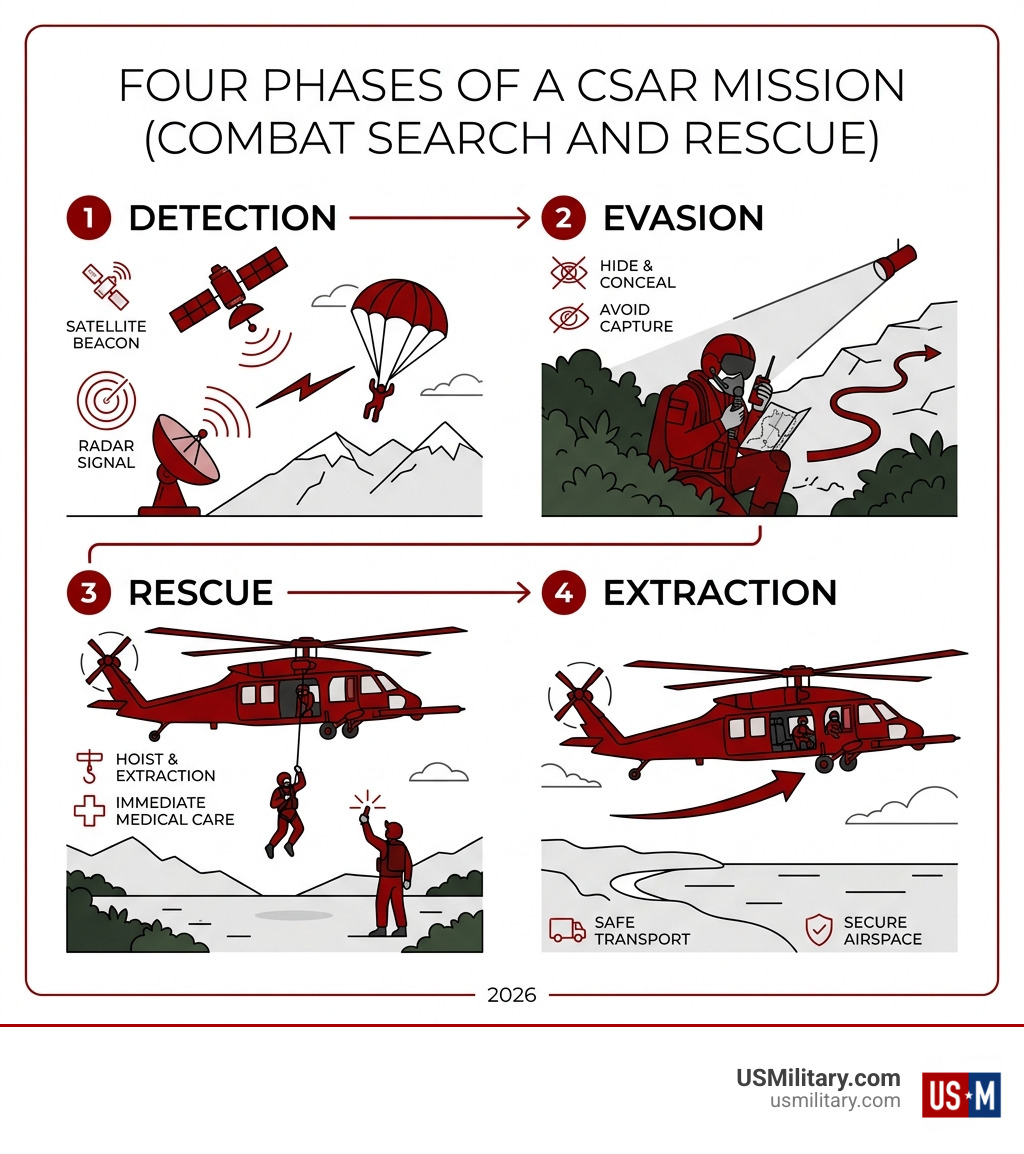
Simple guide to f-15 pilot rescue show of power by us military special forces:
The Downing of the F-15E Strike Eagle Over Iran
On April 3, 2026, the unthinkable happened. A U.S. F-15E Strike Eagle, part of the storied 48th Fighter Wing, was shot down by Iranian air defenses. This wasn’t just a technical malfunction; it was the first loss of a manned U.S. aircraft in a conflict that had been simmering for five weeks. The jet went down in the rugged terrain of southwestern Iran, leaving a pilot and a Weapons Systems Officer (WSO) to face the ultimate test of their survival training.
When a jet is hit, the crew has only seconds to react. Both airmen successfully ejected, but their journey was just beginning. The IRGC (Islamic Revolutionary Guard Corps) immediately mobilized, offering a $60,000 bounty for their capture. While the pilot was located relatively quickly, the WSO—a high-ranking colonel—found himself alone in the Iranian mountains.
This is where years of Day In The Life F35 Pilot and Strike Eagle training come into play. The WSO utilized his SERE (Survival, Evasion, Resistance, and Escape) training to the fullest, finding a mountain crevice to hide in while Iranian search teams closed in. It was a literal “needle in a haystack” situation, with the Colonel evading capture for over 24 hours in hostile territory.
The First Extraction: Rapid Response and Initial Challenges
We often talk about the “Golden Hour” in medical terms, but in CSAR, the first few hours are just as critical. Within hours of the ejection, U.S. military helicopters, including the HH-60W Jolly Green II, were launched into the fray.
The first rescue was anything but a “routine” pickup. As the Blackhawks approached the pilot’s location, they came under intense small-arms fire. Two Blackhawks were damaged during the process, and several crew members were wounded. Despite the damage and the incoming lead, the teams pushed through, successfully recovering the pilot and getting him back to safety for medical treatment. It was a victory, but with one airman still missing, the mission was only half-finished.
F-15 Pilot Rescue Show of Power by US Military Special Forces
When the second crew member remained missing, the U.S. military shifted gears from a rapid response to a massive f-15 pilot rescue show of power by us military special forces. This wasn’t just a search; it was a joint forcible entry operation that utilized every tool in the American arsenal.
A specialized commando unit was deployed deep into Iranian territory near Dehdasht. This wasn’t a quiet “sneak and peak” mission. It was a high-volume, combined arms effort involving heavy air cover and some of the most lethal weapons in the inventory. The message was clear: we are coming to get our own, and nothing will stop us. This level of coordination is reminiscent of the legends in our community, such as those we highlight in the story of Who Is Kevin Holland Former Navy Seals Heroic Journey To Delta Force.
The extraction site became the scene of a fierce firefight. U.S. forces engaged IRGC troops on the ground while jets provided top-tier cover. President Trump later confirmed the success of this second recovery, describing it as “one of the most daring” operations in history.
The Second Rescue: A Masterclass in F-15 Pilot Rescue Show of Power
The rescue of the WSO was a masterpiece of intelligence and tactical deception. While the commandos were preparing for the physical extraction, the CIA was busy winning the information war.
The agency launched a sophisticated deception campaign, spreading disinformation within Iran that the Colonel had already been found and exfiltrated overland. This caused the Iranian forces to shift their search patterns, giving the U.S. teams the window they needed. Using “unique capabilities” that remain largely classified, the CIA pinpointed the WSO’s exact location in that mountain crevice.
The Colonel was wounded but capable of moving. Over the course of a 48-hour mission, the U S Special Forces Lead Makhiat Effort and other elite units proved that no matter how deep the hole or how high the mountain, American forces have the reach to bring their people home.
Air Dominance and the F-15 Pilot Rescue Show of Power
To ensure the safety of the ground teams, the U.S. established overwhelming air superiority over the rescue zone. This wasn’t just about keeping enemy planes away; it was about active kinetic engagement.
| CSAR Asset | Primary Role in F-15 Rescue |
|---|---|
| A-10C Thunderbolt II | Close air support and “Sandy” escort for helicopters |
| HH-60W Jolly Green II | Primary extraction platform for downed airmen |
| HC-130J Combat King | Aerial refueling and command/control for the rescue fleet |
| F-15E / F-35 | Top cover and suppression of enemy air defenses (SEAD) |
| MQ-9 Reaper | Persistent surveillance and precision strike capability |
During the operation, A-10C Thunderbolt IIs performed strafing runs and kinetic engagements to keep IRGC forces from reaching the WSO. Even when an A-10 was hit and the pilot had to bail out (later recovered safely in Kuwait), the mission didn’t falter. We saw a similar USMC reveals details of F-15E pilot rescue during the Libya conflict, where Harriers dropped 500lb bombs as a show of force to clear the way for Ospreys. In Iran, the scale was even larger, effectively blockading the IRGC from their own territory.
Tactical Assets and Combat Search and Rescue (CSAR) Capabilities
The backbone of any f-15 pilot rescue show of power by us military special forces is the specialized equipment and the “Pararescue” or PJs who operate it. These are the men who live by the motto, “That Others May Live.”
The mission utilized a diverse array of assets:
- HH-60W Jolly Green II: The newest generation of rescue helicopters, designed for high-threat environments.
- HC-130J Combat King: The only dedicated fixed-wing personnel recovery platform in the Air Force.
- Reaper Drones: Provided the “eye in the sky” that monitored IRGC movements in real-time.
- Surveillance Jets: Captured electronic signals to help locate the WSO’s emergency beacon.
History teaches us that these missions are always high-risk. From the legendary exploits of Wayne Fisk, who was the last American to engage in ground combat in Southeast Asia, to the Great Career As A Special Forces Engineer Sergeant, the expertise required is immense. In this specific Iranian rescue, U.S. forces even had to demolish damaged aircraft on-site to prevent sensitive technology from falling into enemy hands—a tactic also seen in the story of the mission to rescue an F-14 Tomcat pilot behind the enemy lines in Iraq.
Strategic Implications of Operation Epic Fury
The successful rescue has massive implications for the ongoing U.S.-Iran conflict, often referred to as Operation Epic Fury. When President Trump took to Truth Social to announce “We got him,” it wasn’t just a celebratory post; it was a strategic signal.
By conducting a successful rescue deep inside Iranian territory, the U.S. demonstrated that Iranian air defenses—while capable of a lucky shot—cannot stop the U.S. military from operating wherever it chooses. This “no man left behind” commitment is a cornerstone of American military morale.
Furthermore, the operation served as a deterrent. Despite the IRGC’s bounty and their aggressive search, they were unable to capture a single American airman. This sends a clear message to adversaries in the Strait of Hormuz and beyond. Whether it’s an F 35 Demonstration Sends Clear Message To Dogfight Doubters or a daring midnight extraction, the U.S. military’s reach is global and its resolve is absolute. For those looking at Fighter Pilot Air Force F 22 Jet Careers, this mission serves as a sobering yet inspiring reminder of the risks and the incredible support network behind every pilot.
Frequently Asked Questions about F-15 Rescues
What happened to the missing F-15E crew member?
The Weapons Systems Officer (WSO), a colonel, was rescued on April 5 after evading Iranian forces for over 24 hours in a mountain crevice. He utilized his SERE training to remain undetected while the CIA and Special Operations forces coordinated his extraction.
Were there any US casualties during the rescue?
No US fatalities were reported during the rescue operations. However, the mission was not without its costs: two HH-60W helicopters were damaged by small-arms fire, and one A-10C Thunderbolt II was downed. Fortunately, the A-10 pilot ejected safely and was recovered.
How did the CIA assist in the rescue?
The CIA played a pivotal role by using “unique capabilities” to pinpoint the WSO’s location. They also conducted a highly successful disinformation campaign, tricking the IRGC into searching the wrong areas while U.S. commandos moved in for the save.
Conclusion
At USMilitary.com, we believe in honoring the bravery of those who fly into harm’s way and the elite teams who go in to get them when things go wrong. The f-15 pilot rescue show of power by us military special forces over Iran is a testament to the “Mission Accomplished” spirit that defines our armed forces.
From the halls of the Pentagon to the mountain crevices of Iran, the message is the same: the United States has the global reach and the elite capabilities to protect its own. If you are interested in the different paths these heroes take, be sure to Compare Army Delta Force vs Navy SEALs to see how these elite units prepare for such high-stakes missions. We will continue to bring you the latest updates and nonbiased information on all things military. Stay safe, and stay informed.