
Has The Iran War Influenced Army Recruiting? Here’s What You Need to Know
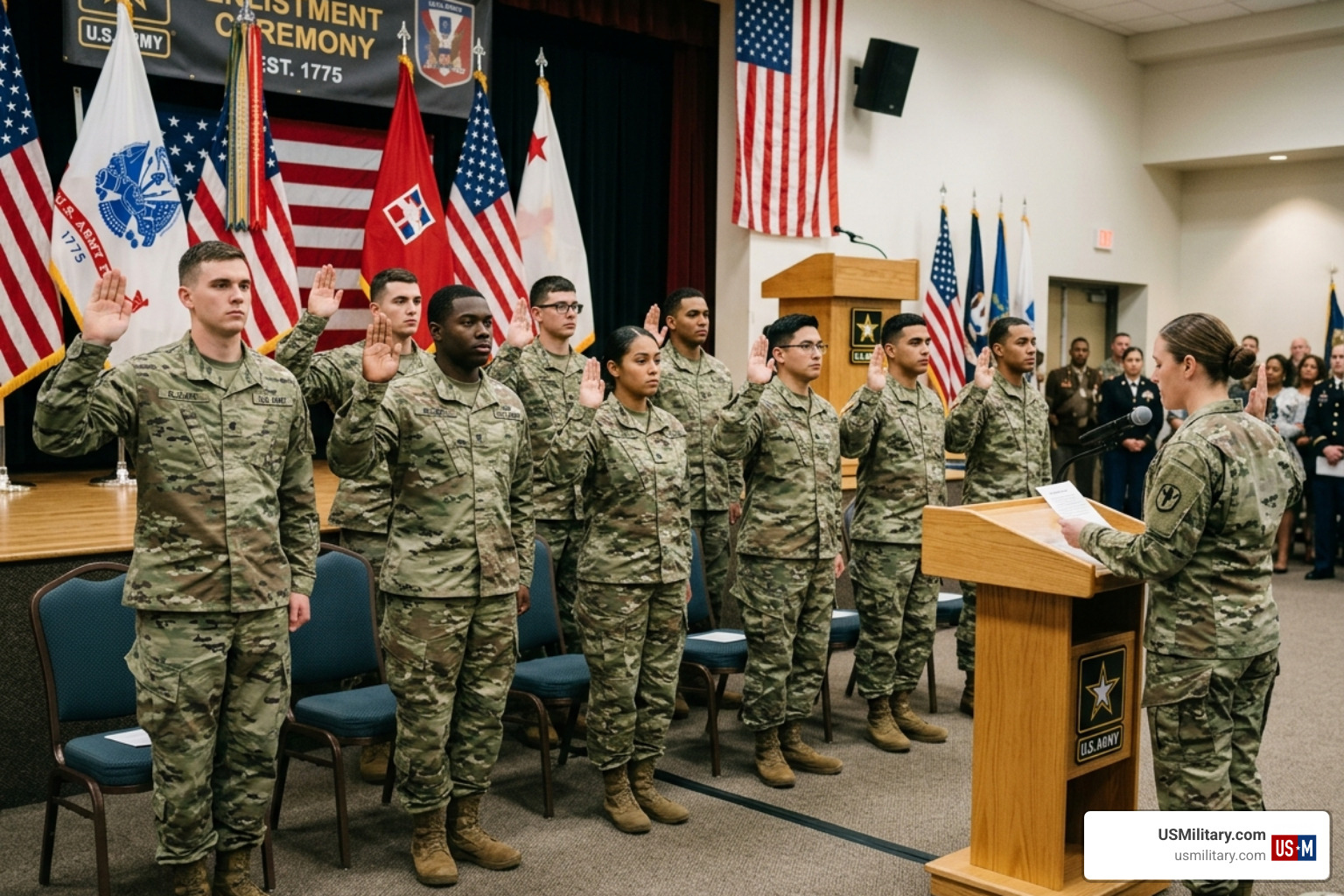
Has The Iran War Influenced Army Recruiting is a question on the minds of many young Americans, military families, and defense watchers in April 2026. Here’s the short answer:
- Yes, in the short term: Conflicts typically trigger a spike in recruiting interest and enlistment inquiries driven by patriotism.
- The Army was already rebounding: In fiscal year 2025, the Army hit its goal of 61,000 recruits ahead of schedule — the first time in years.
- Long-term effects are less certain: Rising casualties, low public support, and a shrinking eligible recruit pool create real pressure on sustaining those gains.
- Public opinion is divided: Polls show 55% of Americans oppose sending troops to Iran (Ipsos), which could dampen recruiting momentum over time.
- The Army has new tools: Preparatory programs, expanded waivers, and enlistment bonuses are helping offset structural recruiting challenges.
The picture is complex — a short-term patriotic boost is likely, but whether it lasts depends on how the conflict unfolds and how Americans feel about it.
I’m Larry Fowler, publisher of USMilitary.com and a military resource advocate since 2007, with direct experience connecting thousands of qualified prospects with Army, Navy, Air Force, and National Guard recruiters — making the question of has the Iran war influenced Army recruiting one I’ve been watching closely. In the sections below, we’ll break down exactly what the data and experts are saying.
The State of Army Recruiting Before the Iran Conflict
Before the first boots hit the ground in this conflict, the U.S. Army was already fighting a different kind of battle: a Military Recruitment Shortage. For several years leading up to 2024, the “Big Green Machine” struggled to find enough qualified young people to fill its ranks.
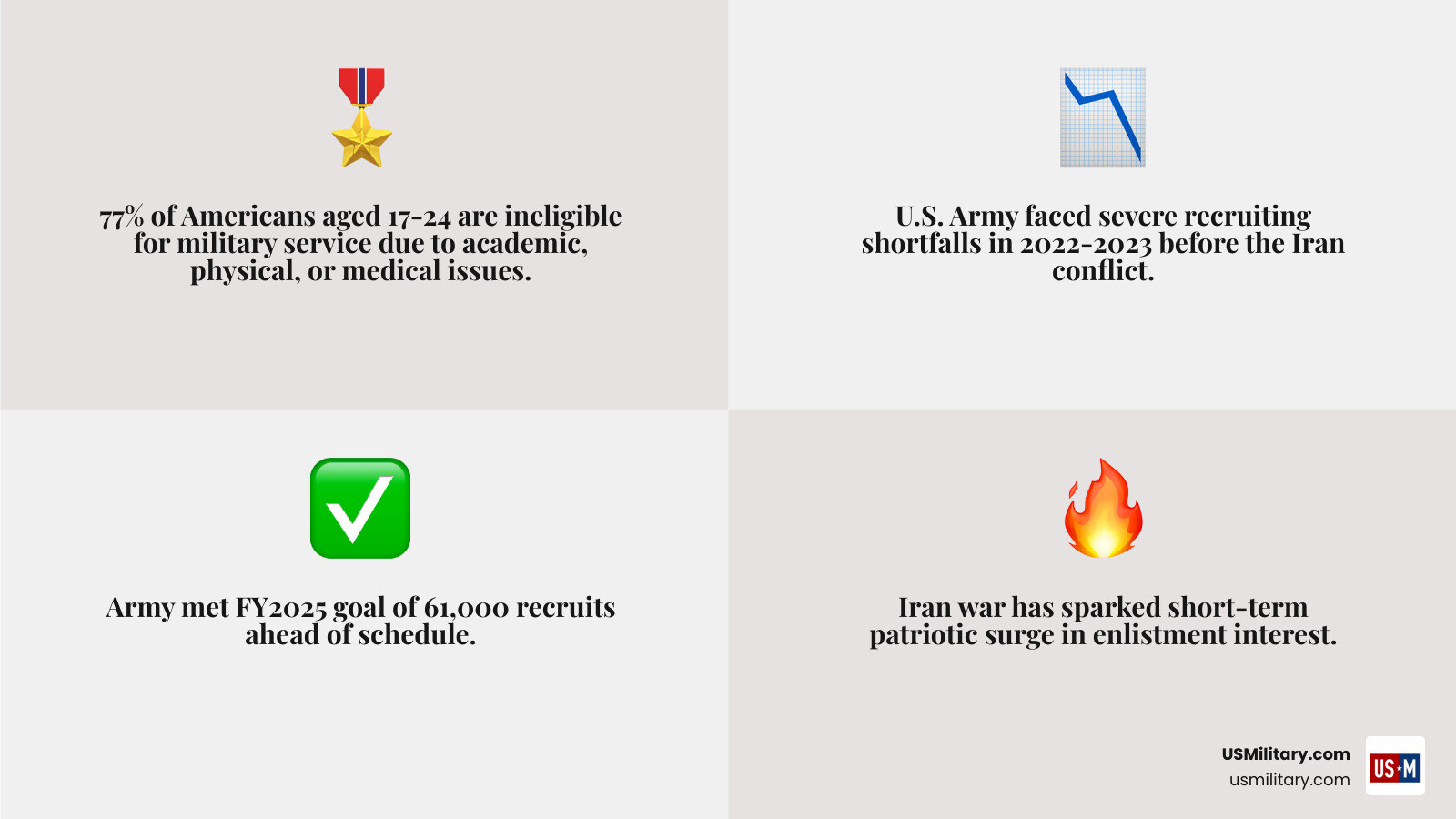
The numbers were staggering. Roughly 77% of Americans between the ages of 17 and 24 were ineligible to serve without some form of waiver. The primary culprits? A mix of academic struggles, physical fitness issues, and legal or medical disqualifiers. We weren’t just looking at a lack of interest; we were looking at a lack of eligibility.
Many wondered, Are Military Recruiting Requirements Being Lowered to meet these quotas? While the Army maintained its core standards, it began shifting from a “selection” model—where they simply picked the best of the best—to a “development” model, where they helped promising candidates reach the required standards.
This shift paid off. In fiscal year 2025, the Army achieved a massive milestone, bringing in more than 61,000 recruits. This wasn’t just a win; they met their target ahead of schedule for the first time in years. This momentum provided a solid foundation just as geopolitical tensions began to boil over.
Has The Iran War Influenced Army Recruiting Interest?
Whenever a major conflict begins, we often see a “rally ’round the flag” effect. History shows that initial surges in patriotism lead to more phone calls and walk-ins at local recruiting stations. But Has The Iran War Influenced Army Recruiting in a way that translates to long-term boots on the ground?
Early reports in 2026 suggest an initial spike in interest. News of Iranian Backed Enemy Fighters Captured and reports regarding whether Are Army Rangers Operating In Iran Now 101/ have dominated the headlines, sparking a sense of duty in many. Rising tensions with Iran could reshape U.S. military recruiting and … enlistment trends by drawing in those who want to be part of the response.
However, interest doesn’t always equal enlistment. While a Army Recruiting Station Near Me 2/ might see more foot traffic, the reality of a prolonged conflict can cause “long-term hesitancy.” Potential recruits—and more importantly, their families—start to weigh the risks differently once the conflict moves past the initial patriotic surge and into a cycle of deployments and casualties.
Engineering the Rebound: Preparatory Programs and Incentives
The Army didn’t just get lucky with its 2025 recruiting numbers; it engineered that success through innovative programs. The crown jewel of this effort is the Future Soldier Preparatory Course at Fort Jackson.

This program is a game-changer for Us Army Recruiting. It takes candidates who are slightly below the academic or physical requirements and gives them up to 90 days of intensive coaching.
- Academic Remediation: Helping students raise their ASVAB scores.
- Fitness Improvement: Helping recruits meet body fat and endurance standards.
- Expanding the Pool: By investing in these “developmental” recruits, the Army effectively widened the gate without lowering the bar.
This is particularly important because federal law caps Category IV recruits—those in the lowest acceptable range on the Armed Forces Qualification Test—at 4% without special authorization. These prep courses help move recruits out of Category IV and into higher brackets, ensuring the force remains smart and capable.
Beyond training, the Army is leaning heavily on financial incentives. If you visit an Army Recruiter Near Me 3/, you’ll likely hear about significant enlistment bonuses and the availability of medical or conduct waivers for those who qualify. Even the Army National Guard Recruiting/ efforts have seen a boost from these centralized preparatory models, as the Guard often benefits from the same training pipelines.
Public Opinion and the Sustainability of the Recruiting Surge
While the Army has built a better “mousetrap” for recruiting, the environment it operates in is becoming more hostile. Public opinion is a massive factor in whether a recruiting surge can be sustained.
As of early 2026, the data shows a country deeply divided over the conflict. We can see this reflected in recent polling data:
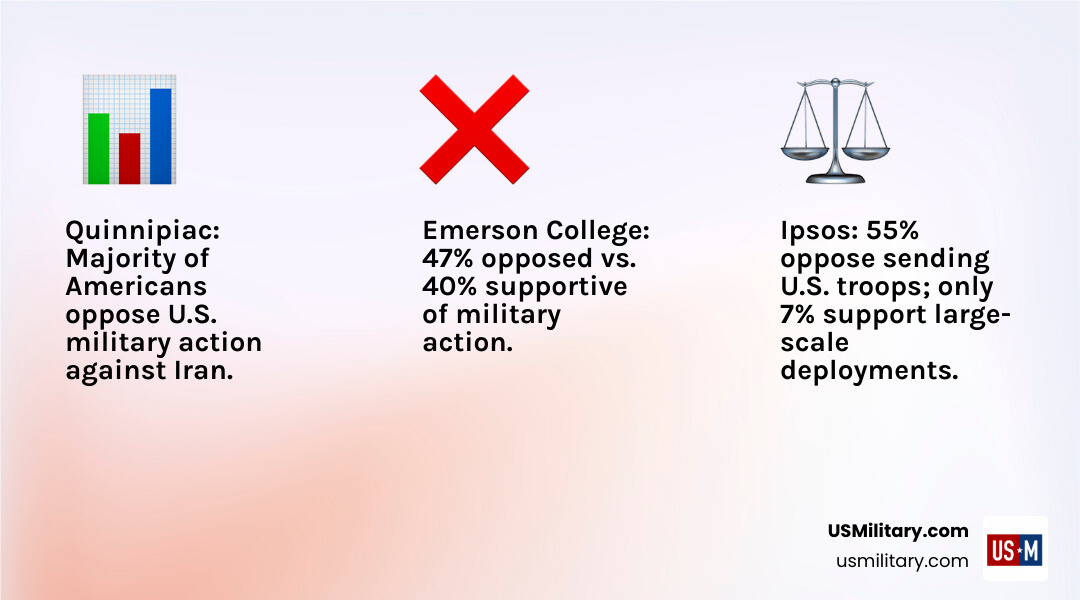
| Polling Organization | Findings on Iran Military Action |
|---|---|
| Quinnipiac University | A majority of Americans oppose U.S. military action against Iran. |
| Ipsos | 55% oppose sending U.S. troops; only 7% support large-scale deployments. |
| Emerson College | 47% opposed vs. 40% supportive of military action. |
This opposition creates a headwind for recruiters. When the public is skeptical, parents are less likely to encourage their children to join. Concerns about How America Responds If Iran Goes Nuclear Key Moves/ and the discovery of Iranian Manufactured Weapons Found keep the threat level high, but they also keep the stakes high for families.
Furthermore, the threat isn’t just overseas. An Essential Guide To Iran Sleeper Cells In America/ highlights domestic concerns that can influence a young person’s decision to stay close to home rather than deploy abroad.
Historical Patterns and Expert Outlook on the Iran Conflict
To understand if the current surge will last, we have to look back. Historical patterns from the post-9/11 era and the wars in Iraq and Afghanistan show a predictable arc.
Initially, there is a massive spike in enlistment. People want to help. But as the “operational tempo” increases—meaning more frequent and longer deployments—recruiting often dips. According to military experts like James Welch, the short-term effects of the Iran conflict on recruiting are positive due to the immediate sense of mission, but the long-term effects are “stress-tested” by casualties and political division.
Interestingly, while recruiting might face future challenges, retention often improves during active conflicts. Current soldiers often feel a deep “sense of duty” to their units and their fellow soldiers. They don’t want to leave their friends behind during a fight. This unit cohesion acts as a powerful glue, keeping experienced NCOs and officers in the service even when the civilian world is calling.
If you are looking for more information, visiting an Army Recruiting Office Near Me/ can provide a clearer picture of how these global tensions are impacting local enlistment opportunities. How rising tensions with Iran could impact U.S. military recruiting is a topic that continues to evolve as the conflict progresses.
Frequently Asked Questions about Has The Iran War Influenced Army Recruiting
Has The Iran War Influenced Army Recruiting in the short term?
Yes. Historically, any major conflict involving the United States triggers a patriotic surge. This leads to an immediate increase in inquiries at recruiting offices. Many young Americans feel a call to service when the nation is actively engaged, leading to initial enlistment spikes that help the Army meet its short-term personnel needs.
How has the Iran conflict affected Army retention rates?
Wartime often leads to improved retention rates among those already serving. Soldiers frequently feel a heightened sense of duty and unit cohesion during active deployments. While the civilian job market might be tempting, the bond between service members in a conflict zone often results in higher reenlistment numbers as soldiers choose to stay with their “military family.”
Could a military draft be reinstated due to the Iran war?
While there is always public discussion about a draft during large-scale conflicts, the U.S. remains committed to the All-Volunteer Force. The Army’s recent success in meeting its 61,000-recruit goal in FY2025 suggests that the current “engineered” recruiting model—using preparatory courses and bonuses—is working well enough to avoid the need for conscription. However, sustained high casualties or a massive expansion of the war could bring these legislative discussions back to the forefront.
Conclusion
At USMilitary.com, we are dedicated to providing the most up-to-date and comprehensive resources for our military members, veterans, and those considering a career in service. Whether you are looking for information on Army Basic Training or need More info on military guidance, we serve as your central hub for all things military.
The question of Has the Iran War Influenced Army Recruiting doesn’t have a simple “yes” or “no” answer. It has sparked a new wave of patriotism and interest, but it also presents significant challenges regarding public support and long-term sustainability. The Army has proven it can adapt by shifting to a development-focused recruiting model, but the true test lies in the months and years ahead.
For those seeking inspiration and strength during these trying times, we also recommend resources like Dare to Live Greatly, which offers powerful guidance for navigating life’s biggest challenges with faith and courage. Stay informed, stay prepared, and thank you for your interest in the future of our Armed Forces.