
When Money Gets Tight, the Army Has Your Back
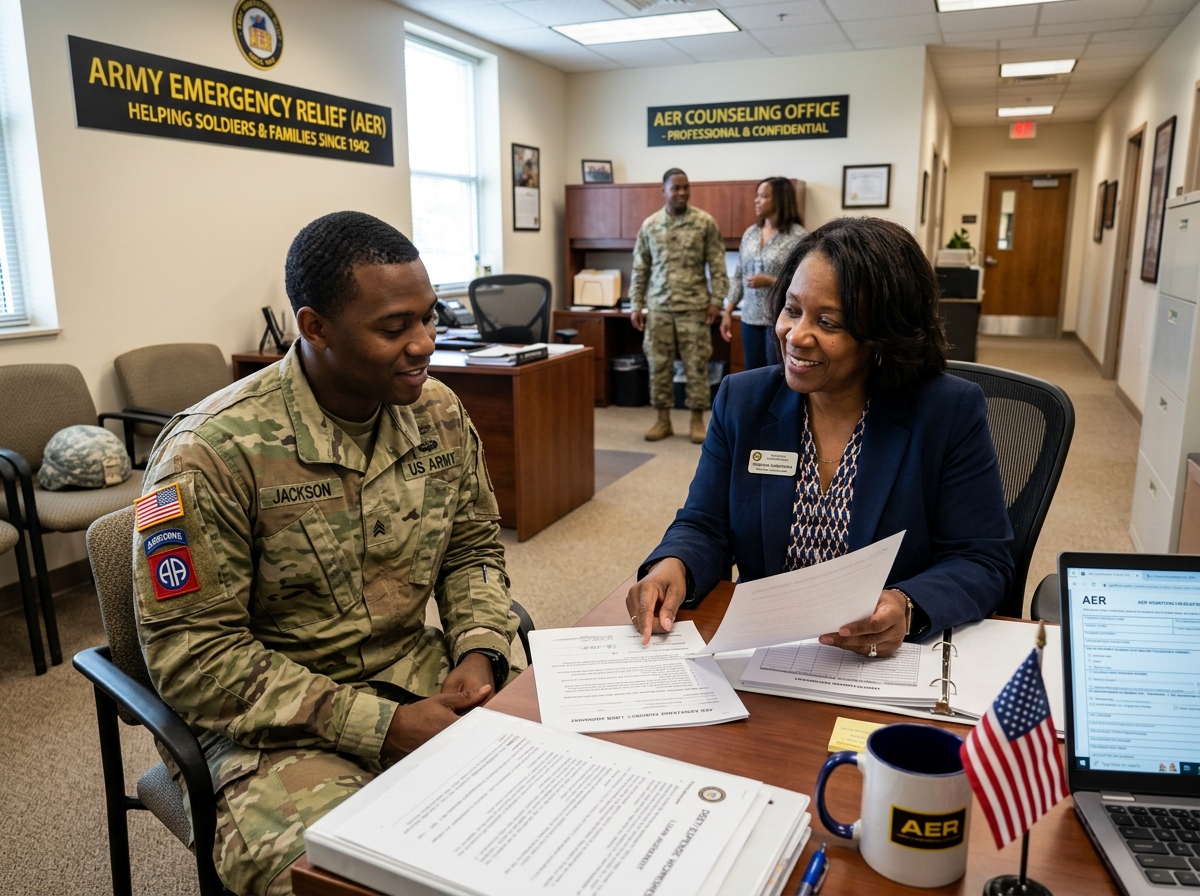
Army emergency relief loan assistance is one of the most valuable — and underused — benefits available to Soldiers and their families. Here is what you need to know right away:
Quick Answer: How to Get an Army Emergency Relief Loan
- Talk to your Chain of Command — your First Sergeant or Company Commander can approve up to $2,000 on the spot through the Quick Assist Program
- Apply online at the AER Portal anytime, from anywhere in the world
- Visit your nearest AER office if one is within 50 miles of you
- Funds arrive within 48 hours — often the same day — via direct deposit, Zelle, or PayPal
- No credit check. No interest. No late fees. Ever.
Financial emergencies don’t wait for a convenient time. A broken-down car, a sudden medical bill, or an unexpected PCS expense can hit hard — and fast. For many Soldiers, the instinct is to reach for a credit card or a payday lender. But those options come with high interest rates and can trap families in a cycle of debt.
Army Emergency Relief (AER) exists precisely for moments like these. Since 1942, this private nonprofit — the official nonprofit of the U.S. Army — has helped more than 4 million Soldiers and family members with over $2 billion in zero-interest financial assistance. In 2024 alone, AER supported more than 34,000 Soldiers and families.
The best part? You do not need perfect credit. You do not need to have donated to AER. And your command does not need to know your personal financial details.
I’m Larry Fowler, publisher of the USMilitary.com Network, and since 2007 I’ve been helping active-duty members and veterans navigate benefits just like the army emergency relief loan program. In this guide, I’ll walk you through everything you need to access this benefit without the stress.
Army emergency relief loan terms explained:
What is an Army Emergency Relief Loan?
When we talk about an army emergency relief loan, we are talking about a unique financial lifeline that is strictly for the Army family. Established in 1942 during the height of World War II, Army Emergency Relief (AER) was created to ensure that Soldiers wouldn’t have to worry about their families’ financial stability while they were focused on the mission.
It is important to understand that AER is a private, nonprofit organization. While it is the “official” nonprofit of the U.S. Army, it does not receive federal funding from the Department of Defense. Instead, it is fueled by voluntary contributions from Soldiers, loan repayments, and investment income. This independence allows AER to be incredibly flexible and responsive to the “human experience” of military life.
AER provides two primary types of financial assistance:
- Zero-Interest Loans: These are the most common form of help. You borrow what you need for a valid emergency and pay it back over time with absolutely no interest or late fees.
- Financial Grants: In cases where repayment would cause extreme hardship (such as for a surviving spouse or a Soldier in a dire long-term situation), AER may provide a grant that does not need to be paid back at all. Sometimes, assistance is a “bridge” — a combination of a loan and a grant.
With over 200 AER officers located at 70 installations worldwide, the goal is “100 percent awareness.” Whether you are stationed at Fort Bliss or USAG Humphreys in Korea, Learn More About U.S. Army Emergency Relief to see how they fulfill their motto: “Helping the Army Take Care of Its Own.”
Eligibility and Covered Expenses for Army Funding
One of the most common questions we hear at USMilitary.com is: “Do I qualify for an army emergency relief loan?” The eligibility pool is actually quite broad. AER isn’t just for the “new guy” in the barracks; it’s a resource for the entire lifecycle of a Soldier’s career and beyond.
Who is Eligible?
- Active Duty Soldiers: Regardless of rank, along with their eligible dependents.
- Retired Soldiers: Those retired for longevity or medical reasons, and their dependents.
- Army Reserve and National Guard: Soldiers on Title 10 orders (federal active duty) for more than 30 consecutive days.
- Surviving Spouses and Children: Those of Soldiers who died on active duty or in a retired status.
What Can AER Help With?
AER evaluates every request on an individual basis, but they generally cover over 30 categories of assistance. If you are facing a valid financial hardship, chances are AER has a category for it. Common covered expenses include:
- Housing: Rent, mortgage payments, initial security deposits, and even temporary lodging if you’re between homes.
- Utilities: Preventing the shut-off of electricity, water, or heating.
- Vehicle Repairs: Essential repairs to keep your primary vehicle safe and on the road.
- Emergency Travel: Flights or gas money for a family emergency or a funeral.
- Medical and Dental: Costs not covered by TRICARE, including co-pays or special needs equipment like cranial helmets.
- PCS Expenses: Moving is expensive. AER can help with travel costs and even pet transportation (up to certain limits).
If you need to find someone local to talk to, you can Search Installation Contacts to find the nearest AER officer.
Understanding the Army Emergency Relief Loan Eligibility
To be eligible as a National Guard or Reserve member, you must be on federal orders for at least 30 days. For everyone else, having a valid Military ID and a recent Leave and Earnings Statement (LES) is the baseline.
A key point to remember: You do not have to have donated to AER to receive help. Some Soldiers feel guilty asking for a loan if they haven’t contributed during the annual campaign. Don’t let that stop you. AER is a “Soldiers helping Soldiers” organization, and they are “very keen on saying yes” to those in need. Each case is evaluated on its own merits, not on your donation history.
What the Army Emergency Relief Loan Does Not Cover
While AER is generous, it isn’t a “blank check” for everything. There are specific exclusions to ensure the funds remain available for true emergencies. AER generally will not provide funds for:
- Non-essentials: Vacations, luxury items, or “convenience” goods.
- Legal Issues: Divorce costs, civilian court fines, or bail.
- Business Ventures: Financing a side hustle or private investment.
- Debt Consolidation: Paying off high-interest credit cards (though they can help with the underlying emergency that caused the debt).
- Bad Checks: Replacing funds from overdrawn bank accounts.
How to Apply for Emergency Financial Assistance
In the past, applying for an army emergency relief loan meant a long walk to the Army Community Service (ACS) building. Today, the process is streamlined and digital. There are three main ways to get the ball rolling:
- The Online Portal: This is the fastest way for most Soldiers. You can access the AER Online Assistance Portal from your phone or computer. You’ll create an account, submit your request, and an AER officer will typically contact you within 48 hours.
- Chain of Command: Your unit leadership is often your best first stop. Your Company Commander or First Sergeant has the authority to approve certain loans directly (more on that in a moment).
- In-Person: If you prefer a face-to-face conversation, you can visit your local AER office. This is often the best route if your situation is complex and requires detailed explanation.
Regardless of how you apply, you will need documentation. At a minimum, have your Military ID, your most recent LES, and “substantiating documents” — things like a repair estimate from a mechanic, a utility shut-off notice, or a copy of your lease. If a spouse is applying while the Soldier is deployed, they will need a valid Power of Attorney.
The Quick Assist Program: Fast Army Emergency Relief Loan Approval
For immediate needs, the Quick Assist Program (QAP) is a game-changer. This program empowers Company Commanders and First Sergeants to approve zero-interest loans of up to $2,000 without the Soldier ever having to step foot in an AER office.
Last year alone, 8,000 Soldiers received over $10 million through this program. If you have an immediate need — like your fridge died or you need to get home for a family emergency — talk to your 1SG. They can validate your circumstances and get the funds approved, often resulting in same-day disbursement.
Remote Assistance and the American Red Cross
What if you aren’t near an Army post? Maybe you’re on leave, or you’re a Recruiter stationed far from a major installation. If there isn’t an AER office within a 50-mile radius, you aren’t out of luck.
AER has reciprocal agreements with the Air Force Aid Society, the Navy-Marine Corps Relief Society, and the Coast Guard Mutual Assistance. You can walk into any of their offices for help. If none of those are available, call the American Red Cross at 1-877-272-7337. They can process AER assistance requests 24/7, ensuring you get the help you need no matter where you are.
Repayment Terms and Financial Incentives
Repaying an army emergency relief loan is designed to be as stress-free as possible. Because there is zero interest, every dollar you pay back goes directly toward your balance.
| Feature | AER Loan | Typical Payday Loan |
|---|---|---|
| Interest Rate | 0% | 300% – 500% |
| Late Fees | $0 | High / Predatory |
| Credit Check | None | Required |
| Repayment Method | Military Allotment | Bank Draft / Cash |
The most common way to repay is through a DFAS payroll allotment. This means a small, manageable amount is taken out of your paycheck automatically, so you don’t have to worry about missing a payment. You can also Manage Your Loan Online to make one-time payments via PayPal, e-check, or credit card.
Earning Credits through Financial Frontline
AER doesn’t just want to give you a loan; they want to help you achieve long-term financial stability. This is where the Financial Frontline program comes in.
If you have an active AER loan, you can actually reduce your balance just by learning. By watching a series of financial training videos and scoring an 80% or higher on a brief exam, you can earn a credit toward your loan:
- Specialists/Corporals and below: Can receive up to a $200 credit.
- Sergeants and above: Can receive up to a $100 credit.
This is essentially free money in exchange for becoming more financially savvy. You can find these Army Financial Training Videos online and take the test within the AER loan portal.
Additional Support Programs and Scholarships
AER’s mission extends far beyond emergency loans. They are also a major player in military education and career support, providing over $13 million in scholarships every single year.
- MG James Ursano Scholarship: For dependent children of Soldiers.
- Mrs. Patty Shinseki Spouse Scholarship: For spouses of active-duty or retired Soldiers pursuing undergraduate degrees.
- Childcare Assistance: AER can provide up to $1,500 ($500 per month for three months) to help cover the gap while waiting for Army Fee Assistance.
- Career Skills Program (CSP): For Soldiers transitioning out of the Army, AER offers grants of $250 to $1,000 to help with costs like professional clothing, tools, or travel for internships.
These programs are designed to empower the entire family. Whether it’s helping a spouse get relicensed after a PCS or ensuring a child can afford college, you should Apply for Scholarships Here to take advantage of these grants.
Frequently Asked Questions about AER
How quickly can Soldiers receive AER funds?
Speed is a priority. Assistance is always provided within 48 hours, but in many cases, it happens the same day. Once approved, funds can be sent via direct deposit, Zelle, or PayPal, making the money available almost instantly.
Do Soldiers need to have donated to AER to receive help?
Absolutely not. AER is a private nonprofit, and while they appreciate donations, your eligibility is based solely on your status as a Soldier (or family member) and your financial need. Every eligible request is given equal consideration regardless of your contribution history.
What documentation is required to apply for AER assistance?
To keep the process moving, have these ready:
- Valid Military ID.
- Most recent LES.
- Substantiating documents (bills, estimates, or a DA Form 31 for emergency leave).
- AER Form 101 and 57 (Budget worksheet), which you can fill out at the office or via the online portal.
Conclusion
At USMilitary.com, our goal is to ensure every member of the military community has the resources they need to thrive. The army emergency relief loan program is a testament to the Army’s commitment to taking care of its own. It is a safe, honorable, and interest-free alternative to the “debt traps” found outside the installation gates.
Financial readiness is a key part of overall mission readiness. By using AER for emergencies and taking advantage of their educational scholarships, you are building a stronger future for yourself and your family. If you’re looking for other ways to secure your family’s future, such as homeownership, be sure to check out our guide on How to get a VA loan.
Stay safe, stay informed, and remember — if you’re in a bind, the Army has your back.