
The Real Answer to Whether the Army Is Less or More Competent With Female Soldiers
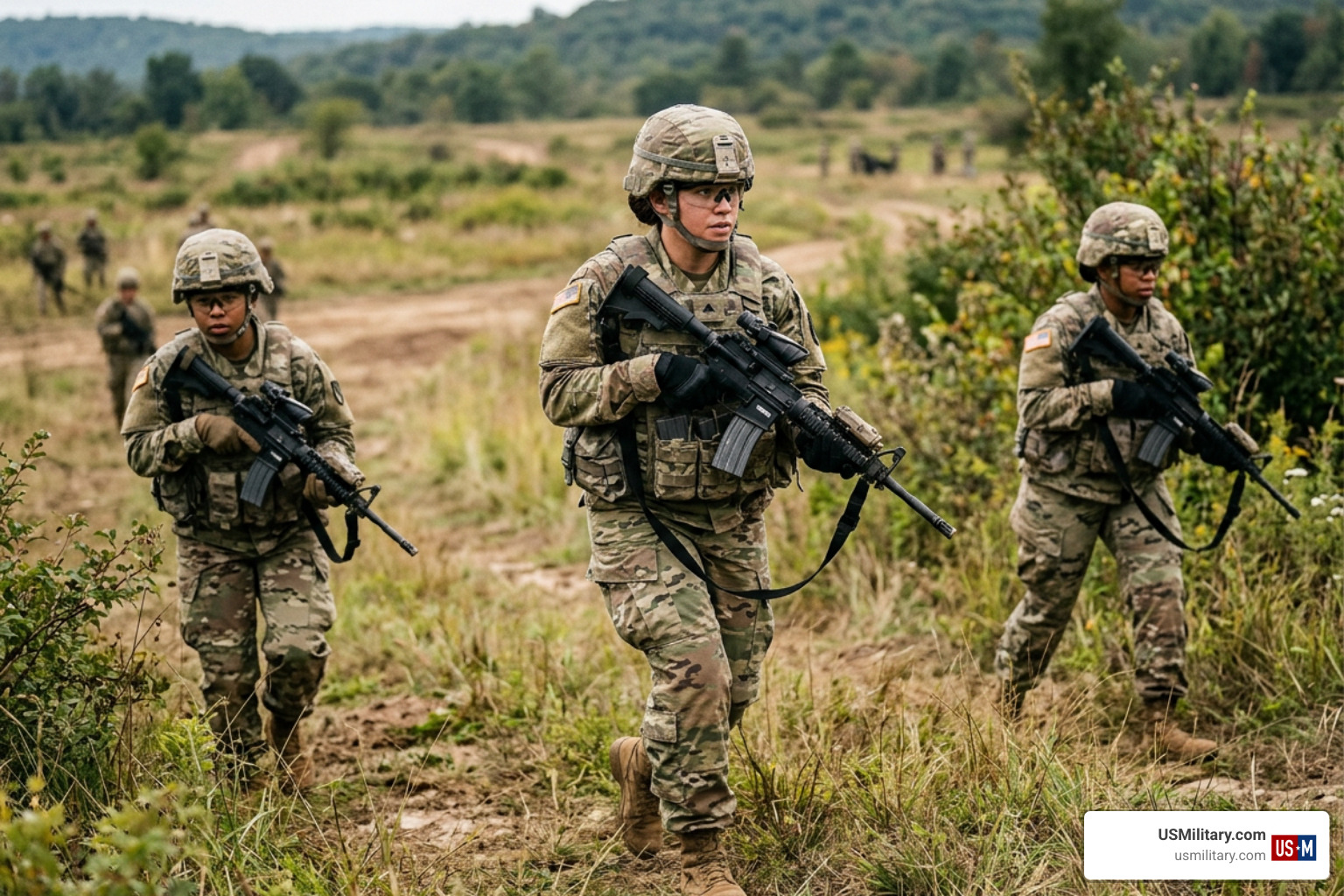
Is the Army less or more competent with female soldiers is one of the most debated questions in modern military policy — and the data points in a clear direction.
The short answer:
- The Army is not less competent with female soldiers
- Top enlisted leaders from every branch told Congress in 2026 they have seen no evidence of lowered standards or reduced readiness
- A 2018–2023 Army study found women in ground combat units performed well — and sometimes scored higher than male soldiers
- Women who pass combat training do so under the same gender-neutral standards as men
- However, attrition rates for women in some combat specialties remain significantly higher than for men, which is an ongoing challenge worth understanding
| Factor | Women | Men |
|---|---|---|
| Infantry training attrition (Army) | 49% | 18% |
| Armor training attrition (Army) | 72% | 17% |
| Ranger tab earners (by early 2025) | 154 | Tens of thousands |
| Active-duty representation (2023) | 17.7% | 82.3% |
| Female soldiers in combat units | ~3,800 (Army) | Majority |
The picture is complex. Women have proven themselves in combat roles. But structural gaps — higher attrition, lower representation in special operations, and ongoing debates about injury rates — mean the conversation is far from settled.
In June 2026, the Pentagon is actively reviewing the operational effectiveness of women in ground combat roles, making this question more relevant than ever.
I’m Larry Fowler, publisher of USMilitary.com since 2007, and a long-time observer of military recruitment trends and policy shifts. I’ve tracked the evolving debate over whether the Army is less or more competent with female soldiers through years of connecting recruits, veterans, and military families with reliable service information. Let’s break down what the evidence actually shows.
Is The Army Less or More Competent With Female Soldiers?

When evaluating whether the military’s lethality and preparedness have shifted, we must look past emotional arguments and focus on hard performance data. The core of military competence is unit readiness — the ability of a unit to deploy, execute its mission, and return home successfully.
Historically, critics argued that integrating women into ground combat roles would inevitably degrade this readiness. They feared that physical standards would be quietly lowered to meet gender diversity quotas, or that mixed-gender units would suffer from fractured unit cohesion.
However, looking at the actual outcomes since the combat ban was lifted shows a different reality. In early 2026, top enlisted leaders from across the military branches testified before Congress. They stated clearly that there is no evidence women in combat roles lower standards, top enlisted leaders say. According to these senior leaders, as long as the physical requirements remain strictly gender-neutral and job-specific, the presence of female soldiers does not diminish a unit’s operational capability.
Competence is not just about raw physical power; it is also about intelligence, adaptability, and leadership. By opening all military occupational specialties (MOSs) to women, the Army effectively doubled its potential talent pool. In an era where high-tech warfare requires advanced cognitive skills, excluding half the population from key roles would actually make the military less competitive.
Historical Context: Is The Army Less or More Competent With Female Soldiers?
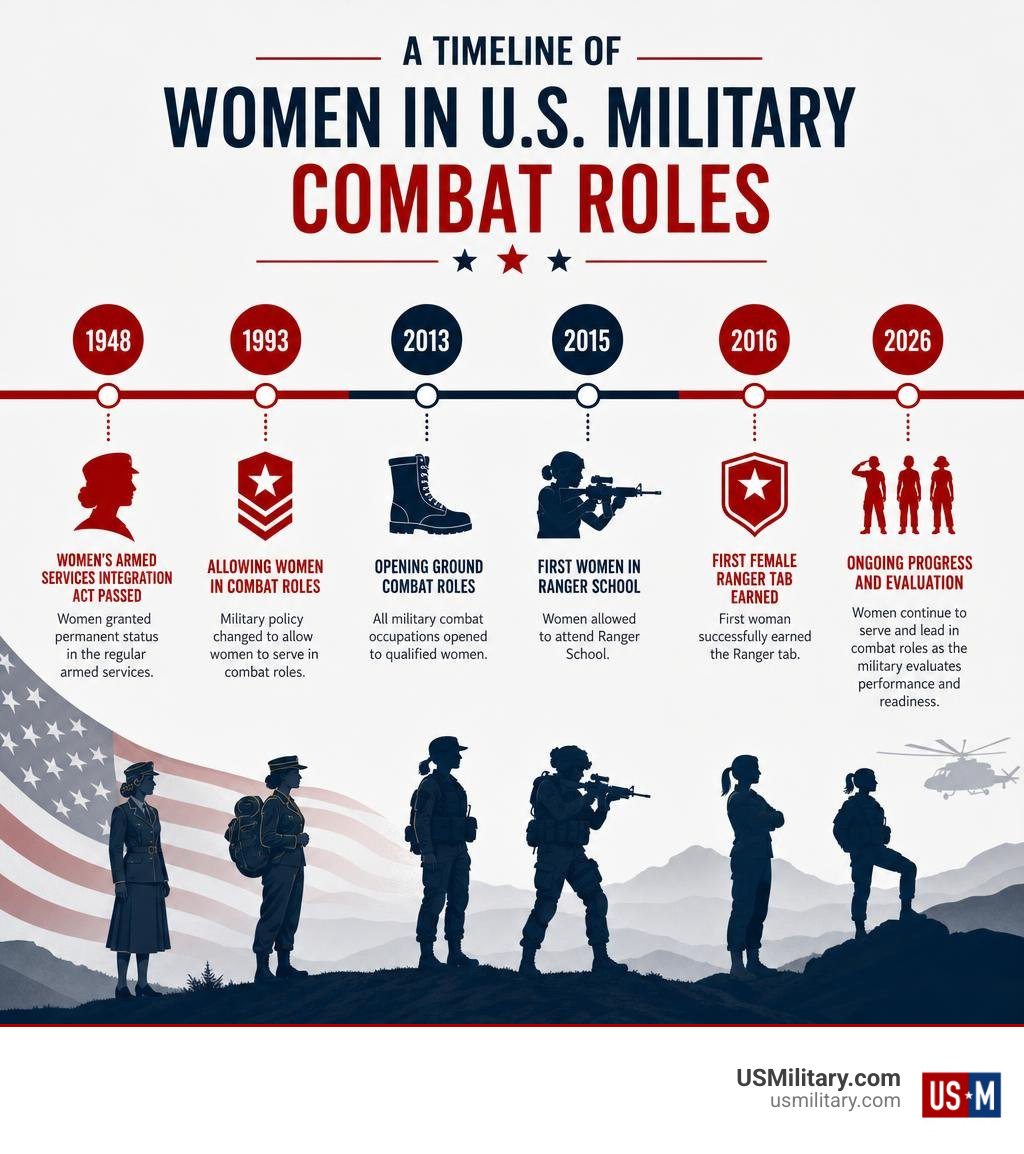
To understand how we arrived at this point, we have to look back at the legislative and cultural milestones that shaped today’s force. For decades, women in the military were restricted to support roles — serving as nurses, clerks, and communications specialists. While thousands of women served in combat zones during the Gulf War and the Global War on Terrorism, they were technically barred from direct ground combat roles.
That changed permanently in late 2015, when the Department of Defense officially lifted all remaining gender-based restrictions on military service. Beginning in January 2016, women could apply for any job in the military, including infantry, armor, and special operations, provided they met the established physical standards.
This policy shift opened the floodgates for historic achievements. In 2015, Captain Kristen Griest and First Lieutenant Shaye Haver became the first two women to graduate from the grueling U.S. Army Ranger School. By early 2025, at least 154 women had earned the coveted black-and-gold Ranger tab. Additionally, around 10 women have successfully completed training to become Green Berets. To explore this historical evolution in detail, check out our piece on the evolving roles of women in combat.
Modern Performance Metrics: Is The Army Less or More Competent With Female Soldiers?
When we look at modern performance data, the argument that women degrade combat readiness falls flat. A comprehensive Army study tracking ground combat units from 2018 to 2023 revealed that integrated units performed exceptionally well. In several instances, female soldiers actually scored higher than their male counterparts in key performance metrics, including cognitive tests and specific technical tasks.
Historically, field tests have supported these findings. During the MAX WAC (Women Content in Units Force Development Test) and various Reforger exercises, units containing up to 35% women performed at the same level as all-male units. In some cases, mixed-gender support units actually outperformed their all-male counterparts over extended 30-day field operations.
Furthermore, clinical reviews, such as the evaluation of female light infantry performance, suggest that physical performance is highly dependent on individual training, conditioning, and prior experience rather than gender alone. When women are given the same preparatory training and resources as men, the gap in physical performance narrows significantly.
Current State of Female Integration Across the Military Branches
The level of female integration varies significantly across branches of service. While some branches have integrated women into almost every operational community, others have faced steeper hills to climb due to the physical demands of their primary missions.
| Service Branch | Female Representation (Officers) | Female Representation (Enlisted) | Key Integration Milestones |
|---|---|---|---|
| U.S. Army | 19.0% | 14.4% | ~3,800 women in ground combat roles; over 150 Ranger tab graduates. |
| U.S. Navy | ~20.0% | ~20.0% | 19 submarine crews integrated with female officers; female sailors in elite diving and salvage. |
| U.S. Air Force | ~22.0% | ~19.0% | Highest overall representation; multiple female Secretaries of the Air Force. |
| U.S. Marine Corps | 8.0% | ~8.7% | Historically lowest representation; ~700 women in ground combat roles. |
| U.S. Coast Guard | ~22.0% | ~15.0% | Removed all gender-based assignment restrictions in 1978; high overall integration. |
Army and Marine Corps Ground Combat Roles
The Army and the Marine Corps have had different experiences with ground combat integration. In the Army, approximately 3,800 women serve in infantry, armor, and artillery units. These women are fully integrated into conventional combat brigades, deploying and training alongside their male peers. If you are a woman considering an Army career, you can explore the best jobs in the Army for women or consult our ultimate guide to military jobs for women to find the right fit for your skills.
The Marine Corps has integrated ground combat roles at a slower pace. Currently, about 700 female Marines serve in ground combat roles, including 112 serving as infantry riflemen. The Marine Corps remains an outlier as the only service that historically segregated recruit basic training by gender, though they have made major strides toward integrating training companies at Parris Island and San Diego in recent years.
Navy, Air Force, and Coast Guard Integration
The Navy, Air Force, and Coast Guard have long histories of gender integration, largely because their primary combat platforms — ships and aircraft — rely more heavily on technical expertise and cognitive skill than raw physical strength.
The Air Force has the highest percentage of female officers and has had five female service secretaries. Women fly every type of combat aircraft, from F-22 fighters to B-2 bombers.
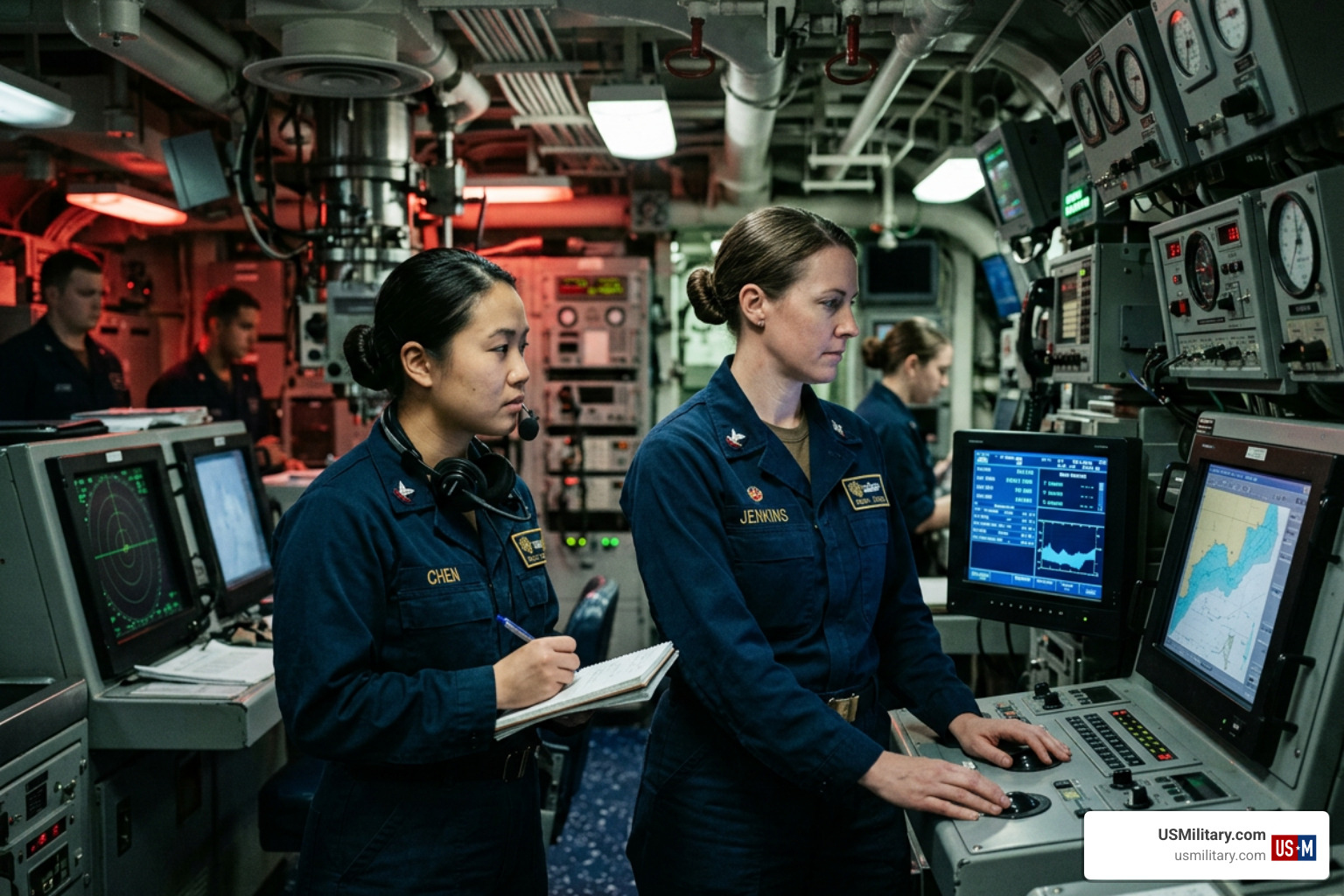
In the Navy, women have served on combatant ships since the 1990s. One of the most significant recent integration efforts has been in the submarine community. By late 2019, the Navy had integrated 19 submarine crews with female officers, and hundreds of enlisted women now serve aboard both fast-attack and ballistic-missile submarines. To learn more about these opportunities, read our guide on careers for women in the Navy.
The Coast Guard has been a leader in this area, having removed all gender-based restrictions on assignments in 1978. Today, women command Coast Guard cutters, fly search-and-rescue helicopters, and lead maritime safety detachments worldwide.
Special Operations Forces
Special Operations Forces (SOF) represent the final frontier of military integration. Because SOF units operate under extreme physical and psychological conditions, their selection pipelines are notoriously difficult.
While women have graduated from Army Ranger School and the Special Forces Qualification Course (Green Berets), other communities have seen slower progress. For example, the Navy SEAL pipeline is incredibly demanding, and while women have attempted the selection process, none have graduated as SEALs yet. If you are curious about the current status of women in these elite units, you can read our detailed breakdowns on women in Army Delta Force and are there any female Navy SEALs?.
Recruitment, Retention, and Attrition Challenges in Combat Arms
While the integration of women has opened up new talent pools, it has also highlighted significant structural challenges, particularly regarding attrition and physical injuries.
To address these concerns, the Pentagon launched a comprehensive, six-month review to evaluate the operational effectiveness of women in ground combat roles. You can find more details in the official report on how the DOD launches review of effectiveness of women in ground combat roles.
Physical Demands and Injury Prevention
One of the most significant hurdles for women in ground combat roles is the physical toll of infantry and armor training. Ground combat requires carrying heavy loads over long distances, dragging casualties, and lifting heavy ammunition.
A famous 2015 Marine Corps study conducted in the Mojave Desert compared all-male units with mixed-gender units. The study found that all-male squads performed faster in tactical movements and demonstrated higher marksmanship accuracy. Crucially, the study also revealed that women in these units suffered injury rates twice as high as men, primarily due to load-bearing tasks.
To prevent these injuries without lowering standards, the Army developed Military Occupational Specialty (MOS)-specific physical standards. These tests assess a recruit’s ability to perform actual combat tasks, such as dragging a 270-pound casualty for 5 feet in under 30 seconds or marching 12 miles with a 110-pound rucksack. By focusing on job-specific physical readiness, the Army ensures that every soldier in a combat role is physically capable of performing their duties safely.
Recruitment Trends and the Draft Debate
The military is currently facing a significant recruitment challenge. Interestingly, while male enlistments dropped by approximately 35% between 2013 and 2023, female recruitment has remained steady at roughly 10,000 enlistments annually. This makes women an increasingly vital component of the All-Volunteer Force.
This shift has also renewed the national conversation surrounding the Selective Service System. If the United States were to reinstate a military draft, would women be included? This is a complex legal and political issue that we cover in-depth in our article, can women get drafted?.
Structural Barriers and Opportunities for Enhancing Military Competence
To maximize the competence of a mixed-gender force, the military must address several structural barriers that limit women’s career longevity and advancement.
The Army War College’s publication, What Women Bring to the Fight, argues that integrating women successfully requires shifting from a model built around a traditional male career path to one that accommodates the realities of modern service members, including dual-military marriages and childbearing.
Addressing Discrimination and Sexual Harassment
One of the most persistent barriers to female retention is the threat of sexual assault and harassment. In the Marine Corps, for example, approximately 10.7% of active-duty women reported experiencing some form of sexual assault or harassment in recent years. This issue severely damages unit cohesion and institutional trust.
Addressing these issues requires a command climate that prioritizes accountability. The military has overhauled its military justice system, moving the prosecution of sexual assault cases outside the chain of command to independent prosecutors. This is a massive step toward building a safer, more professional force.
Leadership and Training Improvements
To help female soldiers succeed, the military has implemented policies like the “Leaders First” initiative. This policy required female officers and non-commissioned officers (NCOs) to be assigned to newly integrated combat units before junior enlisted women arrived. Having experienced female leaders in place provides mentorship and helps smooth the transition for integrated units.
Other necessary improvements include:
- Expanding career re-entry paths to allow women to temporarily step away from active duty for childbearing without ruining their promotional timelines.
- Encouraging members of Congress to nominate more qualified women to the federal service academies.
- Designing combat gear, such as body armor and rucksacks, specifically tailored to fit the female frame, reducing load-bearing injuries.
Frequently Asked Questions About Women in the Military
Do women in combat roles lower physical standards?
No. The military uses gender-neutral physical standards for all combat arms positions. To qualify for infantry, armor, or special operations, every recruit must pass the exact same physical tests, regardless of gender or age. This ensures that the high standards required for combat readiness are never compromised.
What is the current Pentagon review of women in combat?
In early 2026, the Pentagon initiated a six-month review of the operational effectiveness of women in ground combat roles. This review, championed by Defense Secretary Pete Hegseth, aims to evaluate whether the integration of women has impacted unit lethality, readiness, and injury rates. While some female service members have expressed concern that the review is a pretext to restrict their roles, military leaders emphasize that the study is focused on gathering objective, data-driven performance metrics. You can read more about how service members are responding in the article, female troops bristle at Pentagon’s review of combat roles.
How do female attrition rates compare to male attrition rates in combat training?
Attrition rates for women in combat training programs are historically higher than for men. In Army infantry training, the female attrition rate is approximately 49% compared to 18% for men. In armor training, the female attrition rate rises to 72% compared to 17% for men. In the Marine Corps, female attrition at infantry school is 23.9% for enlisted women versus 11.2% for men. These gaps are often attributed to differences in prior physical conditioning, load-bearing capacity, and previous exposure to infantry-style tasks.
Conclusion
When we ask is the Army less or more competent with female soldiers, the answer is clear: the Army is a highly competent, modern fighting force because of the dedication of all its members, male and female alike.
By holding every soldier to strict, gender-neutral physical standards, the military ensures that lethality is never compromised. At the same time, opening up combat roles has allowed the armed forces to tap into an outstanding pool of talent, bringing highly qualified leaders, technical experts, and brave warriors into the ranks.
If you are ready to take the first step toward your own military career, we are here to support you. Let us help you prepare for Army Basic Training with our comprehensive guides, physical fitness tips, and expert career resources. Your journey starts here at USMilitary.com!