
Green Beret vs. Army Ranger: Choose the Mission That Fits You
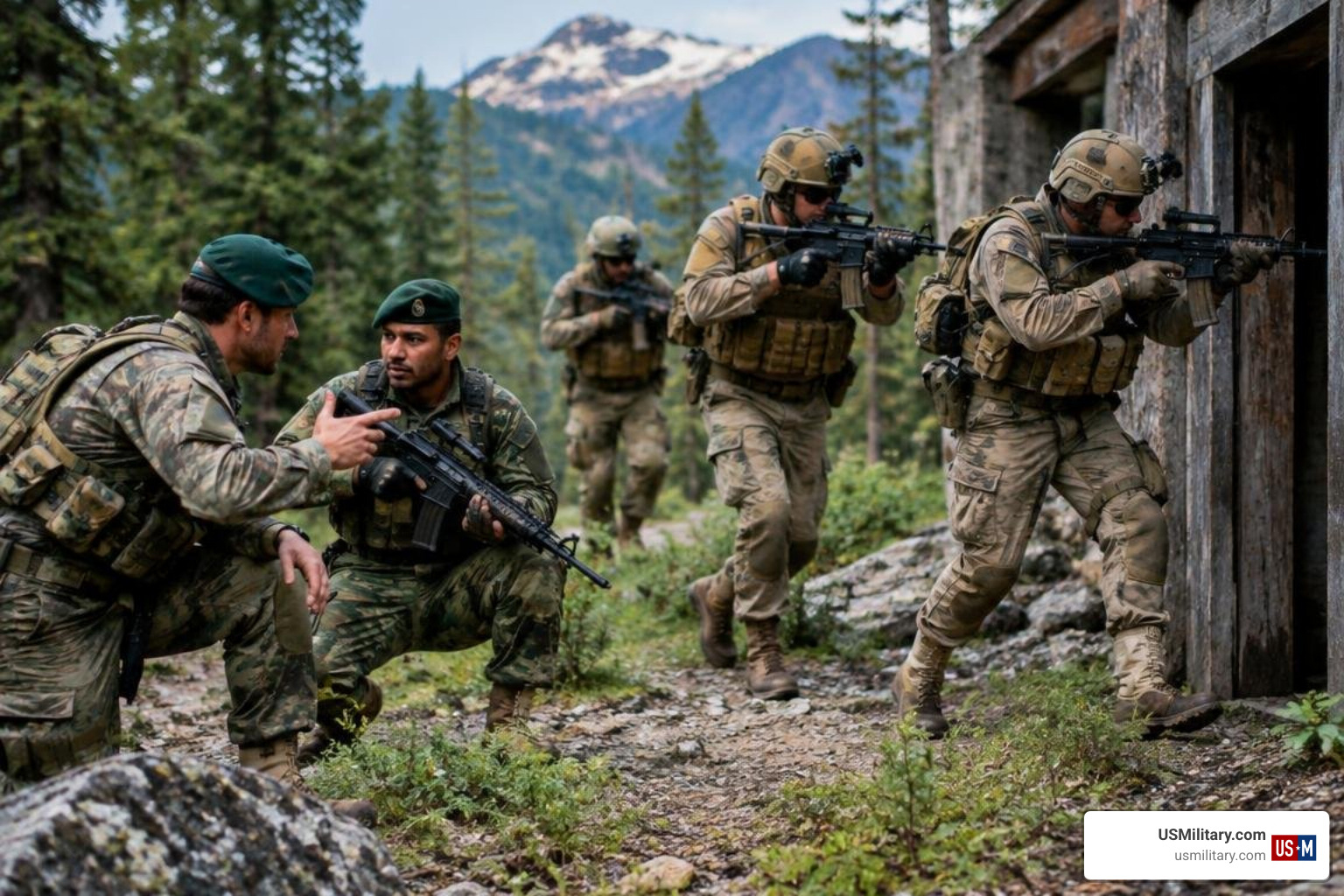
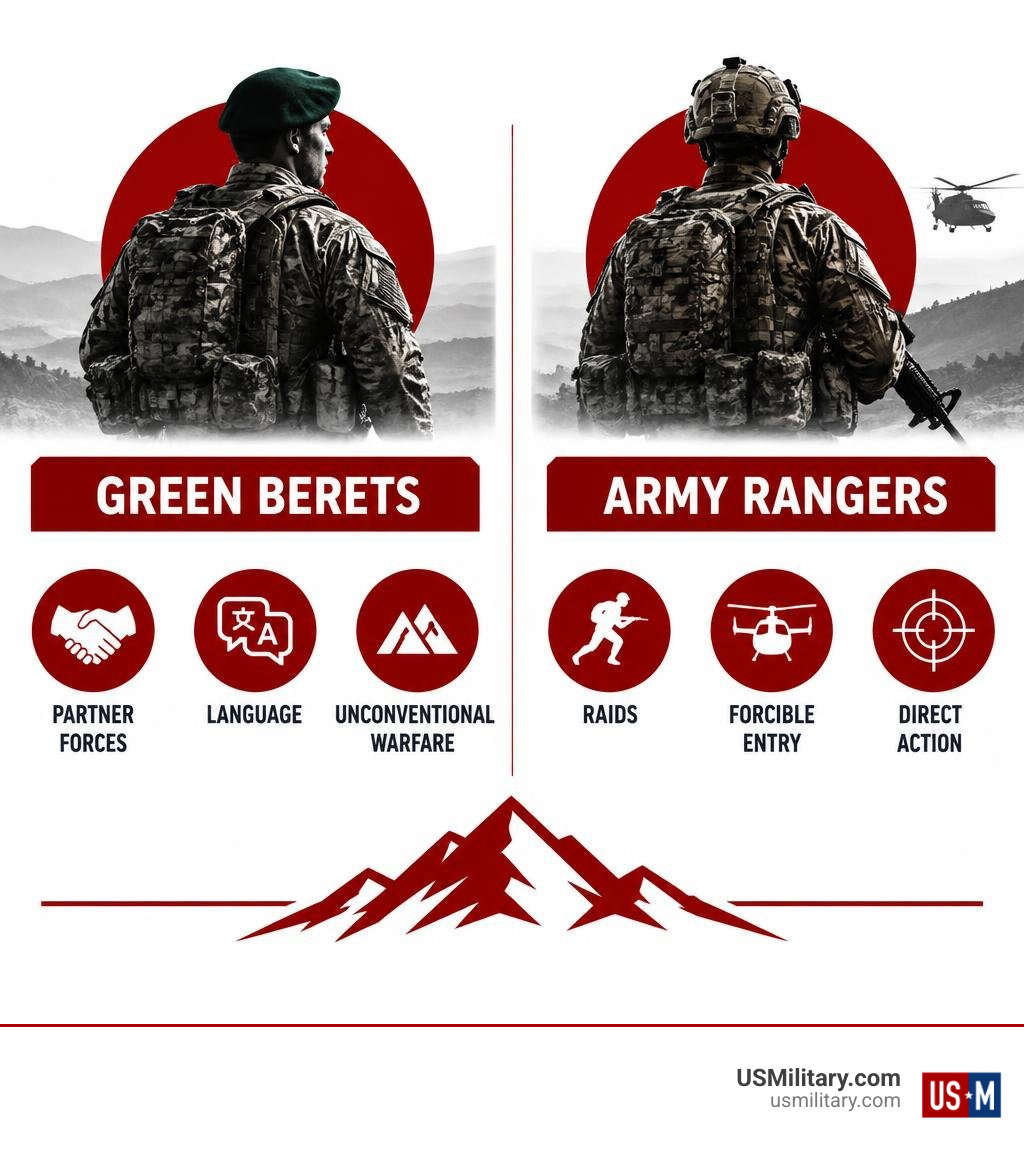
Choose the Green Beret path if you want to learn a language, work with foreign partners, and help build forces for unconventional warfare. Choose the 75th Ranger Regiment if you want to focus on fast-moving raids, forcible entry, and other direct-action missions. Neither path is better. The right choice depends on the work you want to do.
The paths also ask different things of you. Green Beret candidates face a long selection and qualification process that includes language training. Ranger candidates must pass the Ranger Assessment and Selection Program (RASP) to join the Regiment. Ranger School is a separate course; earning its tab alone does not make you a Regiment member.
I’m Larry Fowler, publisher of USArmy.com and BUD/S Class 89 graduate, and I approach the question “Why Should I Become A Green Beret vs Army Ranger?” with respect for both paths. I have not served in either unit, so let’s start with their missions rather than a contest over which is tougher.
Why Should I Become A Green Beret vs Army Ranger? terms to learn:
Why Should I Become A Green Beret vs Army Ranger?
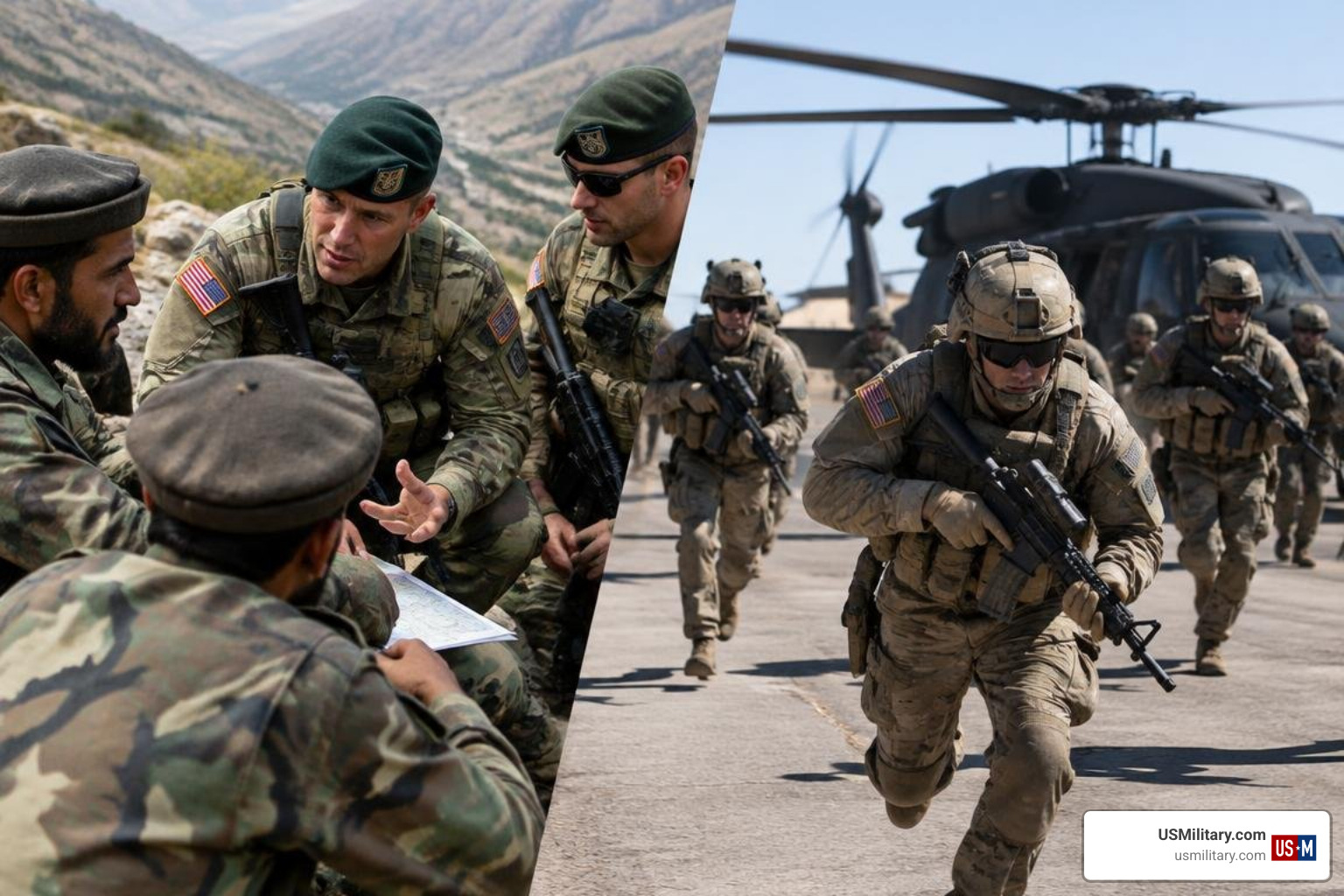
When deciding between these two elite paths, you must look at how each unit fights and operates. Both fall under U.S. Army Special Operations Command, but their core operational mandates differ significantly.
| Feature | U.S. Army Special Forces (Green Berets) | 75th Ranger Regiment (Army Rangers) |
|---|---|---|
| Primary Mission | Unconventional Warfare, Foreign Internal Defense (FID), Counterinsurgency | Direct Action Raids, Airfield Seizure, Joint Forcible Entry |
| Team Structure | 12-man Operational Detachment Alpha (ODA) | Squad-, Platoon-, and Battalion-level Task Forces |
| Partner-Force Focus | Central (training, living with, and leading indigenous forces) | Minimal (executes unilateral surgical strikes or shock-assault tasks) |
| Typical Operation | Long-term infiltration behind lines; advising local resistance | High-intensity nighttime raids, dynamic breaching, airfield seizure |
| Motto | De Oppresso Liber (“To Free the Oppressed”) | Rangers Lead the Way |
You can explore official guidance on the Special Forces | U.S. Army page and the Army Rangers | U.S. Army portal. For an exhaustive side-by-side breakdown, our Army Ranger vs Green Beret Ultimate guide covers structural details across both branches.
Why should I become a Green Beret vs. an Army Ranger if I want unconventional warfare?
If your goal is to immerse yourself in foreign cultures, master a regional language, and train guerrilla fighters or host-nation militaries, Special Forces is your calling. Green Berets are the military’s ultimate force multipliers. Operating as autonomous 12-man ODAs, they deploy deep into denied territories to build resistance movements from the ground up. To understand this operational mindset, check out our deep dive into Beyond the Beret A Deep Dive into Special Forces Life and Missions.
Why should I become a Green Beret vs. an Army Ranger if I want direct-action missions?
If you thrive in high-speed, dynamic combat environments where precision, rapid deployment, and overwhelming violence of action decide the outcome, pursue the 75th Ranger Regiment. Rangers specialize in joint forcible entry, airfield seizures, and direct-action raids on high-value targets. Learn what this training demands in Beyond Basic Training Unpacking the Challenges of Becoming an Army Ranger.
How Do Green Beret and Army Ranger Training Pipelines Compare?
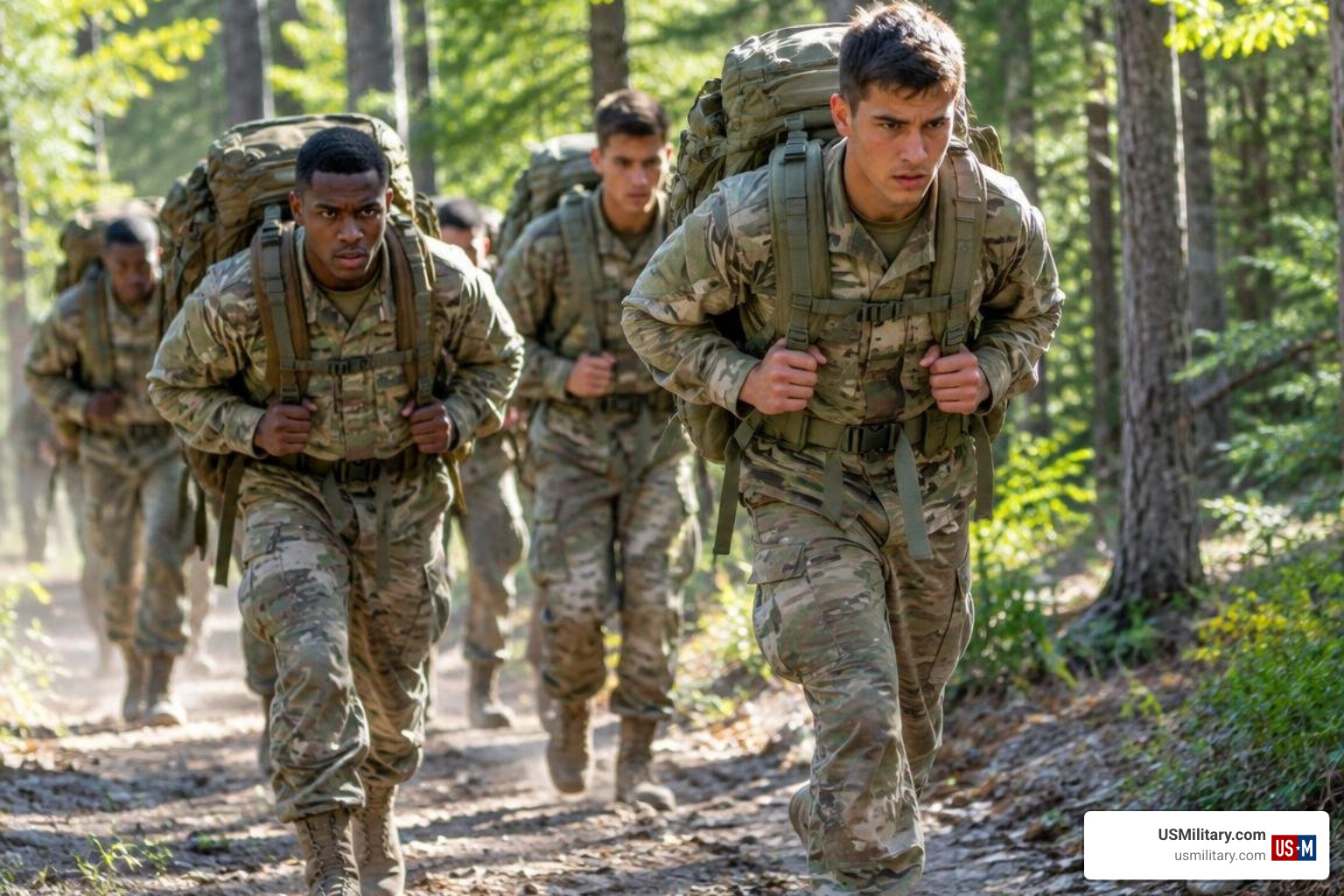
Both pipelines push human endurance to the edge, but they test soldiers through completely different evaluation models.
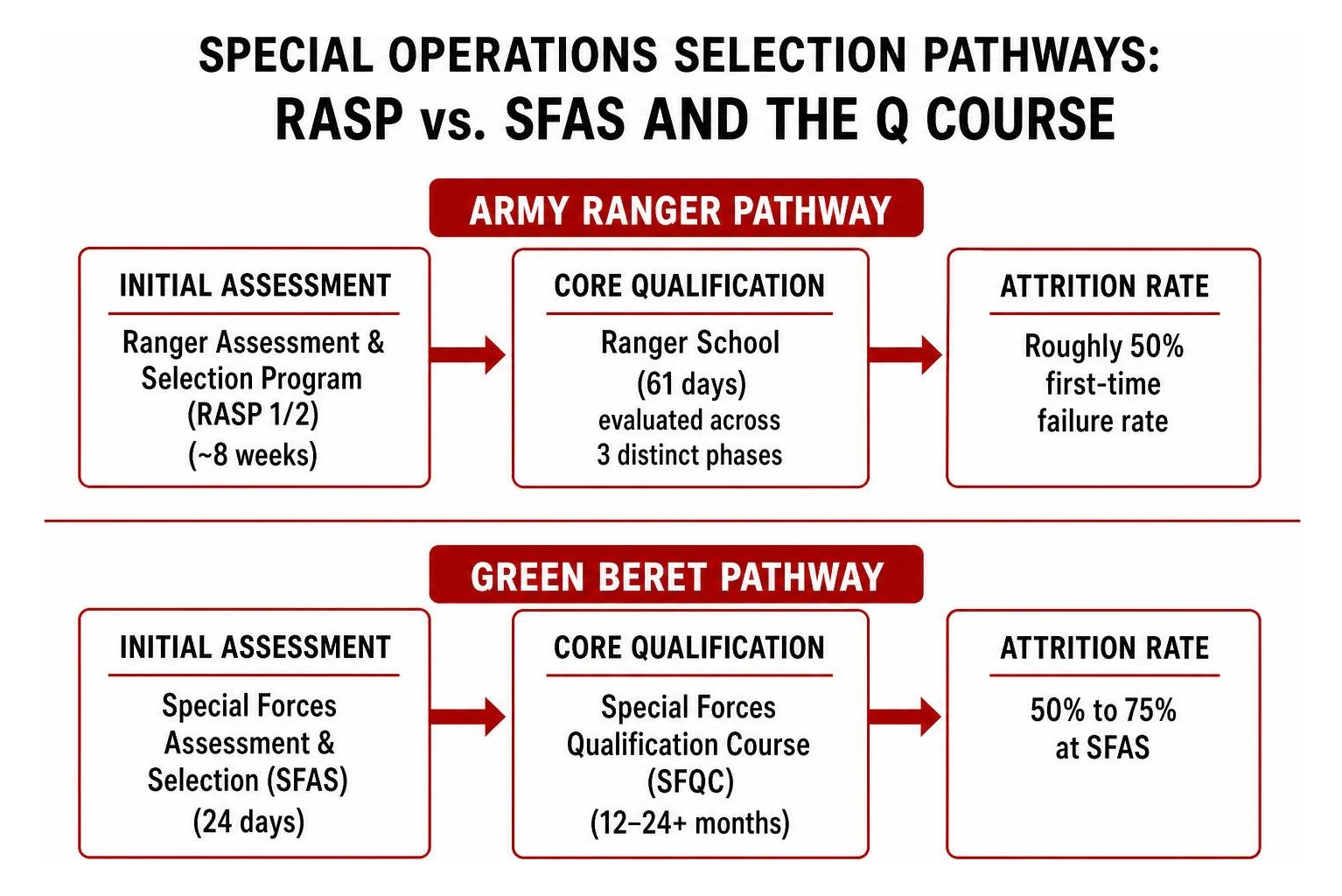
| Training Metric | Green Beret Pipeline | Army Ranger Pipeline |
|---|---|---|
| Initial Assessment | Special Forces Assessment & Selection (SFAS) (24 days) | Ranger Assessment & Selection Program (RASP 1/2) (~8 weeks) |
| Core Qualification | Special Forces Qualification Course (SFQC) (12–24+ months) | Ranger School (61 days, evaluated across 3 distinct phases) |
| Attrition Rate | 50% to 75% at SFAS | Roughly 50% first-time failure rate at Ranger School |
| Primary Stressors | Sustained performance, land navigation, language mastery | Extreme caloric restriction, severe sleep deprivation, small-unit tactics |
| Credential Earned | Green Beret & Special Forces Tab | Tan Beret & Ranger Scroll (RASP); Ranger Tab (Ranger School) |
The Special Forces pipeline requires long-term mental stamina. Candidates must conquer land navigation at SFAS, complete their specific 18-series Military Occupational Specialty (MOS) schooling, pass Survival, Evasion, Resistance, and Escape (SERE) training, and prove their tactical problem-solving during the famous Robin Sage exercise. Prepare effectively with Ready for the Green Beret How to Ace Special Forces Selection and Training.
In contrast, joining the 75th Ranger Regiment requires passing RASP. Once assigned to a battalion, soldiers attend Ranger School—a 61-day leadership crucible held in the woodlands of Fort Benning, the North Georgia mountains, and the Florida swamps. Understand battalion assignments and leadership expectations by reviewing The 75th Ranger Regiment Structure and Where They Call Home.
What Are the Lifestyle, Leadership, and Career Differences?
Daily life, unit culture, and leadership dynamics differ noticeably between these units:
- Average Age & Maturity: The average Green Beret is 31 years old. Special Forces is an NCO-heavy community where mature operators manage themselves without rigid hourly supervision. Rangers often enter right out of basic training as young, high-drive specialists who build disciplined leadership under an established chain of command.
- Living Conditions & Family Life: Green Berets generally live off base with their families, enjoying team-room camaraderie and a culture built on quiet professionalism. Junior Rangers often live in the barracks within an intense, cohesive unit environment.
- Compensation & Career Incentives: Both paths receive special-duty assignment pay, parachute jump pay, and hazardous duty incentives. Special Forces operators also earn foreign language proficiency pay.
- Civilian Transition & Long-Term Benefits: Green Berets frequently transition into international security consulting, intelligence agencies, and defense analysis. Rangers carry elite organizational discipline into corporate leadership, law enforcement, and tactical training. Both earn full VA benefits, including the VA home loan and disability compensation.
For an unvarnished look at life inside the regiment, explore Think You Have What It Takes A Candid Look at Becoming an Army Ranger.
Frequently Asked Questions About Green Berets and Army Rangers
Are Army Rangers and Green Berets both Special Forces?
Under the broader Special Operations Forces (SOF) umbrella, both belong to USASOC. However, the title “Special Forces” officially and historically belongs exclusively to the Green Berets. The 75th Ranger Regiment is designated as elite special operations light infantry.
Can a soldier become both a Ranger and a Green Beret?
Yes. Many soldiers begin their careers in the 75th Ranger Regiment to master direct-action combat, infantry fundamentals, and small-unit tactics, later volunteering for SFAS and earning the Green Beret.
Which path offers more language and cultural immersion?
The Green Berets offer far more cultural and language immersion. Language qualification (such as Arabic, Russian, Tagalog, or Spanish) is a mandatory requirement of the Special Forces Qualification Course.
Conclusion: Choose the Mission That Fits You
Deciding between becoming a Green Beret or an Army Ranger comes down to how you want to serve. If you want to master languages, operate in small autonomous teams, and build partner forces, choose Special Forces. If you want to execute raids, assault enemy compounds, and seize airfields with precision firepower, target the 75th Ranger Regiment.
Review the standard requirements to join the Army to ensure your ASVAB scores and physical fitness meet the entry standards. At USMilitary.com, we provide ongoing guidance on military careers, transition planning, and veteran benefits to help you succeed at every stage of your service.