
What do Army Rangers do is one of the most common questions from people exploring elite military service — and the short answer is: they are the U.S. Army’s most rapidly deployable special operations force, built for high-stakes missions in the world’s most dangerous places.
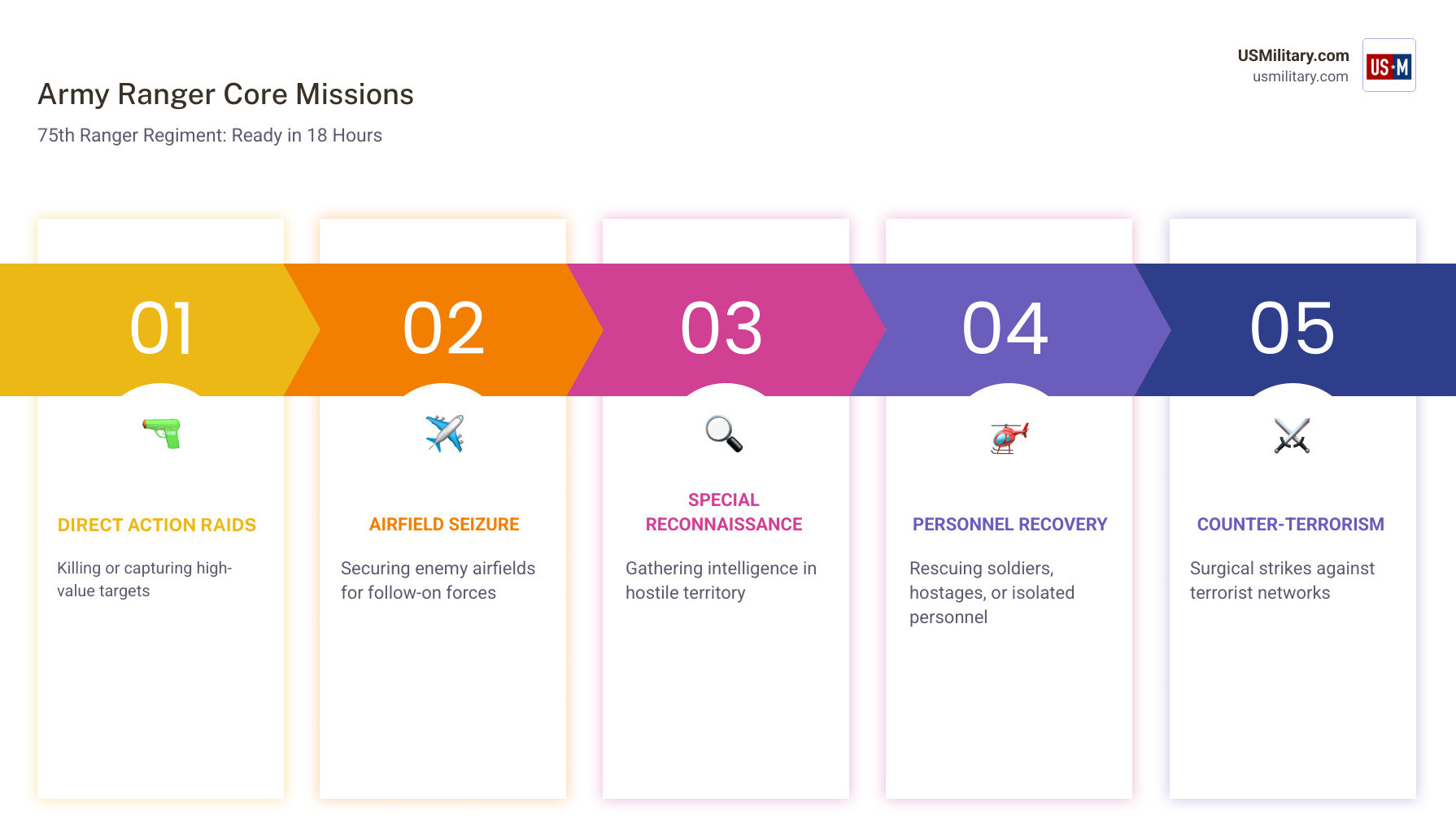
Here is a quick breakdown of their core roles:
| Mission Type | What It Involves |
|---|---|
| Direct Action Raids | Killing or capturing high-value targets |
| Airfield Seizure | Securing enemy airfields for follow-on forces |
| Special Reconnaissance | Gathering intelligence in hostile territory |
| Personnel Recovery | Rescuing soldiers, hostages, or isolated personnel |
| Counter-Terrorism | Surgical strikes against terrorist networks |
| Partner-Centric Ops | Training and operating alongside allied forces |
Rangers serve in the 75th Ranger Regiment — an all-volunteer, elite light infantry unit under U.S. Army Special Operations Command. Each Ranger battalion can deploy anywhere in the world within 18 hours of an alert notification. As of December 17, 2020, the Regiment had logged 7,000 consecutive days of combat operations.
The Regiment’s motto says it best: “Rangers Lead the Way.” That phrase was born on the beaches of Normandy in 1944, and it still defines how Rangers operate today.
I’m Larry Fowler, publisher of USMilitary.com — a network I’ve built since 2007 to help active military members, veterans, and those considering service find reliable, clear information. Covering topics like what do Army Rangers do is central to our mission of connecting Americans with accurate military career and service resources. Read on for a complete guide to Ranger missions, training, structure, and more.
What do army rangers do terms made easy:
What Do Army Rangers Do? Core Missions and Roles
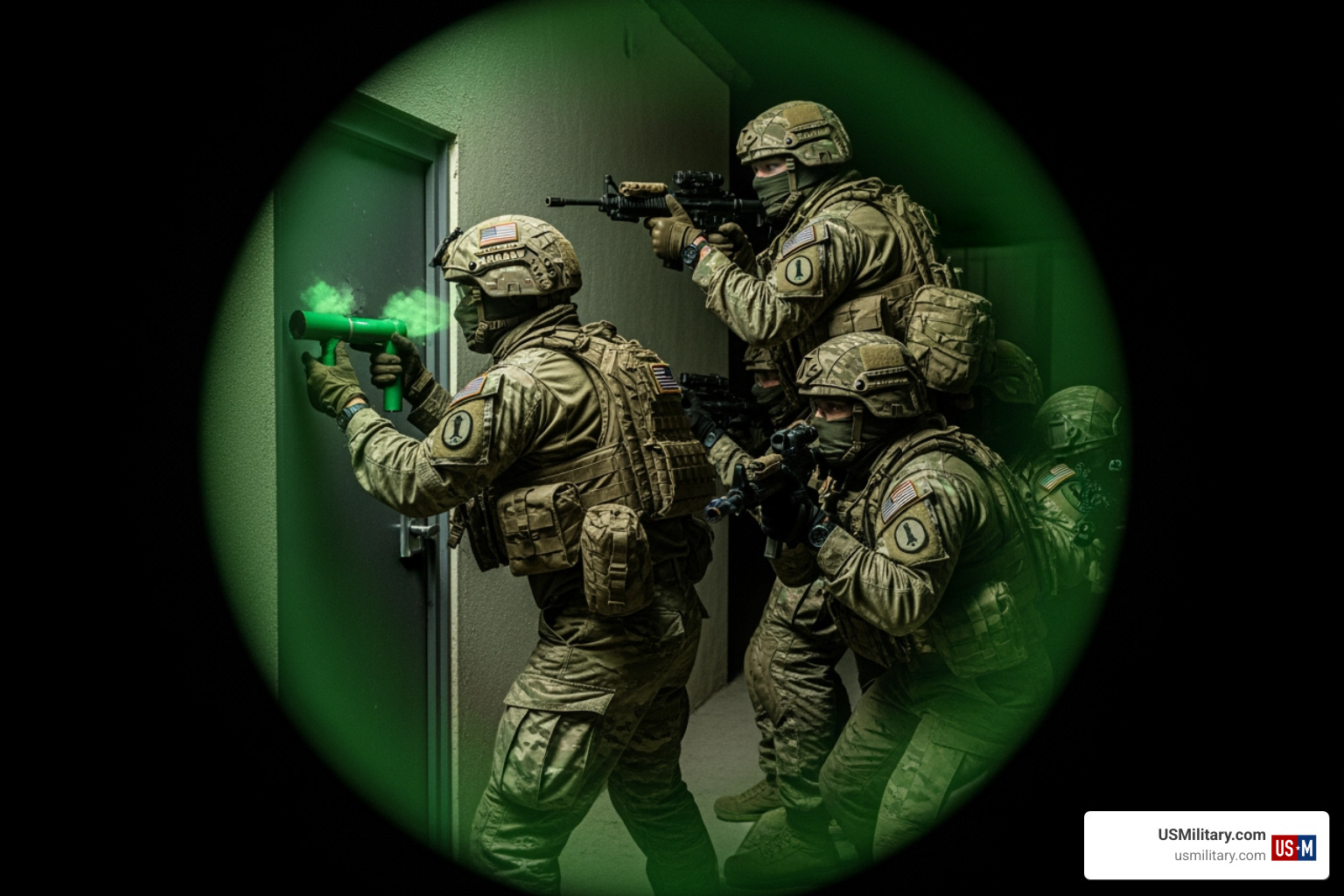
When we look at the 75th Ranger Regiment, we are looking at the premier large-scale raid force of the U.S. Army. While other special operations units might focus on long-term unconventional warfare or underwater demolition, the Rangers are the masters of the “Direct Action” mission.
According to the USSOCOM Fact Book, the Regiment is a lethal, agile, and flexible force. They don’t just participate in battles; they often initiate them by seizing the initiative through speed and violence of action. Their missions are meticulously planned and thoroughly rehearsed, often targeting facilities or individuals that are politically sensitive or time-critical.
Modern Operations: From Direct Action to Partner-Centric Missions
In the modern era, the scope of what do Army Rangers do has expanded significantly. During the height of operations in Afghanistan and Iraq, the 1st Ranger Battalion alone conducted more than 900 missions in a single deployment. These operations resulted in the capture of nearly 1,700 enemy combatants—including 386 high-value targets (HVTs)—and the neutralization of over 400 fighters.
Rangers are often the go-to choice for:
- Airfield Seizures: Jumping into a hostile area to secure a runway so that conventional planes can land with reinforcements.
- Surgical Strikes: High-speed raids to eliminate terrorist leaders.
- Special Reconnaissance: Acting as the “eyes and ears” of the military deep behind enemy lines.
- Joint Operations: Working alongside Navy SEALs, Green Berets, and Delta Force to provide the heavy-hitting security or the primary assault force for complex missions.
Essential Attributes: What Do Army Rangers Do to Build Elite Teams?
Becoming a Ranger isn’t just about how many push-ups you can do. It’s about character. The Regiment looks for specific psychological attributes in its volunteers. We often hear about “intestinal fortitude,” but modern Rangers also emphasize:
- Trust and Integrity: In a small team operating thousands of miles from help, your word is your bond.
- Emotional Intelligence: Rangers must be able to keep their cool in high-stress environments and interact effectively with local populations or allied partners.
- Maturity and Innovation: When a plan goes sideways—and they often do—a Ranger must be able to think on their feet and find a way to win.
Structure, Readiness, and Historical Milestones
The 75th Ranger Regiment is a massive organization compared to other special operations units, with over 3,600 authorized personnel. It is headquartered at Fort Moore (formerly Fort Benning), Georgia, and is composed of several specialized battalions spread across the United States.
| Unit | Location | Primary Role |
|---|---|---|
| 1st Ranger Battalion | Hunter Army Airfield, GA | Tactical Special Operations |
| 2nd Ranger Battalion | JB Lewis-McChord, WA | Tactical Special Operations |
| 3rd Ranger Battalion | Fort Moore, GA | Tactical Special Operations |
| Special Troops Battalion | Fort Moore, GA | Regimental Support, Recon, & Selection |
| Military Intelligence Bn | Fort Moore, GA | Cyber, SIGINT, & All-Source Intel |
For a deeper dive into their lineage, the Ranger Heritage and History archives show a unit that has been active in some form since the 1700s.
Maintaining the Edge: What Do Army Rangers Do to Stay Ready?
To ensure they can live up to their 18-hour deployment standard, Rangers focus on what they call the “Big 5.” These are the core competencies that every single Ranger, regardless of their job, must master:
- Marksmanship: Being able to engage targets accurately under any conditions.
- Physical Training (PT): Maintaining an elite level of fitness to endure the rigors of combat.
- Medical Skills: Every Ranger is trained in advanced “do-it-yourself” battlefield medicine. This training is so effective that the Regiment has a remarkably low 3% death rate from survivable wounds.
- Small Unit Tactics: Mastering the art of the fire team and squad-level movement.
- Mobility: Proficiency in various vehicles, aircraft, and insertion methods.
Notable Engagements from WWII to the War on Terror
The history of the Rangers is written in blood and bravery.
- WWII: “Darby’s Rangers” led the way in North Africa and Sicily. On D-Day, the 2nd Ranger Battalion scaled the 90-foot cliffs of Pointe du Hoc to disable German artillery that threatened the entire invasion.
- The Great Raid: In 1945, the 6th Ranger Battalion conducted the Raid at Cabanatuan, rescuing over 500 POWs from a Japanese camp by crawling a mile across an open field to achieve total surprise.
- Vietnam: Ranger companies (LURPs) conducted long-range reconnaissance and surveillance deep in the jungle.
- Modern Era: From the Battle of Mogadishu (Black Hawk Down) to the airborne assault on Objective Rhino in Afghanistan, Rangers have been at the tip of the spear. More recently, they were instrumental in the raid that took down ISIS leader Abu Bakr al-Baghdadi.
Selection and Training: The Path to RASP
You don’t just “join” the Rangers; you are selected. The gateway to the Regiment is the Ranger Assessment and Selection Program (RASP).
- RASP 1: An 8-week course for junior enlisted soldiers (E-1 through E-5). It tests physical stamina, mental toughness, and basic Ranger skills.
- RASP 2: A 21-day course for senior NCOs and officers. This focuses more on leadership and the ability to operate within the Regiment’s specific culture.
Before even getting to RASP, candidates must be Airborne qualified. If they pass selection, they are assigned to a battalion, but the training never stops. Most will eventually attend the 61-day Ranger School, which is the Army’s premier leadership course.
RASP Physical Standards (Minimums)
To even be considered, we expect candidates to hit these marks:
- 53 Push-ups (2 minutes)
- 62 Sit-ups (2 minutes)
- 5-mile run in under 40:00 minutes
- 6 Pull-ups
- 12-mile ruck march with 35 lbs in under 3 hours
The Ranger Assessment Cadre (RAC) Process
While RASP is the U.S. standard, many people ask about the Ranger Assessment Cadre (RAC). This is a two-week continuous evaluation period. It’s a grueling “gut check” that culminates in a 100km patrol conducted as a team. It’s designed to see who has the leadership and self-reliance to function in a small global team under extreme fatigue.
Comparing US and British Ranger Regiments
It’s important to distinguish between the American 75th Ranger Regiment and the newly formed British Ranger Regiment (established Dec 1, 2021). While they share a name and an elite status, their roles differ.
The British Ranger Regiment is part of the Army Special Operations Brigade (ASOB). Their focus is heavily partner-centric. They are optimized to operate “below the threshold of war,” working alongside specialized partner forces to deliver operational-level insights and effects. You can find more on their specific recruitment via the Defence Connect Ranger Regiment Info portal.
In contrast, the U.S. 75th Ranger Regiment is primarily a Direct Action force. While they certainly work with partners, their primary identity is as the world’s most lethal light infantry raid force.
| Feature | US 75th Ranger Regiment | British Ranger Regiment |
|---|---|---|
| Primary Focus | Direct Action & Raids | Partner-Centric Operations |
| Structure | 5 Specialized Battalions | 4 Special Ops Capable Bns |
| Selection | RASP (8 weeks / 21 days) | RAC (2 weeks) + AARC (10 weeks) |
| Core Identity | Elite Raid Force | Global “Enabler” & Partner |
Frequently Asked Questions about Army Ranger Roles
How long does it take to become an Army Ranger?
If you are starting from scratch, it takes about 6 months of initial training. This includes 10-22 weeks of Infantry OSUT (Basic Training), 3 weeks of Airborne School, and 8 weeks of RASP 1. However, earning the “Ranger Tab” at Ranger School adds another 2 months of training later in your career.
What is the difference between Ranger School and the 75th Ranger Regiment?
This is a big one! Ranger School is a leadership course that anyone in the Army can attend to earn the Ranger Tab. The 75th Ranger Regiment is the actual unit. You can have a Ranger Tab but not be in the Regiment. Conversely, new Rangers in the Regiment wear the tan beret but must eventually go to Ranger School to earn their tab and stay in the unit. For more on this, see our guide on army rangers vs navy seals.
Can women serve in the 75th Ranger Regiment?
Yes. Since 2017, the 75th Ranger Regiment has been open to female soldiers who meet the exact same physical and mental standards as their male counterparts. The first woman graduated RASP in early 2017, marking a historic milestone for the unit.
Conclusion
At USMilitary.com, we believe that understanding what do Army Rangers do is the first step for anyone considering this elite path. Whether it’s conducting a high-altitude jump into a conflict zone or training a partner nation’s military, Rangers remain the gold standard for light infantry.
If you have the discipline, the integrity, and the “Sua Sponte” spirit, the Regiment offers a career like no other. For those ready to take the next step, we recommend visiting the Official Ranger Recruiting Website to start your journey.
Whether you are looking for information on VA disability benefits or curious about Green Beret vs Navy SEAL comparisons, USMilitary.com is here to serve as your central hub for military guidance. Rangers lead the way—and we’re here to help you follow.