
What Is The Army Maximum Draft Age is one of the most searched military questions — especially as the U.S. Army raised its enlistment age and geopolitical tensions continue to spark draft concerns.
Here is a quick answer:
| Category | Age Range |
|---|---|
| Selective Service registration required | 18 through 25 |
| Draft liability (current law) | Up to 26th birthday |
| First drafted in a lottery | Age 20 |
| Then called in order | 21, 22, 23, 24, 25, then 19, then 18 |
| Militia conscription (federal law) | Ages 17–45 |
| Voluntary enlistment max (Army, 2026) | Age 42 |
The short answer: Under current Selective Service rules, male U.S. citizens and immigrants are required to register between ages 18 and 25. Draft liability ends at the 26th birthday. This is separate from the Army’s voluntary enlistment age, which was recently raised to 42.
There is no active draft right now. One would require an act of Congress.
I’m Larry Fowler, publisher of the USMilitary.com Network since 2007, and I’ve spent nearly two decades helping Americans navigate military service questions — including What Is The Army Maximum Draft Age — through trends in VA benefits, disability ratings, and military recruitment. Let’s break down everything you need to know, from Selective Service rules to how a modern draft would actually work.

What Is The Army Maximum Draft Age vocab to learn:
What Is the Army Maximum Draft Age Under Current Law?
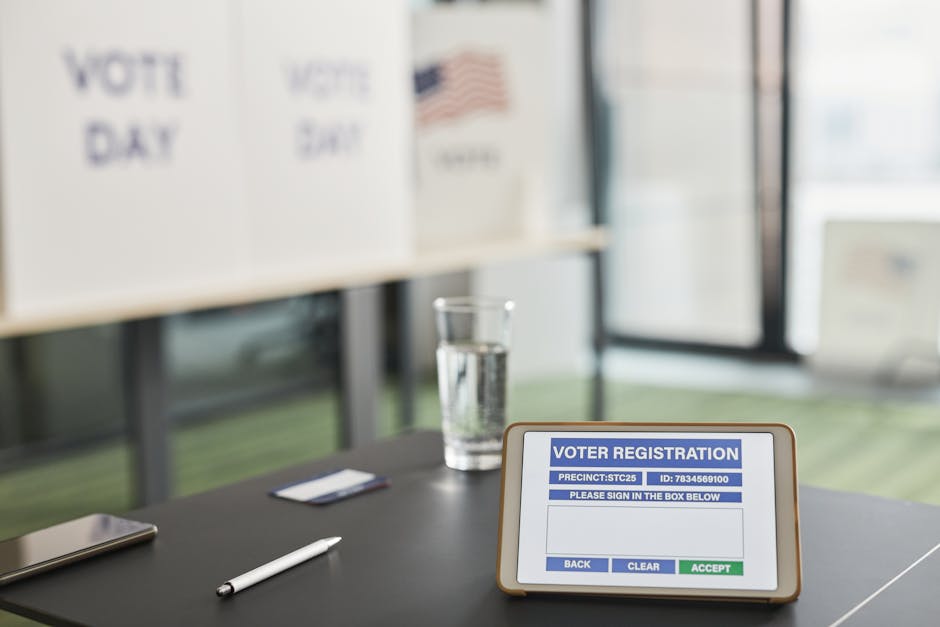
When we talk about the draft, we are really talking about the Selective Service System. Under current federal law, the What Is The Army Maximum Draft Age for registration is 25. Specifically, almost all male U.S. citizens and male immigrants living in the U.S. who are between the ages of 18 and 25 are required by law to register.
Your liability for the draft officially ends on your 26th birthday. If you haven’t been called by the time you blow out the candles for number 26, you are generally “in the clear” regarding the Selective Service pool. We often see confusion here because people assume the “draft age” is the same as the “military age,” but they are two very different legal buckets.
Registration is not just a suggestion; it’s a legal requirement. Failing to register is technically a federal felony, carrying a potential fine of up to $250,000 and up to five years in prison. While the government hasn’t prosecuted anyone for failing to register since 1986, the real “teeth” of the law come from the denial of benefits. If you don’t register by age 26, you can be permanently barred from federal student aid (FAFSA), federal job training, and even federal employment. For immigrants, failing to register can even derail the path to U.S. citizenship.
For more details on who exactly needs to sign up, check out our guide on the draft age: who is eligible for military conscription?.
Understanding the Army Maximum Draft Age vs. Enlistment Age
One of the biggest sources of “draft panic” on social media comes from people seeing headlines about the Army raising its age limits. We want to be very clear: the Army’s voluntary enlistment age and the Selective Service draft age are not the same thing.
In a major policy shift, the U.S. Army recently raised its maximum enlistment age to 42, effective April 2026. Previously, the limit was 35 (with some exceptions). This change was made to align the Army with other branches like the Air Force and to expand the pool of eligible recruits during a challenging recruiting environment. You can view the full list of Eligibility & Requirements to Join | U.S. Army on their official site.
So, while you can choose to join the Army at age 41, the government cannot force you to join via a draft once you pass age 25. This distinction is vital. If a draft were reinstated tomorrow, the Selective Service would still focus on the 18-to-25-year-old group, regardless of the fact that the Army accepts 42-year-old volunteers.
Age waivers are also a big part of the voluntary side. If you have prior service, you can often subtract your years of active duty from your current age to meet enlistment standards. We go deeper into these nuances in our article on your age and the Army: what you need to know to enlist.
Comparing the Army Maximum Draft Age Across Military Branches
While the draft age is set by federal law and applies across the board, each branch of the military sets its own rules for how old you can be to volunteer. If you’re curious about how the Army stacks up against the Navy or the Marines, take a look at the current maximum enlistment ages:
| Military Branch | Maximum Enlistment Age (Non-Prior Service) |
|---|---|
| U.S. Army | 42 (Effective 2026) |
| U.S. Air Force | 42 |
| U.S. Navy | 41 |
| U.S. Coast Guard | 41 |
| U.S. Space Force | 42 |
| U.S. Marine Corps | 28 (Waivers up to 34 possible) |
As you can see, the Marine Corps remains the “young man’s game” of the military, keeping their age limit significantly lower than the other branches. The Department of Defense (DoD) sets the absolute ceiling for regular enlistment at 42, though they allow for some flexibility in the National Guard and Reserves, where limits can sometimes stretch even higher depending on the state and the specific role.
If you are worried about missing your chance to serve, don’t wait too long. You can find a breakdown of these limits in our guide: don’t miss your window: what’s the maximum age to join the military?.
How the Selective Service Lottery and Induction Order Works

If a national emergency occurred and Congress authorized a draft, the process wouldn’t be a free-for-all. It’s a very structured system designed to be fair. The Selective Service uses a lottery based on birthdays to determine who gets called first.
The most important thing to know is that the draft focuses on the youngest eligible men first — but not the absolute youngest. In a draft scenario, 20-year-olds are the first priority group.
Here is the “call-up” order by age:
- Age 20: Men whose 20th birthday falls within the calendar year of the draft.
- Ages 21–25: If more troops are needed, the draft moves up through age 21, 22, 23, 24, and finally 25.
- Age 19: Only after the 20–25 range is exhausted would the draft look at 19-year-olds.
- Age 18: The youngest eligible men are the very last to be called.
This system ensures that those in their “prime” for military service are utilized first, while allowing 18-year-olds a bit more time to finish high school or start their adult lives. For a deep dive into the mechanics of the lottery, read the complete guide to who gets pulled first in a draft.
Future Changes: Automatic Registration in December 2026
The way we register for the draft is about to get a major tech upgrade. Under the FY2026 National Defense Authorization Act (NDAA), the U.S. is moving toward automatic registration.
Starting December 18, 2026, the Selective Service System will use federal databases to automatically register all eligible males between the ages of 18 and 26. This move is designed to simplify the process and ensure 100% compliance without the need for young men to remember to fill out forms at the post office or online.
While this doesn’t change the What Is The Army Maximum Draft Age, it does mean that the “I forgot” excuse for not registering will soon become a thing of the past. It also ensures that the burden of registration doesn’t fall solely on the individual, potentially saving millions of young men from losing out on federal benefits due to a clerical oversight. Curious about how this might impact you? Check out will there be a military draft in 2026?.
Historical Context: Maximum Draft Ages in Past Conflicts
The draft hasn’t always looked the way it does today. In fact, during times of “total war,” the maximum draft age has been significantly higher.
During World War II, the United States saw its most massive mobilization. In 1941, the Selective Training and Service Act was expanded. At one point, all men from ages 18 to 64 were required to register for the draft. However, the actual “liability” for military service was capped at ages 18 to 44. Of the 49 million men who registered during that era, roughly 10 million were eventually inducted into service.
In the Vietnam War era, the draft was a constant presence in American life. Between 1964 and 1973, nearly 1.8 million men were drafted, primarily from the 18-to-26 age pool. The last draft call occurred in December 1972, and the authority to induct draftees expired in 1973, which is when we transitioned to the All-Volunteer Force we have today.
Interestingly, there is also something called the **Militia Act**, which technically defines the “unorganized militia” as all able-bodied males between the ages of 17 and 45. While this isn’t the same as a Selective Service draft, it provides a legal framework for the government to call upon a much wider age range in an absolute “end-of-the-world” scenario. You can learn more about these historical ranges in our article, from 18 to 45: a comprehensive look at us military draft ages.
Evolution of the Army Maximum Draft Age and Liability
The debates over draft ages have often been heated. In 1941, as the U.S. prepared for WWII, Congress wrestled with how far to extend the draft. The War Department originally suggested a service cap of age 44.
President Franklin D. Roosevelt was a strong advocate for lowering the draft age to 19, arguing that younger men were more adaptable to the rigors of modern combat. The House of Representatives initially wanted to keep the minimum age at 21, but the Senate sided with FDR. Eventually, a compromise was reached, and the draft age was lowered to 18 later in the war.
During these debates, some senators, like Senator Downey, argued that the Army shouldn’t draft millions more men because they lacked the equipment and officers to train them properly. Others, like Senator Reynolds, argued that expanding the draft age to 44 was a necessary signal to America’s total commitment to winning the war. These historical debates remind us that the What Is The Army Maximum Draft Age is always a balance between military necessity and national logistics.
Exemptions, Deferments, and Disqualifications
Even if your number is called in a draft, it doesn’t mean you’re heading to basic training the next day. There is a robust system of exemptions and deferments.
- Conscientious Objectors: Individuals who can prove a sincere moral or religious opposition to war can be classified as conscientious objectors. They may be assigned to non-combatant roles or alternative service.
- Hardship Deferments: If your service would cause extreme emotional or financial hardship for dependents (like children or elderly parents), you may be deferred.
- Ministerial Students and Ministers: Those in the clergy or studying for the ministry are generally exempt from service.
- Medical Disqualifications: This is the most common reason for not serving. To be drafted, you must meet strict physical and mental health standards.
We’ve compiled a list of the specific conditions that might keep you out of uniform. You can find them here: US military draft disqualification list and 10 disqualifying disabilities for military draft.
It’s also worth noting that local draft boards, made up of civilian volunteers from the community, are the ones who actually review these claims. They are designed to ensure that the draft is implemented fairly and that local circumstances are taken into account.
Frequently Asked Questions about the Military Draft
Can women be drafted under current Selective Service rules?
No. Under current law, only biological males are required to register for the Selective Service. While women have been eligible for all combat roles since 2013, Congress would have to pass new legislation to change the Selective Service Act to include women. There have been many debates about this in recent years, but as of today, the requirement remains male-only.
What happens if I fail to register for the draft by age 26?
If you pass your 26th birthday without registering, you have essentially “closed the door” on several federal benefits. You will likely be ineligible for federal student loans, federal job training, and any job within the Executive Branch of the federal government. For immigrants, it can create a permanent barrier to citizenship because it is viewed as a failure to show “good moral character.”
Is there a draft currently active in the United States?
No. The United States has not used a draft since 1973. We currently operate an All-Volunteer Force. While the Selective Service System remains in place as a “contingency plan,” it would take an act of Congress and the President’s signature to actually start drafting people again.
Conclusion
Understanding What Is The Army Maximum Draft Age is about more than just knowing a number; it’s about understanding the balance between our national defense needs and our individual responsibilities. While the draft age is capped at 25 for registration and liability, the Army’s willingness to accept volunteers up to age 42 shows a modern military that values maturity and life experience.
At USMilitary.com, we are dedicated to providing you with the most accurate, up-to-date information on military life, from recruitment trends to VA benefits. Whether you are a young man registering for the first time or a professional in your 30s considering a career change into the armed forces, we are here to help you navigate the path.
For a broader look at how the system works, don’t forget to visit our main guide: What is the US Military Draft?. Stay informed, stay prepared, and thank you for your interest in serving our nation.