
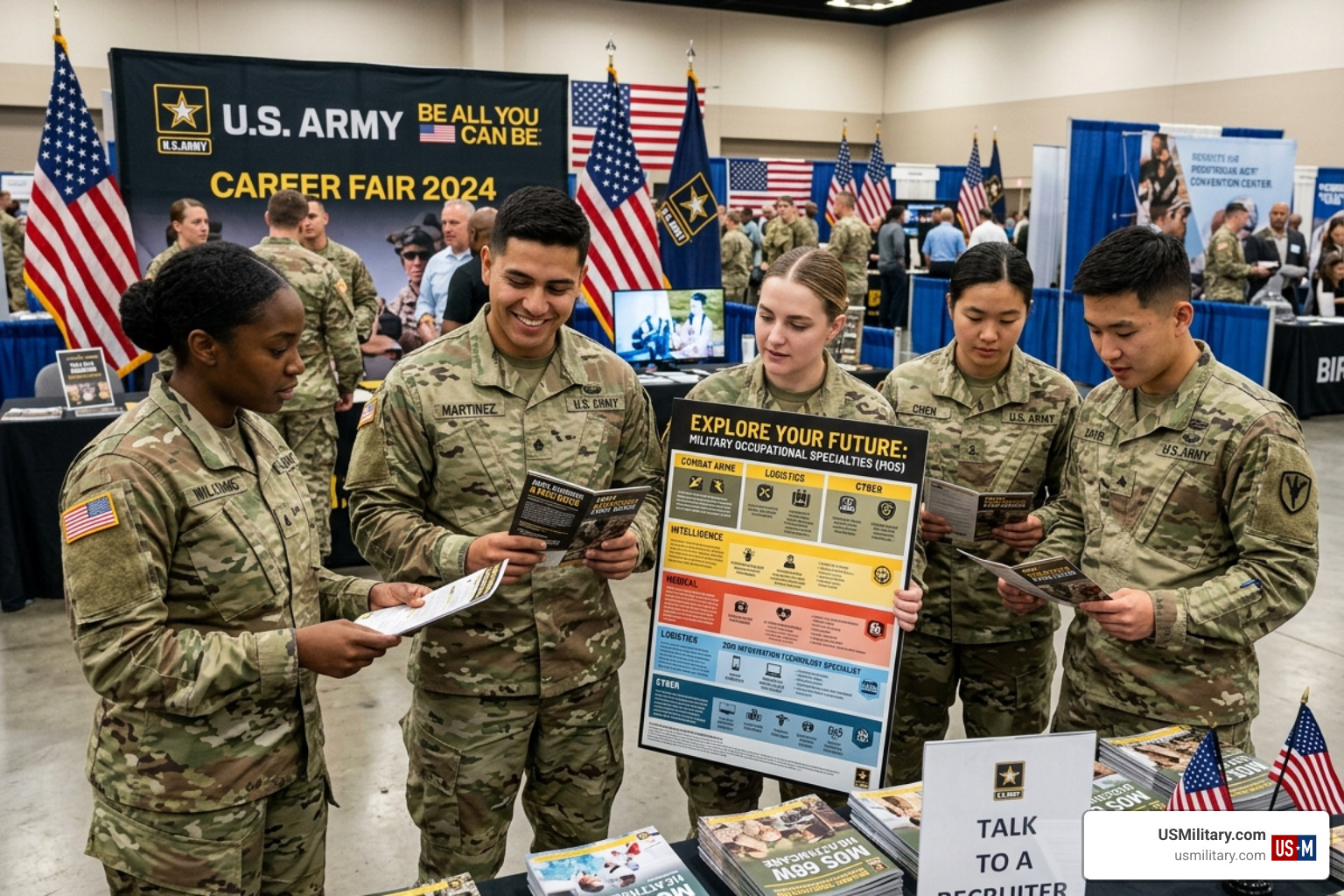
The army mos list is the complete directory of Military Occupational Specialties — the official job titles used by the U.S. Army to classify every enlisted soldier’s role. As of 2026, there are over 140 active enlisted MOS, grouped into roughly 25 Career Management Fields (CMFs). Here’s a quick overview:
| CMF Number | Career Field | Example MOS |
|---|---|---|
| 11 | Infantry | 11B Infantryman |
| 12 | Corps of Engineers | 12B Combat Engineer |
| 13 | Field Artillery | 13B Cannon Crewmember |
| 17 | Cyber | 17C Cyber Operations Specialist |
| 18 | Special Forces | 18X Special Forces Candidate |
| 25 | Signal Corps | 25U Signal Support Specialist |
| 35 | Military Intelligence | 35F Intelligence Analyst |
| 68 | Medical | 68W Health Care Specialist |
| 88 | Transportation | 88M Motor Transport Operator |
| 91 | Mechanical Maintenance | 91B Wheeled Vehicle Mechanic |
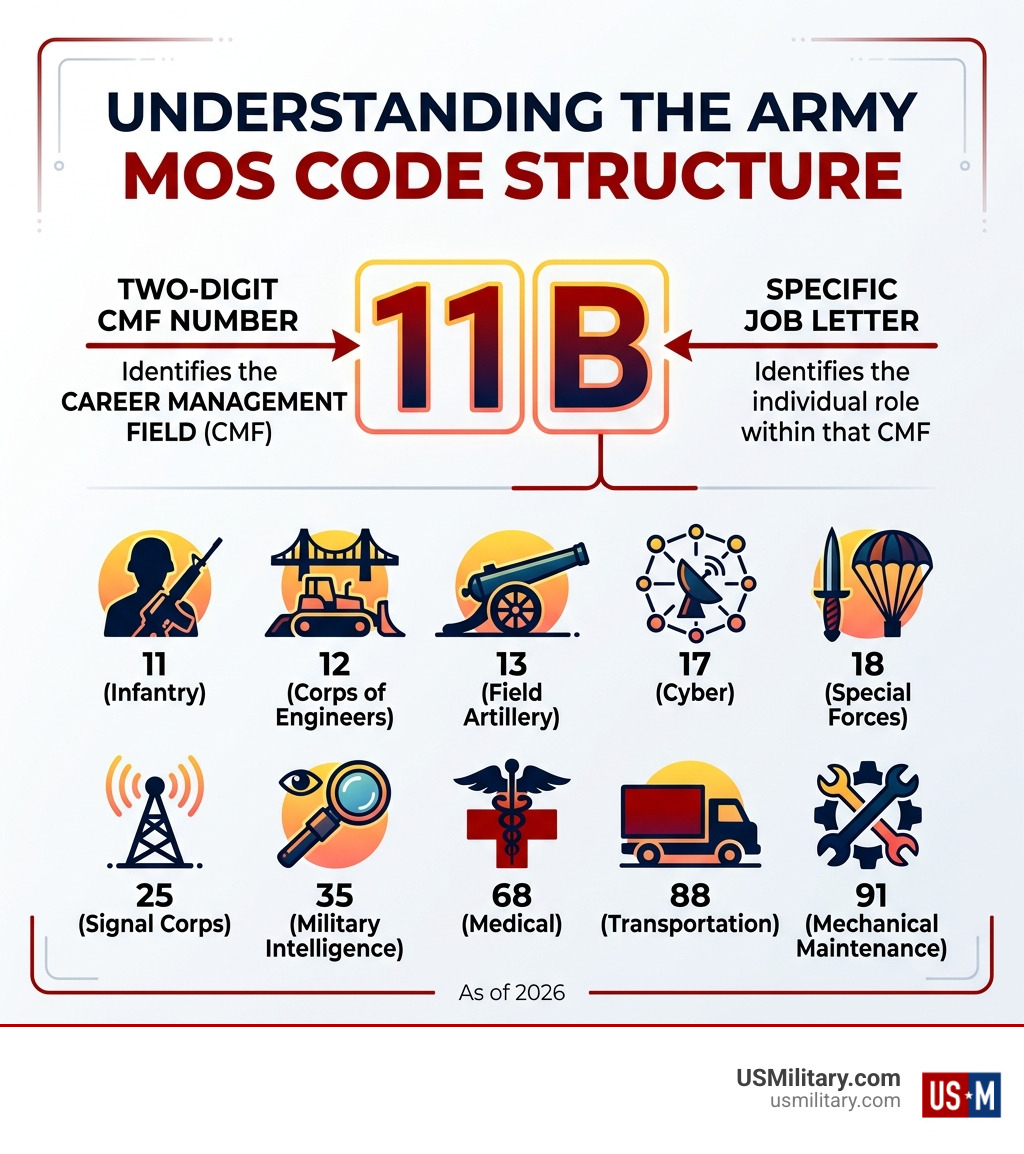
Every MOS is identified by a two-digit CMF number followed by a letter that identifies the specific job — for example, 11B means CMF 11 (Infantry) + job code B (Infantryman).
Knowing which MOS is available — and which ones you qualify for — is one of the most important decisions you’ll make before signing an enlistment contract.
I’m Larry Fowler, publisher of the USMilitary.com Network since 2007, and I’ve spent nearly two decades helping recruits and veterans navigate career decisions — including breaking down the army mos list for thousands of service members. In the sections below, I’ll walk you through every major MOS category, ASVAB requirements, bonuses, and career paths so you can make a confident, informed choice.
Understanding the Army MOS List and Career Management Fields (CMFs)
When we talk about the army mos list, we are talking about the backbone of the Army’s personnel system. An MOS is more than just a job title; it is a classification that determines your training, your daily duties, and your future promotion potential. As of April 2026, the Army maintains around 190 total MOS designations, though about 140 of these are the primary active enlisted roles you’ll likely encounter at a recruiting office.
The Army organizes these jobs into Career Management Fields (CMFs). Think of a CMF as a “department.” For example, if you are interested in building things or blowing them up, you’ll look into CMF 12, the Corps of Engineers. If you want to work on helicopters, you’ll head toward CMF 15, Aviation. This grouping allows the Army to manage training and career progression efficiently.
You can Explore All Army Jobs & Careers | U.S. Army to see how these roles fit into the broader mission. For those looking to lead as officers, we also recommend looking into Us Army Educational Rotc Opportunities to see how college and military service can blend together.
Breaking Down the MOS Alpha-Numeric Code
To the uninitiated, an MOS code looks like a secret password. It’s actually quite logical. The first two digits represent the CMF (the field), and the following letter represents the specific specialty.
For instance, in printing and mapping, an Enlisted Army Lithographer would fall under a specific technical code. As you gain experience and rank, a fourth digit—a number—is added to indicate your skill level (1 for private through specialist, 2 for sergeant, and so on). This system ensures that when a commander needs a specific skill set, they can find exactly the right soldier for the job.
Active Duty vs. Reserve and National Guard Lists
One question we often get is whether the army mos list is the same for everyone. The short answer is yes, but the availability varies.
- Active Duty: You are a full-time soldier. You can pick any MOS you qualify for, provided there is a vacancy in the entire U.S. Army.
- Army Reserve: You serve part-time. Your job choice is usually limited to units within a reasonable driving distance of your home. You might want to be an Army Enlisted Water Craft Specialist, but if there isn’t a watercraft unit near you, you’ll have to pick something else.
- National Guard: Like the Reserve, this is part-time, but you serve your state. The jobs available depend on what your specific state’s Guard units are authorized to have.
How the ASVAB Determines Your Army MOS List Eligibility
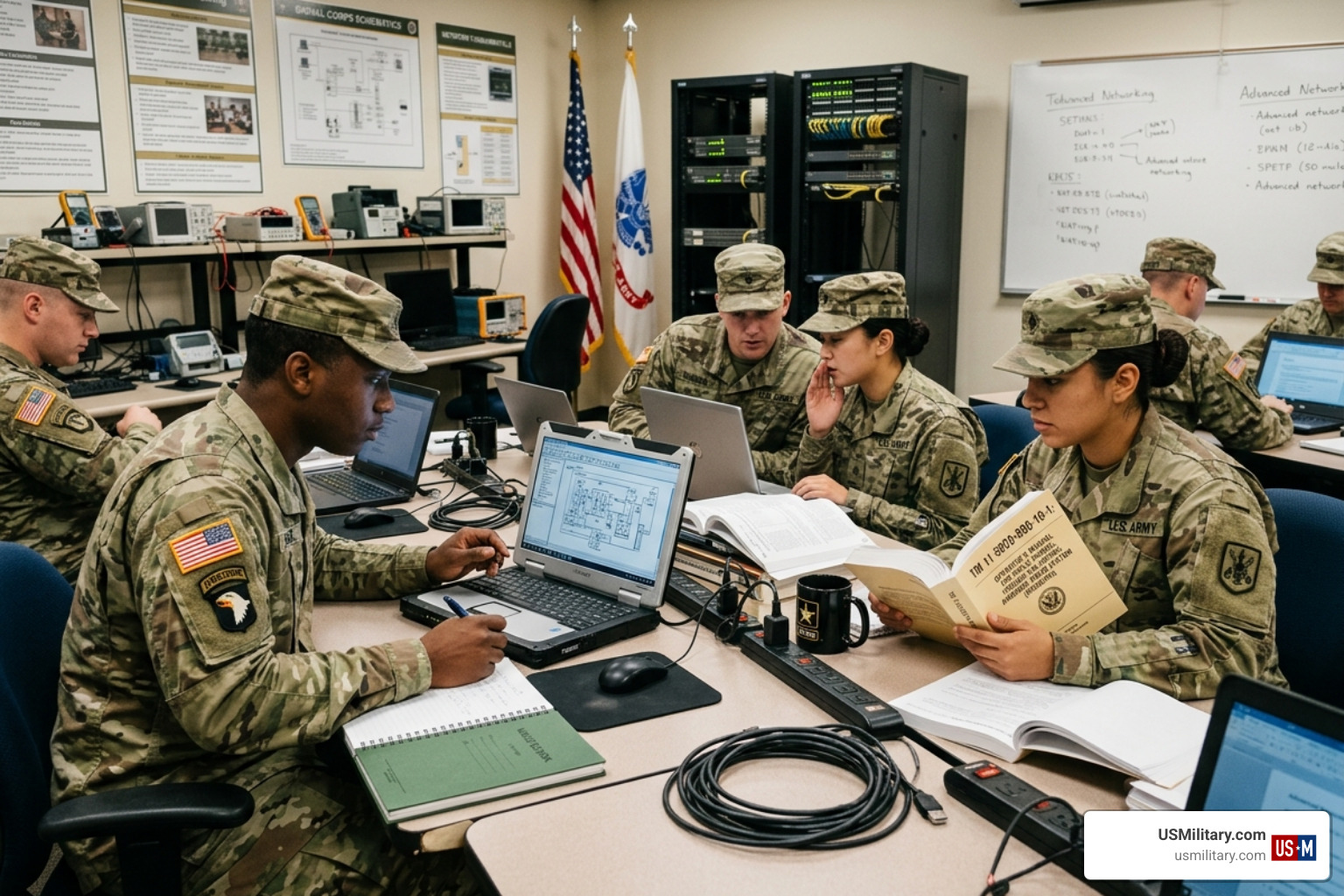
You can’t just point at the army mos list and say, “I’ll take that one.” You have to earn it through the Armed Services Vocational Aptitude Battery (ASVAB). This isn’t an IQ test; it’s a series of ten subsections—like Arithmetic Reasoning, Word Knowledge, and Mechanical Comprehension—designed to see where your natural talents lie.
The Army doesn’t just look at your overall score (the AFQT). They look at “Line Scores,” which are combinations of those subsections. For example, the General Technical (GT) score is one of the most important. Many high-level jobs require a GT score of 110 or higher.
If you are aiming for the Highest Paying Military Jobs, you’ll generally need higher line scores in technical areas like electronics or math.
Minimum Scores for Popular Army Jobs
Each job on the army mos list has a “gatekeeper” score. Here are a few examples effective in 2026:
- Infantryman (11B): Requires a CO (Combat) score of 87.
- Cyber Operations Specialist (17C): This is a tough one, requiring a GT of 110 and an ST (Skilled Technical) of 112.
- Medical (68 Series): Most medical roles, like Xray And Radiology Army Careers, require strong GT and ST scores to handle the complex science involved.
Steps to Select and Change Your MOS
Your journey starts with a recruiter. You’ll take a practice ASVAB, then head to the Military Entrance Processing Station (MEPS) for the real thing. Once you have your scores, you’ll sit down with a guidance counselor who will show you the “live” army mos list—the jobs that are actually open for enlistment that day.
What if you hate your job later? It happens! The Army has a “reclassification” process. Usually, this occurs during your reenlistment window. If you started in a role like Us Army Unit Supply Specialist Careers but realized you’d rather be a mechanic, you can apply to switch, provided your scores are high enough and the Army needs people in that new field.
High-Demand Jobs on the Army MOS List for 2026
In 2026, the Army is putting a massive emphasis on “Future Force” capabilities. This means big incentives for jobs that are hard to fill or require high technical skill.
| MOS Code | Title | ASVAB Requirement (Example) | 2026 Bonus Potential |
|---|---|---|---|
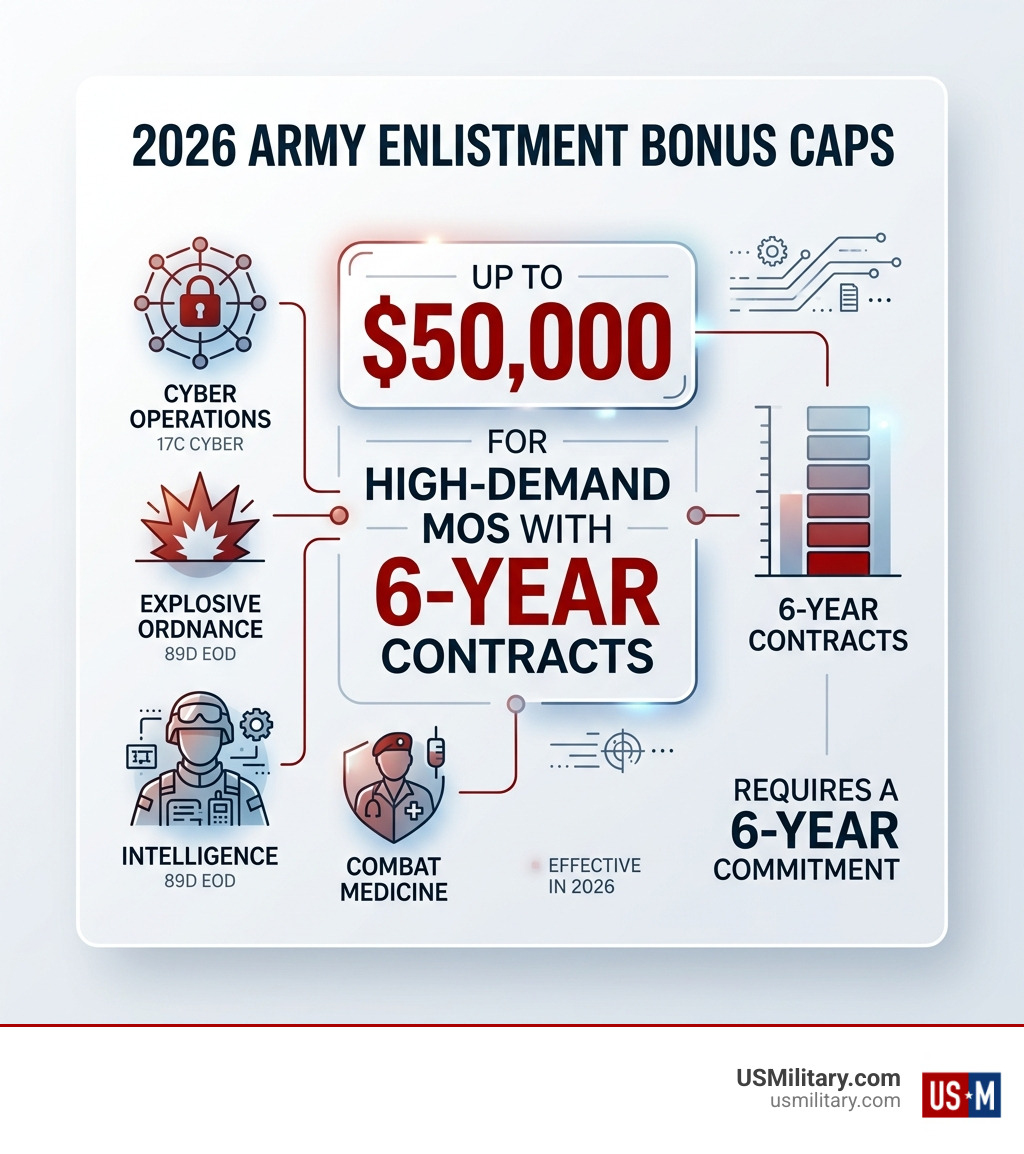
| 17C | Cyber Operations | GT: 110 / ST: 112 | Up to $50,000 |
| 11X | Infantry Option | CO: 87 | Up to $20,000 |
| 89D | Explosive Ordnance | GT: 110 / ST: 110 | Up to $40,000 |
| 35P | Cryptologic Linguist | GT: 105 / ST: 105 | Up to $45,000 |
Enlistment bonuses are currently capped at $50,000 for 6-year contracts. While the Most Dangerous Jobs In the Army often come with “kicker” incentives, the biggest checks often go to those in Army Field Artillery Missile Careers or technical intelligence roles.
Top Technical Roles in the Army MOS List
The 17 series (Cyber) and 25 series (Signal) are the “brain trust” of the modern Army. If you choose Enlisted Us Army Nodal Network Jobs, you are essentially running the military’s version of the internet. These roles are highly sought after because they translate almost perfectly to six-figure civilian careers. Similarly, an Avionic Equipment Repairer In Us Army gains skills that are in high demand at major airlines and aerospace firms.
Combat and Support Roles in the Army MOS List
Don’t overlook the “teeth” of the Army. The 11B Infantryman remains the most iconic role, but there are specialized combat support roles that offer unique challenges. A Us Army Cavalry Scout is the commander’s eyes and ears on the battlefield, while an Abrams Enlisted Armor Support Specialist ensures that the world’s most powerful tanks stay in the fight.
Specialized Career Paths: From Enlisted to Warrant Officer
One of the best-kept secrets in the Army is the Warrant Officer path. While commissioned officers (AOCs) are generalist managers, Warrant Officers (WOMOS) are technical experts. They are the “subject matter experts” who stay in their field for their entire career.
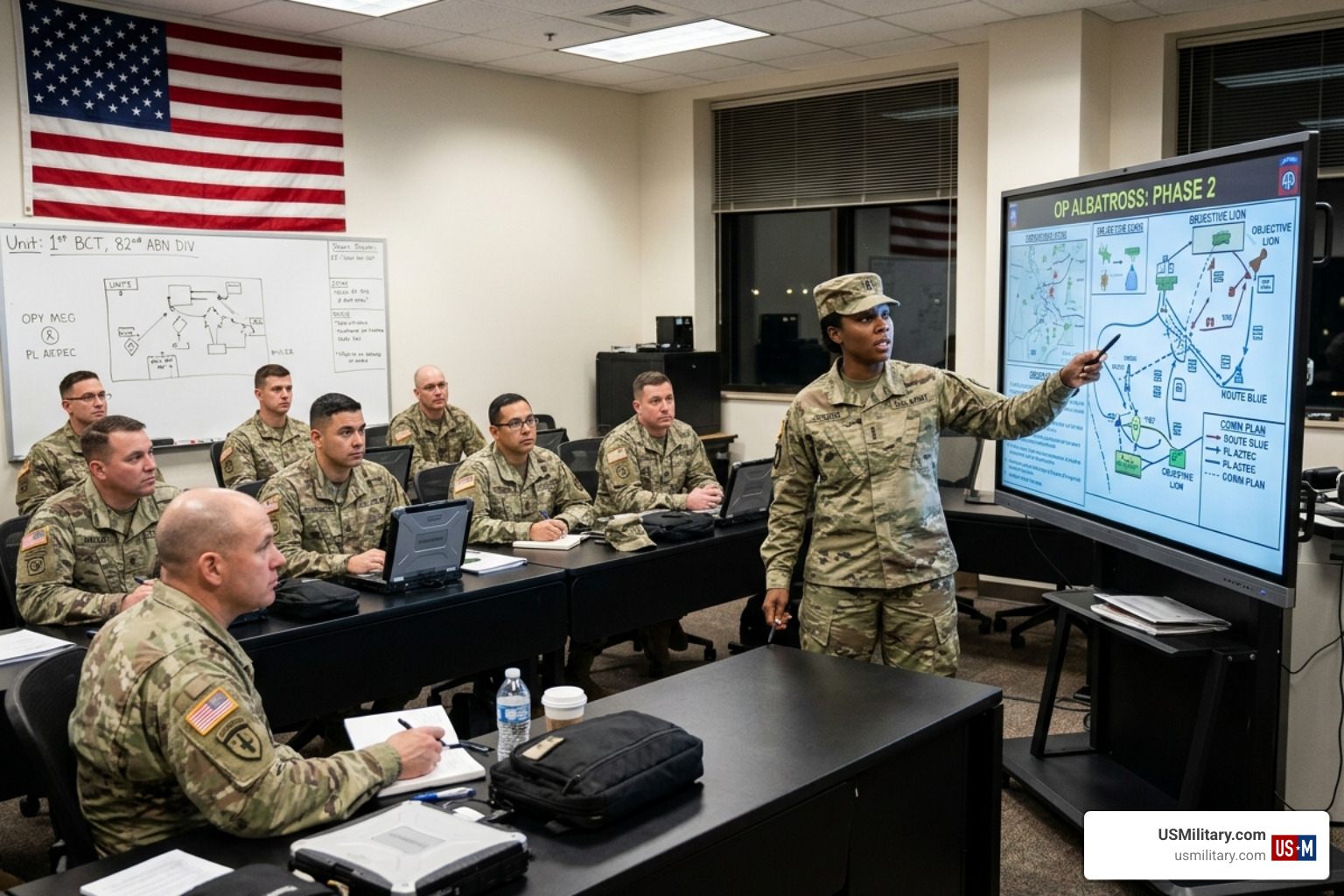
To become a Warrant Officer, you usually need to spend a few years as an enlisted soldier in a “feeder MOS.” For example, if you want to be a 170A Cyber Warfare Technician, you’ll likely need to start in CMF 17 or 25. You can explore more about these elite paths at Us Army Cwo Warrant Officer Careers.
Elite MOS Requirements for Special Forces and Cyber
If you want to wear the Green Beret, you’re looking at the 18 series. This isn’t something you just sign up for and get; you have to survive Special Forces Assessment and Selection (SFAS). The requirements are grueling, and you can learn more about the process at Special Forces Enlisted Army Careers.
Similarly, the 17 series (Cyber) requires a technical screening before you even get to training. Both fields demand high GT scores (usually 110+) and a clean record for a Top Secret security clearance.
Transitioning to Aviation and Flight Roles
The Army is unique because it allows enlisted soldiers to apply for flight school to become Warrant Officer pilots without a college degree. Many start as Helicopter Enlisted Flight Apprentices or mechanics in the 15 series. Even though the budget environment can be tricky, as seen in Army Aviation Soaring High Despite Plummeting Budget, the Army’s need for skilled pilots remains constant.
Training and Civilian Transferability of Army Jobs
Every soldier on the army mos list starts with 10 weeks of Basic Combat Training (BCT). After that, you head to Advanced Individual Training (AIT). This is where you learn your specific job. AIT can last anywhere from six weeks to over a year, depending on the complexity of the MOS.
The goal for many is to find a job with high “civilian transferability.” The Army’s Credentialing Assistance (CA) program even pays for you to get civilian certifications (like PMP, CDL, or CompTIA Security+) while you are still serving. Check out the Army MOS List (Military Occupational Specialty) | USArmy Basic for more details on how these codes map to training. We’ve also compiled a list of the Best Jobs In the Army based on long-term career satisfaction.
Logistics and Maintenance Career Skills
Logistics is the engine of the Army. If the trucks don’t move, the mission fails. Becoming a Us Army Wheeled Vehicle Mechanic provides you with a set of skills that are useful in every town in America. If you prefer the digital side of logistics, the Automated Logistics Specialist role teaches you how to manage multi-million dollar supply chains using advanced software.
Medical and Administrative Professional Growth
The 68 series (Medical) is arguably the best for civilian transition. A 68W (Combat Medic) can often challenge the EMT-Basic exam with little extra study. For those interested in the business side, Human Resource Army Careers provide the experience needed to manage large organizations.
Interestingly, the Army even researches how lifestyle affects performance; you can read about how Army Medicine National Partners Discuss Sleep Effects On Health And Readiness to see how the Army stays at the cutting edge of human performance.
Frequently Asked Questions about Army MOS
How many active enlisted MOS are there in 2026?
As of April 2026, there are over 140 active enlisted Military Occupational Specialties. While there are around 190 total designations (including those for transitioning or training personnel), 140 represents the primary jobs you can enlist for today.
What is the difference between an MOS and an AOC?
An MOS (Military Occupational Specialty) is for enlisted soldiers and warrant officers. An AOC (Area of Concentration) is the equivalent code used for commissioned officers. For example, an enlisted medic is an MOS 68W, while a medical corps officer might have an AOC like 62A (Emergency Physician).
Can I get a bonus for any MOS on the list?
No. Bonuses are based on the Army’s current needs. High-demand technical roles (Cyber, Intelligence) and “critical fill” roles (Infantry, Fire Support) usually have the highest bonuses. These change frequently, so always check with a recruiter for the most current incentives.
Conclusion
Choosing a job from the army mos list is a decision that will shape your life for years to come. Whether you want to be on the front lines, in a high-tech lab, or in a hospital, the Army has a path for you. Our team at USMilitary.com is here to provide the resources you need to plan your career, from initial enlistment to veteran benefits.
Before you head to the recruiter, take the time to research, study for your ASVAB, and think about where you want to be in ten years. If you’re still undecided on which path is right for you, check out our guide on Which Military Branch Should I Join? to compare the Army against the other services. Your future starts with the right code—make it count.