
Will The Army Begin a military draft if Trump wants boots on the ground in Iran is one of the most searched military questions right now — and the short answer is: not currently, but it hasn’t been ruled out.
Here’s what you need to know quickly:
- No draft is planned. White House Press Secretary Karoline Leavitt confirmed a draft is not part of the current strategy.
- Options remain “on the table.” Leavitt stated that President Trump “does not remove options off the table.”
- A draft requires Congress. The president cannot restart conscription alone — Congress must amend the Military Selective Service Act.
- The U.S. has 1.3 million active personnel. The all-volunteer force currently has significant capacity before conscription would be needed.
- Ground troops are not yet deployed. The current conflict (Operation Epic Fury) is an air campaign targeting Iran’s nuclear infrastructure.
The conversation started after Leavitt declined to rule out a draft during a televised interview, which set off a wave of public concern — including sharp criticism from former Representative Marjorie Taylor Greene, who posted on X: “Not my son, over my dead body!!!!!”
The truth is more nuanced than the headlines suggest. The draft system never went away. It’s been quietly maintained for decades — and understanding how it actually works matters right now.
I’m Larry Fowler, publisher of the USMilitary.com Network since 2007, where I’ve helped millions of active-duty members, veterans, and military families navigate complex topics — including the real question of will The Army begin a military draft if Trump wants boots on the ground in Iran. Let’s break down exactly what the law says, who would be affected, and what the realistic path to conscription would look like.
Current Status of Operation Epic Fury and Ground Troop Speculation
As of early March 2026, the conflict with Iran, officially dubbed Operation Epic Fury, has entered its second week. The operation has primarily functioned as an intensive air campaign. The Department of Defense reports that U.S. strikes have targeted Iranian nuclear infrastructure and command centers following decades of regional tension.
While the focus remains in the skies, the human cost is already being felt. Reports indicate that seven U.S. service members have died since the start of the conflict. In Iran, the reported death toll has reached at least 1,230, with additional casualties reported in Lebanon and Israel.

The speculation regarding will The Army begin a military draft if Trump wants boots on the ground in Iran intensified following President Trump’s comments while speaking to the press on Air Force One on March 7. When asked about the circumstances under which he would deploy ground forces, the President suggested that if U.S. ground troops were deployed to Iran, it would likely be because Iranian forces were already “decimated” by air strikes, rendering them unable to offer significant resistance.
On the home front, National Guard forces nationwide are already increasing their “wartime readiness.” In a letter to troops dated March 5, Maj. Gen. Duke Pirak, acting director of the Air National Guard, noted that personnel are already leading the fight and preparing reinforcements. Leaders like South Carolina Sen. Lindsey Graham (R) spoke on March 8 on NBC’s “Meet the Press,” expressing support for the administration’s strategy while emphasizing that the task of finding Iran’s next leader does not fall on the U.S. military. Meanwhile, state-level teams, including the South Carolina National Guard, are monitoring the situation to maintain “rapid response readiness.”
Will The Army Begin a military draft if Trump wants boots on the ground in Iran
The question of whether the U.S. will return to conscription is a sensitive one. White House Press Secretary Karoline Leavitt and Defense Secretary Pete Hegseth have both addressed the topic, though their answers have left the door slightly ajar. Leavitt said a draft is not currently part of the administration’s plans, but she echoed the sentiment that the President wisely keeps all options available to maintain strategic flexibility.
We must remember that the U.S. military is currently an all-volunteer force, a tradition that has stood since 1973. With more than 1.3 million serving personnel, including active duty, Reserves, and National Guard, the United States possesses a massive amount of “surge capacity.” Before a draft would even be legally viable, the military would likely exhaust these voluntary resources. For more on the strategic possibilities, you can read our analysis on could-a-war-with-iran-spark-a-military-draft/.
Legal Requirements for a Military Draft if Trump Wants Boots on the Ground in Iran
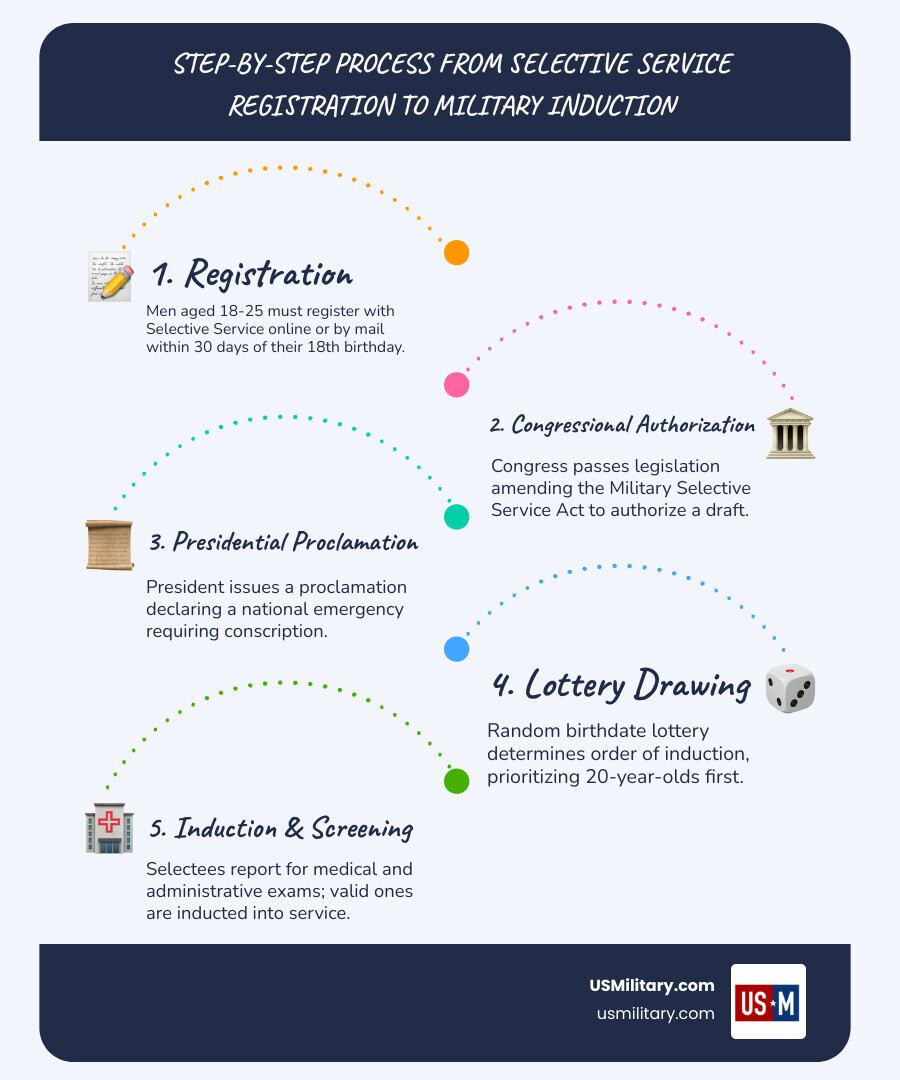
It is a common misconception that the President can simply sign an executive order to start a draft. Under the Constitution and the Military Selective Service Act, only Congress has the power to reinstate conscription.
For a draft to begin:
- Congress must pass legislation to amend the Military Selective Service Act to authorize inductions.
- The President must sign that legislation into law.
- The Selective Service System would then begin the lottery and screening process.
Under the War Powers Act, the President can authorize troop deployments for up to 90 days without a formal declaration of war or specific congressional authorization. However, this does not grant the power to draft civilians. For a deeper dive into the legalities we might face, check out our guide on the military-draft-in-2024/.
Who is Eligible for a Military Draft if Trump Wants Boots on the Ground in Iran?
If a draft were ever reinstated, the pool of eligible candidates would be surprisingly small. According to Department of Defense estimates, only about 23% of Americans aged 17 to 24 meet the basic eligibility standards for military service without needing a waiver.
The primary hurdles to eligibility include:
- Physical Fitness: High rates of obesity among young adults.
- Medical History: Chronic health conditions or mental health histories that require waivers.
- Criminal Records: Significant legal issues can disqualify a candidate.
- Education: A high school diploma or equivalent is generally required.
If you are wondering about your specific status, we have detailed breakdowns on am-i-eligible-to-be-drafted-everything-you-need-to-know/ and whether you will-i-be-drafted-by-the-military-at-age-25/.
How the Selective Service System and Lottery Work
While there hasn’t been a draft since the Vietnam War, the “hidden infrastructure” of the Selective Service System is very much alive. Federal law requires almost all male citizens and male immigrants living in the U.S. between the ages of 18 and 25 to register with the agency. Currently, more than 15 million men are in the database.
The system is managed by thousands of civilian volunteers who serve on local draft boards across the country. These boards would be responsible for reviewing claims for deferments or exemptions if a draft were called. Interestingly, lawmakers have discussed implementing automatic registration, which would use existing government data to enroll eligible men, potentially starting as early as late 2026.
In the event of a draft, the order of call is determined by a random lottery based on birthdates and a specific age priority.
| Priority Group | Age Bracket | Description |
|---|---|---|
| First Priority | 20-year-olds | Individuals in the calendar year they turn 20. |
| Second Priority | 21-year-olds | Follows the first group if more personnel are needed. |
| Third Priority | 22-25-year-olds | Called in ascending order by age. |
| Last Priority | 18-19-year-olds | These younger individuals are the last to be called. |
Exemptions, Deferments, and the Question of Women in the Draft
Not everyone who is drafted is required to serve. After receiving an induction notice, individuals report for medical and administrative screening to determine their fitness for duty. There are several categories for those seeking to postpone or be excused from service:
- Student Deferments: College students can usually postpone service until the end of the current semester (or senior year for graduates).
- Conscientious Objectors: Those with deeply held religious or moral beliefs against war.
- Hardship Deferments: For those whose absence would cause extreme emotional or financial hardship for dependents.
- Ministerial/Divinity Students: Exemptions for members of the clergy or those studying for it.
The question of whether women will be included in a future draft remains a major point of debate. The current policy of male-only registration is based on the 1981 Supreme Court case Rostker v. Goldberg, which argued that since women were barred from combat, they didn’t need to register. However, since all combat roles opened to women in 2015, many argue this precedent is outdated. You can explore this further in our articles on can-women-be-drafted-2/ and the women-draft-us-defense-gender-equality-future/.
Frequently Asked Questions About the U.S. Military Draft
Who would be called first in a draft?
The lottery system is designed to be fair. If authorized, the Selective Service would hold a lottery based on birthdates. The first group to be called would be those in the calendar year of their 20th birthday. If more troops are needed, the lottery moves to 21-year-olds, and so on, up to age 26. Those aged 18 and 19 are the very last to be considered. For more on the specifics of age, see our guide on the age-to-be-drafted-by-military/ and the history of following year lotteries.
Can the President unilaterally start a draft?
No. While the President is the Commander in Chief, the power to conscript citizens resides with Congress. The Military Selective Service Act provides the framework, but it would require a new Act of Congress to actually induct people into the military. You can read more about this balance of power at will-there-be-a-military-draft/.
Are women required to register for Selective Service?
Currently, no. Only men are required to register. This has been upheld by the Supreme Court in Rostker v. Goldberg. While there have been legislative attempts to change this, the law remains male-only for now. For a look at how this might change in a global conflict, see who-will-be-drafted-if-ww3-starts/.
Conclusion
While the rhetoric surrounding will The Army begin a military draft if Trump wants boots on the ground in Iran is high, the logistical and legal barriers to a draft are significant. With roughly 75% of Americans opposing the reinstatement of a draft, any political move toward conscription would likely face massive public resistance.
At USMilitary.com, we are dedicated to providing the most accurate and up-to-date information for our military community. Whether you are curious about elite units — like when you Compare Army Delta Force vs Navy SEALs — or you’re trying to understand the nuances of army ranger vs green beret training, we are here to help.
If you are considering a career in the military on your own terms, you might want to learn how to become Ranger or compare the life of a green beret vs navy seal. For now, the all-volunteer force remains the backbone of American defense, and a draft remains a distant “option on the table” rather than an immediate reality.