
14 Daring Personality Traits Of Delta Force Operators
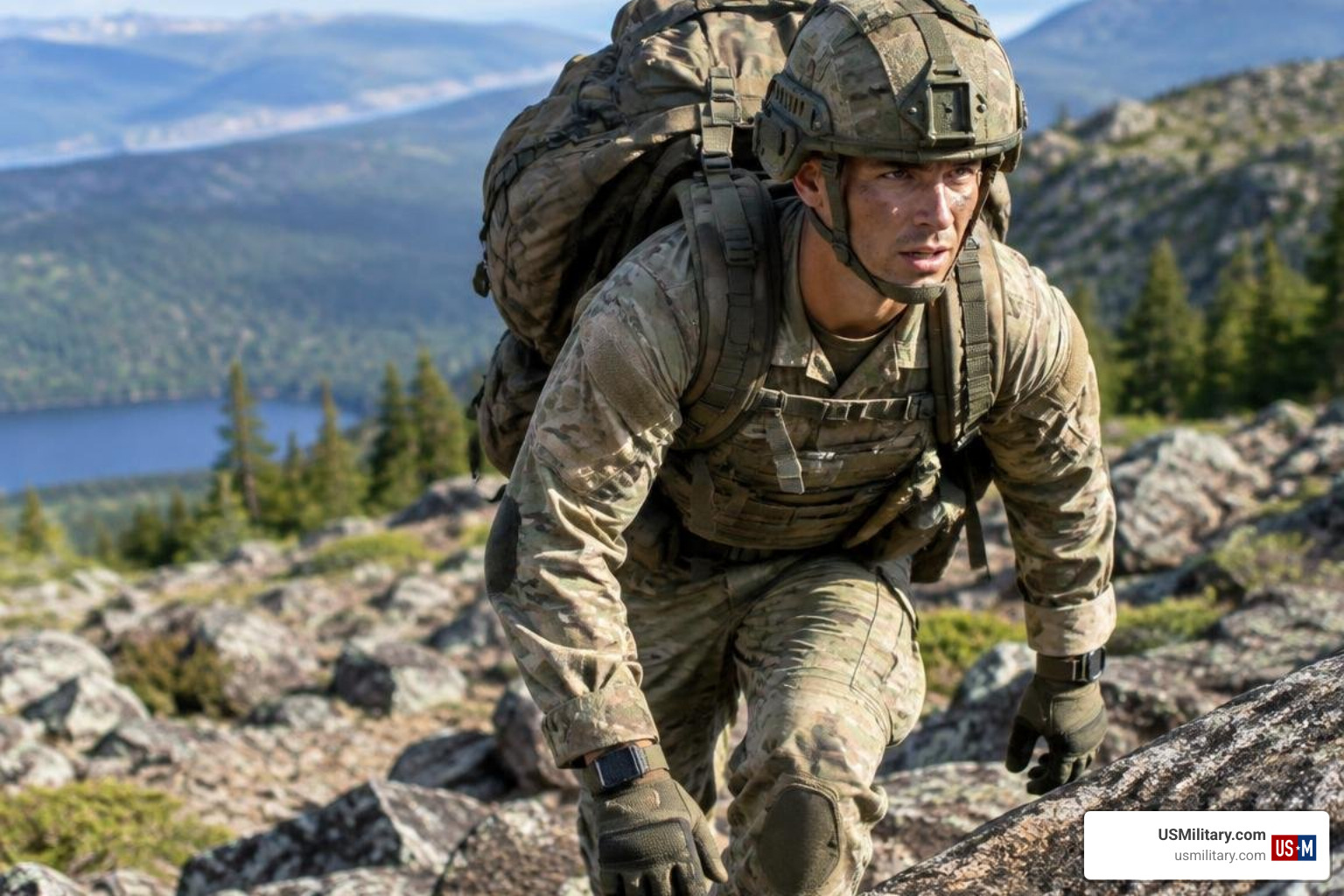
When we examine the elite operators inside the 1st Special Forces Operational Detachment-Delta (1st SFOD-D), we quickly realize that superhuman fitness is merely the entry fee. The unit looks for a distinct psychological profile. While many candidates possess Type A drives, raw athleticism alone cannot conquer the crucible of selection. The shadow warriors of Delta Force represent a balance of cognitive adaptability, emotional discipline, and absolute resolve.
Below, we break down these 14 defining personality traits into their mental foundations and operational applications.
I, Larry Fowler, as publisher of USArmy.com and a veteran special forces operator, I hope you enjoy these special traits of Delta Force operators. They are truly special!
14 Daring Personality Traits Of Delta Force Operators: The Mindset and Mental Grit
- Unyielding Willpower: Delta Force selection has a washout rate exceeding 80%. When exhaustion sets in during solo mountain treks, pure willpower is the only engine that keeps an operator moving forward.
- Mental Endurance: Enduring physical pain, sleep deprivation, and extreme isolation requires deep psychological stamina. Candidates must push through without external encouragement or clear timelines.
- Cognitive Fluidity and Intelligence: Fast problem-solving under chaotic conditions is vital. Operators must analyze shifting variables, calculate ballistic trajectories, and make life-and-death choices within fractions of a second.
- Radical Humility: Delta operators embrace the “quiet professional” ethos. Arrogance gets weeded out quickly; candidates who boast or place themselves above the mission do not last.
- Emotional Stability: Panic kills. Delta operators maintain absolute calm under fire, keeping their heart rates and adrenaline under conscious control during intense firefights.
- Autonomous Drive: Operators must execute complex mission objectives unsupervised. They operate with total self-motivation, taking the initiative without waiting for step-by-step orders.
- Comfort with Ambiguity: In selection land navigation, candidates are given coordinates with zero information about total distance or end times. Thriving without a defined safety net is essential.
14 Daring Personality Traits Of Delta Force Operators: Tactical Execution and Character
- Controlled Aggression: Delta operators can switch instantly from absolute calm to surgical lethality. This aggression is never wild or reckless; it is tightly focused on eliminating threats with precision.
- Uncompromising Moral Integrity: The commander board evaluates a soldier’s character above all else. Doing the right thing when nobody is looking is non-negotiable for operating with strategic autonomy.
- Relentless Curiosity: Tier-1 operators pursue continuous learning. They master foreign languages, advanced tradecraft, enemy weapons systems, and novel breaching techniques throughout their careers.
- Selfless Camaraderie: Small-unit cohesion requires complete selflessness. A Delta operator instinctively places the safety of the team and mission success above their own survival.
- Calculated Daring: Operators take massive operational risks, but those risks are thoroughly rehearsed and analyzed rather than reckless gambles.
- Situational Empathy and Restraint: In close-quarters hostage rescues, distinguishing instantly between a non-combatant and an armed captor requires profound emotional discipline and respect for human life.
- Operational Secrecy and Discretion: Delta personnel live in the shadows. They protect sensitive tactics, techniques, and procedures (TTPs) without ever seeking public recognition or personal celebrity.
The Psychological Assessment: How Delta Force Selects Character Over Pure Fitness
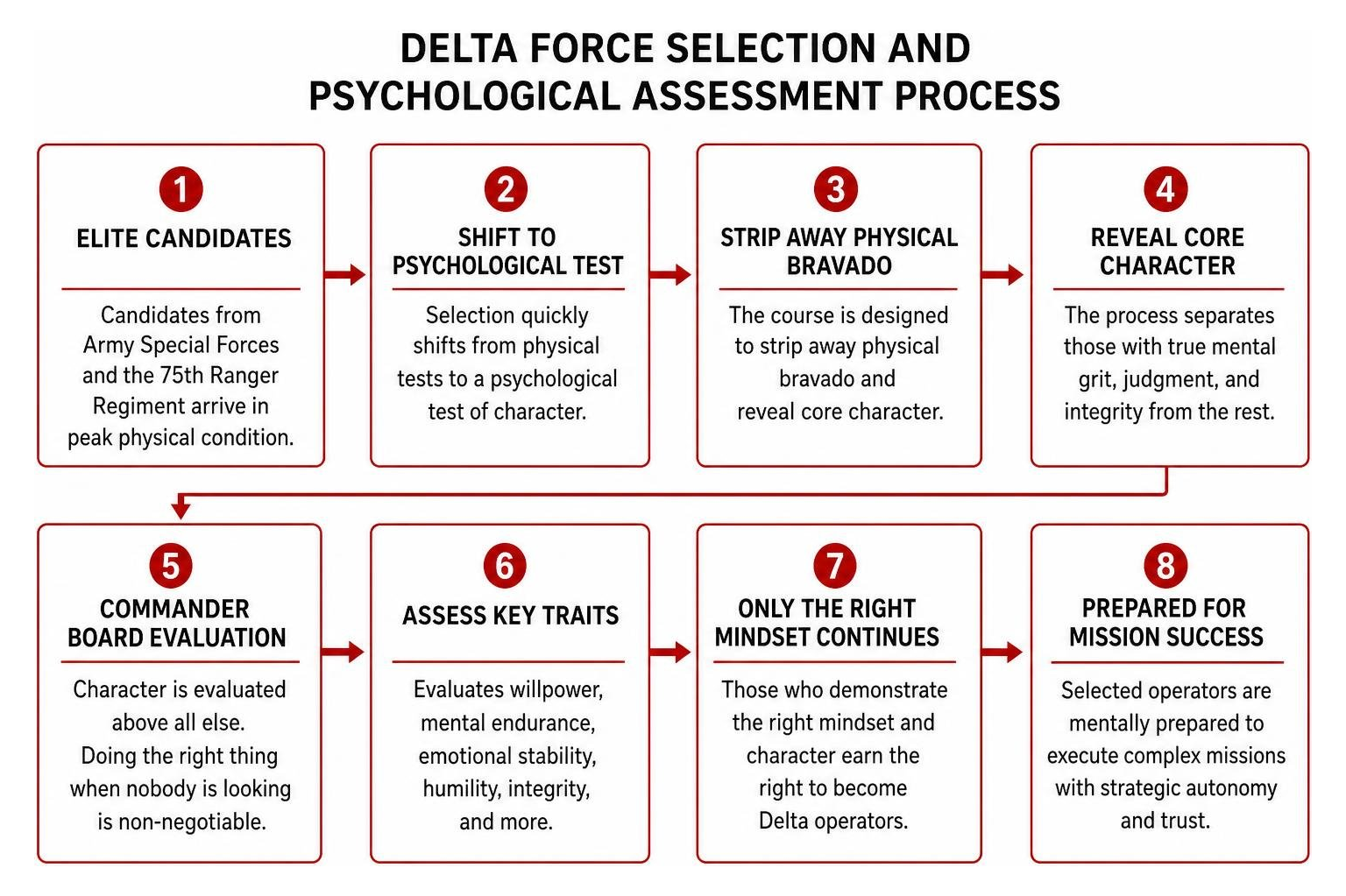
The Delta Force Selection and Assessment course held at Camp Dawson, West Virginia, is designed to strip away physical bravado and reveal a soldier’s core character. While candidates from Army Special Forces and the 75th Ranger Regiment arrive in peak physical condition, selection quickly shifts into a psychological test.
The infamous “Long Walk”—a grueling 40-mile solo land navigation march across mountainous terrain carrying a heavy ruck—serves as the ultimate mental test. Instructors offer no encouragement, feedback, or time limits. Candidates must navigate deep forests alone, testing their internal drive and honesty.
Following the physical phases, candidates face exhaustive psychiatric evaluations and the commander’s selection board. Psychologists evaluate emotional stability, stress tolerance, and ego structure. A candidate who finishes first on every ruck march can still be dropped instantly if peer evaluations or board interviews reveal arrogance or selfishness. Delta Force selects for cultural and psychological fit—the right person, not just the fastest athlete.
Operational Crucible: Delta Force Personality Traits Tested in Real-World Missions
The history of 1st SFOD-D demonstrates how these 14 personality traits function in combat.
During Operation Gothic Serpent in Mogadishu in 1993, Master Sergeant Gary Gordon and Sergeant First Class Randy Shughart displayed ultimate selfless camaraderie and calculated daring. They repeatedly requested permission to insert into an overrun crash site to protect injured pilot Michael Durant, ultimately sacrificing their lives and earning the Medal of Honor.
During Operation Desert Storm, Delta sniper teams relied on high-grade Delta Force operator equipment to hunt SCUD missiles deep behind Iraqi lines, destroying missile launchers from extreme distances with .50-caliber rifles. Later, during Operation Red Dawn in 2003, operators combined forensic intelligence work with patient direct action to capture Saddam Hussein without firing a shot. Reviewing the complete history of Delta Force operations shows that mission success consistently relies on cognitive adaptability, restraint, and mental toughness.
Delta Force vs. Other Elite Units: Distinct Mindset Differences
Founded in 1977 by Colonel Charles Beckwith, Delta Force was patterned after the British Special Air Service (SAS). Beckwith recognized that America needed an agile counterterrorism force made up of mature, experienced soldiers who could operate with minimal oversight.
While units like the 75th Ranger Regiment excel at large-scale assault operations, Delta Force emphasizes mature autonomy in ambiguous environments. Understanding the Navy SEALs vs Delta Force comparison highlights key cultural nuances between America’s elite Tier-1 elements.
| Feature / Trait | Delta Force (1st SFOD-D) | US Navy DEVGRU (SEAL Team 6) | 75th Ranger Regiment |
|---|---|---|---|
| Primary Branch | U.S. Army | U.S. Navy | U.S. Army |
| Average Candidate Profile | Experienced NCOs (E-4 to E-8) / Officers | Experienced SEAL operators | Direct entry & experienced soldiers |
| Operational Ethos | Quiet professional, deep discretion | High-tempo maritime / direct action | Premier large-scale airfield seizure & raid force |
| Primary Mindset | Extreme autonomy & adaptability | Dynamic aggression & team synergy | Relentless aggression & disciplined standard |
Frequently Asked Questions About Delta Force Operator Personality Traits
What is the most critical personality trait required to pass Delta Force selection?
Unflinching internal willpower is the most critical trait. Candidates face long solo marches through rugged terrain without feedback or encouragement. When physical energy runs out, only internal drive keeps a soldier moving.
Can someone be dropped from Delta Force selection solely for personality flaws?
Yes. Delta Force frequently drops candidates who achieve top physical scores if the commander selection board identifies arrogance, poor peer reviews, or an inability to work within a small team. Character and humility are non-negotiable.
How do Delta Force operators balance intense aggression with operational humility?
Operators use strict emotional discipline. They view lethal aggression as a precise tool applied only when necessary to secure an objective or save innocent lives. Outside active engagements, they practice humility, ongoing learning, and quiet professionalism.
Conclusion
Understanding the psychological traits that define Delta Force operators highlights the importance of mental grit, emotional maturity, and humility in high-stakes environments. At USArmy.com, we provide comprehensive resources, career path guides, and transition support for active service members and veterans.
Whether you are exploring special operations pipelines or looking into military career trajectories, check out our comprehensive Army Delta Force vs Navy SEALs breakdown to learn more about how America’s top units train and operate.
Discover More Military Insights & Resources
- Explore the complete overview of the shadow warriors of Delta Force.
- Review specialized Tier-1 gear and weapon platforms with our guide to essential Delta Force equipment.
- For inspirational strategies on building discipline, explore Dare to Live Greatly to strengthen your mental and physical endurance.