
Did Biden’s Border Policies Boost Army Recruiting?
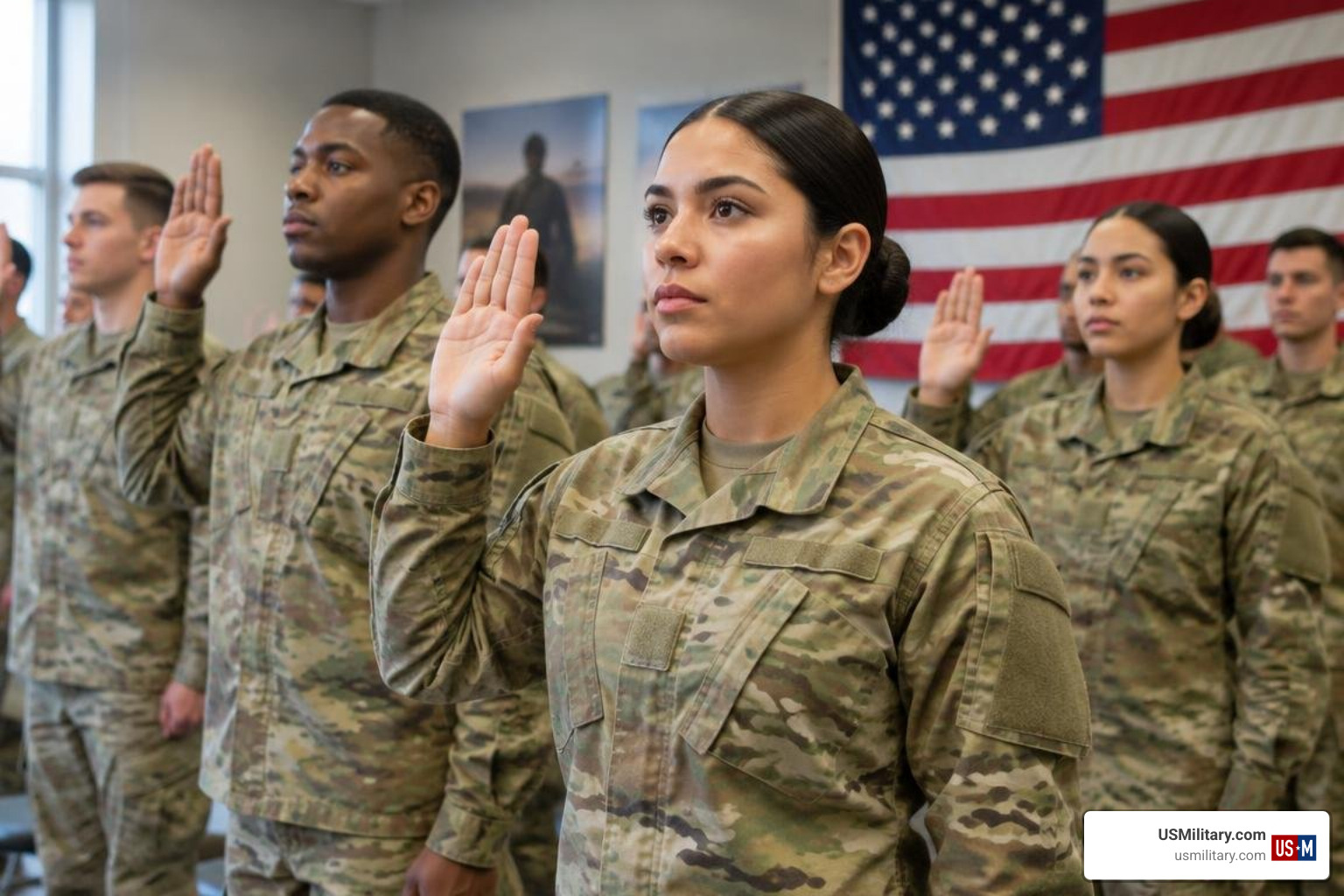
Did Biden’s unchecked borders increase and have a positive impact on Army recruiting? No evidence shows they did.
While extensive congressional testimony raised persistent concerns regarding border security, transnational cartels, and homeland defense, none of the evidence showed that southern border policies increased Army enlistments or expanded the legal pool of prospective military service members.
The United States Army experienced significant manpower fluctuations across recent fiscal cycles, missing its active recruiting benchmark in 2022 before meeting targets in 2024 and hitting elevated milestones early in 2025. These fluctuating numbers illustrate an institutional rebound, not its underlying cause. Modern preparatory initiatives, updated recruit eligibility standards, educational incentives, and shifting civilian labor market dynamics provide concrete explanations for this recovery rather than federal border policies.
I’m Larry Fowler, a Navy veteran, BUD/S Class 89 graduate, and publisher of USArmy.com and USMilitary.com. In examining “Did Biden Unchecked Borders Increase and Have Positive Impact on Army Recruiting?” I evaluate verifiable defense manpower data, statutory enlistment qualifications, and historical accession trends to bridge the gap between speculative political claims and verified military recruiting facts.
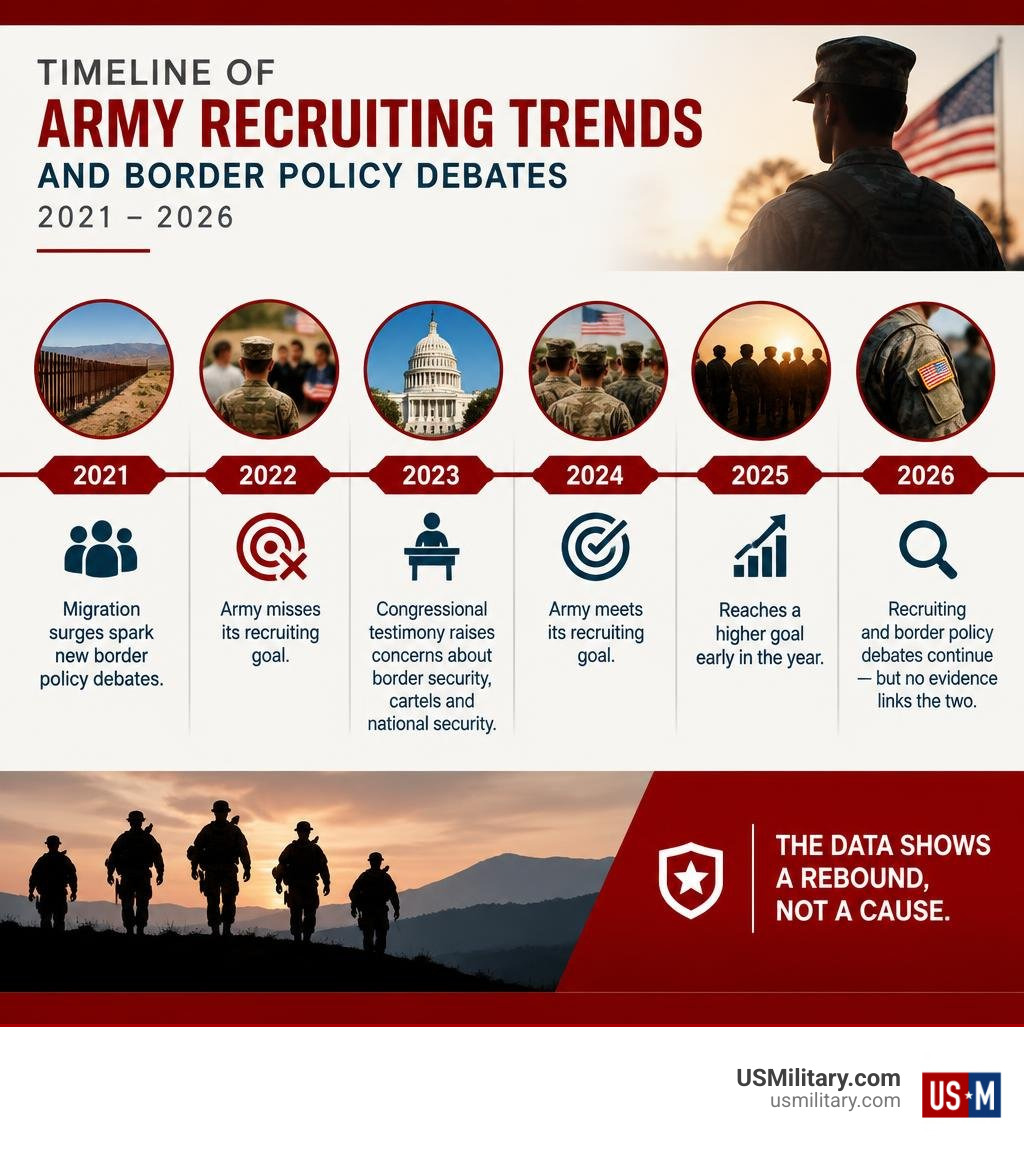
Did Biden’s Unchecked Borders Increase and Have a Positive Impact on Army Recruiting?
When national political debates intensify, partisan commentators frequently attempt to link separate public policy challenges into a single narrative. Over recent years, various political observers have claimed that unauthorized border crossings either degraded armed forces readiness or, conversely, expanded the available pool of prospective military recruits. A rigorous review of military personnel records and federal law reveals that both claims fundamentally lack factual merit.
Independent nonpartisan evaluations, including detailed fact-checking political claims on military recruiting turnaround, demonstrate that defense accession figures do not follow southwest border apprehension statistics. Enlistment requires candidates to fulfill rigorous statutory, moral, aptitude, and medical criteria, which are systematically presented in our step-by-step army eligibility guide.
Examining Congressional Testimony on Border Encounters and Military Readiness
Extensive House Homeland Security Committee hearings and armed services testimonies have examined operational enforcement challenges across the southern border. Official witnesses recorded over 5.5 million migrant encounters between ports of entry between fiscal year 2021 and 2024, alongside an estimated 1.5 million known evadees. Law enforcement officials documented criminal cartel syndicates exploiting migration corridors to transport illicit fentanyl and conduct human smuggling operations.
Lawmakers have frequently emphasized strategic national defense priorities and readiness concerns during these sessions, as reflected in congressional statements on military enlistment trends. However, these congressional deliberations centered on interagency logistics, border patrol support, and counternarcotics operations. Not a single defense witness presented empirical evidence suggesting that elevated border crossings expanded recruit volume or assisted armed forces recruiters in achieving enlistment quotas.
Did Biden’s Unchecked Borders Increase and Have a Positive Impact on Army Recruiting Numbers?
To understand why migrant encounters do not affect enlistment totals, one must examine federal statutory accession requirements. Under United States Title 10 regulations detailed in our comprehensive guide to military enlistment, every military applicant must be a citizen of the United States or a verified lawful permanent resident possessing a valid Green Card.
Undocumented immigrants, individuals granted temporary humanitarian parole, and foreign nationals with pending asylum claims cannot legally enlist in the armed services. When emergency border restrictions evolved and encounter levels fluctuated, the qualified military applicant pool remained completely unchanged. Official defense data confirms that border enforcement policies had zero measurable correlation with the Army’s recruiting recovery.
What Actually Drove the Army Recruitment Rebound
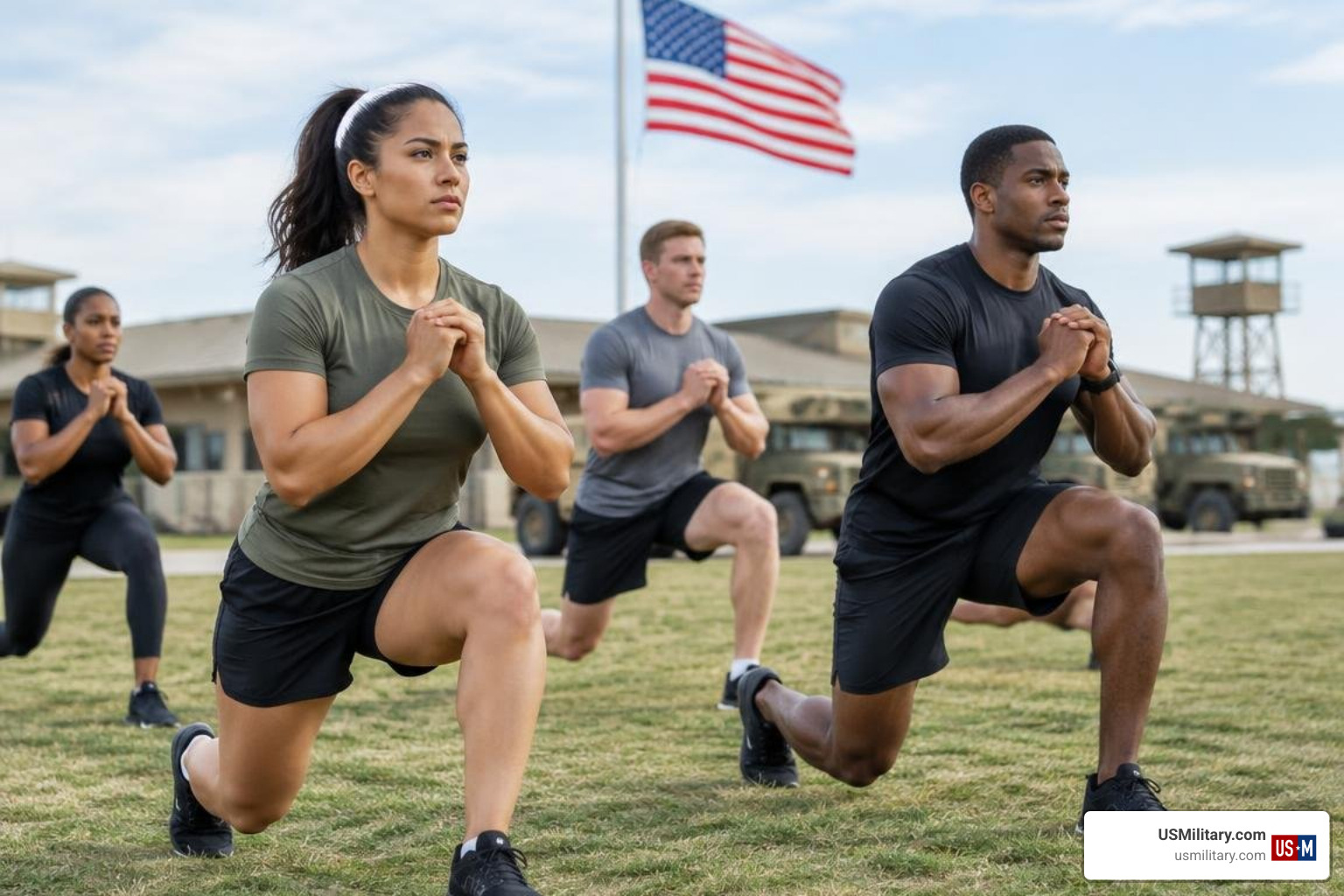
If southern border policy developments did not drive the recruitment recovery, what factors explain the turnaround? The answer lies in targeted structural reforms, revised candidate screening practices, and internal military accession programs initiated by defense leadership.
Rigorous academic scholarship on military personnel administration—such as the academic analysis on US military manpower challenges [[ADAPTIFYMEDICALCITATION:mcdoia585da8792be:INLINE]]—demonstrates that while the eligible youth population faces persistent demographic constraints, institutional innovations create sustainable results. Rather than relying on external migration trends, the military modernized applicant evaluation procedures detailed in our essential guide to military enlistment requirements.
The Real Impact of Internal Army Policy Tweaks and Preparatory Programs
The central driver of the Army’s enlistment resurgence was the establishment of the Future Soldier Preparatory Course at Fort Jackson in August 2022. This targeted initiative established focused academic and physical conditioning modules for motivated applicants who initially fell just short of baseline qualification standards.
As documented in an investigative report on Future Soldier Prep Course expansion, the preparatory course delivered dramatic results across multiple training installations:
- More than 46,000 qualified soldiers entered basic combat training after completing preparatory coursework.
- The program supplied between 20% and 25% of total regular Army accessions during critical recovery cycles.
- Over 90% of enrolled candidates graduated successfully and transitioned seamlessly into regular active-duty service.
- Armed Services Vocational Aptitude Battery scores improved substantially while strictly upholding Department of Defense quality limitations.
Alongside this preparatory model, the military modernized medical waiver workflows and delayed-entry pipelines, eliminating administrative bottlenecks without compromising fundamental physical standards.
Economic Pressures and Job Market Realities Versus Political Narratives
Military accessions are closely linked to macroeconomic conditions. When civilian hiring softens, private-sector wage growth moderates, or living costs rise, young Americans seek predictable career trajectories, full medical benefits, housing allowances, and comprehensive educational funding.
A comprehensive news report on motivations behind rising recruit numbers revealed that new service members cited tuition assistance, practical technical training, and clear professional advancement as primary enlistment motivators. For prospective candidates considering service pathways, our overview of military joining process provides essential guidance on navigating recruiting options, enlistment contracts, and career specialties.
Comparing Border Security Arguments and Defense Manpower Realities
A persistent theme in workforce discussions suggests that shifting migration patterns fundamentally alter domestic employment trends. Within the armed services, strict legal requirements isolate the military recruiting pool from unauthorized labor fluctuations.
The defining hurdle confronting modern military recruiting commands is not competition with foreign labor, but stringent domestic qualification criteria. Approximately 71% to 77% of young Americans aged 17 to 24 cannot qualify for military service without formal waivers due to disqualifying medical conditions, physical fitness deficits, or educational shortcomings. Consulting joining military age requirements helps prospective candidates understand service standards and specific eligibility milestones.
| Fiscal Year | Regular Army Enlistment Goal | Recruits Contracted | Key Operational Driver | Border Policy Correlation |
|---|---|---|---|---|
| FY 2022 | 60,000 | 45,000 | Post-pandemic job market competition | None (Encounters high; Enlistments down) |
| FY 2023 | 65,000 | 50,000 | Rollout of Future Soldier Prep Course | None (Encounters high; Enlistments flat) |
| FY 2024 | 55,000 | 55,300 | Prep course expansion & waiver reforms | None (Encounters peaked; Enlistments grew) |
| FY 2025 | 61,000 | 61,000 (Early Goal Hit) | Streamlined intake & delayed-entry pipeline | None (Policy shifts; Numbers stable) |
Counterarguments and National Security Overlaps
Although southern border migration dynamics do not generate military enlistees, they significantly influence armed forces operational tasking. Title 10 active-duty forces and Title 32 National Guard units have deployed continuously to support federal law enforcement agencies along the international frontier under Joint Task Force Southern Border.
While these support missions provide valuable surveillance and logistical assistance, prolonged border commitments place real demands on military readiness and training schedules. As highlighted in news coverage of Army recruiting milestones, genuine accession success depends on dedicated community outreach, modernized marketing campaigns, and responsive enlistment incentives rather than partisan border policy claims.
Frequently Asked Questions About Border Policies and Military Recruitment
Did Biden unchecked borders increase and have positive impact on Army recruiting?
No. Federal law strictly mandates that military enlistees must possess United States citizenship or permanent resident status with a valid Green Card. Undocumented migrants, individuals paroled under temporary humanitarian mechanisms, and pending asylum applicants cannot enlist in the Armed Forces. Record border encounters between 2021 and 2024 did not expand the qualified recruiting pool.
What were the actual causes of the military recruiting crisis between 2022 and 2024?
The defense recruiting shortfall resulted from a competitive civilian labor market, pandemic-related declines in academic testing, rising youth physical unfitness, and administrative delays caused by the initial rollout of the military’s MHS Genesis medical screening system. In response, recruiting commands modernized their evaluation procedures, including updated waiver guidelines for enlistment.
How did the U.S. Army reach its 61,000 recruit goal ahead of schedule?
The Army achieved its recruitment goals through targeted internal programs: expanding the Future Soldier Preparatory Course at Fort Jackson, streamlining medical waiver evaluations, implementing attractive enlistment bonuses, and strengthening delayed-entry pipelines. Prospective applicants can examine current qualification pathways in our 2026 military enlistment options guide.
Conclusion
The claim that southern border policies increased military recruitment finds no support in statutory law or empirical accession records. Federal eligibility statutes bar non-permanent residents from serving in the military, and exhaustive congressional hearings on border management presented no evidence linking border numbers to military recruiting success.
The Army’s manpower turnaround was accomplished through focused institutional reforms: innovative preparatory training courses, sensible medical waiver updates, modernized marketing outreach, and valuable educational benefits for young Americans seeking honorable national service.
At USMilitary.com, we provide active service members, veterans, and prospective recruits with trusted, objective guidance regarding military career tracks, veteran benefits, and enlistment standards. For detailed information on military pathways, visit our comprehensive resource center for military recruiting resources and career guidance.
References
[[ADAPTIFYMEDICALCITATION:mcdoia585da8792be:REFERENCE]]