
Active Duty Military Loans: Where to Start

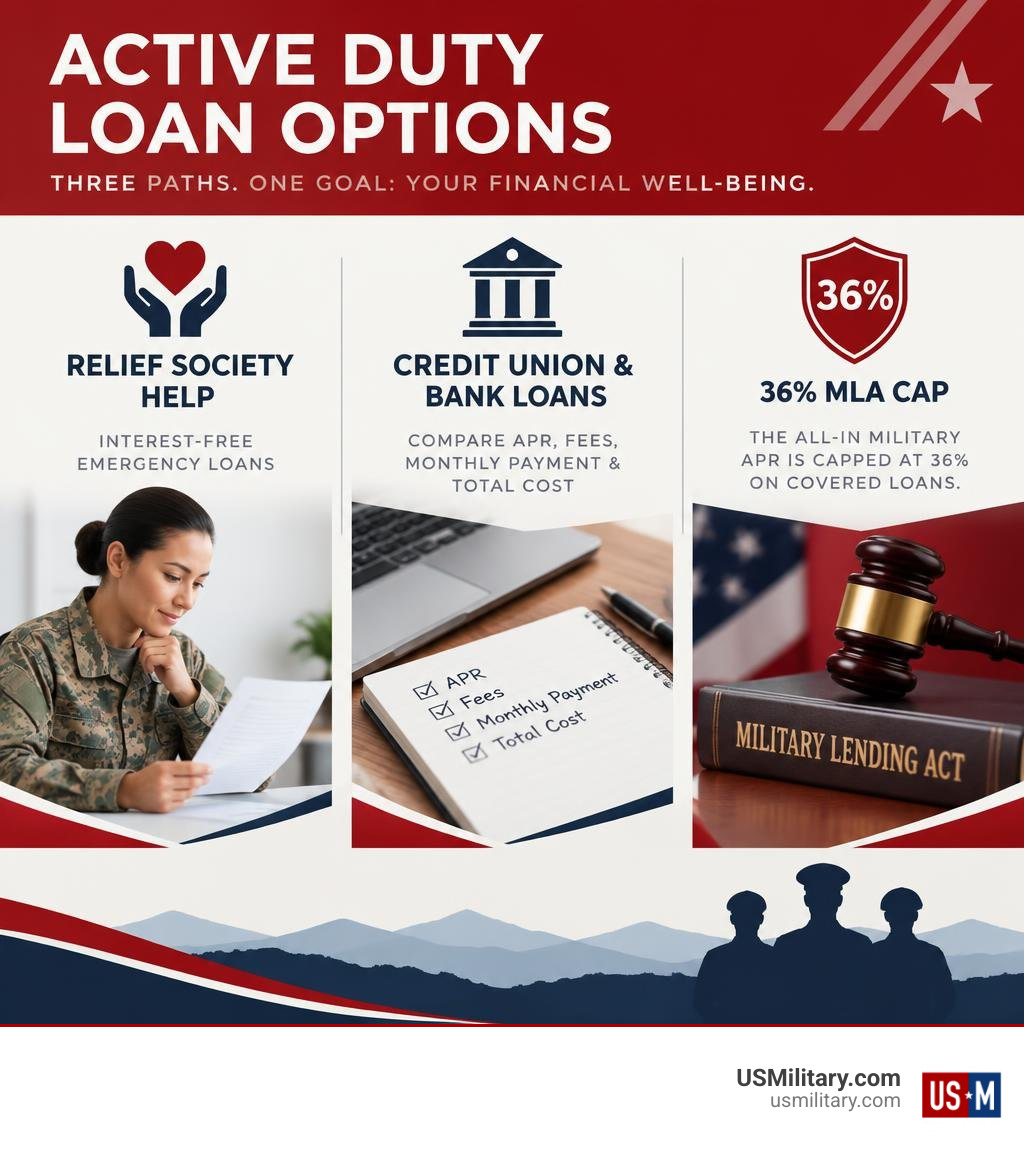
Active duty military loans include interest-free emergency loans from military relief societies and personal loans from credit unions or banks. If the expense is urgent, check your branch’s relief society first. For a personal loan, compare the APR, fees, monthly payment, and total repayment cost. The Military Lending Act caps the all-in Military Annual Percentage Rate at 36% on covered loans—a legal limit, not a rate to aim for.
I’m Larry Fowler, a Navy veteran and publisher of USArmy.com and USMilitary.com. Since 2007, I’ve shared guidance for service members and veterans, including information on active duty military loans and benefits.
Active duty military loans glossary:
Types and Options for Active Duty Military Loans
When unexpected expenses hit, knowing where to turn keeps you mission-focused and prevents high-cost borrowing traps. Between permanent change of station (PCS) moves, vehicle repairs, and cross-country family emergencies, life on active duty carries unique financial demands.

Finding the right loan depends on whether you are dealing with a sudden crisis or planning a structured purchase. Service members have access to a distinct financial ecosystem that civilians simply do not have, ranging from non-profit aid societies to specialized defense credit unions and commercial banks.
| Loan Type | Typical APR / Cost | Maximum Loan Amount | Repayment Term | Best Used For |
|---|---|---|---|---|
| Branch Relief Society | 0% APR (No fees) | $500 – $1,000+ (Streamlined) | 3 – 12 months | Urgent emergencies, basic living needs |
| Military Credit Union | 6.00% – 18.00% APR | Up to $25,000+ | 12 – 60 months | Debt consolidation, major planned expenses |
| Military Bank Installment | 14.95% – 35.95% APR | $250 – $15,000 | 9 – 48 months | Fast personal funding, fair credit needs |
Before signing any commercial agreement, review our top 10 military loans for detailed reviews to see how specific lenders structure origination fees and terms.
Branch Relief Societies and Zero-Interest Active Duty Military Loans
Your first line of defense should always be your branch’s official aid organization. These non-profit entities provide interest-free loans and non-repayable grants designed to keep troops out of predatory debt:
- Navy-Marine Corps Relief Society (NMCRS): Offers interest-free loans and grants to active-duty and retired Sailors and Marines, as well as surviving spouses and reservists on extended active duty of 30 or more days. They assist with everyday living expenses, emergency medical bills, car repairs, and travel.
- Air Force Aid Society (AFAS): Features the Falcon Loan program, which provides streamlined emergency funds up to $1,000 with repayment structured over 3 to 12 months via military allotment.
- Army Emergency Relief (AER): Delivers zero-interest loans and emergency grants for travel, housing deposits, healthcare gaps, and essential vehicle repairs.
- Coast Guard Mutual Assistance (CGMA): Provides Coast Guard personnel with tailored, short-term, interest-free assistance.
Because these funds are repaid through routine payroll deductions without interest, they protect your credit and keep your wallet intact. If you serve in a non-active status, specialized emergency loan options for reserve personnel offer similar protections during qualifying duty periods.
Military Credit Unions and Specialized Personal Financing
If your financial need exceeds what a relief society can provide—such as consolidating high-interest credit card debt or funding home improvements—military-focused credit unions and banks offer structured installment products.
Many institutions offer unique first-term military programs. For junior enlisted troops (E-2 and above) who haven’t yet built a strong credit history, these programs offer starter credit lines and low-interest vehicle financing. For instance, programs like Tyndall Federal Credit Union’s First Term initiative provide auto loans up to $20,000 and low-limit starter cards without requiring a co-signer.
When you need reliable transportation, dedicated military car loans offer low annual percentage rates and flexible loan-to-value allowances. Military-friendly lenders also often offer early direct deposit, releasing military pay up to one business day early.
Military Lending Act Caps and Borrower Rights
The Military Lending Act (MLA) is a federal law providing substantial consumer protections for active-duty troops and their dependents.
Under the MLA, creditors cannot charge a Military Annual Percentage Rate (MAPR) exceeding 36% on covered consumer credit products. Crucially, the MAPR calculation includes more than just the base interest rate; it rolls in finance charges, credit insurance premiums, debt cancellation fees, application fees, and add-on product charges.
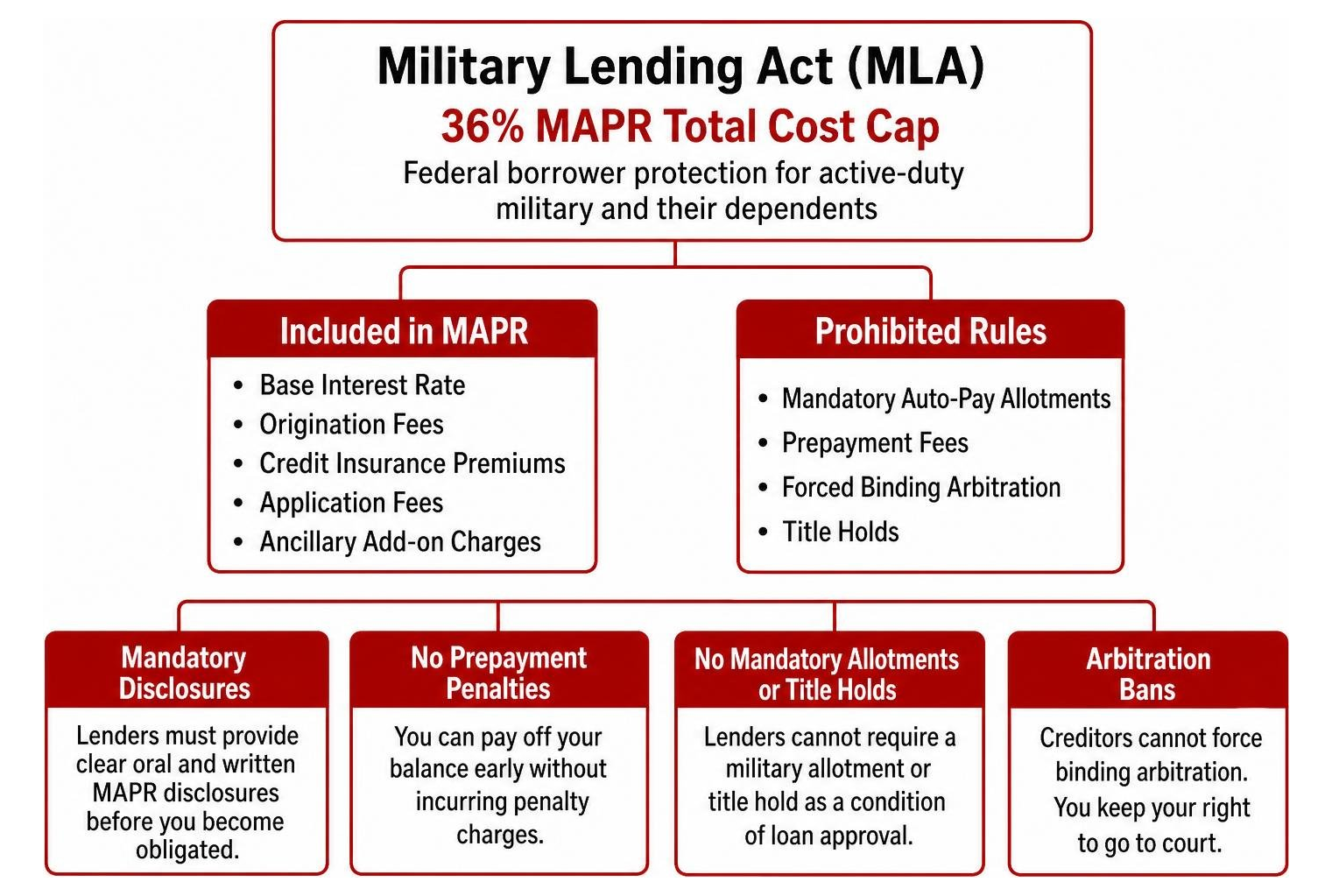
The law establishes essential legal safeguards:
- Mandatory Disclosures: Lenders must supply both clear oral and written statements of your MAPR before you become obligated.
- No Prepayment Penalties: You can pay off your balance early without incurring penalty charges.
- No Mandatory Allotments or Title Holds: Lenders cannot require you to create a military allotment or surrender a personal vehicle title as a condition of personal loan approval.
- Arbitration Bans: Creditors cannot force you into binding arbitration, preserving your legal right to take disputes to court.
To verify eligibility, lenders query the official Department of Defense database. You can review detailed rules regarding MLA covered borrowers to ensure your transactions reflect all statutory limits.
How to Qualify, Apply, and Protect Your Financial Health
Securing affordable financing requires presenting clear verification of your military income while understanding your legal debt rights.

A critical distinction separates the MLA from the Servicemembers Civil Relief Act (SCRA). While the MLA protects credit taken out during active service, the SCRA caps interest rates at 6% on qualifying obligations you entered before entering active duty. Federal student loan servicers routinely offer these reductions alongside post-active duty deferments, as detailed in the official benefits for military servicemembers guidelines.
Qualification Rules and Bad Credit Active Duty Military Loans
A low credit score or an unestablished file doesn’t close the door to borrowing. Lenders evaluate several factors on your application:
- Consistent Income: Verified through your regular military base pay, Basic Allowance for Housing (BAH), and Basic Allowance for Subsistence (BAS).
- Debt-to-Income (DTI) Ratio: Lenders compare your total monthly debt payments against your gross earnings. Keeping recurring debt payments below 40% of your income improves your odds of approval.
- Collateral Options: If unsecured loan rates are high, institutions allow you to pledge non-tax-qualified mutual funds or a certificate of deposit (CD) to secure much lower interest rates.
Avoid lenders near base gates marketing “instant approvals” without credit checks. These operations often attempt to charge the maximum legal 36% MAPR. If your credit isn’t perfect, work with an on-base financial counselor or military credit union to pursue small credit-builder loans instead of high-cost short-term lenders.
Step-by-Step Application and Documentation Process
Following a clear checklist streamlines your loan application:
- Assemble Core Records: Download your most recent Leave and Earnings Statement (LES), state-issued identification, active duty military ID, and housing utility bills for proof of residence.
- Review Your Personal Credit: Pull your free credit reports to ensure no inaccurate collections or errors are dragging down your score.
- Submit Through Official Portals: Apply via your bank or credit union’s secure portal, designating your desired repayment account.
- Coordinate Repayment: Set up automatic payments via ACH direct debit rather than allotments to maintain full control over your cash flow.
- Consult Command Assistance if Needed: If you face sudden hardship, visit your installation’s Family Readiness Center or staff judge advocate legal office before taking on high-interest debt.
Navigating Long-Term Financing and Housing Support
Personal loans cover immediate cash needs, but buying a home requires your VA home loan entitlement. Backed by the federal government, VA mortgages offer 100% financing and don’t require private mortgage insurance (PMI).
Active duty personnel qualify after 90 continuous days of service. You can obtain your Certificate of Eligibility (COE) online through the VA portal or directly through a VA-approved lender. Service members who have earned a Purple Heart can even receive a complete waiver of the VA funding fee if they close while still on active duty.
To make the most of your housing benefits, review our complete guide to VA home loans and follow our walkthrough on how to apply for a VA home loan in 5 easy steps.
At USMilitary.com, we provide clear, comprehensive guidance on military career pathways, VA benefits, and financial readiness. By exploring relief society programs first, using credit unions for major purchases, and enforcing your federal rights under the MLA and SCRA, you can build lasting financial security while serving your country.