
Are Army Veterans’ Benefits Safe Under the Incoming Democratic Congress?

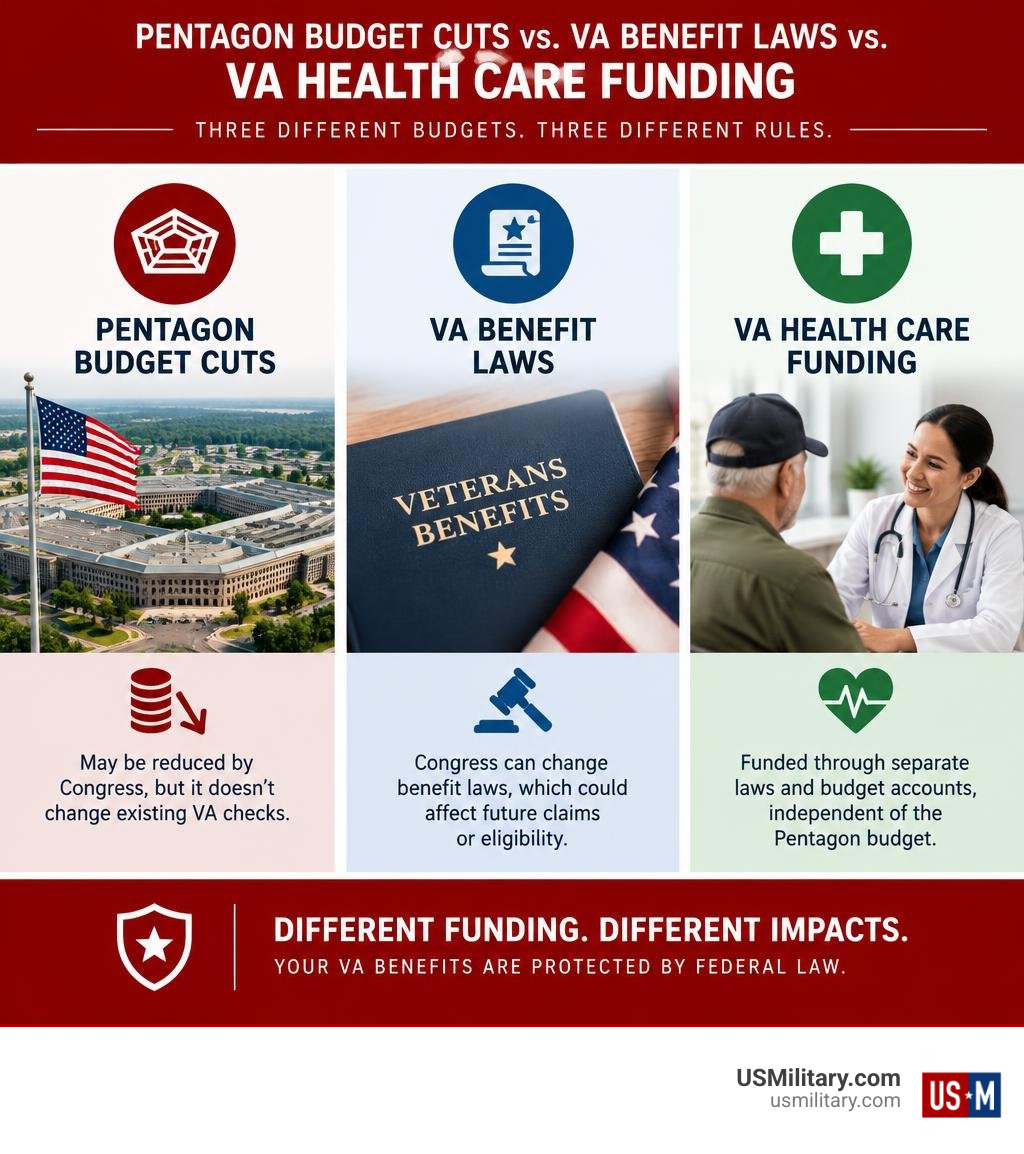
Can Army veterans’ benefits be cut with the incoming Democratic-majority Congress in power? Congress can change veterans’ benefit laws, but cutting the Pentagon’s budget would not, by itself, reduce existing VA disability checks. Army veterans receive the same VA benefits under federal law as eligible veterans from other branches.
The new majority may seek to trim President Trump’s proposed $1.5 trillion defense budget after it takes office. The December 11 funding deadline could push some spending decisions into that new Congress. For veterans, the key distinction is between Defense Department spending and VA benefits and health care. Those are funded through different laws and budget accounts, though changes to VA funding or benefit rules could still affect care or future claims.
I’m Larry Fowler, a Navy veteran, BUD/S Class 89 graduate, and publisher of USArmy.com and USMilitary.com, where I’ve covered military and VA benefits since 2007. I address Can Army Veterans Benefits Be Cut With The Incoming Democrat Majority Congress In Power by separating the defense budget fight from decisions that could change veterans’ benefits.
Relevant articles related to Can Army Veterans Benefits Be Cut With The Incoming Democrat Majority Congress In Power:
Can Army Veterans Benefits Be Cut With The Incoming Democrat Majority Congress In Power?

As we look ahead to the new legislative session starting in early 2027, many military families are understandably anxious about their earned support. The short answer is that existing earned payouts are heavily protected under federal law. According to statements from the House Committee on Veterans’ Affairs, a Democratic House majority plans oversight and protection of earned benefits rather than direct reductions.
Under Title 38 of the U.S. Code, veterans’ disability compensation and pensions are classified as mandatory entitlement spending. This means funding is automatically obligated based on eligibility, rather than being renegotiated every year during routine political battles. For a detailed breakdown of these permanent programs, explore our VA veteran benefits complete guide.
Mandatory Compensation vs. Discretionary Spending Protections
The Department of Veterans Affairs operates under two distinct budgetary mechanisms:
- Mandatory Entitlements: These cover monthly disability compensation, Dependency and Indemnity Compensation (DIC), military pensions, and GI Bill education support. The Congressional Budget Office (CBO) treats these as binding statutory obligations that cannot be reduced without passing explicit, standalone legislation to rewrite Title 38.
- Discretionary Spending: This covers medical facility construction, medical research, and general administrative overhead, which are funded through annual congressional appropriations.
Because of this statutory barrier, your monthly tax-free disability pay for service-related injuries is legally insulated from standard budget debates.
What VA Leadership Says About Direct Benefit Payouts
VA Secretary Doug Collins publicly reassured the community that earned payouts face no executive cuts. Secretary Collins confirmed that external advisory teams, including Department of Government Efficiency (DOGE) representatives, are strictly auditing agency contracts and eliminating bureaucratic waste to redirect funds directly toward patient services.
Rather than privatizing the system, current leadership emphasizes shortening claim backlogs and expanding internal clinical capacity. If you need assistance navigating your initial claim or requesting an evaluation increase, review the complete guide to VA disability claims.
How the $1.5T Pentagon Budget Battle Impacts Military and Veteran Programs

Much of the current political anxiety stems from the White House’s FY 2027 national security proposal. The Trump administration requested a historic $1.5 trillion defense budget—a 42% increase over prior levels—which includes $1.15 trillion in regular defense accounts and a $350 billion reconciliation package dedicated to the defense industrial base and next-generation weapons.
Incoming Democratic leaders in Congress have announced plans to cap defense spending at roughly $1 trillion, seeking to trim approximately $500 billion from the administration’s proposal.
| Spending Category | Trump Administration FY 2027 Request | Democratic Spending Targets | Primary Program Focus |
|---|---|---|---|
| Base Defense Funding | $1.15 Trillion | ~$1.0 Trillion | Core operations, military personnel pay, maintenance |
| Reconciliation Package | $350 Billion | $0 – $60 Billion (Targeted for rejection) | Industrial base expansion, advanced technology |
| Missile Defense Shield | $185 Billion (Golden Dome total) | Subject to severe spending caps | Multi-layered continental missile defense |
| Naval Fleet Expansion | Multi-Billion Next-Gen Battleships | Defunded or delayed | Capital surface warships |
Can Army Veterans Benefits Be Cut With The Incoming Democrat Majority Congress In Power Through NDAA Defense Reductions?
The primary tool lawmakers use to set defense policy is the National Defense Authorization Act (NDAA). If Congress relies on stopgap Continuing Resolutions (CRs) past the December 11 funding deadline, major defense procurement decisions will land directly in the lap of the incoming Democratic majority.
However, NDAA cuts apply strictly to Department of Defense (DoD) hardware, munitions procurement, and research accounts. They do not siphon money away from the Department of Veterans Affairs. Understanding these boundaries is critical, and you can learn more in our ultimate guide to military benefits.
Big-Ticket Weapons Programs Under Congressional Scrutiny
Under a $1 trillion spending cap, congressional leaders like Rep. Adam Smith and Sen. Jack Reed plan to target high-dollar procurement initiatives rather than personnel accounts. The programs facing the highest scrutiny include:
- The $185 billion Golden Dome continental missile defense shield.
- Next-generation Trump-class battleship procurement lines.
- The $350 billion defense industrial base reconciliation fund.
Defense leaders like Secretary Pete Hegseth argue these programs are vital for deterrence, but lawmakers maintain that fiscal discipline requires eliminating weapon system cost overruns while protecting core service member compensation.
Legislative Clashes Over VA Rating Schedules and Concurrent Receipt
While general defense cuts will not impact your monthly disability check, specific legislative proposals inside omnibus veterans bills have raised valid concerns. Earlier this year, debates over the Take Care of America’s Veterans Act (TCAVA) highlighted how lawmakers occasionally attempt to offset new programs by adjusting future claim criteria under strict PAYGO rules, as detailed when a massive veterans bill faced heavy pushback from lawmakers and labor groups.
To safeguard your household budget, review the disabled veteran benefits you need to know.
Can Army Veterans Benefits Be Cut With The Incoming Democrat Majority Congress In Power via VA Policy Revisions?
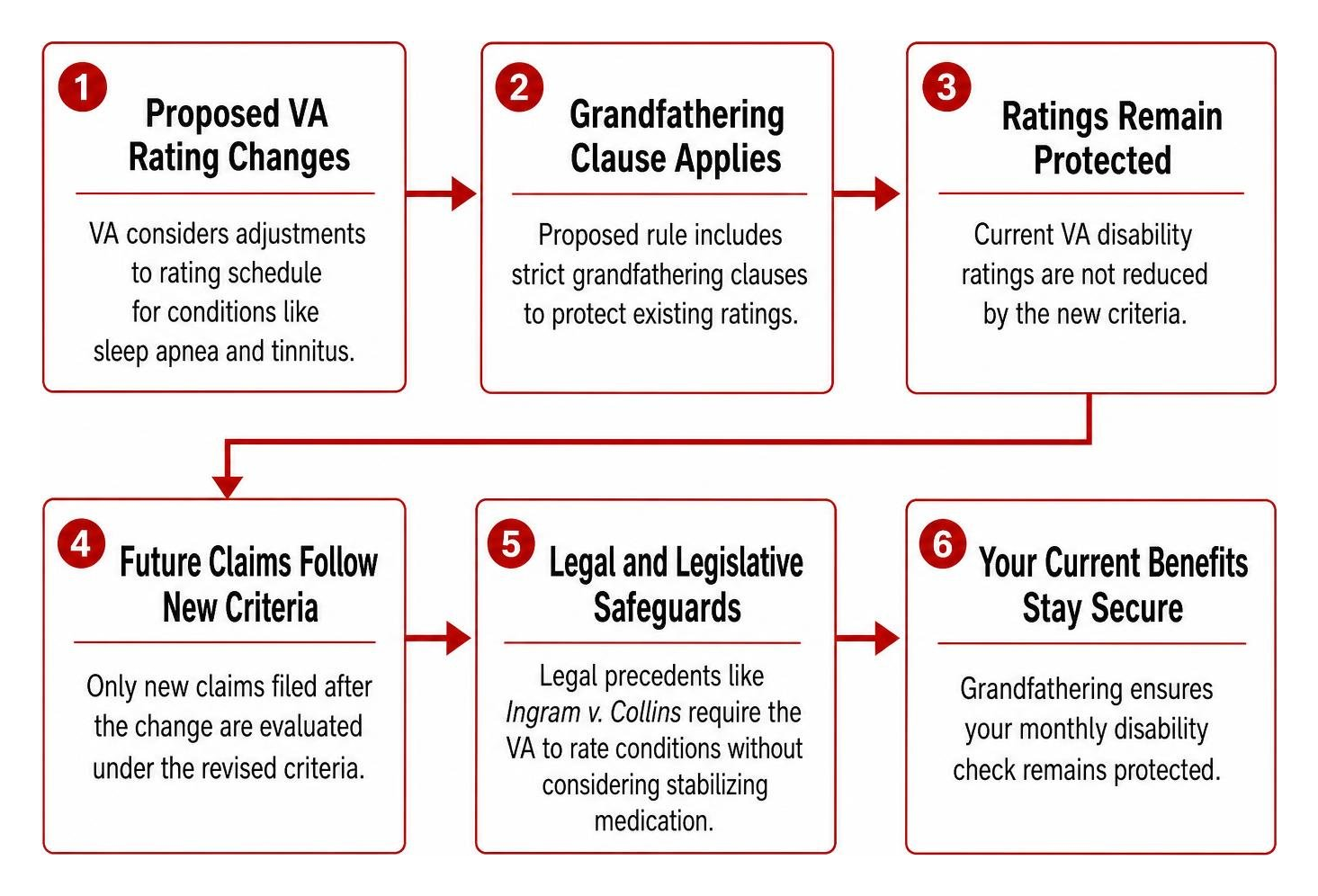
Rather than passing direct legislative cuts, benefit reductions more often surface through administrative rule adjustments. Recently, Democrats sounded the alarm over proposed VA rating changes that sought to evaluate a veteran’s impairment based on how well their condition responds to prescription medication.
Following pushback and legal precedents like Ingram v. Collins—which requires the VA to rate conditions without considering stabilizing medication—the agency paused the policy. Furthermore, proposed adjustments to standalone ratings for sleep apnea and tinnitus include strict grandfathering clauses:
If you have unfiled service-connected injuries, see these VA disability benefits that veterans often do not claim.
The Bipartisan Battle Over the Major Richard Star Act
The most high-profile legislative effort on Capitol Hill remains the Major Richard Star Act. Currently, combat-injured service members medically retired with under 20 years of active service face a dollar-for-dollar offset between their DoD retirement pension and VA disability pay.
While the House approved expanded compensation for combat-injured veterans, passing full concurrent receipt requires funding an estimated $11 billion over 10 years. Lawmakers continue pushing to fund this expansion through the $1.7 trillion Military Retirement Fund rather than offsetting costs through disability rating cuts.
Frequently Asked Questions About Veteran Benefits Under the New Congress
Will the incoming Democratic Congress reduce existing VA disability checks?
No. Current disability compensation ratings are protected entitlements under Title 38 of the U.S. Code. Congress routinely passes annual cost-of-living adjustments (COLA) with overwhelming bipartisan support, and any future changes to rating criteria apply strictly to new, prospective claims.
Can DOGE independently defund VA healthcare or disability programs?
No. The Department of Government Efficiency (DOGE) is an advisory entity without statutory authority. Under Article I of the U.S. Constitution, only Congress holds the power of the purse to allocate or eliminate federal spending.
How does a short-term Continuing Resolution (CR) affect Army veteran healthcare?
VA medical care is largely shielded from government shutdowns through advance appropriations passed a year ahead of time. While a CR can slow administrative hiring, direct medical appointments, emergency room care, and monthly disability direct deposits continue without interruption.
Conclusion: Protecting Your Earned Military Benefits
At USArmy.com, we believe every service member and veteran deserves clear, accurate facts about their earned healthcare and compensation. While Capitol Hill will see fierce budget debates over the Pentagon’s $1.5 trillion spending blueprint and weapons procurement, your core statutory VA disability benefits remain secure under federal law.
We will continue monitoring NDAA committee markups, tracking Federal Register rule changes, and providing the latest guidance on your rights. For a complete look at programs available to you and your family, visit our guide on all about U.S. veteran benefits.