
Five VA Disability Claims Special Operations Veterans May Overlook
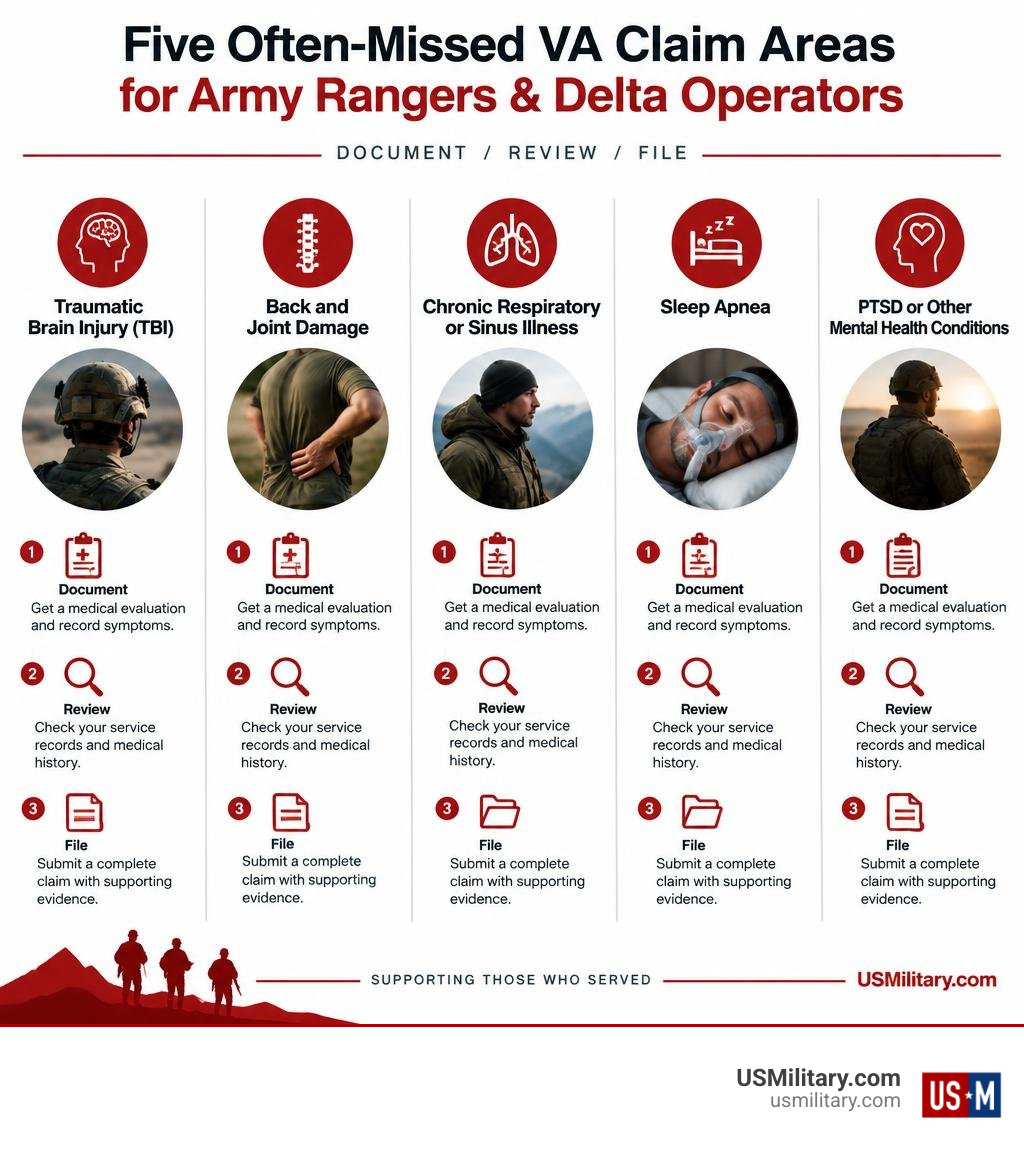
Five conditions Army Rangers and Delta operators may overlook in VA claims are traumatic brain injury (TBI), back and joint damage, chronic respiratory or sinus illness, sleep apnea, and PTSD or other mental health conditions. Learning all about 5 common VA disabilities that Army Rangers and Delta operators miss starts with one critical step: get each ongoing condition evaluated and documented, even if you never reported symptoms while serving.
A diagnosis alone does not establish a claim. VA must also find a link to service, unless a condition meets a presumptive service connection rule. For example, some veterans with qualifying deployments may not need to prove that their service caused chronic sinusitis. Sleep apnea, by contrast, is not automatically connected to PTSD or chronic pain; a secondary claim needs supporting medical evidence.
I’m Larry Fowler, a Navy veteran, BUD/S Class 89 graduate, and publisher of military and VA benefits information since 2007. In this guide, I use that experience to help veterans identify conditions worth documenting and reviewing for a claim.
Key special operations resources and background topics:
- Is Suicide A Problem In The Special Warfare Community
- Family Life Dyanmites of Army Delta Force and Ranger Families
- What Is Military’s SERE Training
All About 5 Common VA Disabilities Army Rangers & Delta Operators Miss

Special operations personnel operate under extreme physical and psychological demands. Elite units maintain a culture of relentless drive, where pushing through severe pain is standard practice. Unfortunately, that same mindset often leads separating operators to ignore long-term injuries. All about 5 common VA disabilities that Army Rangers and Delta operators miss comes down to recognizing these patterns early, and mastering the complete guide to VA disability claims is essential to securing the benefits and healthcare you earned.
1. Chronic Blast-Induced Mild TBI and Micro-Concussions
Years of repeated blast exposure from breaching charges, heavy weapons systems, shoulder-fired rockets, and flashbangs take a cumulative toll. Many operators never experienced a single catastrophic blast event that knocked them unconscious. Instead, they endured thousands of low-level blast waves.
Over time, these micro-concussions trigger neuroinflammatory responses. The result is chronic headaches, subtle memory lapses, sudden cognitive fatigue, and severe sleep disruption. For personnel serving in high-tempo assault units like the shadow warriors of Delta Force, blast overpressure is an occupational hazard that often goes undiagnosed until years after discharge.
2. Airborne and Rucking Musculoskeletal Degradation
Jumping with combat equipment and carrying 80-to-100-pound rucks over rough terrain destroys joints and spines. Parachute landing falls (PLFs) transfer massive rotational impact into the lower back, hips, knees, and ankles.
Common overlooked diagnoses include:
- Degenerative disc disease and spinal stenosis
- Cervical and lumbar radiculopathy (nerve impingement)
- Chronic bilateral osteoarthritis in the knees and hips
- Severe plantar fasciitis and ankle instability
Reviewing qualifying disability conditions helps ensure you claim each affected joint separately under the VA diagnostic codes for limited range of motion and painful motion.
3. Toxic Burn Pit Exposures and Chronic Respiratory Illness
Operators deployed throughout the Middle East, Central Asia, and Africa breathed in toxic particulate matter from open-air burn pits, burning oil fields, industrial chemical fires, and heavy dust storms. Over time, these fine particulates cause permanent airway damage.
Veterans frequently overlook conditions like:
- Chronic sinusitis and chronic rhinitis
- Constrictive bronchiolitis and asthma
- Chronic obstructive pulmonary disease (COPD)
Reviewing official VA rating criteria clarifies how these upper and lower respiratory conditions are rated and combined.
4. Sleep Apnea Secondary to Musculoskeletal and Mental Health Conditions
Obstructive sleep apnea (OSA) is widely prevalent among special operations veterans, yet rarely diagnosed during active duty. While direct service connection can be tough without an in-service sleep study, OSA frequently qualifies as a secondary condition.
Severe chronic spinal pain disrupts restorative sleep and prevents positional relief, while post-traumatic stress and anxiety alter autonomic respiration during sleep cycles. Additionally, weight gain resulting from physical immobility due to service-connected joint damage is a well-established medical bridge. Identifying these links helps operators claim frequently unclaimed VA benefits.
5. Undocumented PTSD, Anxiety, and Operator Reintegration Burnout
Special operations culture demands extreme emotional regulation and mental compartmentalization. In high-threat environments, perpetual hypervigilance keeps you alive. Back home, that continuous sympathetic nervous system arousal manifests as irritability, emotional numbness, insomnia, and hyper-reactivity.
Because operators rarely seek mental health support while assigned to operational teams, their active-duty records may contain zero psychiatric visits. For 75th Ranger Regiment veterans, establishing these conditions after separation requires showing how combat and high-stress missions produced lasting psychological changes.
How Presumptive Service Connection Applies to Special Operations Veterans
The VA maintains statutory presumptive rules that eliminate the burden of proving a direct in-service event caused your illness. If you served in a qualifying location during a specified timeframe and developed a covered condition, the law presumes your military service caused it.
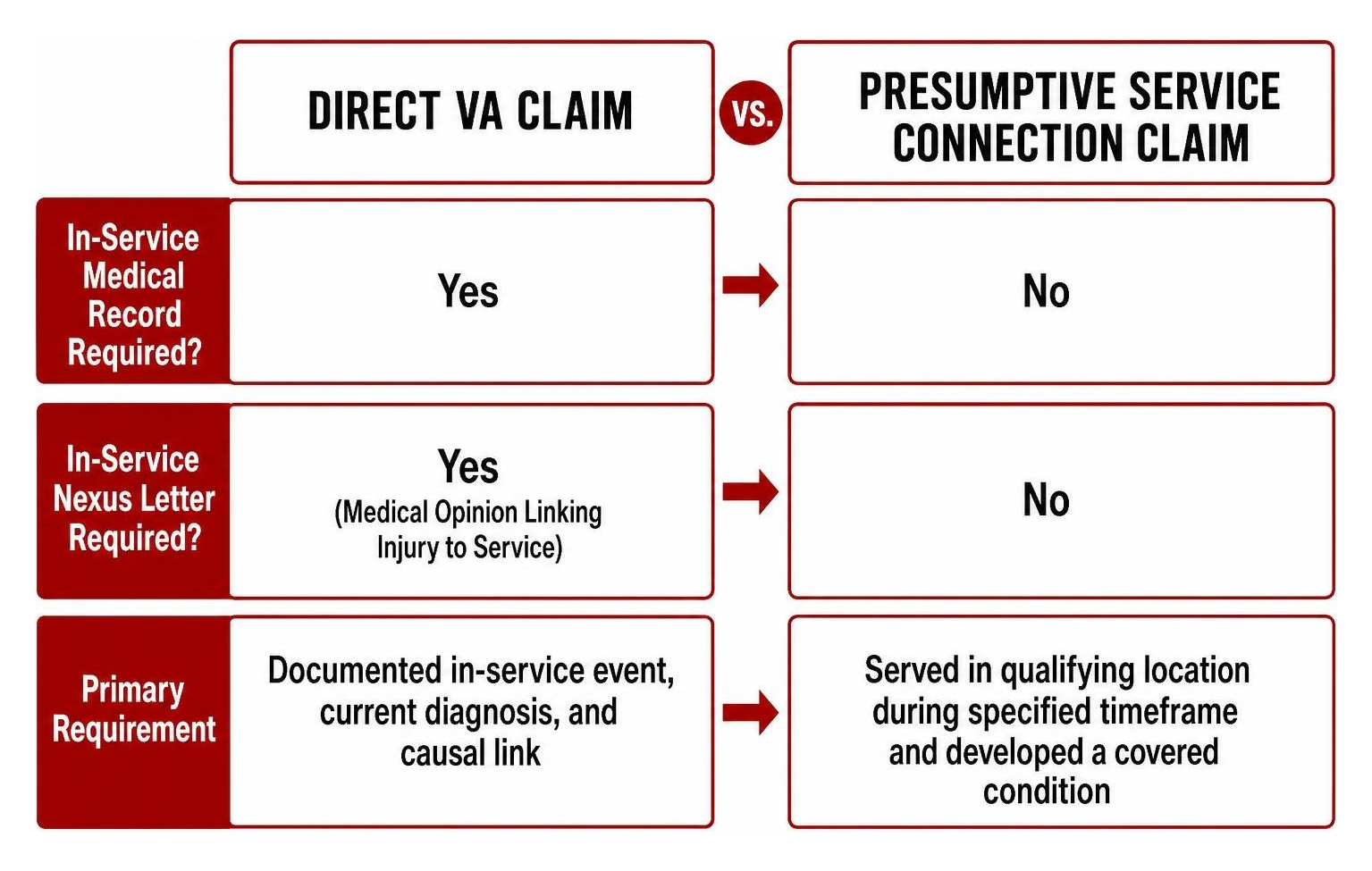
Presumptive Claim Requirements Compared
| Claim Type | In-Service Medical Record Required? | In-Service Nexus Letter Required? | Primary Requirement |
|---|---|---|---|
| Direct Service Connection | Yes | Yes (Medical Opinion Linking Injury to Service) | Documented in-service event, current diagnosis, and causal link |
| Presumptive Service Connection | No | No | Qualifying deployment location/dates and current medical diagnosis |
Detailed criteria can be verified directly through official presumptive disability benefits guidance.
All About 5 Common VA Disabilities Army Rangers & Delta Operators Miss in the First Year Post-Discharge
Under Title 38 of the Code of Federal Regulations, chronic diseases that manifest to at least a 10% disabling degree within one year of discharge are presumed service-connected. This applies to veterans who completed at least 90 continuous days of active duty.
Key conditions covered under the one-year post-discharge window include:
- Hypertension (high blood pressure)
- Arthritis (osteoarthritis in major joints)
- Peripheral neuropathy
- Peptic ulcers and chronic gastrointestinal disorders
- Type 2 diabetes
Filing within 12 months of separation ensures these degenerative and metabolic conditions receive immediate service connection without requiring a complex medical nexus.
PACT Act Toxic Exposures and Presumptive Respiratory Diagnoses
The PACT Act expanded presumptive coverage for post-9/11 veterans who deployed to the Southwest Asia theater, Afghanistan, and other designated operational areas.
Presumptive respiratory conditions include:
- Chronic bronchitis and chronic sinusitis
- Chronic rhinitis and asthma (diagnosed post-service)
- Pulmonary fibrosis and sarcoidosis
- Constrictive bronchiolitis
Navigating these claims requires accurate diagnostic imaging and pulmonary function tests, especially since lung conditions have historically been among the hardest VA claims to win.
Overcoming Special Operations Cultural Barriers and Underreporting
The special operations community is built on accountability, grit, and mission success. Seeking medical treatment during a training workup or deployment cycle can result in being placed on down status, losing team trust, or missing a deployment. As a result, operators routinely mask severe pain, treat injuries informally with team medics, and avoid documentation in their permanent military treatment records.
Understanding the 10 most common VA disabilities helps demystify the claims process and encourages veterans to document their real service impact.
All About 5 Common VA Disabilities Army Rangers & Delta Operators Miss Due to Classified Missions
When injuries happen during classified target interdiction or sensitive site exploitation, your standard personnel records will not detail the incident.
To prove service connection without violating national security protocols:
- Use unclassified mission summaries, performance evaluations, and non-sensitive travel vouchers that confirm deployment dates and locations.
- Submit lay and buddy statements (VA Form 21-4138) from teammates who witnessed the blast, jump malfunction, or combat injury.
- Secure an independent medical nexus letter from a civilian physician who reviews your post-service symptoms and notes the causal connection to heavy tactical training and operational exposures.
- Review established VA diagnostic categories to ensure no secondary conditions are missed.
Step-by-Step Claim Strategy and Professional VSO Support
- Submit an Intent to File (VA Form 21-0966): This locks in your effective date immediately, giving you 12 months to gather medical evidence while protecting back pay.
- Obtain Complete Civilian and Military Records: Pull your active-duty medical logs and combine them with diagnostic tests (X-rays, MRIs, pulmonary function testing, sleep studies) from private doctors.
- Draft Detailed Lay Statements: Clearly describe the progression of your symptoms from your time on active duty to the present.
- Partner with an Accredited Representative: Florida veterans and operators nationwide can access no-cost guidance through accredited County and State Veterans’ Service Officers (VSOs). These accredited advocates guide you through form submissions, evidence gathering, and Compensation & Pension (C&P) exam preparation without charging a dime.
Frequently Asked Questions About SOF VA Disability Claims
Can Delta Force and Ranger operators claim disabilities for injuries sustained during classified operations?
Yes. You do not need to disclose classified tactical information to prove service connection. The VA relies on unclassified deployment orders, military awards citations, jump logs, and sworn buddy statements from fellow operators describing the physical mechanism of injury.
What respiratory conditions are automatically presumed under the PACT Act for SOF veterans?
Under the PACT Act, veterans who deployed to qualifying combat zones are presumed service-connected for asthma, chronic bronchitis, chronic sinusitis, chronic rhinitis, COPD, pulmonary fibrosis, and various respiratory cancers without needing an in-service nexus letter.
Will filing a new disability claim put existing ratings at risk of reduction?
Under standard VA policy, submitting a claim for a new or secondary condition does not automatically trigger a re-evaluation of unrelated existing ratings. However, if you request an increase on an existing rating, the VA will re-evaluate that specific condition’s current severity.
Conclusion
Securing your earned VA disability benefits is not about taking resources from other service members—it is about receiving the healthcare, specialized therapies, and financial support you earned through demanding combat service.
At USMilitary.com, we provide veterans and service members with actionable insights across VA benefits, healthcare pathways, military careers, and financial planning. To learn more about elite training tracks and tactical roles, compare Delta Force and Navy SEAL careers and service to see how operational paths shape long-term veteran health.