
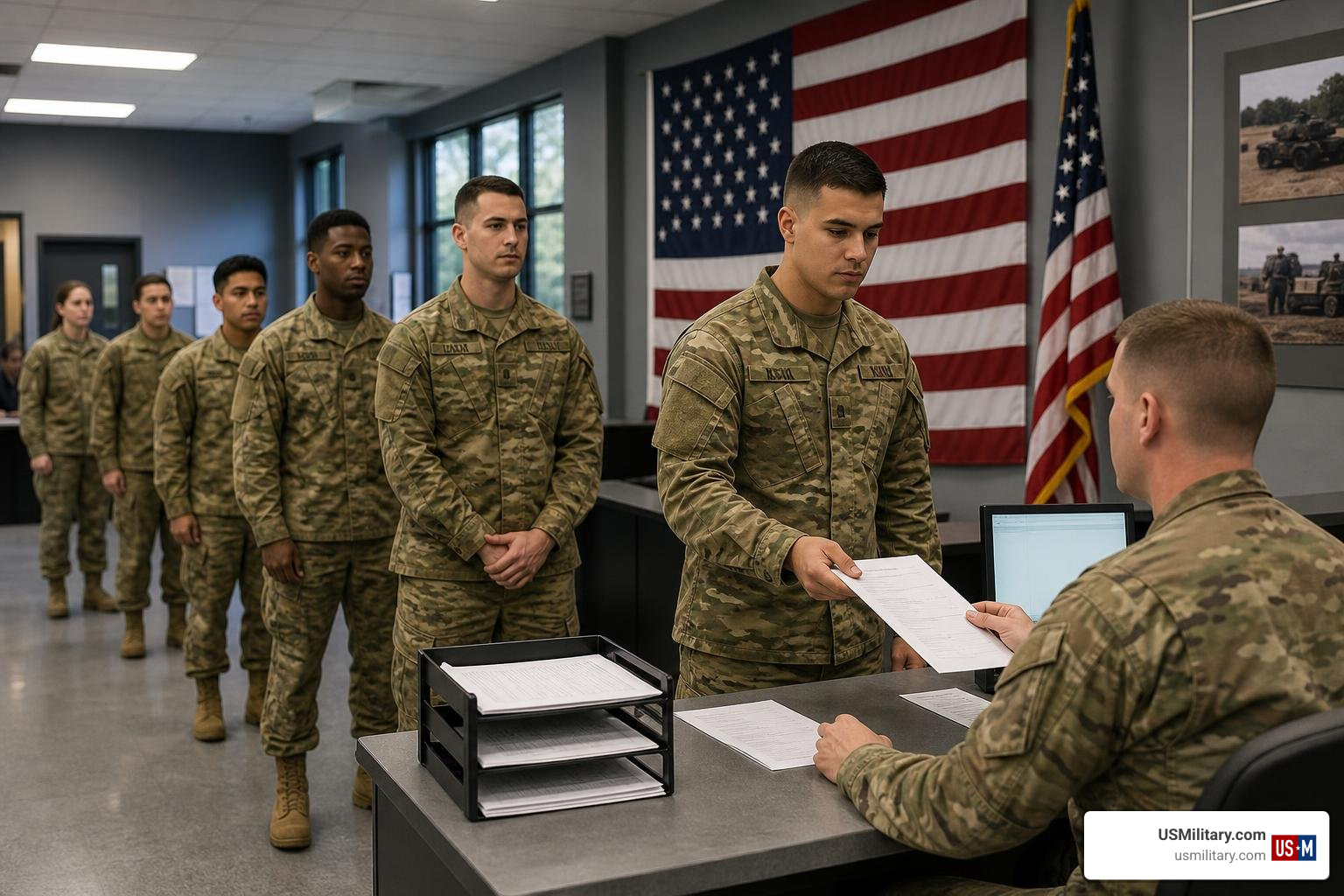
Will the Army be the first military branch to draft (if necessary)? Yes — and history backs it up clearly.
Here’s the short answer:
- The Army has received the vast majority of draftees in every major U.S. conflict. During the Vietnam War, roughly 95% of all draftees went directly into the Army.
- The Navy and Marine Corps relied entirely on volunteers until late 1942 in World War II, meaning the Army absorbed all early draftees by default.
- The Army requires the most ground combat personnel of any branch, and its infantry training pipeline is far shorter than the technical training required by the Navy or Air Force.
- If Congress ever reinstates a draft, the Army would almost certainly be the primary recipient of inducted personnel — just as it has been every time before.
The draft itself isn’t active today. The U.S. military has been an all-volunteer force since 1973. But the infrastructure behind conscription is very much alive — and it’s about to get a major upgrade.
Starting December 18, 2026, the Selective Service System will stop relying on young men to register themselves. Instead, the government will automatically pull data from federal databases — driver’s licenses, FAFSA records, Social Security files — to register eligible males aged 18 to 26. This change was quietly included in the FY 2026 National Defense Authorization Act (NDAA), signed into law in December 2025, with little public debate.
A coalition of 45 antiwar, religious, and civil liberties organizations publicly opposed the move. Critics argue it makes activating a draft too easy by removing the one logistical barrier that previously slowed the process down.
I’m Larry Fowler, publisher of USArmy.com & USMilitary.com and a longtime resource for active-duty service members, veterans, and military families since 2007 — and the question of will the Army be the first military branch to draft (if necessary) is one I’ve watched evolve through decades of military policy shifts and recruiting trends. I’ll break down everything you need to know — from the historical record to modern legal debates — so you can make sense of where things stand right now.
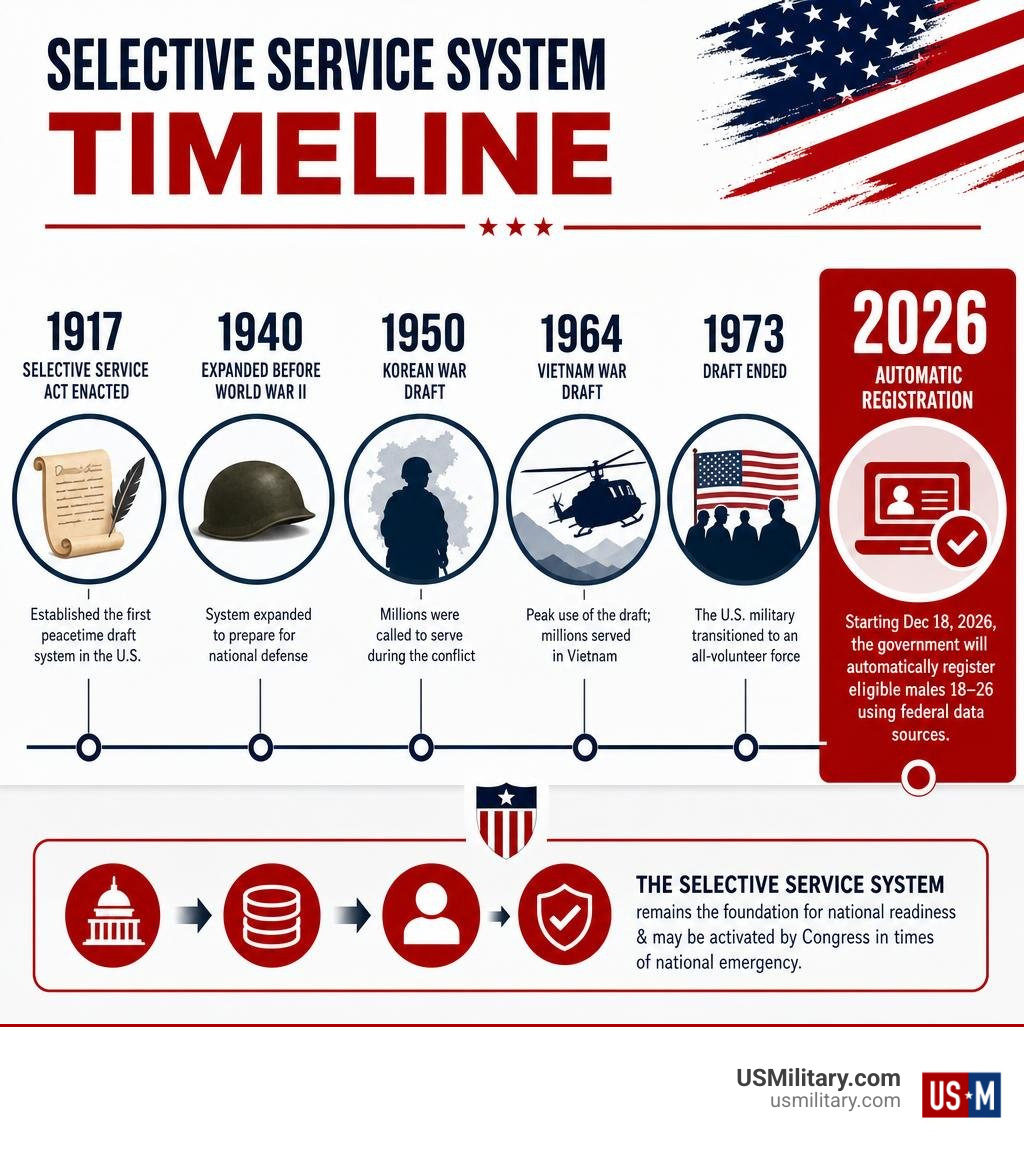
Will The Army Be The First Military Branch To Draft (If Necessary)? terms to learn:
- How The Military Draft Works
- Which Branch of the Military Will Draft The Most
- Who gets pulled first in a draft?
The Selective Service System and the December 2026 Automatic Registration Shift
To understand how a future draft would work, we have to look at the machinery that keeps track of everyone. That machinery is the Selective Service System (SSS). Operating on an annual budget of $31.3 million, this independent government agency is completely separate from the Department of Defense. It keeps a standby database of millions of young Americans, ready to hand over those names if Congress and the President decide to flip the switch.
Currently, the SSS has roughly 16.7 million men aged 18 to 25 registered. However, compliance has taken a serious hit in recent years. Historically, the FAFSA (Federal Student Aid) checkbox accounted for roughly 24% of all draft registrations between 2009 and 2019. When the federal government removed that registration checkbox in 2021, compliance rates plummeted from 89% down to 84% in 2022, and hit a historic low of 81% by 2024.
To fix this “paperwork problem,” Congress quietly stepped in. Tucked inside the massive FY 2026 National Defense Authorization Act (NDAA)—signed into law on December 18, 2025—was a provision that completely changes the game. Starting December 18, 2026, the United States will officially transition to an automatic registration system.
Instead of young men manually filling out a form at the post office or checking a box when applying for student aid, the government will automatically integrate various federal and state databases. If you get a driver’s license, apply for federal benefits, or interact with federal systems, your data will be matched and registered. Currently, 46 states and U.S. territories already use some form of automatic or opt-in draft registration through state DMVs, which accounts for over 60% of all current registrations. The new law makes this seamless and nationwide.
This shift has raised significant civil liberties and privacy concerns. Critics point out that the SSS has not published its legally required Computer Matching Act notices in the Federal Register since 2017, raising questions about how securely our personal data is being shared. Furthermore, advocacy groups worry that a centralized database of this scale could be weaponized for other forms of federal enforcement.
For a deeper dive into these administrative changes and what they mean for you, check out our guide on How the Military Draft Works in 2026.
While some worry that this automatic registration is a precursor to active conscription, military planners emphasize that it is purely administrative. Reinstating an active draft still requires a literal act of Congress and a presidential signature. For a clear-eyed look at the political realities of this system, read more on Iran War Draft 2026: Trump Won’t Rule It Out — Here’s Who Gets Called First – Boomers Broke America .
Will The Army Be The First Military Branch To Draft (If Necessary)?
Now we get to the core question: will the Army be the first military branch to draft (if necessary)?
The simple answer is yes. The Army is historically, logistically, and mathematically the primary destination for draftees. When the nation needs to rapidly scale its military force to fight a large-scale land war, the Army requires the most sheer manpower.
Ground combat is incredibly resource-intensive when it comes to personnel. The Army has a massive “tooth-to-tail” ratio, meaning that for every single front-line combat soldier (the “tooth”), it requires several support personnel (the “tail”)—including mechanics, logistics specialists, cooks, and medics.
The logistical reality of training pipelines also makes the Army the most viable branch for conscription. The Navy and Air Force rely on highly complex, technical hardware. Training a recruit to repair a jet engine or operate advanced sonar systems on a submarine can take up to 18 months. If a draftee is only legally obligated to serve for 24 months, a technical branch would only get about 6 months of active utility out of them after training. The Army, however, can train an infantry soldier in a fraction of that time, making a short-term conscript incredibly valuable.
To see how these branch training times and draft viabilities compare, look at the table below:
| Military Branch | Average Basic & Initial Training Time | Technical Complexity | Historical Reliance on Draftees |
|---|---|---|---|
| U.S. Army | 10 to 22 weeks (Infantry/Support) | Moderate | Extremely High (95% in Vietnam) |
| U.S. Marine Corps | 13 weeks + School of Infantry | Moderate | Low (Under 43,000 in Vietnam) |
| U.S. Navy | 10 weeks + Technical A-School (Months) | High | Minimal (Primarily Volunteer) |
| U.S. Air Force | 8.5 weeks + Technical School (Months) | Very High | None (Volunteer-Only) |
| U.S. Space Force | 8.5 weeks + Specialized Space Training | Extremely High | None |
This dynamic is why the Army has always been the first line of conscription. If you want to know more about the order of service and how branches are prioritized, read our breakdown of Who Gets Pulled First in a US Military Draft.
For a broader perspective on why the Army bears this burden, you can read Why the Army Draft More Than All The Branches .
Historical Precedents of Army Dominance in Conscription
History doesn’t just whisper this truth; it screams it. During World War II, the United States inducted more than 10 million men into the military. Until late 1942, the Navy and Marine Corps operated entirely on volunteers, funneling 100% of all draftees exclusively into the Army or the Army Air Corps.
The story was even more lopsided during the Vietnam War. Between 1964 and 1973, the draft inducted 1,766,910 men. The Army absorbed nearly 95% of them—roughly 1.7 million men. By contrast, the Marine Corps received fewer than 42,700 draftees during the entire conflict, and the Navy and Air Force took none.
This massive disparity created a phenomenon known as “draft-induced volunteerism.” Young men who wanted to avoid being drafted into the Army infantry would quickly volunteer for the Navy or Air Force, accepting longer enlistment terms in exchange for safer, more technical roles.
Operational Realities: Will The Army Be The First Military Branch To Draft (If Necessary)?
In modern land warfare, holding territory requires boots on the ground. No matter how advanced our drone technology or cyber capabilities become, you cannot occupy a city with an F-35 or a satellite. Because the Army is the branch tasked with sustained land combat, its troop density requirements are unmatched.
If a major geopolitical crisis erupted tomorrow requiring rapid deployment on a global scale, the volunteer Army would exhaust its active and reserve personnel first. The Selective Service System is designed to deliver the first inductees to the military within 193 days from the onset of a crisis. When those first draftees arrive at basic training, they will be wearing Army green.
The All-Volunteer Force vs. Conscription: Quality, Morale, and Modern Warfare
Since the draft ended in January 1973, the U.S. military has operated as an All-Volunteer Force (AVF). This transition was deliberately structured by leaders like Army Gen. Creighton Abrams to make the military highly professional, lethal, and dependent on citizen-soldier volunteers.
Today, the modern military operates much like a highly selective university. It draws from a very limited pool of eligible youth. Shockingly, only about 30% of young Americans meet the military’s minimum physical, medical, educational, and moral standards. When you exclude those disqualified for obesity, drug use, or lack of a high school diploma, the eligible pool shrinks to just 23% without a waiver.
Because the AVF selects only the highly qualified, it enjoys excellent discipline and technical proficiency. Conscription, on the other hand, historically dilutes this quality. During the Vietnam War, the draft disproportionately swept up men from working-class and poor backgrounds who lacked the resources to secure college or medical deferments. By the late 1960s, nearly half of the enlisted soldiers in Vietnam did not have high school diplomas.
This drop in personnel quality had devastating consequences for morale and discipline:
- Fragging: The Vietnam War saw at least 904 documented cases of “fragging” (enlisted men attacking their own officers or NCOs with fragmentation grenades) between 1969 and 1972.
- Atrocities: The Vietnam War Crimes Working Group documented 320 substantiated atrocities committed by U.S. forces, often attributed to poor training, low morale, and leadership breakdowns among conscripts.
A return to the draft would severely challenge the modern Army’s unit cohesion and technical effectiveness. To explore how the military would handle these standards during a crisis, read Will the Quality and Expectations of an Army Soldier Rise During a Military Draft.
Technical Expertise and the Special Skills Draft
While we often picture a draft as sending thousands of young men into the infantry, a modern conflict would look very different. The Selective Service maintains active, standby plans for specialized drafts to meet the demands of modern, high-tech warfare.
During a mobilization exercise, the SSS simulated a “special skills draft.” Under this plan, the first draftees called up wouldn’t just be general infantry; they would include computer network technicians, cyber security specialists, aerospace engineers, and other highly skilled technical workers.
Additionally, the Selective Service maintains the Health Care Personnel Delivery System (HCPDS). This is a standby plan designed to draft healthcare workers aged 20 to 54—including both men and women—to fill critical medical shortages in military hospitals during a national emergency.
Legal, Constitutional, and Political Dimensions of a Modern Draft
The draft registration system is a frequent subject of intense legal and constitutional debate. The most prominent issue is the male-only registration requirement. Under current law, only individuals assigned male at birth are required to register.
This policy was upheld by the Supreme Court in the 1981 case Rostker v. Goldberg, which ruled that because women were excluded from combat roles at the time, registering only men was constitutional. However, in 2015, the Pentagon opened all combat roles—including infantry and special operations—to women. This led to a 2019 federal court ruling that declared the male-only draft unconstitutional. Although that ruling was overturned on appeal in 2021, the legal discrepancy remains a major target for reform.
Politically, draft registration has often been maintained as a form of “political theater” rather than military necessity. For example, President Jimmy Carter reinstated draft registration in 1980 largely to project strength during the Soviet invasion of Afghanistan and the Iran hostage crisis.
Despite this political posturing, actual enforcement of the draft has been virtually non-existent for decades. The last prosecution for failing to register with the Selective Service occurred in January 1986. In fact, from 1980 through 1986, there were only twenty indictments nationwide for failure to register.
For a detailed look at the political debates surrounding modern conflicts and the draft, read Could the Iran war trigger a military draft? Why experts say it’s unlikely – Poynter .
To understand the legal process of how a lottery would be executed today, you can read The Complete Guide to Who Gets Pulled First in a Draft.
Gender and the Future of Will The Army Be The First Military Branch To Draft (If Necessary)?
As the military continues to integrate women into all combat specialties, Congress has repeatedly debated amending the Military Selective Service Act to require women to register. While several legislative amendments have been proposed, they have faced fierce political pushback and have not yet been enacted into law.
If women are eventually required to register, it would fundamentally change the demographic makeup of any future draft, though the Army would still remain the primary branch receiving those draftees due to its size and operational mission.
Frequently Asked Questions About the Military Draft
We get a lot of questions about how a modern conscription system would actually function. Here are the facts you need to know.
Who gets called first if a draft is reinstated?
If a draft is activated, the Selective Service does not start with 18-year-olds. Instead, they use an age-priority sequence determined by a birthdate lottery.

The draft sequence works as follows:
- 20-Year-Olds: This is the highest priority group. Anyone turning 20 during the calendar year of the draft is called first.
- 21 to 25-Year-Olds: If more personnel are needed, the draft moves sequentially up through ages 21, 22, 23, 24, and 25.
- 18 and 19-Year-Olds: This group is the absolute lowest priority and would only be called if the crisis exhausted all older cohorts.
To read more about this lottery system and how birthdates are drawn, check out Everything You Need to Know About the Military Draft.
Can the President single-handedly reinstate the draft?
No. The President cannot unilaterally order a military draft. Reinstating conscription requires Congress to pass legislation amending the Military Selective Service Act, which must then be signed into law by the President. Only after this legislative process is complete can the President issue a proclamation to activate the draft machinery.
What are the penalties for failing to register with the Selective Service?
Failing to register is a federal felony. The statutory penalties are severe:
- A fine of up to $250,000.
- Up to five years in prison, or both.
While actual criminal prosecutions are incredibly rare, the administrative penalties are automatically enforced and can follow you for life. If you fail to register before turning 26, you can be permanently barred from:
- Federal student loans and financial aid.
- Employment with the federal government and many state governments.
- U.S. citizenship pathways (for immigrants).
For a complete breakdown of these penalties and how to check your registration status, read our Military Draft Complete Guide.
Conclusion
While the U.S. military remains a highly professional, all-volunteer force, the infrastructure of the draft is quietly transforming. With the upcoming transition to automatic registration in December 2026, the government is ensuring that its standby database is fully populated and ready for any national emergency.
If a crisis ever forces Congress to reinstate conscription, history and logistics tell us that the Army will undoubtedly be the first and primary branch to receive draftees.
At USMilitary.com, we are committed to keeping you informed with unbiased guidance on all military branches, VA benefits, and career paths. Whether you are looking to volunteer or simply want to stay informed about national policy, we are here to serve as your central hub.
To learn more about the history and mechanics of conscription, read our comprehensive guide on What is the US Military Draft, or explore our homepage at USMilitary.com for resources on VA loans, career comparisons, and veteran benefits. You can also explore inspirational stories of service in the book Dare to Live Greatly.