
Does the Army Have the Most Arrests? The Short Answer
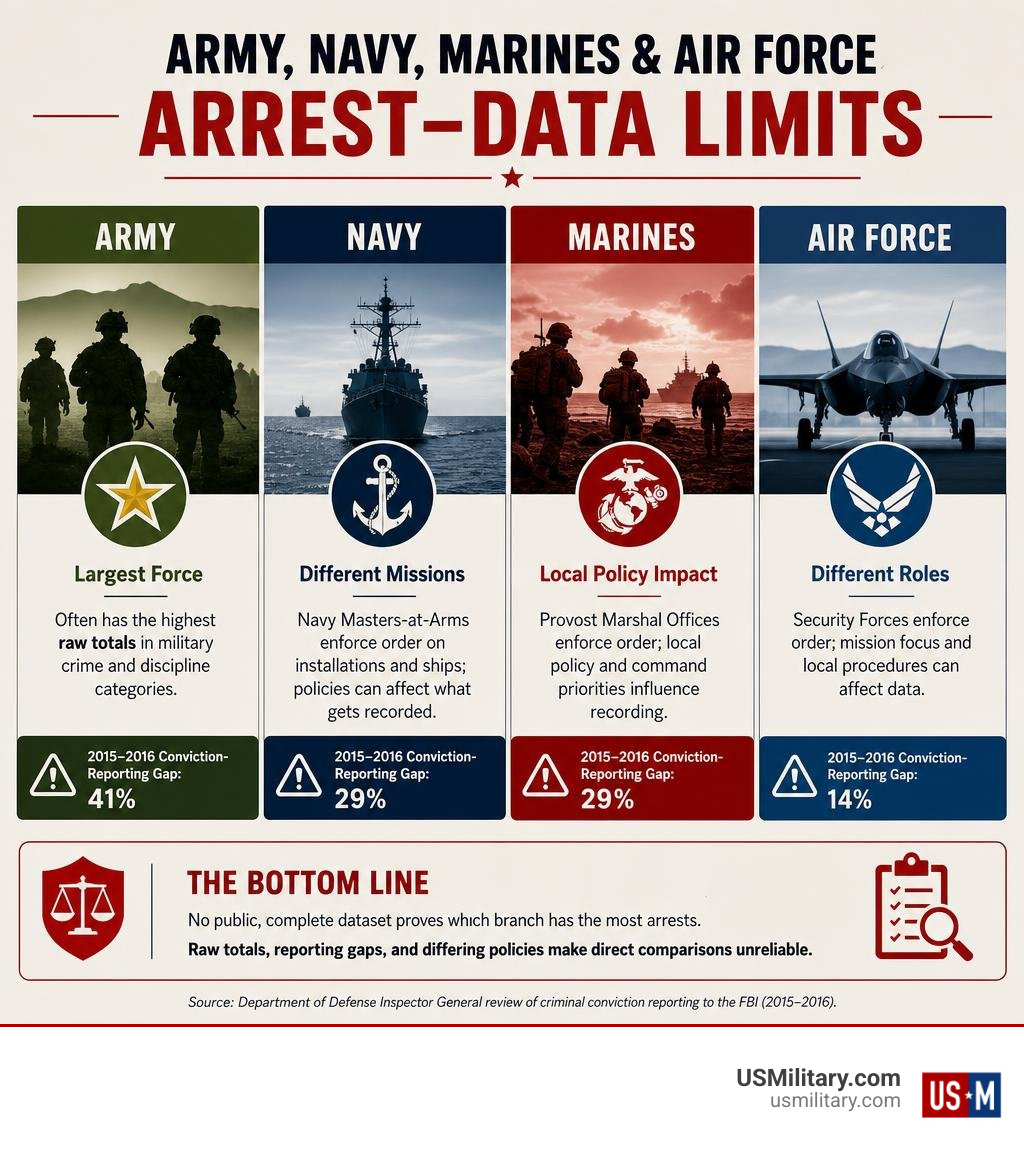
No public, complete dataset proves that the Army has the highest arrest rate of every U.S. military branch. The Army often has the highest raw total in military crime and discipline categories because it is the largest active-duty branch. But raw totals do not show which branch has the highest rate per service member.
The data is also incomplete. A Department of Defense Inspector General review found the Army failed to report 41% of sampled criminal convictions to the FBI in 2015-2016, compared with 29% for the Navy and Marine Corps and 14% for the Air Force. Those are conviction-reporting gaps, not arrest totals, but they make simple branch-to-branch comparisons unreliable.
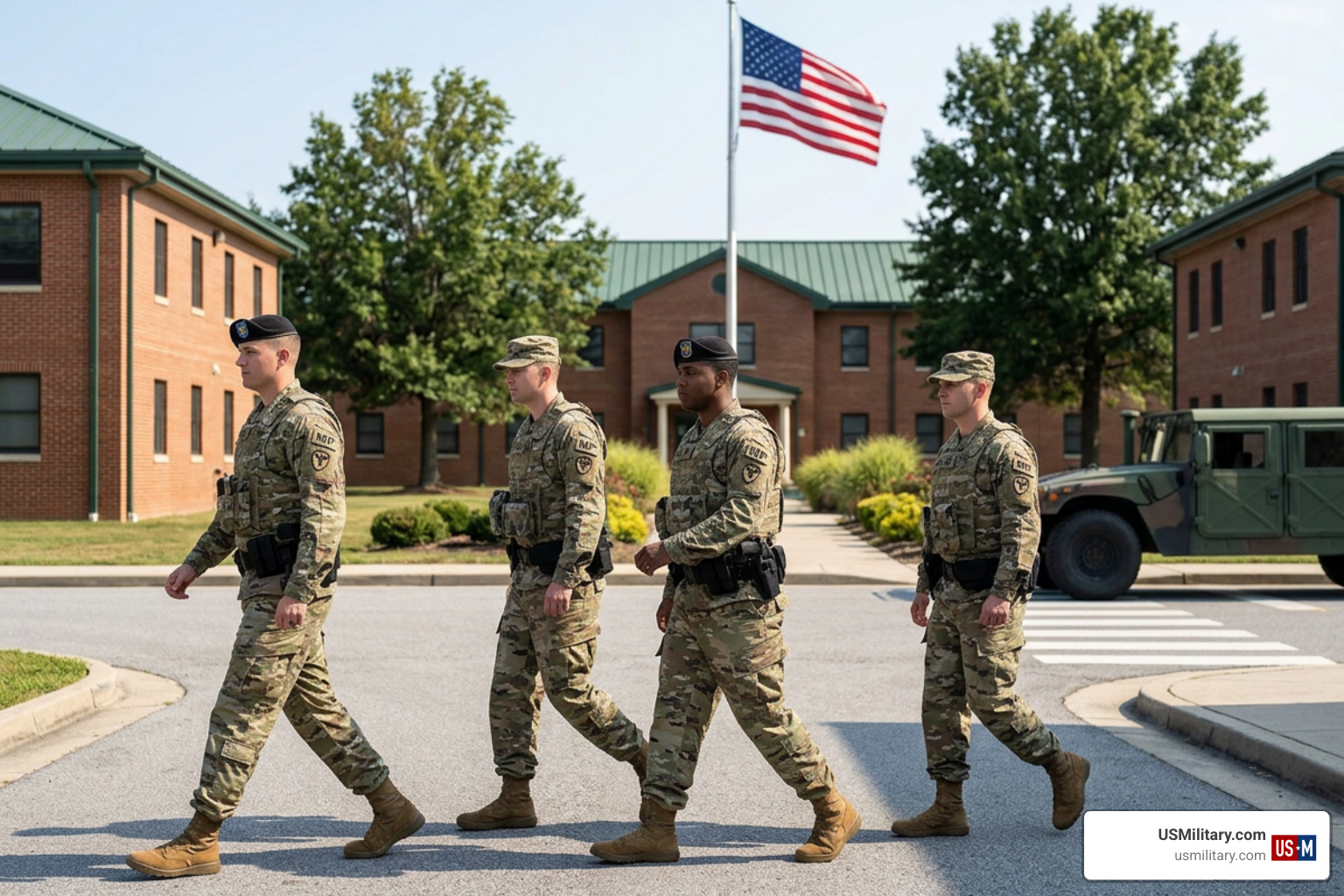
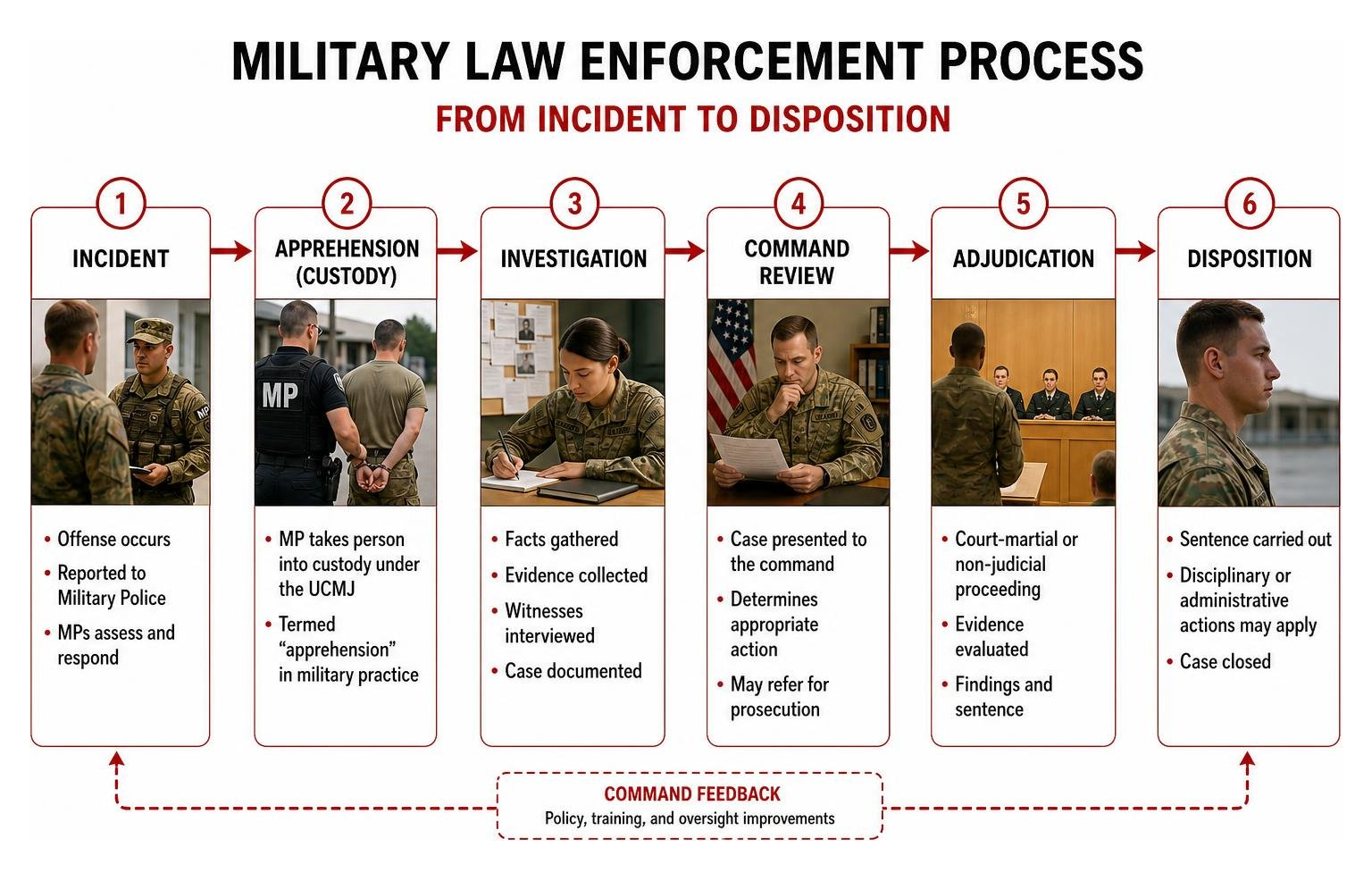
Military police also use the term apprehension for taking a person into custody under the Uniform Code of Military Justice. Army Military Police, Navy Masters-at-Arms, Marine Corps Provost Marshal Offices, and Air Force Security Forces all enforce order on installations, but their missions and local policies can affect what gets recorded.
I am LARRY FOWLER, publisher of the USArmy.com and the USMilitary.com Network since 2007, where I have helped service members, veterans, and future recruits understand military careers and service-related issues. In answering Does the Army have the highest number of arrests of all the military branches, I focus on the difference between reliable data, raw totals, and per-person rates.
Relevant articles related to Does the Army have the highest number of arrests of all the military branches:
Does the Army Have the Highest Number of Arrests of All the Military Branches?
When people ask, does the Army have the highest number of arrests of all the military branches, the simple answer from sheer headcounts is often yes—in gross, unadjusted numbers. However, looking only at raw figures creates a misleading picture of military discipline.
The Department of Defense (DoD) operates as one of the largest employers in the world. As we look at active-duty troop numbers, the U.S. Army stands out as the largest service branch by a wide margin. To understand how crime statistics, court-martial dockets, and apprehensions play out across the armed forces, we have to evaluate the sheer scale of each branch.
| Military Branch | Active-Duty Personnel (Approx.) | Primary Law Enforcement Agency | Investigative Service | Positivity Rate (Urinalysis) |
|---|---|---|---|---|
| U.S. Army | ~447,455 | Military Police Corps (MP) | Army CID | ~0.92% |
| U.S. Navy | ~339,602 | Masters-at-Arms (MA) / Shore Patrol | NCIS | ~1.10% |
| U.S. Air Force | ~315,317 | Air Force Security Forces (SF) | AFOSI | ~0.58% |
| U.S. Marine Corps | ~170,849 | Provost Marshal’s Office (PMO) | NCIS | ~1.40% |
| U.S. Coast Guard | ~41,825 | Coast Guard Police | CGIS | N/A |
| U.S. Space Force | ~10,205 | Air Force Security Forces (SF) | AFOSI | Trace |
Understanding troop distribution is essential. A comprehensive look at how many people are in the US military? A demographic overview shows that the Army maintains hundreds of thousands more service members than the Marine Corps or the Coast Guard. Because the Army holds such a large portion of the military workforce, it naturally tallies the highest aggregate volume of disciplinary hearings, police blotter entries, and court-martial trials every fiscal year.
Raw Totals vs. Per Capita: Does the Army Have the Highest Number of Arrests of All the Military Branches?
To honestly determine whether one service experiences more misconduct than another, researchers rely on per-capita rate normalization (incidents per 1,000 service members). When looking at per-capita numbers rather than raw incident counts, the narrative shifts noticeably.
For instance, when evaluating substance abuse through random mandatory urinalysis tests across the services:
- The U.S. Marine Corps registered a positive drug testing rate of roughly 1.40%.
- The U.S. Navy recorded a positive rate near 1.10%.
- The U.S. Army registered a rate of roughly 0.92%.
- The U.S. Air Force recorded the lowest rate among major DoD branches at approximately 0.58%.
While the Army had the highest absolute number of drug cases tried by court-martial (over 1,100 cases in recent reporting periods), its per-capita rate was lower than that of the Navy and Marine Corps. The Marines, with a younger overall demographic profile (an average age of 25.2 years compared to 29.1 for the Army), consistently show higher per-capita rates in certain behavioral and substance infractions despite registering far lower raw arrest numbers. Anyone seeking to learn about the U.S. military branches must take these demographic variations into account.
Most Common Offenses Leading to Apprehension Across the Services
Across all military branches, service members are subject to the Uniform Code of Military Justice (UCMJ). The types of offenses that result in apprehension by military law enforcement mirror both civilian criminal statutes and unique military-specific operational requirements:
- Driving Under the Influence (DUI): Impaired driving remains one of the most frequent reasons for service member apprehensions on and around military installations. The Army led all branches with 2,789 DUI-related courts-martial and non-judicial punishments in FY2023, followed by the Navy (1,234), Air Force (789), and Marine Corps (456).
- Simple Assault and Disorderly Conduct: Physical altercations in barracks, entertainment districts adjacent to bases, or post-deployment environments lead to thousands of apprehensions annually.
- Unauthorized Absence (AWOL) and Desertion (Article 86 & 87): A uniquely military offense, failure to report to duty accounted for more than 3,400 administrative and judicial disciplinary actions in the Army alone in recent years.
- Property Crimes and Larceny: Equipment theft, wrongful appropriation of government gear, and personal property larceny represent a steady share of military police casework.
- Domestic Violence (Article 128b): The formal addition of Article 128b to the UCMJ has led to a significant increase in dedicated domestic abuse apprehensions and courts-martial across installations.
For deeper insights into these figures, our review of 100+ Military Crime Statistics (2026, Fact-Checked) breaks down how non-judicial punishments (Article 15s) handle the vast majority of these offenses before they ever escalate to a general court-martial.
Military Police Powers and Jurisdictional Differences by Branch
Military law enforcement personnel do not hold traditional civilian police titles in most branches, nor do they operate under identical operational doctrines. Each branch has its own specialized security and investigative apparatus designed around its unique mission environment.

Army MP Corps vs. Masters-at-Arms, Security Forces, and PMO
The structure of law enforcement varies significantly across the Department of Defense:
- U.S. Army Military Police Corps (MP): Army MPs have a unique dual mandate. In garrison environments, they provide traditional law enforcement, patrol base housing, manage gate access, and conduct misdemeanor criminal investigations. In expeditionary theaters, MPs operate as tactical combat support units handling battlefield circulation control, high-value asset security, and detainee operations.
- U.S. Navy Masters-at-Arms (MA) & Shore Patrol: Navy MAs manage force protection on naval bases, air stations, and aboard surface vessels. In overseas ports, temporary Shore Patrol details maintain order among sailors on liberty.
- U.S. Air Force Security Forces (SF): Known as “Defenders,” Security Forces personnel secure flight lines, nuclear assets, and perimeter defense across both Air Force and U.S. Space Force installations. They handle base traffic, installation law enforcement, and anti-terrorism response.
- U.S. Marine Corps Provost Marshal’s Office (PMO): PMO provides civilian-style garrison policing for Marine Corps bases, while specialized Law Enforcement Battalions historically handled expeditionary policing missions.
When felony-level crimes occur (such as grand larceny, sexual assault, or homicide), uniformed military police turn investigations over to independent civilian-credentialed criminal investigative organizations: Army CID, the Naval Criminal Investigative Service (NCIS), the Air Force Office of Special Investigations (AFOSI), or the Coast Guard Investigative Service (CGIS).
Disciplinary Standards and Pre-Enlistment Background Factors
Misconduct trends within the military are also shaped by accession screening. All military branches require recruits to undergo comprehensive background checks. Serious criminal records, particularly violent felonies and drug trafficking convictions, represent permanent moral disqualifications.
Prospective recruits often wonder about moral character waivers and what disqualifies you from the military draft or voluntary enlistment. While minor juvenile infractions or isolated misdemeanor drug possession can occasionally be waived depending on recruiting needs, federal law strictly enforces the Lautenberg Amendment. Anyone convicted of a misdemeanor crime of domestic violence cannot legally handle firearms, barring them completely from enlistment across every branch of service.
DoD Crime Reporting Failures and Data Distortion
A major hurdle in answering which military branch has the most arrests is the historical inconsistency in how military law enforcement agencies report criminal records to federal civilian databases.
Reporting Gaps and Reality: Does the Army Have the Highest Number of Arrests of All the Military Branches?
Official oversight investigations have revealed significant gaps in military crime reporting. A landmark Department of Defense Inspector General (DoD OIG) report evaluating thousands of criminal convictions uncovered widespread non-compliance in transmitting military criminal conviction records and fingerprint cards to the FBI’s Interstate Identification Index:
- U.S. Army: 41% failure rate in reporting criminal convictions to the FBI; missed submitting 21% of required fingerprint cards.
- U.S. Navy: 29% failure rate in reporting convictions; missed submitting 25% of required fingerprint cards.
- U.S. Marine Corps: 29% failure rate in reporting criminal convictions.
- U.S. Air Force: 14% failure rate overall, with the Air Force Office of Special Investigations (AFOSI) achieving an impressive 98% compliance rate (a 2% failure rate).
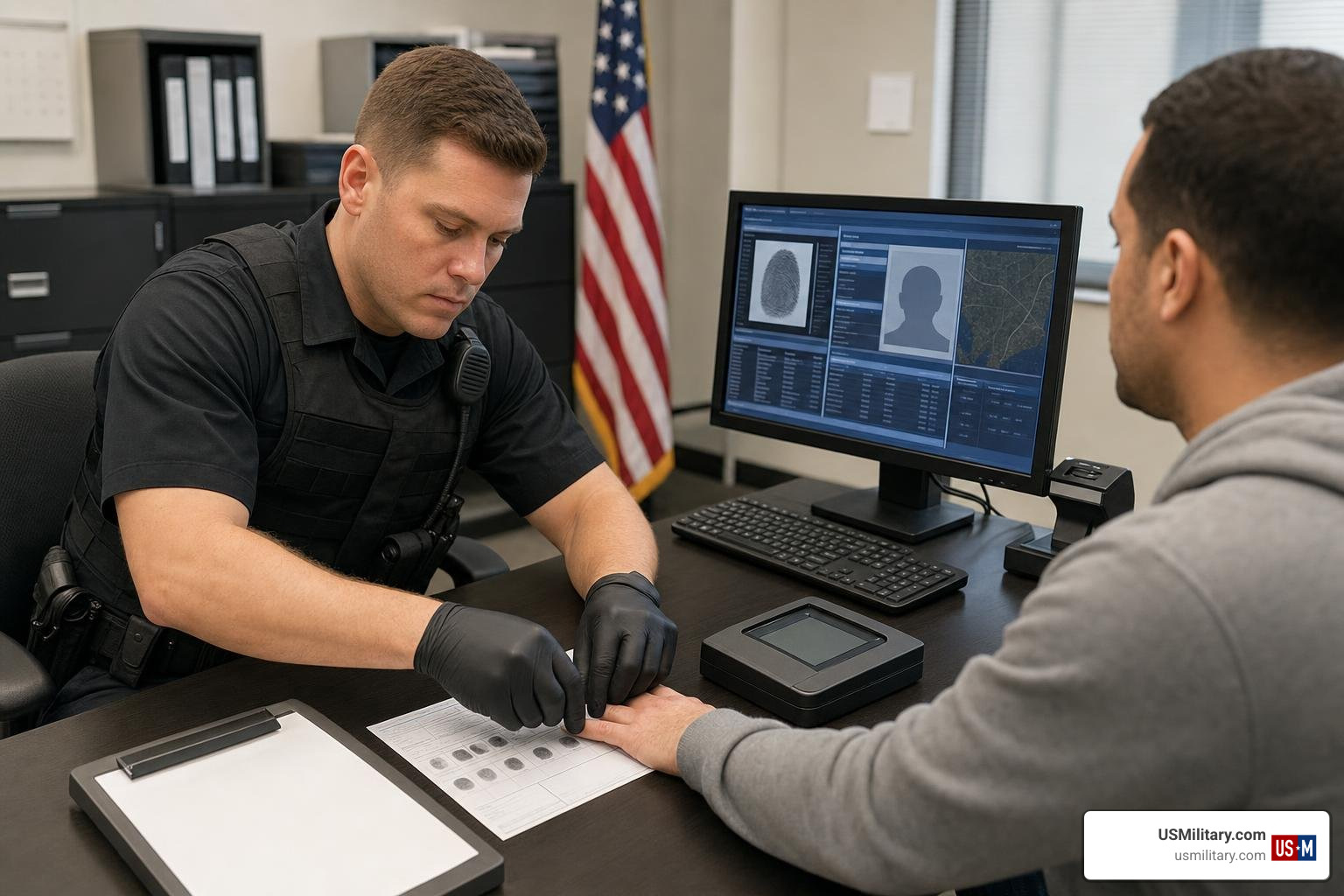
These reporting failures mean thousands of military apprehensions and court-martial convictions were never indexed in federal law enforcement systems. Training deficiencies in Army police schools—where investigators were taught to collect fingerprints for evidence rather than mandatory national index transmission—contributed to these gaps.
Furthermore, congressional testimony documented in GAO-20-648T military justice reporting and racial disparity findings highlighted that branches tracked disciplinary data across 15 separate, unintegrated database systems (such as the Army’s ALERTS and the Navy/Marines’ CLEOC). Because these systems historical underreported case outcomes, public datasets do not reflect the full scope of military apprehensions.
Systemic Fixes and Modern Judicial Oversight
To fix these systemic reporting issues and address command influence, the Department of Defense enacted sweeping military justice reforms. The creation of independent Offices of Special Trial Counsel (OSTC) removed commanding officers from prosecutorial decisions involving serious offenses, including sexual assault, domestic violence, kidnapping, and homicide.
Additionally, military branches historically utilized administrative separations in lieu of court-martial (commonly referred to in the Army as “Chapter 10” discharges). Between 2012 and 2021, the Army allowed hundreds of soldiers facing felony-level allegations to separate with an Other Than Honorable (OTH) discharge rather than facing trial. Because administrative separations do not generate criminal convictions, thousands of serious offenses were handled outside the formal civilian court registry, further muddying historical comparative arrest rates.
Frequently Asked Questions About Military Arrests and Discipline
Can military police arrest high-ranking officers and civilian visitors?
Yes. Military law enforcement officers and civilian DoD police derive their jurisdictional authority directly from the Installation Commander and the UCMJ. On federal military property:
- High-Ranking Officers: Military police have the legal authority to apprehend any commissioned officer, regardless of rank, if the officer commits an offense or breach of the peace. By standard operating procedure, the Provost Marshal Office and the suspect’s commanding officer are notified immediately.
- Civilians: Military police do not have UCMJ authority over civilians. However, under Title 18 of the U.S. Code and federal trespassing statutes, MPs can detain civilians on base property, issue federal magistrate citations, or transfer custody to local civilian police or federal marshals.
What is the difference between military apprehension and civilian arrest?
Under military law, words have precise legal definitions:
- Apprehension: The physical taking of a person into custody upon reasonable belief that an offense has occurred (the military equivalent of a civilian arrest).
- Arrest: In the military, “arrest” refers to a form of moral or administrative restraint ordered by a commanding officer that restricts an individual to specific base limits pending disciplinary action.
- Pretrial Confinement: The military equivalent of jail. Unlike civilian courts, the military justice system does not utilize a cash bail system. Confinement decisions are reviewed by a Custody Review Officer (CRO) within 48 hours to determine whether pretrial detention is legally justified.
How do military criminal records impact future civilian employment?
Military court-martial convictions (Special and General Courts-Martial) constitute formal federal criminal convictions. Once properly transmitted to the FBI’s National Crime Information Center (NCIC), these records appear on standard civilian background checks. Furthermore, service members separated with an Other Than Honorable (OTH), Bad Conduct (BCD), or Dishonorable Discharge face substantial barriers to federal employment, loss of VA educational benefits, and restrictions on state professional licensing.
Conclusion: Navigating Military Law Enforcement Realities
When examining whether the Army has the most arrests among military branches, context is everything. While the Army registers the highest raw total of apprehensions, non-judicial punishments, and courts-martial each year, this is largely a reflection of its size as the military’s largest branch. When normalized on a per-capita basis, branches like the Marine Corps and Navy occasionally show higher rates in specific misconduct categories like positive urinalysis screenings.
Understanding the inner workings of military law, base security, and career trajectories is vital for service members, recruits, and their families. At USMilitary.com, we are committed to providing transparent, clear, and up-to-date guidance on all facets of service life—from enlistment requirements and base assignments to VA benefits, military loans, and justice reforms.
To explore our full library of military career pathways, enlistment standards, and veteran transition resources, visit our USMilitary.com comprehensive armed forces career and benefits guide today.